
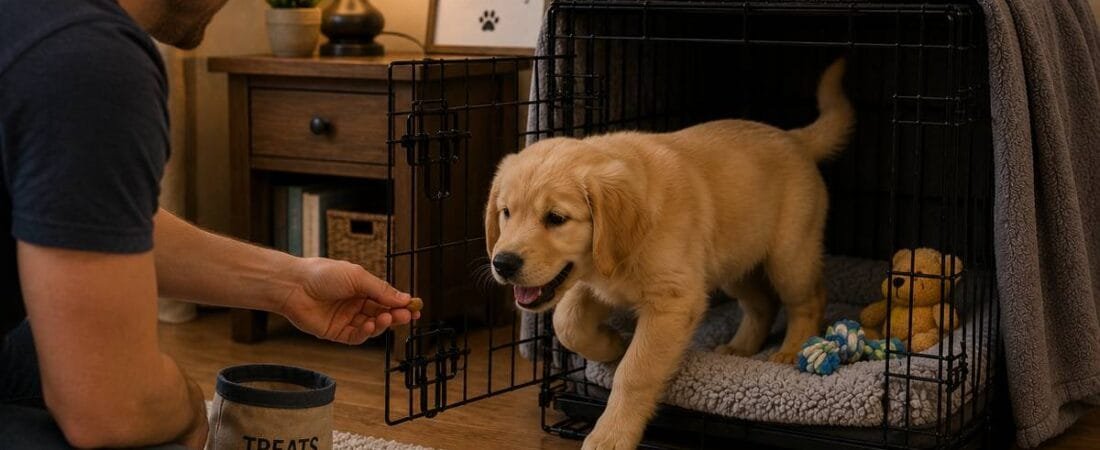
Learn how to crate train a puppy in this guide. Crate training is one of the most useful things you can teach a new puppy. Done correctly, it supports potty training, helps prevent destructive chewing when you cannot supervise directly, and gives your puppy a safe, quiet space of their own to settle into.
Many first-time owners worry that a crate feels like confinement, but most puppies actually come to see it as a comfort zone once the association is built correctly. The difference between a puppy who resists the crate and one who walks in happily almost always comes down to how the introduction was handled in those first few days.
This guide walks through the entire process from the very first introduction to a full daily routine, using positive reinforcement at every step. There is no need for punishment or forcing your puppy into the crate before they are ready. A little patience early on builds a lifelong positive relationship with the space.
Why Crate Training Is Important
Natural Den Instinct
Dogs descend from den dwelling ancestors, and many puppies naturally gravitate toward small, enclosed spaces that feel secure. A crate taps into this instinct rather than working against it, offering a spot that feels more like a den than an open, exposed room.
House Training
A properly sized crate uses a puppy’s natural reluctance to soil their sleeping area, which speeds up potty training significantly when paired with a consistent schedule. This is one of the fastest ways to reduce indoor accidents during the early months.
Better Sleep
A quiet, enclosed space free from household distractions often helps puppies settle into deeper, more restful sleep than an open room would. Less stimulation means less temptation to wander, chew, or explore instead of resting.
Travel Safety
A crate trained puppy adjusts far more easily to car rides, vet visits, and travel carriers later in life, since the concept of a safe enclosed space is already familiar. This can meaningfully reduce stress during trips that would otherwise feel overwhelming.
Vet Recovery
Should your dog ever need restricted movement after surgery or an injury, a dog who is already comfortable in a crate handles that recovery period with far less stress. Many veterinarians specifically recommend crate rest for certain injuries, which is far easier to manage with a dog who already sees the crate as a comfortable space rather than a foreign one.
When Should You Start Crate Training a Puppy?
Best Age
Most puppies can begin crate training as early as 8 weeks old, right around the time they typically come home. Starting early makes the process smoother, since younger puppies have not yet formed strong habits that need to be undone. Early exposure also means the crate becomes a familiar, unremarkable part of daily life rather than something introduced later that feels new and worth resisting.
Older Puppies
Older puppies who missed early crate training can absolutely still learn. It simply takes a bit more patience and a slower introduction process, since they may already have opinions about small enclosed spaces. The same core steps still apply, just spread out over a longer timeline with extra attention to each stage.
Rescue Puppies
Rescue puppies sometimes carry unknown history with confinement, which can mean extra caution and a slower pace during the introduction phase. Watch closely for signs of stress and adjust your timeline accordingly rather than following a fixed schedule. A rescue puppy who shows strong resistance early on may simply need several extra days at each step before moving forward.
Choosing the Right Crate
Size
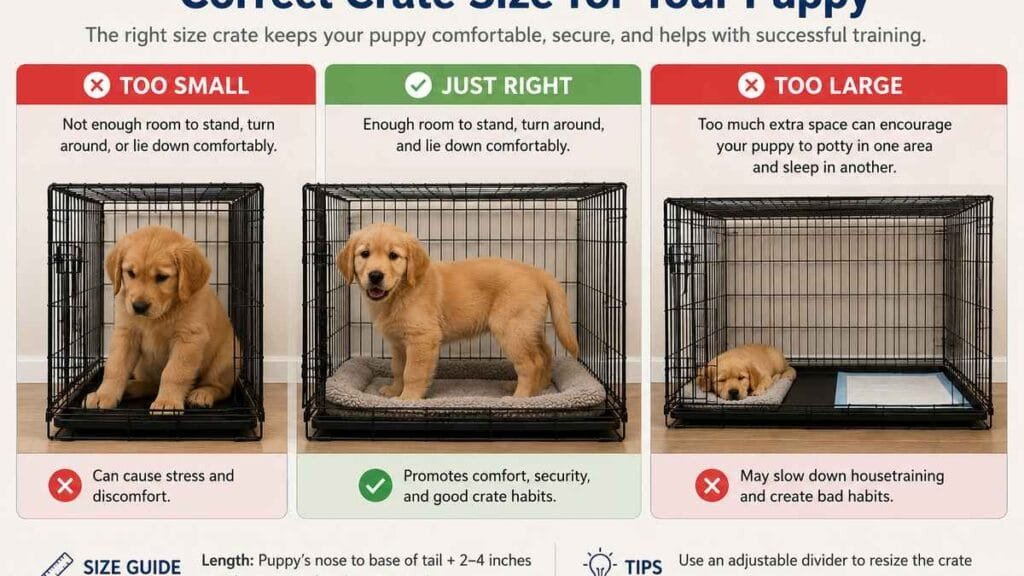
The crate should be large enough for your puppy to stand, turn around, and lie down comfortably, but not so large that they can use one end as a bathroom space and still sleep comfortably in the other. For growing breeds, sizing for their adult dimensions with a divider panel is often more practical than buying multiple crates over time.
Material
Wire crates and plastic crates are the two most common options, and both work well depending on your household needs. Soft-sided crates also exist but are generally better suited for already trained, calm adult dogs rather than puppies still learning the ropes.
Wire vs Plastic
Wire crates offer better airflow and visibility, which many puppies find reassuring. Plastic crates feel more den-like and enclosed, which some puppies prefer, and they are often required for airline travel.
Divider Panels
A wire crate with an adjustable divider panel lets you resize the usable space as your puppy grows, which is especially useful for larger breeds that will need a much bigger crate as an adult than they do as a puppy.
Bedding
Choose washable, chew-safe bedding. Avoid anything with loose stuffing that could pose a choking risk for a puppy who explores with their mouth.
Toys
A few safe chew toys or a food puzzle can help make crate time feel productive and enjoyable rather than simply confining.
According to the American Kennel Club (AKC), choosing the correct crate size is one of the most important factors in successful crate training, since a crate that is too large can undermine the potty training benefits entirely. The Humane World for Animals also offers helpful guidance on selecting crate materials suited to your specific puppy’s temperament.
Step-by-Step Guide to Crate Train a Puppy
Step 1: Introduce the Crate Slowly
Set the crate up in a common area with the door open, and let your puppy explore it on their own terms. Avoid forcing your puppy inside, which can create a negative first impression that takes much longer to undo. Some puppies walk in within minutes, while others need a day or two of simply getting used to the crate being part of the room before showing any real curiosity.
Step 2: Make the Crate Positive
Use food, treats, favorite toys, and calm praise to build a genuinely positive association. Toss a treat inside and let your puppy walk in and out freely at first, without closing the door. Repeat this several times a day in short bursts rather than one long session, since puppies respond better to frequent, brief positive experiences.
Step 3: Feed Meals Inside
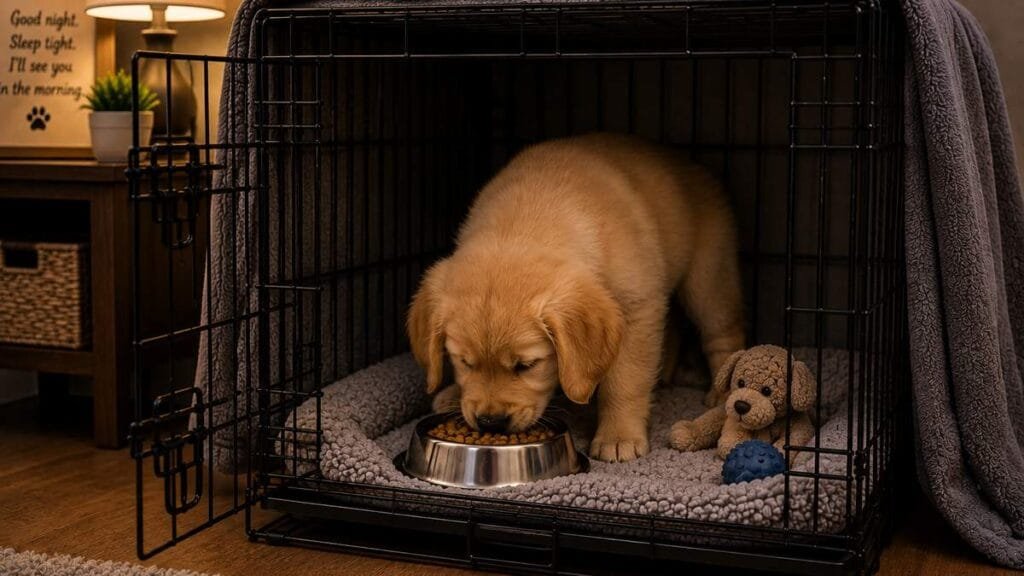
Feeding regular meals inside the crate, with the door open initially, reinforces the idea that good things consistently happen in this space. Over time, this becomes one of the strongest positive associations you can build, since mealtime is already something your puppy looks forward to.
Step 4: Practice Short Sessions
Once your puppy is comfortable eating and resting inside with the door open, begin closing the door for very short periods, just a minute or two at first, while staying nearby. Open the door again before your puppy shows signs of frustration, ending the session on a calm, successful note.
Step 5: Increase Crate Time Gradually
Slowly extend the duration of these sessions over several days, always watching for signs that your puppy is coping well before adding more time. If your puppy shows stress at a longer duration, it is completely fine to step back to a shorter stretch for a few more sessions before trying again.
Step 6: Practice Leaving the Room
Once your puppy tolerates a closed door calmly with you nearby, start stepping out of the room briefly, then returning. This teaches your puppy that your absence is temporary and predictable, which builds the foundation for longer stretches later without you present at all.
Step 7: Build a Daily Routine
Pair crate time consistently with the same points in your daily schedule, such as after meals, after play, and at bedtime, so your puppy begins to anticipate and accept crate time as a normal part of the day rather than something unpredictable.
How to Crate Train a Puppy at Night
First Night Expectations
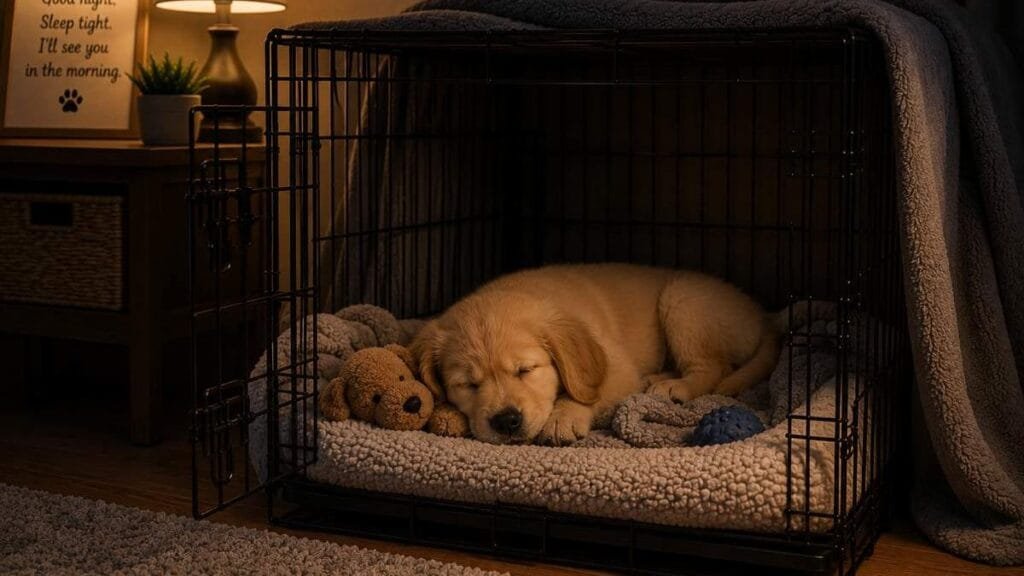
The first night is often the hardest. Some crying and unsettledness is completely normal as your puppy adjusts to being away from littermates in an unfamiliar space.
Potty Breaks
Very young puppies typically need at least one nighttime potty break. Keep these low key, with minimal lights and no play, so your puppy learns the difference between a quick break and morning wake-up time.
Bedroom Placement
Keeping the crate in or near your bedroom for the first few weeks often reduces nighttime distress significantly, since your puppy does not feel completely alone.
White Noise
A fan or white noise machine can help mask sudden household or outside sounds that might otherwise startle a light sleeping puppy awake.
Comfort Items
A soft, chew-safe toy or a piece of clothing with your scent can offer extra reassurance during the early adjustment period. If nighttime crying continues to be a significant challenge, our Puppy Crying in Crate at Night: Causes, Solutions & When to Worry guide covers this specific topic in much greater depth.
How to Crate Train a Puppy That Cries
Why Puppies Cry
Crying in the crate usually points to a potty need, loneliness, overtiredness, or simply not yet being fully comfortable with the space. It is communication, not stubbornness.
Avoid Rewarding Barking
Opening the crate the instant your puppy cries or barks can accidentally teach them that vocalizing gets immediate results, which makes the behavior harder to fade over time.
Ignore Attention Barking
If your puppy has recently had a potty break and shows no signs of real distress, briefly waiting for a pause in the noise before responding helps reinforce calm, quiet behavior instead.
Respond to Genuine Needs
Genuine distress, such as a real potty need or signs of real panic, should always be met with a calm, appropriate response rather than being ignored. If your puppy’s crying pattern feels persistent or intense, our Puppy Barking in Crate Won’t Stop? 11 Vet-Approved Ways to Calm Your Puppy guide breaks down exactly how to tell the difference and respond appropriately.
Common Crate Training Mistakes
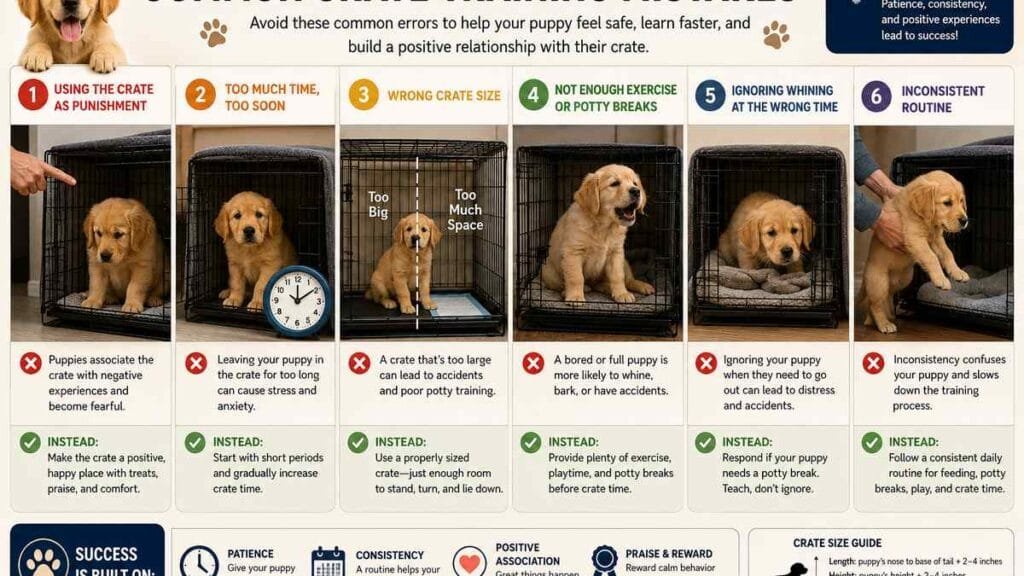
- Using the crate as punishment. This damages the positive association you are working hard to build, and can make your puppy fear the space instead of finding comfort in it. A puppy sent to the crate after chewing something forbidden learns to associate the crate with trouble, not safety.
- Leaving your puppy in the crate too long. Crate time needs to match your puppy’s current age and bladder control, not your daily schedule. Our How Long Can a Puppy Stay in a Crate? Age-by-Age Crate Time Guide breaks this down by age in detail, since what feels reasonable for an adult dog is often far too long for an 8 week old puppy.
- Choosing the wrong crate size. Too large undermines potty training benefits, since your puppy can use one end as a bathroom and still rest comfortably in the other. Too small is simply uncomfortable and can create negative associations that are hard to reverse.
- Skipping exercise before crate time. A puppy with leftover energy struggles far more with settling into the crate than one who has already had a chance to play. Even a short burst of active play beforehand makes a noticeable difference.
- Moving too fast. Rushing straight to long crate stretches before your puppy has built genuine comfort with shorter sessions is one of the most common reasons crate training stalls or backslides. Slow, steady progress almost always outperforms an aggressive timeline.
Sample Puppy Crate Training Schedule
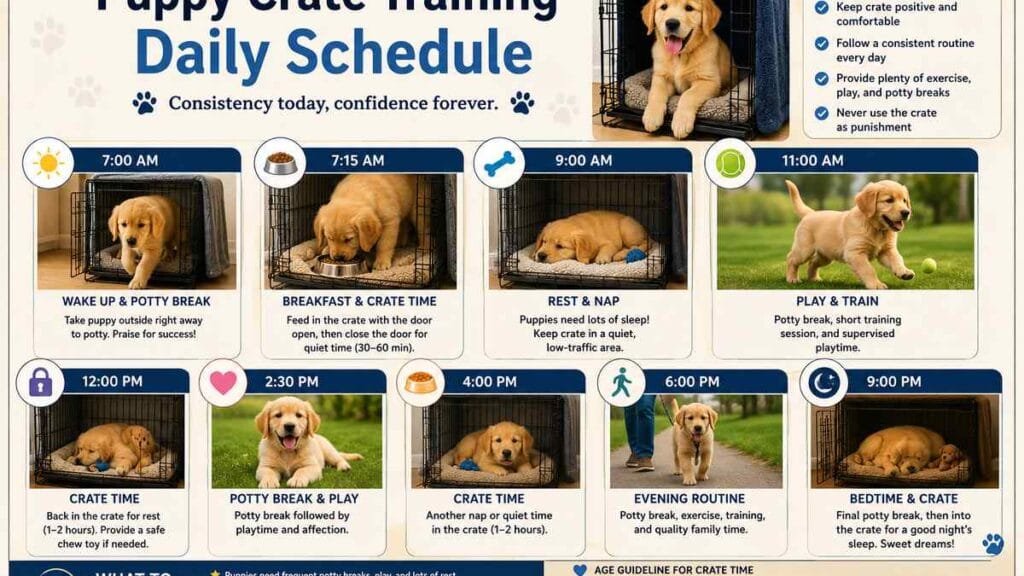
| Time | Activity |
|---|---|
| Morning wake up | Potty break, then breakfast |
| Mid-morning | Play and short crate session |
| Midday | Nap in crate after exercise |
| Afternoon | Potty break, play, second meal |
| Evening | Exercise, dinner, calm wind-down |
| Bedtime | Final potty break, then crate for the night |
Signs Your Puppy Is Adjusting Well
- Sleeping calmly through most or all of the night
- Entering the crate willingly, without hesitation or resistance
- No excessive whining once settled
- Relaxed body language, such as lying down comfortably rather than pacing
These signs indicate that the positive association you have been building is taking hold. Progress is not always perfectly linear, so occasional setbacks during growth spurts or routine changes are completely normal.
Related Article: Crate Training an Older or Rescue Dog
Frequently Asked Questions
How long does it take to crate train a puppy?
Most puppies show solid progress within 2 to 4 weeks of consistent practice, though full comfort with longer stretches can take a couple of months depending on the individual puppy. Breed, temperament, and how early you started all play a role in the exact timeline.
What is the fastest way to crate train a puppy?
Consistency is the biggest factor. Short, frequent, positive sessions that gradually increase in length tend to produce faster results than occasional long attempts. Trying to rush the process with long stretches too early almost always backfires and slows overall progress.
Should I let my puppy cry in the crate?
Brief protest crying after ruling out potty needs and exercise can often be allowed to pass on its own, but persistent or intense crying deserves a calm, appropriate response rather than being ignored outright. The key is distinguishing mild protest from genuine distress.
Can a puppy sleep in a crate all night?
Very young puppies typically still need at least one nighttime potty break. By around 4 to 5 months, many puppies can manage a full night without interruption, assuming their daytime routine and bladder control support it.
What age should a puppy start crate training?
Most puppies can begin around 8 weeks old, though older puppies and even adult rescue dogs can still learn crate training successfully with a slightly slower approach. There is no upper age limit where crate training becomes impossible.
How do I crate train a puppy for the first night?
Take your puppy for a thorough potty break right before bed, keep the crate nearby, use a calm and quiet approach, and expect some adjustment crying as completely normal on night one. Avoid the temptation to take your puppy out of the crate the moment crying starts, since this can make the following nights more difficult.
Conclusion
Crate training takes patience, but the process is straightforward when broken into small, positive steps. Stay consistent, use positive reinforcement rather than punishment, and remember that every puppy adjusts at their own pace. With time, most puppies come to see the crate as a genuinely comfortable, safe space of their own.
Has your puppy started crate training yet? Share your biggest challenge in the comments, and we’ll help you work through it.
Author Bio
David Jason is the founder of My Pet Care Tips
David writes practical, research based guides to help pet owners raise healthier, happier dogs and cats. His content focuses on clear, beginner friendly advice backed by trusted veterinary resources and real world pet care best practices.