

Can an older rescue dog really learn to love a crate? In most cases, yes, though the path there often looks different than it does for a young puppy. Many rescue dogs arrive with an unknown history, and for some, that history includes negative associations with confinement.
This does not mean crate training is off the table. It simply means the process needs to move at a pace built around trust rather than a fixed schedule. Rescue dogs often fear crates not because crates are inherently frightening, but because of what confinement may have meant in a previous, less stable situation.
This guide walks through a gentle, step-by-step approach built on patience and consistency, so your rescue dog can come to see the crate as a genuinely safe space rather than something to fear.
Can You Crate Train an Older Rescue Dog?
Yes
Age and past history do not rule out successful crate training. Dogs of any age are capable of forming new positive associations, though the timeline and approach need to be adjusted accordingly.
Why Older Dogs May Take Longer
An older rescue dog often needs more time simply because they are building trust in an entirely new environment at the same time they are learning about the crate. A puppy is forming their very first associations, while a rescue dog may be unlearning something else first.
Common Myths
One common myth is that a dog who resists the crate initially will never adjust. In reality, most resistance fades significantly with a slow, patient approach. Another myth is that crate training an adult dog works the same way as training a puppy on a compressed timeline. It does not, and trying to rush an adult rescue dog through a puppy-paced plan often backfires.
Understanding the 3-3-3 Rule Before Crate Training
First 3 Days
The first three days are typically about decompression, not training. Your rescue dog is adjusting to an entirely new environment, new smells, and new routines. Expect some hesitation and avoid pushing crate training hard during this window.
First 3 Weeks
Over the following three weeks, most rescue dogs begin settling into a routine and start showing their real personality as the initial overwhelm fades. This is often the stage where genuine crate training progress becomes possible.
First 3 Months
By around three months, many rescue dogs have built a stronger sense of trust and security in their new home, which typically translates into faster, more confident progress with crate training specifically.
Pushing crate training too quickly, especially during the first few days, often slows overall progress rather than speeding it up. A dog who has a negative experience with the crate early on may take much longer to recover than one given time to settle first. Both the ASPCA and the Humane World for Animals (formerly the Humane Society of the United States) offer additional guidance on the general adjustment timeline for newly adopted dogs.
Choose the Right Crate for an Adult Rescue Dog
Crate Size
The crate should be large enough for your dog to stand, turn around, and lie down fully stretched out, without excess space that feels less secure.
Divider
Unlike a growing puppy, an adult rescue dog typically does not need a divider panel, since their crate size will not need to change over time.
Bedding
Soft, washable bedding helps make the space feel comfortable rather than sterile. Some rescue dogs are initially unsure about bedding and prefer a simpler setup at first, which is worth watching for.
Toys
A few safe chew toys or a food puzzle can help make crate time feel rewarding rather than simply confining.
Location
Placing the crate in a common area at first, rather than an isolated room, often helps a rescue dog feel less alone during the adjustment period.
Cover or Not?
A partial cover can create a calming, den-like effect for some dogs, while others find it stressful. Test this gradually and watch your dog’s reaction rather than assuming either option is automatically better.
Step-by-Step Crate Training an Older Rescue Dog
Step 1: Introduce the Crate Without Forcing
Set the crate up with the door open and let your dog investigate entirely on their own terms. Never physically push or force a rescue dog into the crate, which can undo weeks of progress in a single moment.
Step 2: Feed Meals Inside
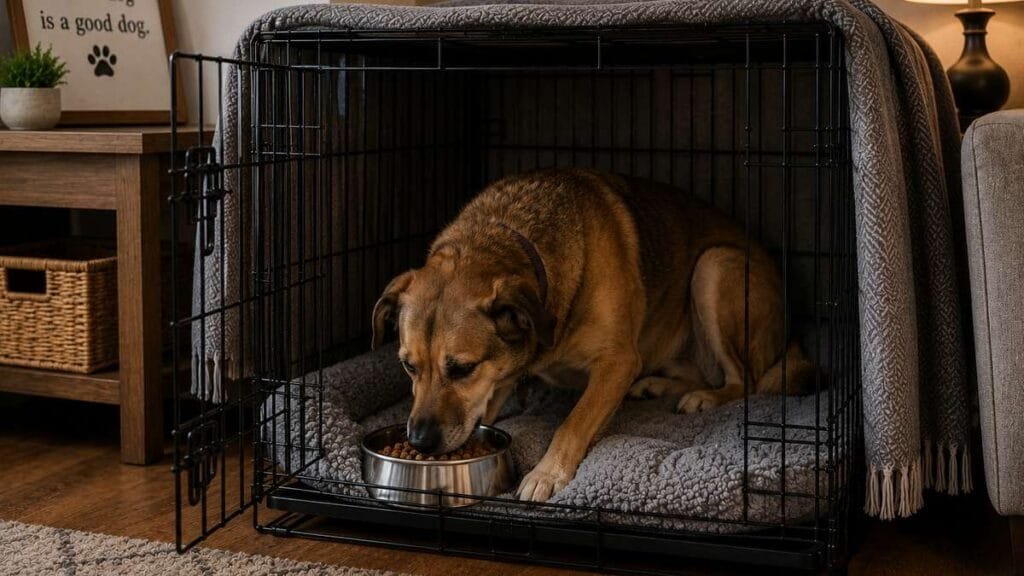
Feeding meals inside the crate, with the door open, builds a genuinely positive association through something your dog already looks forward to each day.
Step 3: Reward Calm Behavior
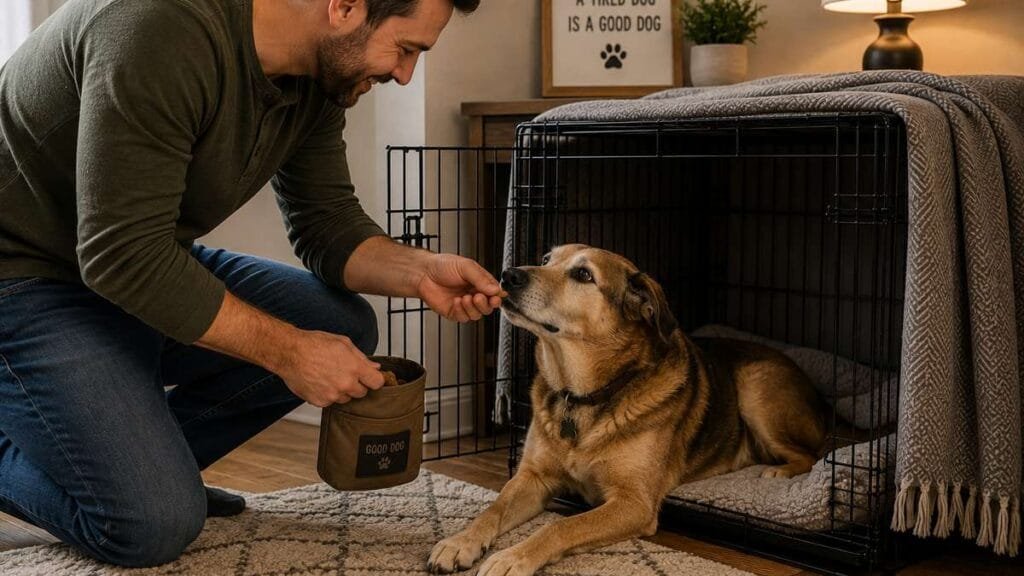
Any time your dog is calm near or inside the crate, even briefly, offer quiet praise or a treat. This reinforces that calm behavior around the crate consistently leads to good things.
Step 4: Close the Door Briefly
Once your dog is comfortable eating and resting inside with the door open, begin closing it for very short periods, just a few seconds to start, while staying close by.
Step 5: Increase Crate Time Slowly
Extend these sessions gradually over days and weeks, always watching closely for signs of stress before adding more time. If your dog shows resistance at a longer duration, step back to a shorter one for a while longer before trying again.
Step 6: Practice Short Departures
Once your dog tolerates a closed door calmly with you nearby, begin stepping out of the room briefly, then returning. This builds the understanding that your absence is temporary and predictable.
Step 7: Build a Consistent Routine
Pair crate time with the same points in your daily schedule so your dog begins to anticipate and accept it as a normal, unremarkable part of the day.
If your rescue dog also struggles with nighttime crying once crate training begins, our How to Crate Train a Puppy That Cries at Night guide covers troubleshooting steps that apply well beyond puppies specifically.
How Long Does It Take to Crate Train a Rescue Dog?
Personality
Some dogs adjust to a new routine within days, while others, particularly more anxious or cautious temperaments, need significantly longer.
Previous Trauma
A dog with a difficult past involving confinement may need a much slower, more careful approach than a dog without that history.
Consistency
The single biggest factor within your control is consistency. Dogs who experience a predictable, calm routine tend to progress faster than those facing an inconsistent approach.
Realistic Timeline
Most rescue dogs show meaningful progress within several weeks to a few months, though full comfort with longer crate stretches can take longer depending on the individual dog. There is no fixed deadline that applies to every dog equally.
Common Mistakes That Slow Crate Training
- Forcing your dog inside. This is one of the fastest ways to create a lasting negative association that takes far longer to undo than it would have taken to avoid in the first place.
- Using the crate as punishment. A crate associated with trouble rather than safety works directly against the goal of crate training.
- Leaving your dog crated too long. Extended crate time without breaks, especially early in the adjustment process, can increase stress rather than build comfort.
- Moving too fast. Rushing through the steps before your dog has genuinely built comfort at each stage is one of the most common reasons progress stalls.
- Keeping an inconsistent routine. Unpredictable timing makes it harder for your dog to settle into the process with confidence.
Crate Training an Older Rescue Dog at Night
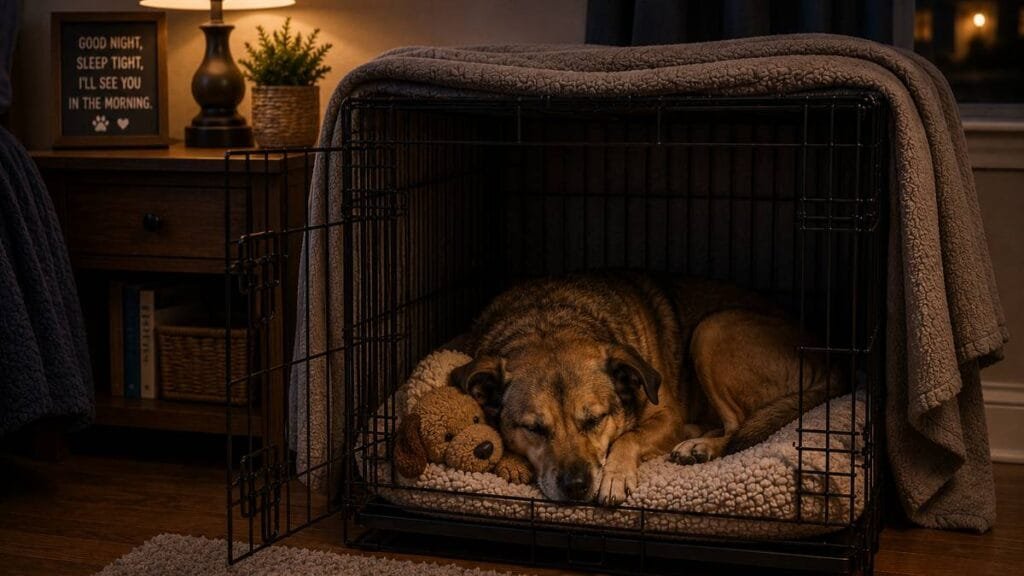
Bedtime Routine
A calm, predictable bedtime routine signals to your dog that it is time to settle rather than remain alert or anxious.
Potty Break
A thorough potty break right before crate time reduces one of the most common sources of nighttime unsettledness.
Calming Environment
Keep the space around the crate quiet and free of unnecessary stimulation as bedtime approaches.
White Noise
A fan or white noise machine can help mask sudden household or outside sounds that might otherwise startle a light sleeping or anxious dog awake.
Crate Location
Keeping the crate in or near your bedroom, at least during the early weeks, often helps a rescue dog feel less alone during the most vulnerable part of the day.
Our upcoming How to Crate Train a Puppy the First Night guide covers first-night specific strategies that apply well to newly adopted adult dogs too, despite the puppy-focused title. If your dog’s nighttime unsettledness continues beyond the first few nights, our Puppy Crying in Crate at Night: What to Do guide covers troubleshooting steps that work well for rescue dogs adjusting to a crate for the first time too.
What If Your Rescue Dog Has Separation Anxiety?
Adjustment Stress vs True Separation Anxiety
Some unsettledness during the first few weeks is a normal part of adjusting to a new home. True separation anxiety tends to be more persistent, intense, and does not meaningfully improve with time and consistent positive training.
When to Contact a Professional
If your dog shows signs like destructive behavior, sustained distress, or attempts to escape the crate that do not improve despite a patient, consistent approach, it is worth reaching out to a certified trainer or your veterinarian. Our Signs of Separation Anxiety in Dogs guide covers the full symptom list and next steps in more detail.
Benefits of Crate Training an Older Rescue Dog
- Safer travel, since a crate trained dog adjusts far more easily to car rides and travel carriers.
- Easier vet visits, particularly for dogs who may already need extra reassurance in unfamiliar settings.
- Reduced stress, since a properly introduced crate becomes a genuine retreat rather than a source of anxiety.
- House training support, especially useful if your rescue dog is still building reliable habits in a new home.
- Confidence building, since successfully adjusting to the crate often carries over into greater overall confidence and security.
The American Kennel Club (AKC) notes that crate training can benefit dogs of any age when introduced with patience and positive reinforcement, reinforcing that an older rescue dog is just as capable of adjusting well as a young puppy.
Frequently Asked Questions
Can you crate train an older rescue dog?
Yes. Age does not prevent successful crate training, though the process typically requires more patience and a slower pace than training a young puppy.
Is it too late to crate train an older dog?
No. Dogs are capable of forming new positive associations throughout their lives. It is never too late to start, as long as the approach respects your dog’s individual pace.
What is the 3-3-3 rule for rescue dogs?
The 3-3-3 rule describes a general adjustment timeline: the first 3 days for decompression, the first 3 weeks for settling into routine, and the first 3 months for building deeper trust and security in a new home.
How long does it take to crate train a rescue dog?
This varies significantly based on personality, past history, and consistency, though many dogs show meaningful progress within several weeks to a few months.
Should I crate my rescue dog the first night?
Introducing the crate gently on the first night, without forcing your dog inside or expecting full comfort immediately, can be appropriate, though decompression time matters more than crate progress in these very first days.
Can an older rescue dog sleep in a crate every night?
Yes, once a dog is comfortable with the crate, many rescue dogs sleep in one every night long term, often coming to see it as their preferred resting space.
Conclusion
Crate training an older rescue dog takes patience, but it is absolutely achievable with a gentle, consistent approach. Never force the crate, and celebrate the small wins along the way, since every rescue dog adjusts to their new life at their own pace. Stay consistent, stay patient, and trust that steady progress will get you there.
If you are working through crate training right now, keep going. Small, consistent steps forward matter far more than speed, and your rescue dog is very likely closer to feeling at home than it may seem some days.
Author Bio
David Jason is the founder of My Pet Care Tips
David writes practical, research based guides to help pet owners raise healthier, happier dogs and cats. His content focuses on clear, beginner friendly advice backed by trusted veterinary resources and real world pet care best practices.