

If you feel like your Beagle puppy is potty training slower than everyone else’s dog, you are probably right, and it is not because you are doing anything wrong. Beagle puppy potty training genuinely takes longer for this breed than for many others, and there is a real, breed-specific reason why.
Once you understand what is actually working against you, the process gets a lot less frustrating, even if it does not get dramatically faster.
Quick answer: Beagle puppies are harder to potty train mainly because their powerful nose keeps drawing them back to spots where they have already had accidents, and their independent, scent-driven nature makes them less naturally focused on you during outdoor breaks. A strict schedule, a consistent spot, crate training, and enzymatic cleaner for accidents make the biggest difference.
Why Are Beagles Harder to Potty Train Than Other Breeds?
A few overlapping traits make beagle puppy potty training more challenging than average, and it is worth understanding each one rather than assuming your puppy is simply being difficult.
Their Nose Leads Them Back to Old Accidents
Beagles have one of the most powerful noses in the dog world. Once your puppy has an accident indoors, the lingering scent, even after you think you have cleaned it up, can pull them right back to that exact spot again and again.
They Were Bred to Think Independently
Unlike breeds developed to work closely alongside a handler, Beagles were bred to follow a scent trail on their own, often well ahead of the hunter. That independent streak carries over into everyday life, including a tendency to get distracted by an interesting smell rather than staying focused on the task of going potty.
Small Bladders Mean Less Holding Time
As a smaller breed, Beagle puppies simply cannot hold their bladder as long as larger puppies can. This means accidents happen more easily if you stretch the time between potty breaks even slightly too long.
Outdoor Distractions Slow Everything Down
A Beagle puppy taken outside to potty is often more interested in investigating every new smell in the yard than actually getting down to business. This can make potty breaks take longer and occasionally end without success, only for an accident to happen minutes after coming back inside.
The Scent Trap: Why Accidents Keep Happening in the Same Spot
This is one of the most overlooked parts of beagle puppy potty training, and it explains why so many owners feel like they are going in circles. Regular household cleaners often do not fully remove the scent markers a dog’s nose can detect, even when the spot looks and smells clean to you.
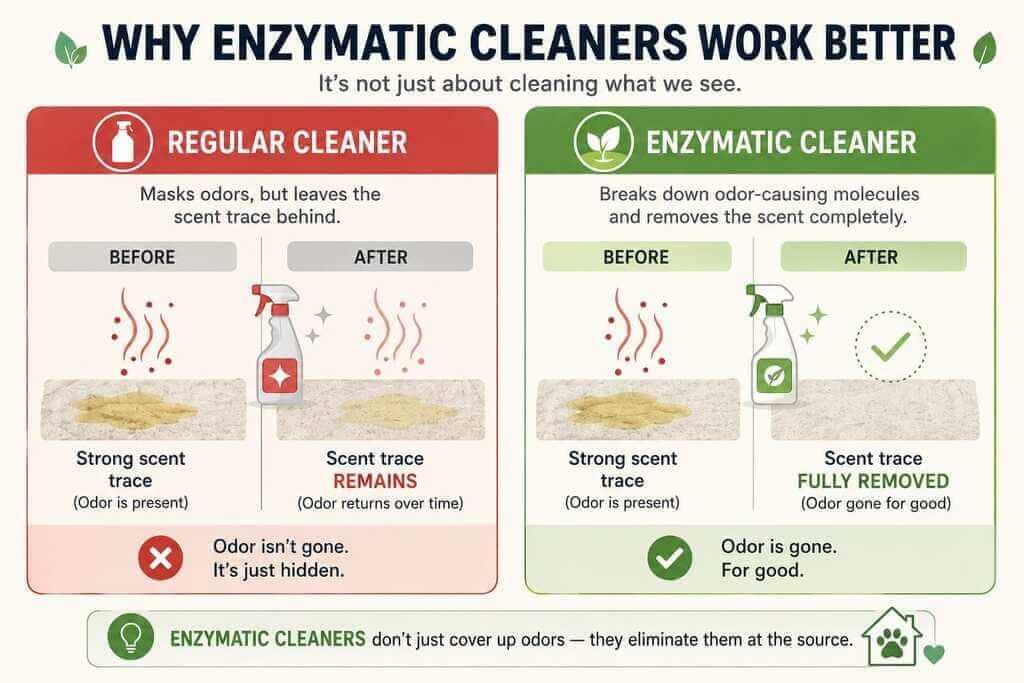
An enzymatic cleaner, specifically designed to break down the proteins in urine and other waste, actually eliminates that scent trail rather than just masking it. Skipping this step is one of the most common reasons potty training accidents keep recurring in the exact same spot.
How Long Does It Take to Potty Train a Beagle Puppy?
Most Beagle puppies show real progress within 4 to 8 weeks of consistent training, though full reliability often is not solid until closer to 6 months old. Some individual puppies take longer, and that is not necessarily a sign anything is wrong.
Consistency matters more than speed here. A puppy taken out on a strict, predictable schedule from day one usually progresses faster than one on an inconsistent routine, even if both puppies are equally food-motivated and equally smart.
How to Potty Train a Beagle Puppy Step by Step
A structured approach works far better than reacting to accidents after they happen.
Keep a Strict Schedule
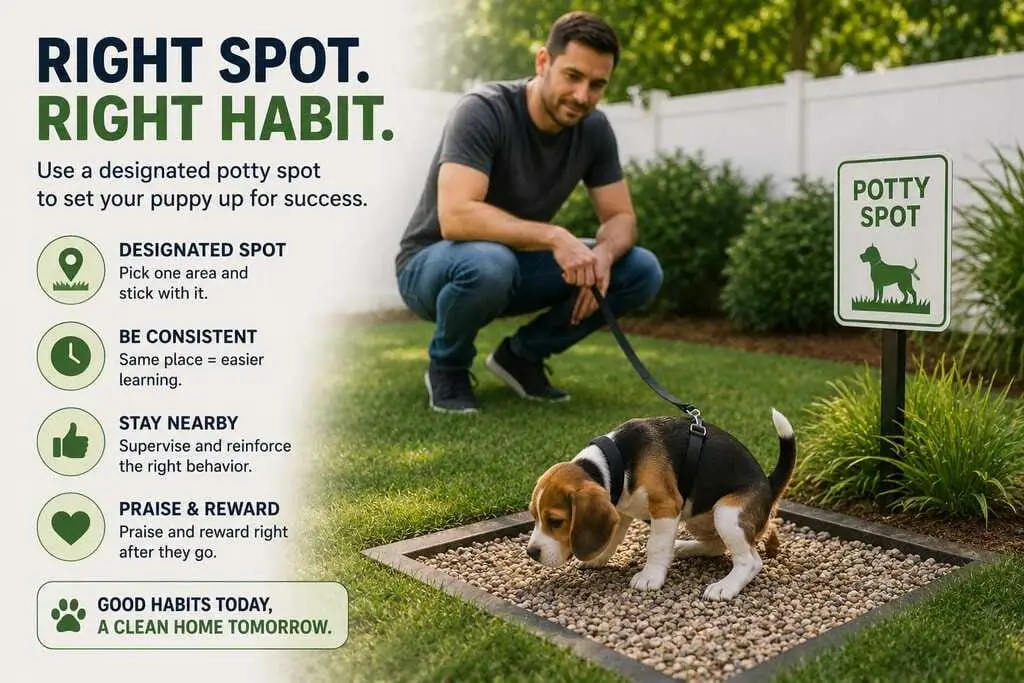
Take your puppy out every 1 to 2 hours, plus immediately after waking up, eating, drinking, or playing. Beagle puppies have limited bladder control, so a predictable schedule prevents most accidents before they start.
Use One Consistent Spot
Bringing your puppy to the same outdoor spot every time lets the residual scent do some of the teaching for you. That familiar smell helps signal to your puppy exactly what they are supposed to do there.
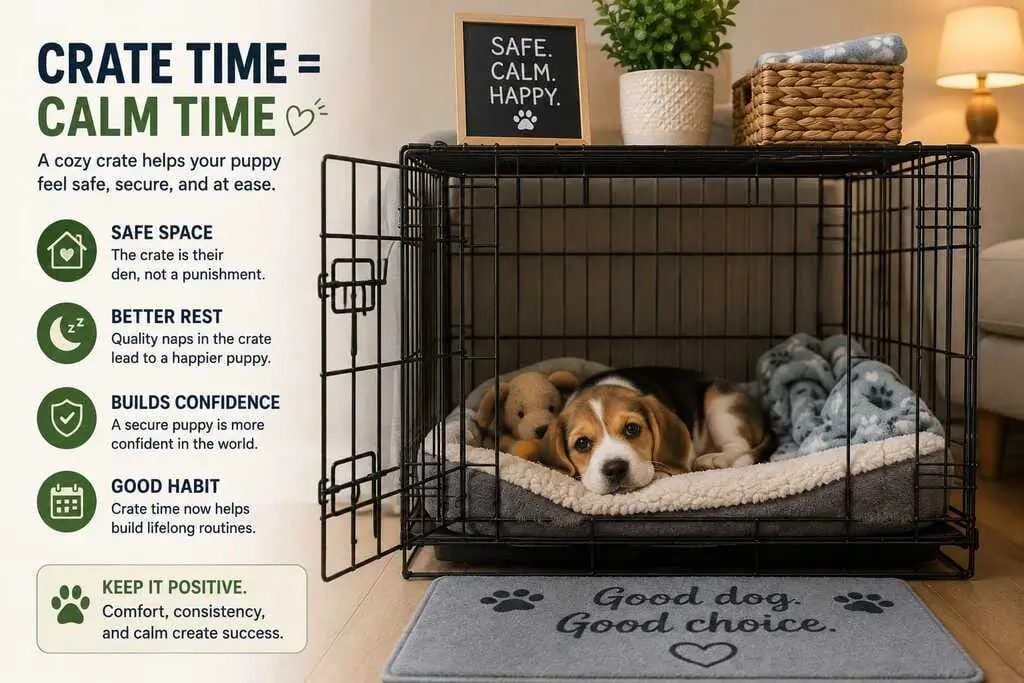
Crate Train Alongside Potty Training
Dogs generally avoid soiling the space where they sleep, which makes crate training a genuinely useful tool during this process. Our How to Crate Train a Puppy guide covers how to set this up properly from the start.
Keep Your Puppy on a Leash During Potty Breaks
A loose puppy in the yard often gets distracted exploring instead of focusing on the task at hand. A short leash during potty breaks keeps their attention on business first, play second.
Watch for Pre-Potty Signals
Circling, sniffing intensely, or suddenly wandering off from what they were doing are all classic signs your puppy needs to go. Catching these cues early and heading outside immediately prevents a lot of accidents.
Reward Immediately, Every Time
Praise and a small treat right after your puppy goes potty outside reinforces exactly what you want. Timing matters, since rewarding even a minute too late can confuse what behavior is actually being rewarded.
Use One Consistent Cue Word
Pick a single phrase, like “go potty,” and have everyone in the household use it the same way every time. Mixed cues from different family members slow down how quickly your puppy connects the word to the action.
Turning Their Nose Into an Advantage
The same scenting ability that makes accidents tricky to fully clean up can actually work in your favor once you understand it. Consistently using one outdoor spot lets your puppy’s nose reinforce good habits instead of bad ones, since the scent there becomes strongly associated with the correct behavior.
Pairing that consistent spot with high-value, food-based rewards taps directly into how food-motivated most Beagles naturally are, which tends to speed up learning once the routine is in place.
Common Potty Training Mistakes With Beagles
A few mistakes show up again and again and tend to slow down beagle puppy potty training specifically.
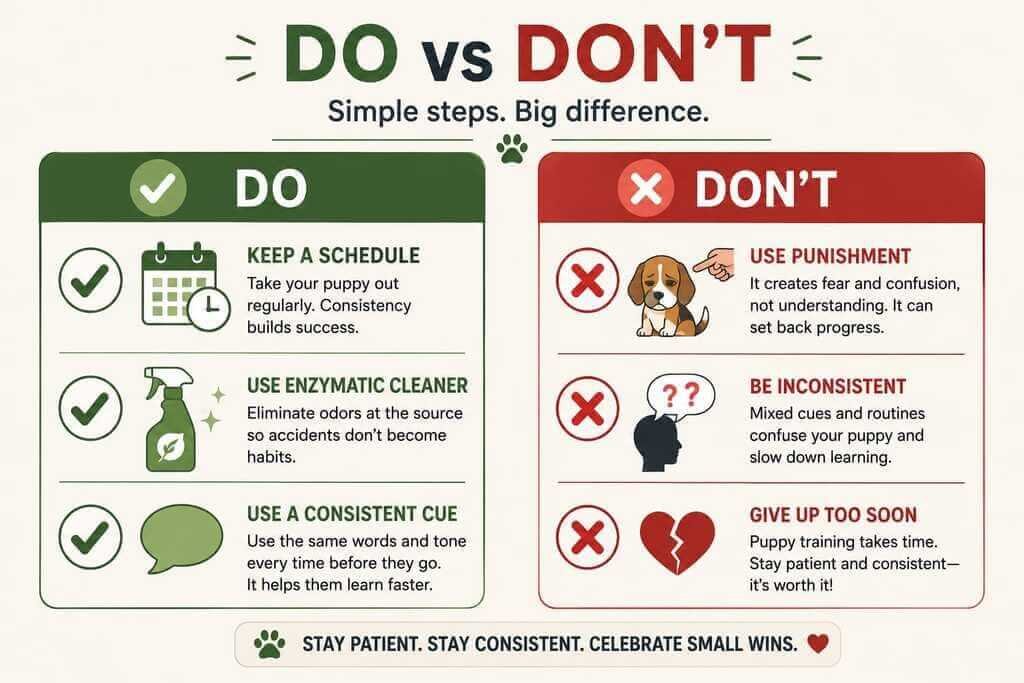
- Punishing after the fact: Beagles, like all puppies, do not connect delayed punishment with an accident that already happened
- Inconsistent cues across the household: Different words or routines from different family members create confusion
- Skipping enzymatic cleaner: Regular cleaning products often leave scent traces that pull your puppy back to the same spot
- Giving up too early: This breed genuinely takes longer than many others, and inconsistency at the first sign of slow progress often resets weeks of effort
When Potty Training Struggles Might Be a Health Issue
Most slow progress is simply typical for this breed and improves with consistency and time. Occasionally, ongoing accidents point to something beyond normal training difficulty.
- Sudden regression after being previously reliable
- Frequent urination in small amounts
- Straining, discomfort, or visible distress while going
- Accidents that persist well past 6 to 8 months despite consistent training
The American Kennel Club notes that Beagles’ strong scenting instincts and independent nature are simply part of the breed’s working heritage, not a training flaw on the owner’s part. If accidents seem tied to a sudden change, discomfort, or unusual frequency, the VCA Animal Hospitals recommends a veterinary check to rule out a urinary tract infection or other underlying medical cause before assuming it is purely behavioral.
Frequently Asked Questions
Why is my Beagle puppy still having accidents at 6 months old?
This can still be within a normal range for this breed, though full reliability is expected by this age with consistent training. If accidents continue well beyond 6 to 8 months, a vet check can rule out a medical cause.
Do Beagles take longer to potty train than other breeds?
Yes, generally. Their powerful sense of smell and independent nature make them more prone to distraction and scent-driven accidents than many other breeds.
What is the fastest way to potty train a Beagle puppy?
A strict, consistent schedule, one designated outdoor spot, crate training, and enzymatic cleaner for accidents together produce the fastest, most reliable results.
Why does my Beagle puppy keep peeing in the same spot indoors?
Residual scent markers from a previous accident, often invisible to regular cleaning products, keep drawing your puppy back to that exact location.
Should I punish my Beagle puppy for accidents?
No. Punishment after the fact does not help a puppy connect the correction to the accident and can create fear or anxiety instead of solving the problem.
How can I use my Beagle’s nose to help with potty training?
Bring them to the same outdoor spot every time. The consistent scent there reinforces the correct behavior rather than pulling them toward random locations.
Final Takeaway
Beagle puppy potty training takes patience, mostly because this breed’s nose and independent streak genuinely work against a quick process. A strict schedule, one consistent spot, crate training, and enzymatic cleaner for any accidents are your best tools for making real progress.
If your Beagle also tends to wander off following a scent, our Why Do Beagle Puppies Run Away? guide covers that closely related instinct. For a broader step-by-step approach to housetraining, our How to Potty Train a Puppy: Complete Guide is a helpful companion resource, along with our complete Beagle Puppy: Complete First-Year Guide.
Author Bio
David Jason is the founder of My Pet Care Tips and writes practical, research based guides to help pet owners raise healthier, happier dogs and cats. His content focuses on clear, beginner friendly advice backed by trusted veterinary resources and real world pet care best practices.