

This golden retriever puppy guide walks you through everything that happens during your dog’s first 12 months, from a blind, tiny newborn to a nearly full-grown, food-motivated goofball who has probably already tried to steal a sock or two.
Golden Retrievers pack a lot of change into their first year, and their friendly, eager nature makes almost every stage genuinely enjoyable, even the messy parts. Rapid growth, a dramatic coat transformation, a mouthy retriever instinct, and a surprisingly long road to full emotional maturity all overlap in ways that catch first-time owners off guard.
Quick answer: Expect the fastest physical growth between 3 and 6 months, roughly 85 to 95 percent of adult height by 9 to 10 months, and continued muscle and coat fill until 18 to 24 months. Golden Retrievers train easily but need consistent structure, and their famously friendly temperament stays intact well into adulthood.
Preparing for Your Golden Retriever Puppy
Before diving into the month-by-month breakdown, a little preparation goes a long way. This golden retriever puppy guide assumes you already have your puppy, but a few basics are worth mentioning up front.
Golden Retrievers are retrievers by nature, meaning mouthing, carrying objects, and general curiosity about anything within reach start early. Puppy-proof your home before bringing your Golden Retriever puppy inside, securing anything you would not want carried around or chewed on.
Stock up on essentials ahead of time: a properly sized crate, a large-breed puppy food, a collar and leash, a handful of durable chew toys, and grooming basics like a pin brush and undercoat rake. Having these ready before your puppy arrives means you can focus on settling in rather than scrambling for supplies.
Golden Retriever Puppy Guide: Month-by-Month Overview
Every puppy develops on their own timeline, but this general pattern shows up consistently across the breed.
| Age | What’s Happening |
|---|---|
| 0-8 weeks | With mother and littermates, eyes and ears open, early social skills develop |
| 2-3 months | Home with you, growth begins ramping up, training and socialization start |
| 3-6 months | Fastest physical growth, teething, first coat transition begins |
| 6-12 months | Sexual maturity, near-adult height, continued playful energy |
| 12 months and beyond | Close to full height, though muscle, coat, and emotional maturity continue |
Weeks 1-8: Before They Come Home
Newborn Golden Retriever puppies are born blind and deaf, completely dependent on their mother. Eyes and ears open within the first couple of weeks, and mobility develops quickly after that.

By 4 to 5 weeks, puppies start interacting more with littermates, which is where early social cues and communication begin forming. By 6 to 8 weeks, most Golden Retriever puppies are ready to leave for their new homes, walking confidently and eating solid food.
Months 2-3: Settling In and Starting Training
The first weeks home set the tone for the rest of the year. There is no reason to wait for full vaccination before starting basic training and socialization, and Golden Retrievers respond especially well to early, consistent structure given how food and people motivated they are.
This is also when growth starts ramping up noticeably. Our Golden Retriever Puppy Growth Chart breaks down what to expect for weight during this stage.
Socialization Starts Now, Not Later
The socialization window for this breed runs roughly 3 weeks to 3 or 4 months old, making it one of the most important stretches covered in this golden retriever puppy guide. Positive exposure to people, sounds, and safe environments during this window builds the confident, friendly temperament this breed is known for.
Months 3-6: Fastest Growth and Coat Changes
This stretch brings the most dramatic physical changes of the entire first year. Golden Retrievers typically grow most rapidly between 3 and 6 months old, sometimes gaining several pounds a week, alongside peak teething and a noticeably increased appetite.

Why Is My Puppy So Mouthy Right Now?
Teething combines with this breed’s natural retriever instinct to create a genuinely mouthy stage during these months. Our Golden Retriever Puppy Training Tips for First-Time Owners guide covers why “drop it” deserves special attention for this breed specifically.
The First Coat Transition Begins
Around 3 to 4 months, you will likely notice the first signs of feathering, the longer wispy fur on the ears, legs, and tail. This marks the start of the transition away from the soft, single-layer puppy coat. Our When Does a Golden Retriever Puppy Start Shedding? guide covers the full coat transition timeline in detail.
Feeding During Rapid Growth
A large-breed puppy formula with controlled calcium supports steady bone development instead of growth that outpaces the joints. Most puppies do well on 3 meals a day until around 6 months, then a switch to 2 meals a day afterward.
Months 6-12: Sexual Maturity and Growing Independence
By 6 months, your Golden Retriever puppy is approaching sexual maturity. Growth slows down considerably after this point, though it does not stop entirely.

Most Golden Retrievers reach roughly 85 to 95 percent of their adult height by 9 to 10 months old. What continues after that is less about height and more about filling out: chest depth, muscle, and that classic thick double coat all keep developing well past the one-year mark.
Exercise Needs During This Stage
Growth plates in large breeds like Golden Retrievers typically stay open until closer to 12 to 18 months, so structured exercise still needs limits during this stage even though your puppy looks nearly grown. Mental stimulation through training matters just as much as physical activity for this working breed, a theme covered throughout this golden retriever puppy guide.
Spaying and Neutering Timing
This is worth discussing with your vet specifically for Golden Retrievers. Research has linked neutering before one year of age to a higher risk of certain joint disorders in this breed, more so than in some other large breeds studied. This does not mean early neutering is wrong for every dog, but it is a conversation worth having directly with your vet rather than following a generic timeline.
Around 12 Months: Approaching Adulthood
By around 12 months, your Golden Retriever will largely resemble their adult self physically, though they are far from done maturing. The American Kennel Club notes that the foundation built during the first year, particularly the first several months, shapes behavior for the rest of the dog’s life, which is exactly why consistency matters so much early on.
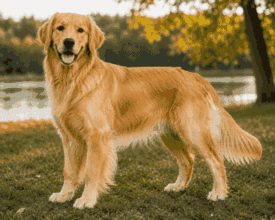
What sets this breed apart from many others covered in a typical first-year guide is just how long the playful, puppy-like energy tends to stick around. Full physical maturity often is not complete until closer to 2 years old, and many Golden Retrievers stay notably goofy and affectionate well beyond that.
Common First-Year Challenges
A few issues come up again and again during a Golden Retriever’s first year, and this golden retriever puppy guide would not be complete without covering them.
Mouthing and Object Stealing
This breed’s retriever instinct means carrying objects, including ones you would rather they not have, is simply part of who they are. Consistent “drop it” training and appropriate chew toys manage this far better than trying to eliminate the instinct entirely.
Uneven Growth and Awkward Phases
Golden Retrievers often go through lanky, uneven growth spurts that can look alarming if you are not expecting them. A puppy who looks too skinny, too tall, or oddly proportioned for a few weeks is usually just in the middle of a normal growth stage, not a sign something is wrong.
Coat Management During Transition
The shift from soft puppy fluff to a dense adult double coat produces significantly more loose fur than most new owners expect. Starting a brushing routine around 3 to 4 months, when feathering first appears, makes the heaviest shedding phases much more manageable.
Weight Management
Given how food-motivated Golden Retrievers are, portion control matters throughout the entire first year. Overfeeding, especially when combined with rapid growth, adds unnecessary stress to developing joints.
Golden Retriever Puppy Guide: Training Milestones by Month
Training goals shift as your puppy grows. This table gives a general sense of what is realistic to work on at each stage.
| Age | Training Focus |
|---|---|
| 2-3 months | Name recognition, sit, gentle handling, leash introduction |
| 3-4 months | Drop it, come, basic house manners, continued socialization |
| 4-6 months | Stay, leave it, loose-leash walking, impulse control |
| 6-9 months | Focus around distractions, settle cue, polishing basics |
| 9-12 months | Reinforcing all commands around real-world distractions |
Health and Vet Checkpoints
Regular veterinary care matters throughout the first year, not just for vaccinations. The VCA Animal Hospitals notes that large-breed dogs, including Golden Retrievers, typically reach adult size between 12 and 18 months and may need up to 24 months to fully mature, which is why ongoing wellness exams during this window matter for monitoring joint and skeletal development.
Keep an eye on body condition, energy levels, and any signs of pain or lameness, especially during the fastest growth months. Golden Retrievers are also prone to certain health conditions later in life, so establishing a good relationship with your vet early sets the stage for catching issues sooner rather than later.
How Golden Retriever Development Compares to Other Breeds
If you have raised a Labrador or German Shepherd puppy before, some parts of this golden retriever puppy guide may feel familiar, particularly the mouthiness and food motivation shared with Labradors as fellow retriever breeds. Where Golden Retrievers genuinely stand apart is in how long their puppy-like friendliness and playfulness persist, often well past the point where other working breeds have visibly settled into a calmer adult temperament.
Physically, Golden Retrievers follow a fairly typical large-breed timeline, reaching most of their height by 9 to 10 months and filling out until around 18 to 24 months. Emotionally, many owners describe their Golden as staying a puppy at heart for years, which is part of why this breed remains such a popular family choice despite the shedding and mouthing challenges covered throughout this guide.
Golden Retriever Puppy Guide: First-Year Checklist
Use this golden retriever puppy guide checklist as a quick reference throughout the year.
- Start training and socialization from day one
- Feed a large-breed puppy formula with controlled calcium
- Expect peak growth and teething between 3 and 6 months
- Begin brushing routines around 3 to 4 months as feathering appears
- Practice “drop it” consistently given this breed’s retriever instinct
- Follow age-appropriate exercise guidelines until growth plates close
- Discuss spay or neuter timing with your vet given breed-specific research
- Prepare for playful, puppy-like energy to last well beyond the first year
Frequently Asked Questions
How big will my Golden Retriever puppy get?
Most adult Golden Retrievers weigh between 55 and 80 pounds depending on sex, with males on the larger end, and stand 21.5 to 24 inches at the shoulder.
When do Golden Retriever puppies stop growing?
Most reach 85 to 95 percent of their adult height by 9 to 10 months, with continued muscle and coat fill until 18 to 24 months.
When does a Golden Retriever puppy start shedding?
Mild shedding often begins around 12 to 14 weeks, with the bigger coat transition to an adult double coat happening between 4 and 6 months.
Are Golden Retriever puppies easy to train?
Generally yes, thanks to their intelligence and eagerness to please, though they still need consistent, structured training rather than assuming good behavior develops on its own.
Why is my Golden Retriever puppy so mouthy?
This is a natural retriever instinct, not misbehavior. Consistent “drop it” training and appropriate chew toys manage it far better than trying to eliminate it.
Do Golden Retrievers make good family pets?
Yes, they are widely considered one of the best family breeds. Our Best Dog Breeds for Families guide covers how Golden Retrievers compare to other family-friendly options.
Final Takeaway
Raising a Golden Retriever puppy through their first year means navigating rapid growth, a dramatic coat transition, and a genuinely mouthy retriever instinct, all wrapped in one of the friendliest, most food-motivated breeds around. This golden retriever puppy guide is meant as a starting point, and consistency in training, feeding, and grooming throughout the year makes the biggest difference in how your dog turns out.
Author Bio
David Jason is the founder of My Pet Care Tips and writes practical, research based guides to help pet owners raise healthier, happier dogs and cats. His content focuses on clear, beginner friendly advice backed by trusted veterinary resources and real world pet care best practices.