
You have probably heard it before. Goldendoodles are hypoallergenic. They do not shed. Perfect for allergy sufferers. The goldendoodle shedding hypoallergenic claim gets repeated constantly, and it is more complicated than most breeders let on.
The truth sits somewhere between “totally hypoallergenic” and “sheds just as much as any other dog.” Let’s break down what actually determines shedding in this breed, and why the marketing often oversimplifies things.
Quick answer: No dog, including the Goldendoodle, is truly 100 percent hypoallergenic. Shedding and allergen levels depend heavily on genetics, specifically whether a puppy inherits the “furnishing gene” from the Poodle side. Some Goldendoodles shed very little. Others shed nearly as much as a purebred Golden Retriever, even within the same litter.
Do Goldendoodles Shed? The Real Answer
Yes, most Goldendoodles shed at least a little. The amount varies wildly depending on genetics. This is the honest starting point for any goldendoodle shedding hypoallergenic conversation.
A Golden Retriever parent has a heavy-shedding double coat. A Poodle parent has a curly, low-shedding single coat. Mix the two together, and you get a genetic lottery rather than a guaranteed outcome.
Is “Hypoallergenic” a Myth for Goldendoodles?
Mostly, yes. No dog breed produces zero allergens. Veterinary sources agree on this point consistently. The term “hypoallergenic” simply means lower allergen exposure, not none at all.
Dog allergies come from proteins in dander, saliva, and urine. Fur itself is not usually the main trigger. A low-shedding dog spreads less dander around your home, which helps some allergy sufferers. It does not eliminate the risk entirely.
The Furnishing Gene: What Actually Controls Shedding
Here is the piece most casual advice skips entirely. A specific gene, often called the furnishing gene, determines whether a Goldendoodle grows the curly, low-shed coat associated with Poodles.
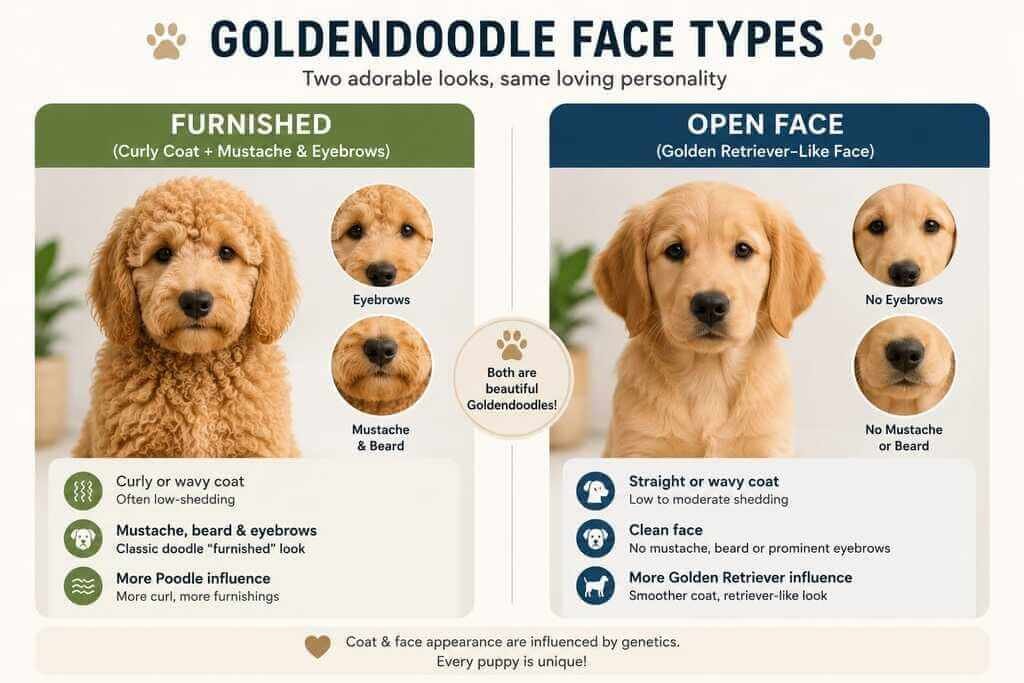
A puppy with two copies of this gene typically develops facial furnishings. Think a fuller mustache and eyebrows, plus a low-shedding, wavy or curly coat. A puppy with zero copies often has an “open face,” closer to a Golden Retriever’s smooth coat. This puppy usually sheds significantly more.
Reputable breeders now DNA test their breeding dogs for this gene. Without that testing, coat outcomes within a single litter can vary dramatically, even between siblings.
Goldendoodle Shedding by Generation: Debunking the F1B Myth
Many breeders market F1B Goldendoodles as the safest bet for low shedding. That claim needs a closer look.
An F1 Goldendoodle is a straight 50/50 cross. Shedding outcomes vary widely here, since coat genes split unpredictably. An F1B Goldendoodle is bred by crossing an F1 back with a Poodle, pushing genetics closer to 75 percent Poodle. This generally improves the odds of a low-shedding coat.
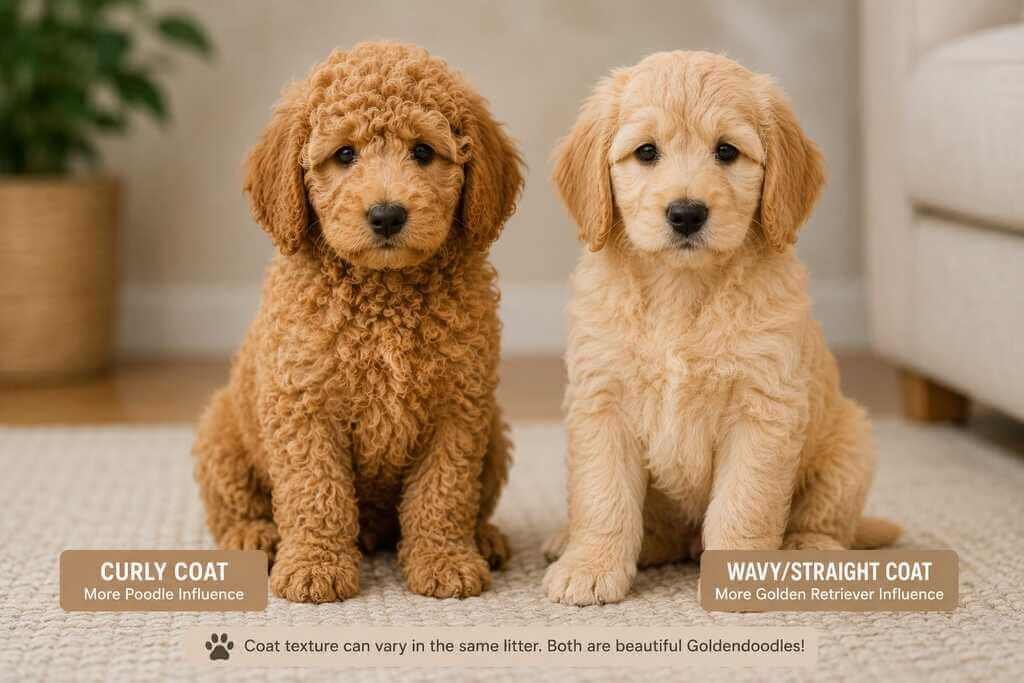
It does not guarantee it. If the F1 parent carries only one copy of the furnishing gene, roughly half of an F1B litter will still inherit just one copy or none at all. That means some F1B puppies shed noticeably more than their breeder’s marketing might suggest. Multigenerational Goldendoodles, bred from parents who both carry two furnishing genes, offer the most consistent low-shedding results.
Coat Type and Shedding: Curly vs Wavy vs Straight
Goldendoodle coats generally fall into three categories, and each one sheds differently.
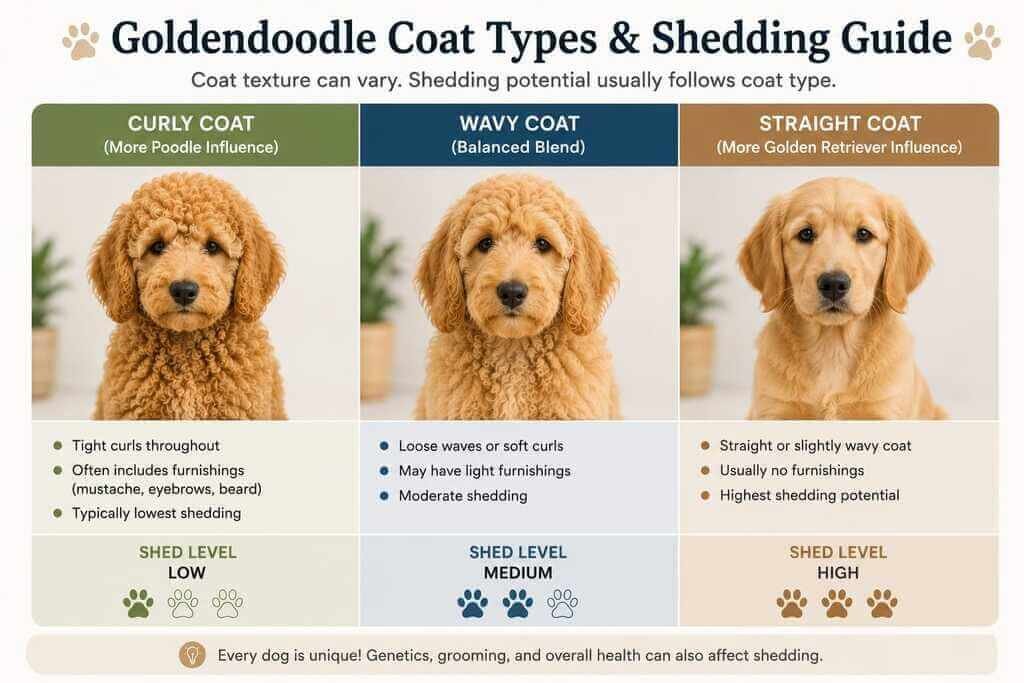
- Curly coats: Closest to the Poodle parent. Shed the least and are considered the most allergy-friendly.
- Wavy coats: The most common type. Moderate shedding, manageable with regular brushing.
- Straight coats: Closest to the Golden Retriever parent. Shed the most, often noticeably more than owners expect from a “doodle.”
Checking a puppy’s coat type early, particularly the texture behind the ears, offers a rough early hint at which category they will land in.
What Actually Causes Allergic Reactions to Dogs
This is worth repeating, since it gets lost in most hypoallergenic marketing. Allergens live primarily in dander, saliva, and urine, not just loose fur floating around your living room.
A low-shedding dog does spread less dander through the house, since less fur means less dander clinging to surfaces. But saliva and skin cells still exist regardless of coat type. This is exactly why some allergy sufferers still react to low-shedding dogs, including well-bred Goldendoodles.
How to Reduce Allergens If You Choose a Goldendoodle
A few practical habits genuinely help, even with a naturally low-shedding puppy.

- Brush regularly. Trapped loose hair and dander stay contained in the coat longer with consistent brushing rather than spreading through the house.
- Bathe on a routine schedule. Regular bathing reduces dander buildup on the skin and coat.
- Keep bedding and furniture clean. Washing dog beds and vacuuming upholstery frequently limits allergen accumulation.
- Create pet-free zones. Keeping bedrooms off-limits reduces overnight allergen exposure for sensitive individuals.
- Spend time with the specific puppy first. Every allergy sufferer reacts differently, so meeting the actual puppy before committing matters more than any generation label.
How to Find a Genuinely Low-Shedding Goldendoodle Puppy
If minimizing shedding matters to your household, a few steps improve your odds significantly.
- Ask breeders directly whether they DNA test for the furnishing gene
- Request to see both parents in person, or at least clear photos and coat descriptions
- Consider a multigenerational Goldendoodle over a straight F1 cross
- Meet the specific puppy, ideally more than once, if allergies are a real concern
The American Kennel Club does not officially recognize any dog breed as fully hypoallergenic, since allergen levels vary by individual dog regardless of breed or coat type. The American Veterinary Medical Association similarly notes that allergic reactions depend on multiple factors beyond shedding alone, including dander and saliva proteins that exist across all dogs.
Frequently Asked Questions
Do Goldendoodle puppies shed a lot?
It depends heavily on genetics. Some shed very little, closer to their Poodle parent, while others shed noticeably more, closer to their Golden Retriever parent.
Are Goldendoodles truly hypoallergenic?
No dog is 100 percent hypoallergenic. Goldendoodles with the furnishing gene tend to produce fewer allergens due to lower shedding, but allergic reactions can still happen.
What is the furnishing gene in Goldendoodles?
It is the specific gene responsible for the curly, low-shedding coat and facial furnishings inherited from the Poodle side. Puppies with two copies typically shed the least.
Are F1B Goldendoodles guaranteed to be low-shedding?
No. While F1B puppies generally have better odds than F1 puppies, genetics can still vary within a litter, especially if a parent carries only one copy of the furnishing gene.
What actually causes dog allergies?
Proteins found in dander, saliva, and urine, not just loose fur, are the primary triggers behind most dog allergies.
How can I find a low-shedding Goldendoodle puppy?
Ask breeders about furnishing gene DNA testing, consider a multigenerational puppy, and spend time with the specific puppy before bringing them home if allergies are a concern.
Final Takeaway
The goldendoodle shedding hypoallergenic label oversimplifies a genuinely complex genetic story. Shedding depends on the furnishing gene, coat type, and generation, not a blanket guarantee that comes with the name Goldendoodle. Doing your homework on genetics and meeting the specific puppy gives you a far more realistic picture than marketing alone.
If you are also curious about the coat changes your puppy will go through as they mature, our Goldendoodle Puppy Coat Transition guide covers that timeline in detail. For help figuring out whether a mini or standard size fits your household, our Mini vs Standard Goldendoodle guide is a useful companion. Since the Golden Retriever side shapes so much of this cross, our Golden Retriever Puppy: Complete First-Year Guide and Best Dog Breeds for Families guide are worth checking too.
Author Bio
David Jason is the founder of My Pet Care Tips and writes practical, research based guides to help pet owners raise healthier, happier dogs and cats. His content focuses on clear, beginner friendly advice backed by trusted veterinary resources and real world pet care best practices.