
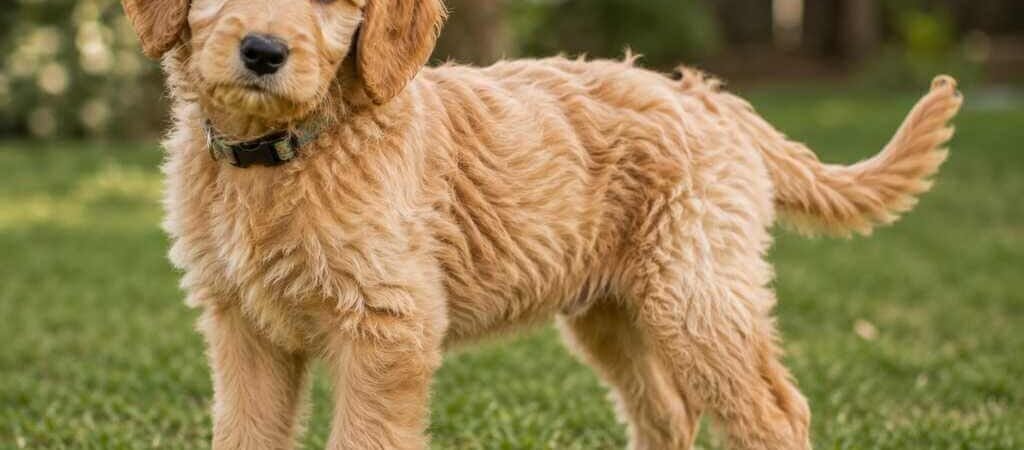
Your puppy’s soft baby fluff will not last forever. The goldendoodle puppy coat transition is a real milestone, and it catches a lot of owners off guard the first time it happens.
One day your puppy has that silky, easy-care puppy coat. A few weeks later, you find more hair in the brush and more tangles behind the ears. This guide breaks down exactly what to expect.
Quick answer: Most Goldendoodle puppies begin their coat transition between 4 and 8 months old, though some start earlier and others take until closer to a year. The puppy coat sheds gradually as the denser, often wavier or curlier adult coat grows in underneath. Regular brushing during this window prevents mats before they form.
When Does the Goldendoodle Puppy Coat Transition Happen?
Most breeders and owners report the goldendoodle puppy coat transition starting somewhere between 4 and 8 months old. Some puppies begin as early as 4 months. Others do not show real changes until closer to their first birthday.
There is no single fixed age for this. Genetics, coat type, and generation all play a role. A few dogs even continue shedding remnants of their puppy coat past 12 months.
Signs Your Puppy Is Starting the Coat Transition
The change is often gradual, not sudden. Watch for these early signals.
- More loose hair showing up in the brush during normal grooming
- Tangles or small mats forming around the ears, armpits, and tail
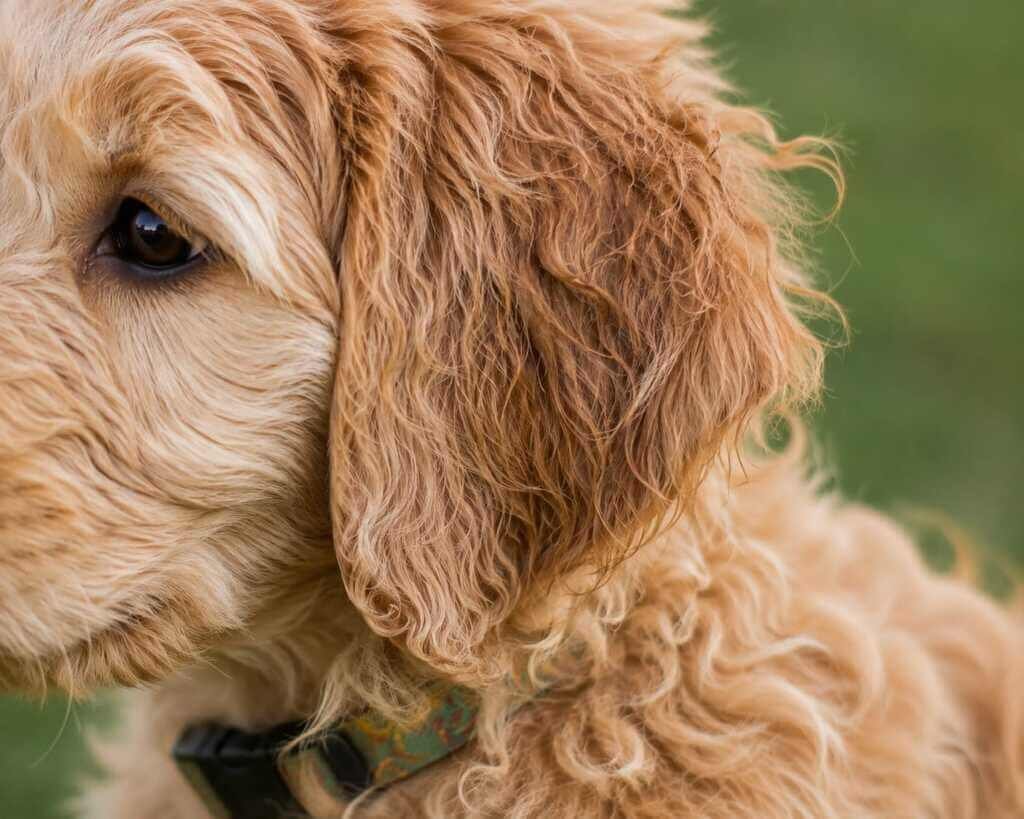
- A slight coarsening in texture where the coat used to feel silky and soft
- New waves or curls appearing, especially behind the ears first
Some owners barely notice the shift at all. It really does depend on your puppy’s specific coat type and how gradual the process ends up being.
How Generation Affects the Goldendoodle Puppy Coat Transition
Breeding generation shapes both the timing and intensity of the goldendoodle puppy coat transition. An F1 Goldendoodle is a straight first-generation cross between a Golden Retriever and a Poodle. These puppies often show a more noticeable coat change, since their genetics sit closer to the middle between the two parent breeds.
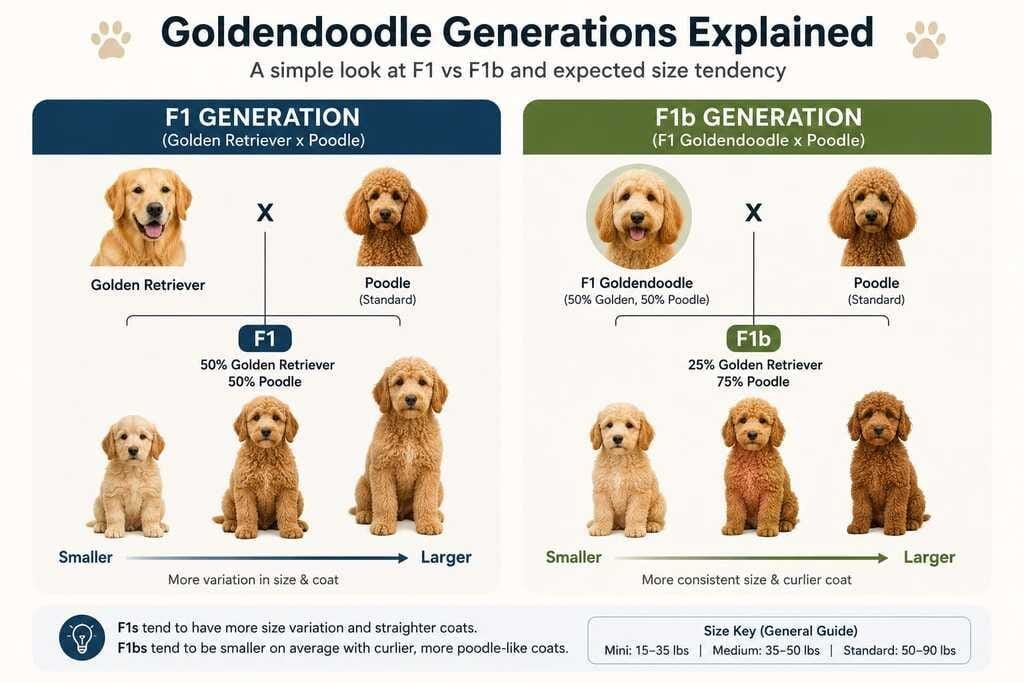
An F1B Goldendoodle carries roughly 75 percent Poodle genetics from a backcross. These puppies usually start out curlier already. They tend to experience a much less dramatic transition, since their adult coat type was closer to set from the start.
Will My Puppy’s Coat Color Change Too?
Often, yes. Color shifts commonly happen alongside the texture change. Red puppies frequently fade toward apricot or cream. Black puppies sometimes develop silver or gray tones as they mature.
Not every dog lightens, though. Some puppies actually deepen in color instead. The most dramatic shifts usually align with the same 6 to 18 month window as the broader coat transition.
Predicting Your Puppy’s Adult Coat Type Early
You do not have to wait until the full transition to get a sense of what is coming. Check the fur directly behind your puppy’s ears between 8 and 12 weeks old. This spot tends to develop adult texture earlier than the rest of the body.
Tighter waves in that area often signal a curlier adult coat ahead. Straighter hair on the face can suggest a wavier or straighter final texture. That said, some puppies genuinely surprise their owners, since coat genetics do not always play out exactly as expected.
How to Manage Matting During the Goldendoodle Puppy Coat Transition
Matting is the biggest practical challenge during this stage. Loose puppy fur tangles easily with the new growth coming in underneath, especially in high-friction areas.
Brush More Often Than You Think You Need To
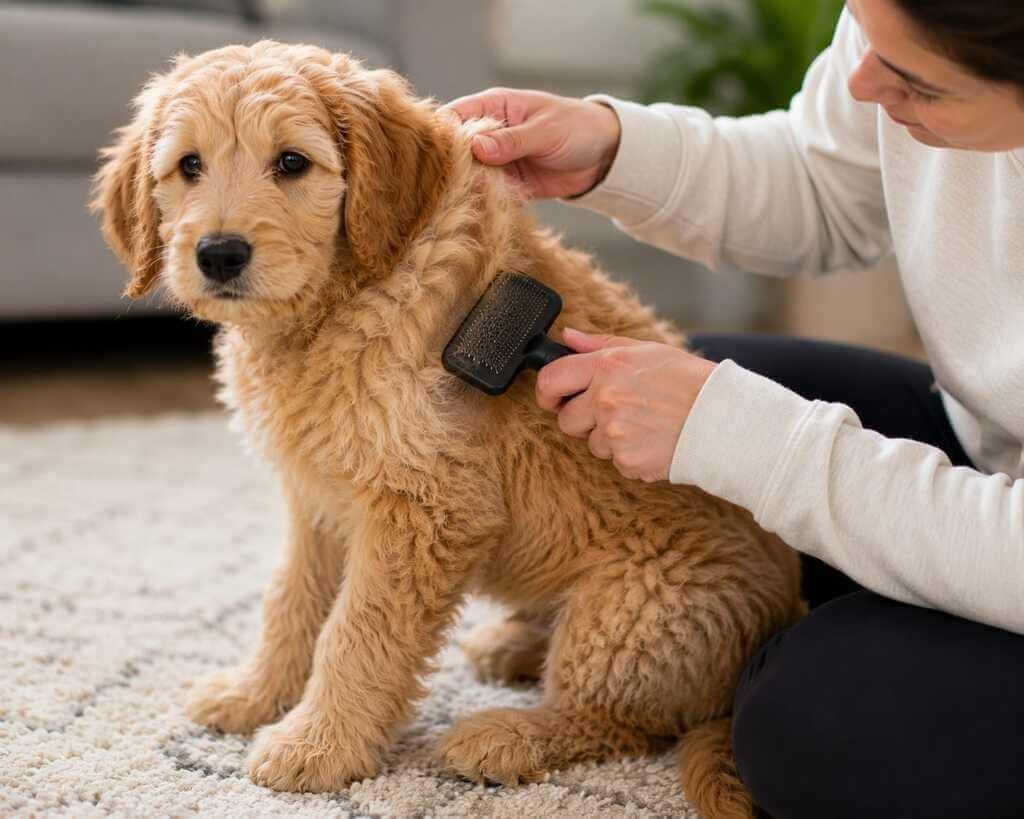
Daily brushing works best once the transition is underway. Focus extra attention on the ears, armpits, tail, and behind the legs, since these spots mat fastest.
Use the Right Tools for the Job
A slicker brush handles surface tangles well. A metal comb helps you check for hidden mats closer to the skin, which brushes alone can miss.
Be Gentle Around Sensitive Areas
Skin under a mat can become irritated or even painful if pulled too hard. Work through tangles slowly, and never yank at a stubborn mat directly against the skin.
Grooming Tools and Brushing Schedule
A consistent routine makes the goldendoodle puppy coat transition far more manageable.
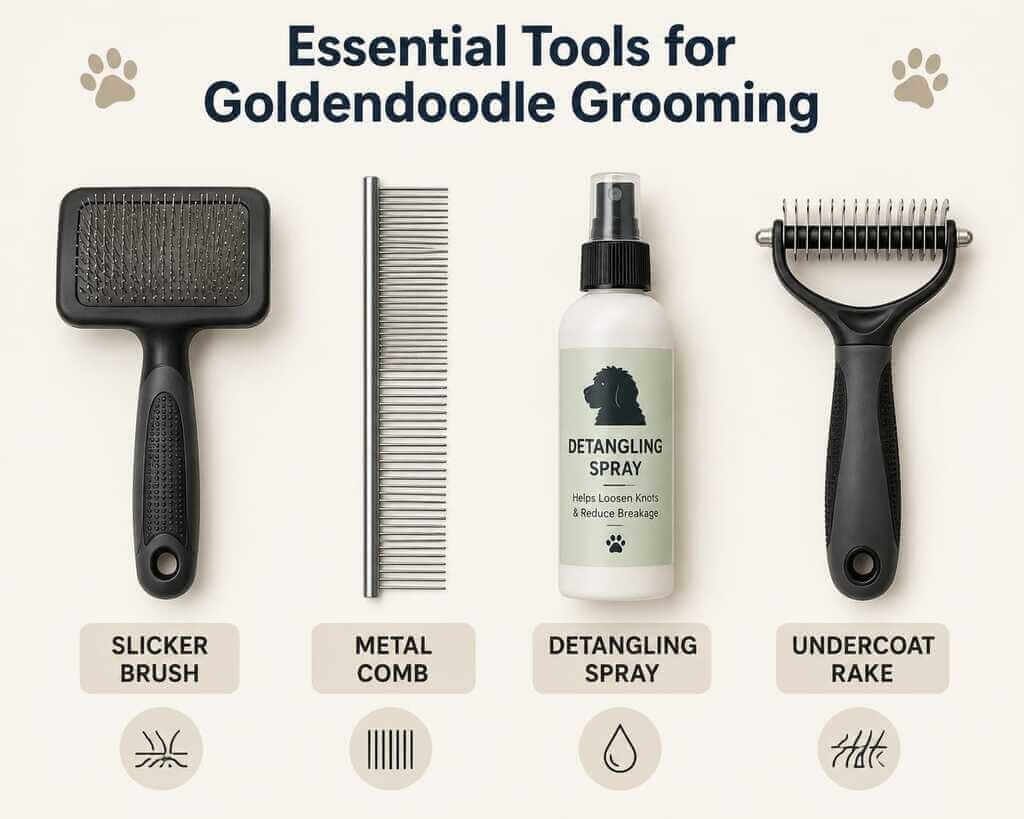
- Slicker brush: Daily use for general detangling and loose fur removal
- Metal comb: Weekly deep checks to catch mats brushes might miss
- Detangling spray: Helpful for working through tough spots without pulling
- Undercoat rake: Useful once the denser adult coat starts filling in
When to Start Professional Grooming
Many groomers recommend waiting until around the 6-month mark before the first real haircut. This gives most of the puppy coat time to shed out naturally first.
Bringing your puppy in too early sometimes means the groomer is working against a coat that has not finished transitioning yet. A professional groomer experienced with doodle coats can also spot early mats you might miss at home.
Is There a Health Concern Behind Excessive Shedding?
Most shedding during this stage is completely normal, even when it feels like a lot. A few signs point to something beyond a typical coat transition.
- Bald patches rather than general thinning
- Red, irritated, or itchy skin underneath the coat
- Mats so severe they restrict movement or cause visible discomfort
- Shedding that seems disproportionate for your puppy’s age and coat type
The American Kennel Club notes that coat texture in mixed breeds like Goldendoodles can vary significantly based on genetics from both parent breeds. If shedding is paired with skin irritation or unusual bald spots, the VCA Animal Hospitals recommends a veterinary check to rule out an underlying skin condition or allergy.
Do All Coat Types Transition the Same Way?
Not quite. Goldendoodles generally fall into three coat categories: straight, wavy, and curly. Each one handles the transition a little differently.
Straight-coated puppies tend to shed the most, since their coat is closest to a single-layer Golden Retriever coat. Wavy-coated puppies, the most common type, usually go through a moderate transition with manageable shedding and matting. Curly-coated puppies, closer to the Poodle side genetically, often shed the least but need the most consistent brushing to prevent tight mats from forming.
Knowing which category your puppy is heading toward helps you set realistic expectations for how much loose fur and how much brushing you are actually signing up for.
Common Mistakes During the Goldendoodle Puppy Coat Transition
A few habits tend to make this stage harder than it needs to be.
- Waiting too long between brushings. Skipping even a few days can let small tangles turn into full mats.
- Only brushing the surface. Mats often form closer to the skin, so a quick surface brush can miss real problems.
- Bathing too frequently without drying properly. Trapped moisture near the skin can worsen matting and lead to irritation.
- Assuming a groomer visit fixes everything. Regular home brushing between appointments still matters, even with professional grooming in the mix.
Frequently Asked Questions
At what age does a Goldendoodle puppy’s coat change?
Most puppies start the coat transition between 4 and 8 months old, though some begin earlier and others take until closer to a year.
Do all Goldendoodle puppies go through a dramatic coat change?
No. F1B Goldendoodles, which carry more Poodle genetics, often show a much subtler transition than F1 Goldendoodles.
How can I tell what my puppy’s adult coat will look like?
Check the fur behind your puppy’s ears between 8 and 12 weeks old. This area often develops adult texture earlier than the rest of the coat.
Will my Goldendoodle’s coat color change during the transition?
Often, yes. Many puppies lighten, such as red fading to apricot, though some dogs deepen in color instead.
How often should I brush my puppy during the coat transition?
Daily brushing works best once the transition begins, with extra attention to the ears, armpits, and tail where mats form fastest.
When should I take my Goldendoodle puppy for their first haircut?
Most groomers recommend waiting until around 6 months old, once most of the puppy coat has shed naturally.
Final Takeaway
The goldendoodle puppy coat transition is a normal, expected part of growing up for this breed. It usually starts between 4 and 8 months, though the exact timing and intensity depend heavily on generation and individual genetics. Daily brushing and a little patience will get you through it without major matting problems.
If you are also figuring out whether your puppy will end up mini or standard sized, our Mini vs Standard Goldendoodle guide covers that alongside this coat information. Since the Golden Retriever side of this cross shapes so much of the coat and temperament, our Golden Retriever Puppy: Complete First-Year Guide is a useful companion resource. For families weighing this cross against other breeds, our Best Dog Breeds for Families guide is worth a look too.
Author Bio
David Jason is the founder of My Pet Care Tips and writes practical, research based guides to help pet owners raise healthier, happier dogs and cats. His content focuses on clear, beginner friendly advice backed by trusted veterinary resources and real world pet care best practices.