
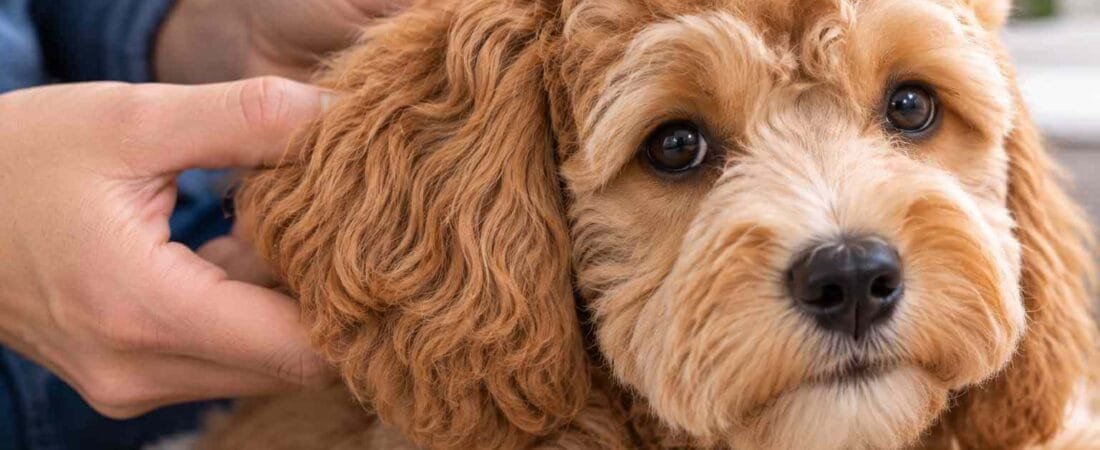
Those adorable floppy ears are one of the very first things people notice about a Cockapoo. They are also, unfortunately, a genuine liability. Cockapoo puppy ear infections are common enough that most owners deal with at least one at some point.
The good news is that understanding why makes prevention far more manageable. This is not a random bad luck situation. It comes down to basic anatomy, and once you understand that anatomy, the prevention steps that actually work start to make a lot more sense.
Quick answer: Yes, Cockapoo puppies are prone to ear infections. Their floppy, hair-covered ears trap moisture and reduce airflow, creating an ideal environment for bacteria and yeast to grow. Both parent breeds, the Cocker Spaniel and the Poodle, share this same vulnerability. Regular ear cleaning, thorough drying after baths or swimming, and routine checks help reduce the risk significantly.
Are Cockapoo Puppies Prone to Ear Infections?
Yes, genuinely. This is not exaggerated breeder talk or internet myth. Cockapoos inherit long, floppy, hair-covered ears from both parent breeds, and that combination consistently ranks among the biggest risk factors for canine ear infections.
Cocker Spaniels are frequently listed among breeds prone to ear infections. Poodles carry a similar risk due to hair growth inside the ear canal itself. A Cockapoo gets both traits at once, which is exactly why cockapoo puppy ear infections come up so often in owner forums and vet visits alike, sometimes surprising new owners who did not expect this particular challenge.
Why Cockapoo Ears Are More Vulnerable
The ear canal in dogs already channels downward and then horizontally, making natural drainage difficult even in upright-eared breeds. Add a floppy ear flap on top of that structure, and airflow drops even further.
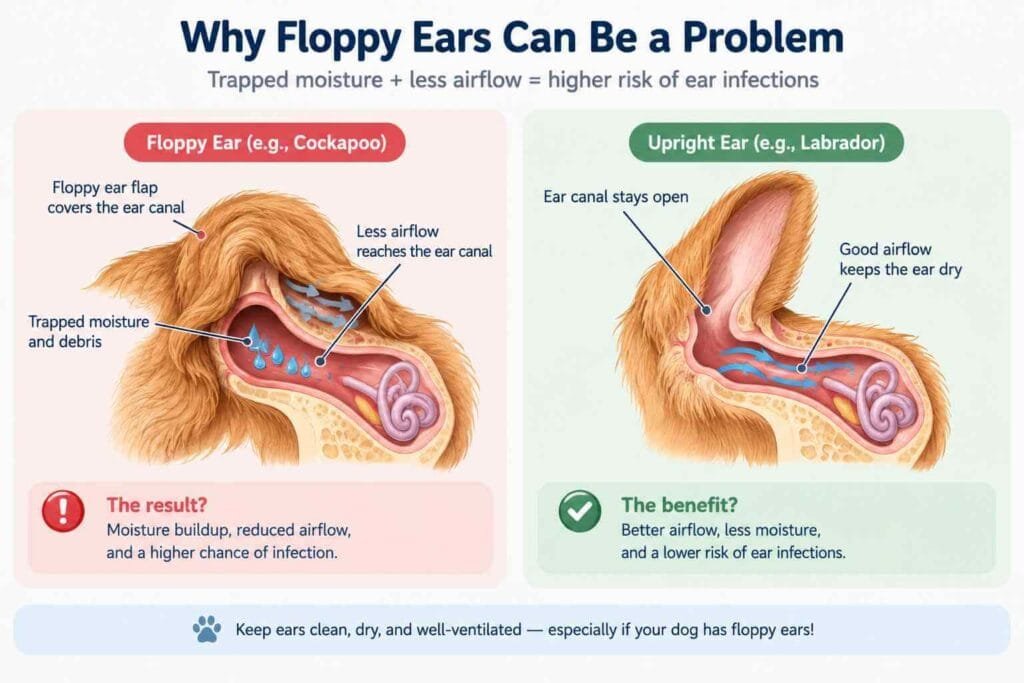
Warm, moist, low-oxygen environments are exactly what bacteria and yeast need to multiply. A Cockapoo’s ear essentially works like a small, dark blanket sitting over the ear canal, trapping heat and moisture that would otherwise evaporate.
Signs of Cockapoo Puppy Ear Infections
Catching an infection early makes treatment easier and faster. Watch for these signs.
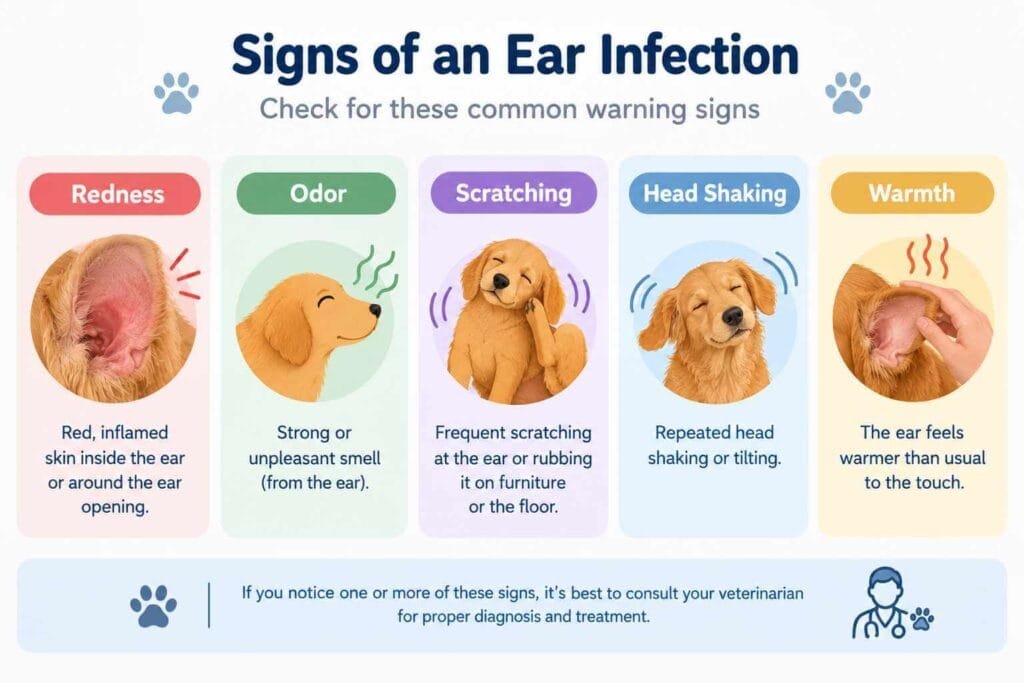
- A noticeably unpleasant odor coming from the ear
- Redness or visible inflammation inside the ear flap
- Frequent scratching or pawing at the ears
- Head shaking or tilting
- Rubbing the ear against furniture, carpet, or your leg
- Ears that feel warmer than usual to the touch
- Visible discharge or excessive wax buildup
Any single sign deserves attention right away. Several signs together strongly suggest an active infection rather than simple everyday ear wax buildup, and waiting to see if things improve on their own rarely pays off with this particular issue.
Common Causes of Ear Infections in Cockapoo Puppies
A few specific triggers show up repeatedly in cockapoo puppy ear infections cases.
- Bacteria and yeast overgrowth, the most common underlying cause given the warm, moist environment floppy ears create
- Ear mites, especially common in young puppies
- Trapped moisture from baths, swimming, or humid weather
- Excess hair growth inside the ear canal, reducing airflow further
- Allergies, which can trigger inflammation that leads to secondary infection
- Wax buildup left unaddressed for too long between cleanings
How to Prevent Cockapoo Puppy Ear Infections
Prevention genuinely works here, and a consistent routine makes a real difference.
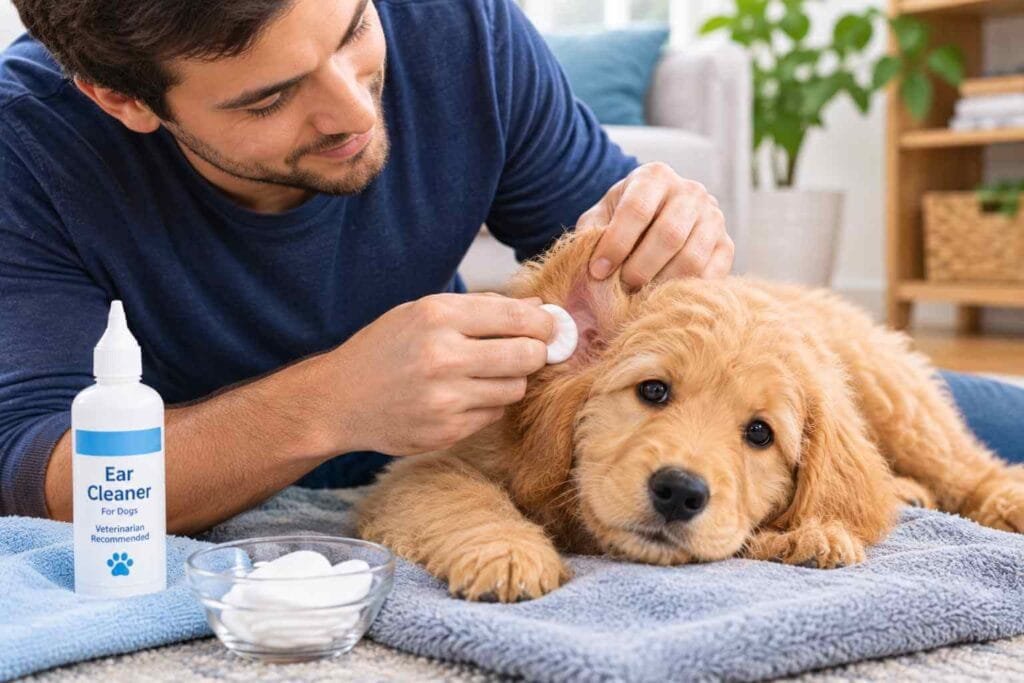
Clean Ears Regularly With a Vet-Approved Solution
Use a cleaner specifically designed for dog ears, applied according to the product instructions or your vet’s guidance. Avoid flooding the ear canal excessively, since over-cleaning can sometimes cause irritation of its own rather than solving the underlying moisture problem.
Dry Ears Thoroughly After Baths or Swimming
Trapped water is one of the most preventable triggers behind cockapoo puppy ear infections. Gently towel-dry the ear flap and surrounding area every time your puppy gets wet, whether from a bath, the rain, or a swim.
Manage Hair Growth Inside the Ear
Some groomers and owners choose to pluck or trim hair growing inside the ear canal to improve airflow. This practice is debated within the Cockapoo community, so ask your vet or an experienced groomer what makes sense for your specific puppy’s ear structure.
Schedule Routine Ear Checks
Build a quick ear check into your regular grooming routine, even when nothing seems wrong. Catching early redness or odor before it becomes a full infection saves your puppy discomfort and saves you a more complicated, more expensive vet visit later on.
What Not to Do If You Suspect an Ear Infection
A few common instincts can actually make things worse.
- Do not rely on cleaning alone to treat an active infection. Bacterial and yeast infections typically need appropriate veterinary treatment, not just cleaning.
- Do not use unproven home remedies. Certain substances found in casual online advice are not vet-tested for safety in the ear canal and can cause additional irritation.
- Do not ignore a mild-seeming issue and hope it resolves. Untreated ear infections can worsen and become significantly more painful and harder to treat.
- Do not skip the vet visit because symptoms seem minor. A quick exam early on is far less involved than treating an advanced infection later.
When to See a Vet
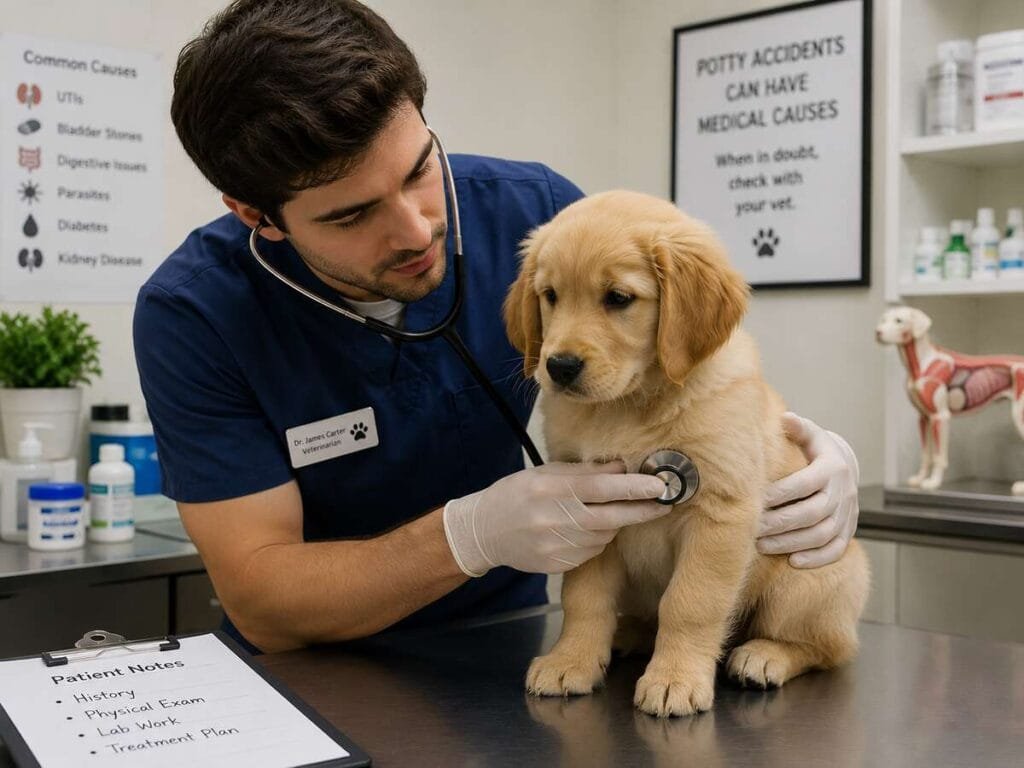
Most ear issues in Cockapoo puppies respond well to prompt veterinary care. Do not wait if you notice any of these signs.
- A strong or worsening odor from the ear
- Visible redness, swelling, or discharge
- Your puppy seems to be in pain when the ear is touched
- Head shaking or scratching that continues for more than a day or two
The American Kennel Club notes that breeds with pendant ears and heavy ear hair, tracing back to both the Cocker Spaniel and Poodle lines, face a meaningfully higher risk of ear infections without consistent preventive care. The VCA Animal Hospitals recommends a proper veterinary examination, sometimes including ear cytology, to identify the specific cause before starting treatment, since bacterial, yeast, and mite infections all require different approaches.
Why Do Some Cockapoos Get Recurring Ear Infections?
If your puppy seems to get one infection after another despite consistent cleaning, an underlying trigger is often the real issue. Allergies are one of the most common culprits behind repeated cockapoo puppy ear infections, since ongoing inflammation from an allergic reaction creates the same warm, irritated environment that lets bacteria and yeast take hold again and again.
Addressing the root cause, whether that means an allergy investigation, adjusting grooming habits, or reviewing your cleaning routine with your vet, matters more than repeatedly treating each individual flare-up as it comes up. A vet can help identify whether recurring infections point to something beyond simple ear anatomy.
Frequently Asked Questions
Are Cockapoos really more prone to ear infections than other breeds?
Yes. Both parent breeds, the Cocker Spaniel and the Poodle, carry ear infection risk factors, and Cockapoos inherit this vulnerability from both sides.
How often should I clean my Cockapoo puppy’s ears?
This depends on your individual puppy and their activity level, but a regular check as part of grooming, combined with cleaning after swimming or baths, is a reasonable baseline. Ask your vet for a specific recommendation.
What does a Cockapoo ear infection smell like?
Owners typically describe it as a distinctly unpleasant, sometimes yeasty or musty odor, different from normal ear wax smell.
Can I treat my Cockapoo’s ear infection at home?
Cleaning alone usually is not enough for an active infection. Bacterial, yeast, and mite infections typically need veterinary diagnosis and appropriate treatment.
Does trimming ear hair help prevent infections?
It may help improve airflow for some dogs, though this practice is debated. Ask your vet or groomer what makes sense for your Cockapoo’s specific ear structure.
What causes most Cockapoo puppy ear infections?
Bacteria and yeast overgrowth, often triggered by trapped moisture, are the most common cause, though mites, allergies, and wax buildup can also contribute.
Final Takeaway
Cockapoo puppy ear infections are common, but they are also genuinely preventable with a consistent routine. Regular cleaning, thorough drying after water exposure, and prompt vet visits when something seems off will keep those adorable floppy ears far more comfortable.
If grooming your puppy’s coat and ears together is on your mind, our Cockapoo Puppy Grooming guide covers haircuts and coat care alongside ear maintenance. If your puppy also struggles with being left alone, our Cockapoo Puppy Separation Anxiety guide covers that closely related first-year challenge. For families weighing this breed against others, our Best Dog Breeds for Families guide is worth a look, along with our complete Cockapoo Puppy: Complete First-Year Guide.
Author Bio
David Jason is the founder of My Pet Care Tips and writes practical, research based guides to help pet owners raise healthier, happier dogs and cats. His content focuses on clear, beginner friendly advice backed by trusted veterinary resources and real world pet care best practices.