

Your Cockapoo follows you to the bathroom. Sits outside the shower door. Cries the second you close a room between you. If this sounds familiar, cockapoo puppy separation anxiety is probably the most common challenge new owners of this breed run into.
There is a real reason behind the clinginess, and it is not something you accidentally caused. Understanding where it comes from makes prevention and management far more effective.
Quick answer: Cockapoos are bred purely for companionship, which makes them genuinely prone to separation anxiety. Signs include destructive behavior, barking or crying when left alone, house accidents despite being housetrained, and constant shadowing of their owner. Gradual alone-time training, proper crate introduction, and adequate mental stimulation help prevent and manage it.
Why Are Cockapoos So Prone to Separation Anxiety?
Both parent breeds behind this cross were developed as companion dogs, not working breeds bred for independence. Cocker Spaniels and Poodles were both selected over generations for closeness with people, not for handling alone time well.
That genetic background carries straight through into Cockapoos. This breed genuinely craves human company more than many others, which is exactly why so many owners describe them as a “velcro dog.” Higher intelligence plays a role too. Smarter dogs often need more social interaction and mental engagement, and a Cockapoo left without either tends to struggle.
Signs of Cockapoo Puppy Separation Anxiety
Recognizing the pattern early makes a real difference. Watch for these signals when you leave, or even just step into another room.
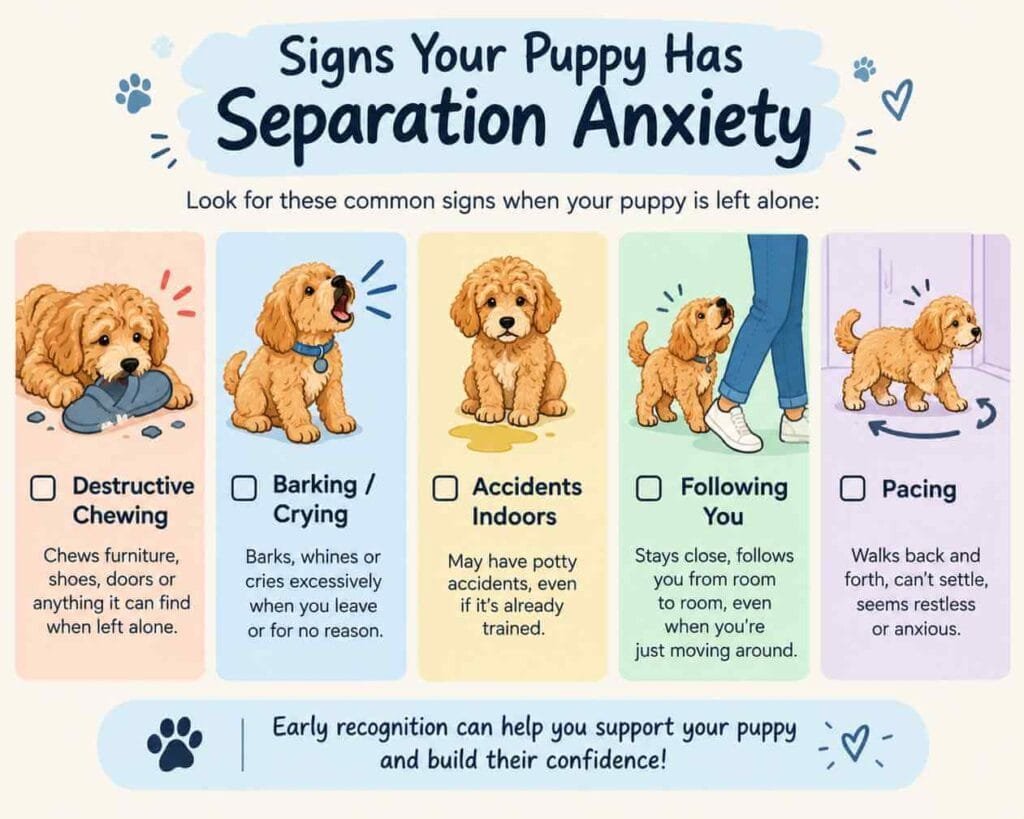
- Destructive chewing or digging, especially near doors and windows
- Barking, whining, or howling that starts shortly after you leave
- House accidents despite being reliably housetrained otherwise
- Refusing to settle in a crate or bed when left alone
- Following you constantly, even from room to room within the house
- Pacing, drooling, or panting that seems disconnected from heat or exercise
A single occasional whine when you leave is not necessarily separation anxiety. A consistent pattern across several of these signs points to something worth addressing directly.
Is It Separation Anxiety or Just Boredom?
These two overlap constantly, and telling them apart matters for how you respond. Boredom-driven behavior usually improves significantly once a puppy gets more physical exercise and mental stimulation. True separation anxiety persists even with plenty of both, since the root cause is genuine distress about being alone, not simply a lack of things to do.
Many Cockapoo puppies show a mix of both. Addressing boredom first, through exercise, training, and enrichment, is a reasonable starting point before assuming the deeper anxiety pattern is at play.
Preventing Cockapoo Puppy Separation Anxiety From the Start
Prevention works far better than fixing an established pattern later. A few habits from the very beginning make a genuine difference.
Practice Alone Time Early, Even in Small Doses
Leave your puppy alone for just a few seconds at first, gradually building up to minutes and then hours. Rushing this process, or never practicing it at all until you suddenly need to leave for a full workday, sets your puppy up to struggle.
Keep Departures and Arrivals Low-Key
Big, excited greetings and dramatic goodbyes teach your puppy that your coming and going is a major event worth getting worked up about. Calm, quiet transitions in both directions help normalize the routine instead.
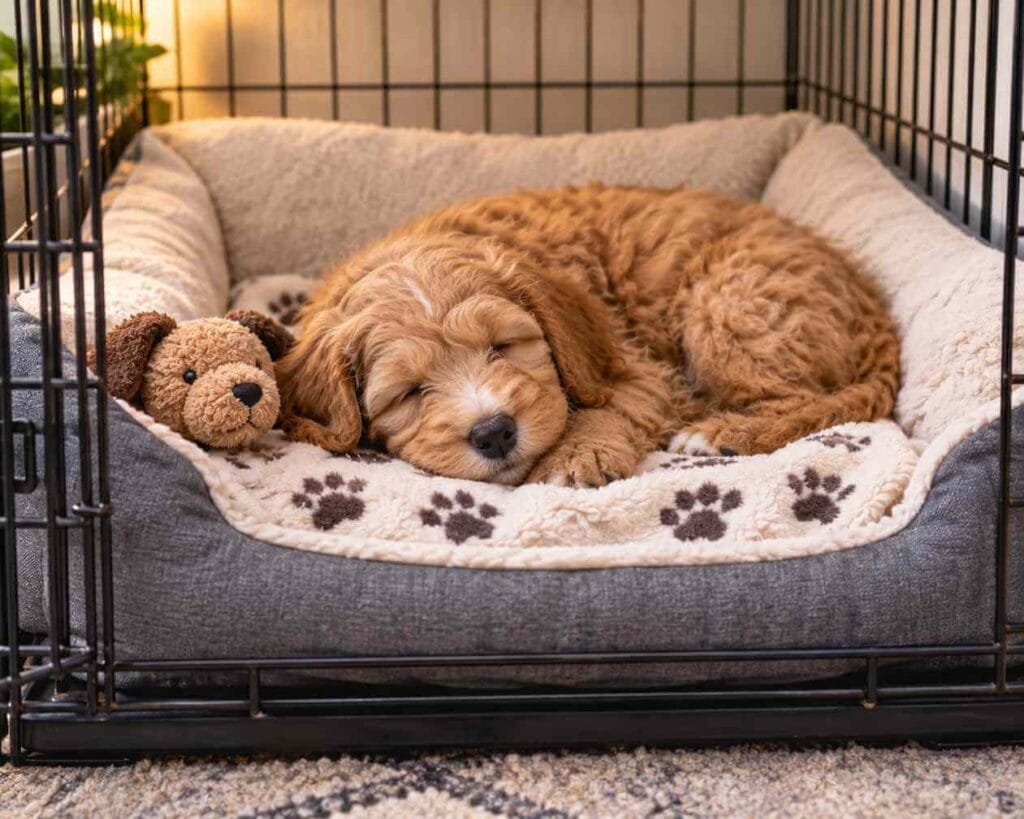
Introduce the Crate as a Safe Space, Not a Punishment
A properly introduced crate gives your puppy a secure spot rather than an open room that feels too exposed when you are gone. Never use the crate as punishment, since that association undermines its value as a calming tool entirely.
How to Help a Cockapoo Puppy With Existing Separation Anxiety
If the pattern is already established, a structured approach works better than hoping it resolves on its own.
Use Gradual Desensitization
Systematic training, slowly increasing alone time over weeks or months, is the most evidence-backed approach for genuine separation anxiety. Rushing this process by jumping straight to long absences usually makes things worse, not better.
Meet Physical and Mental Needs Before You Leave
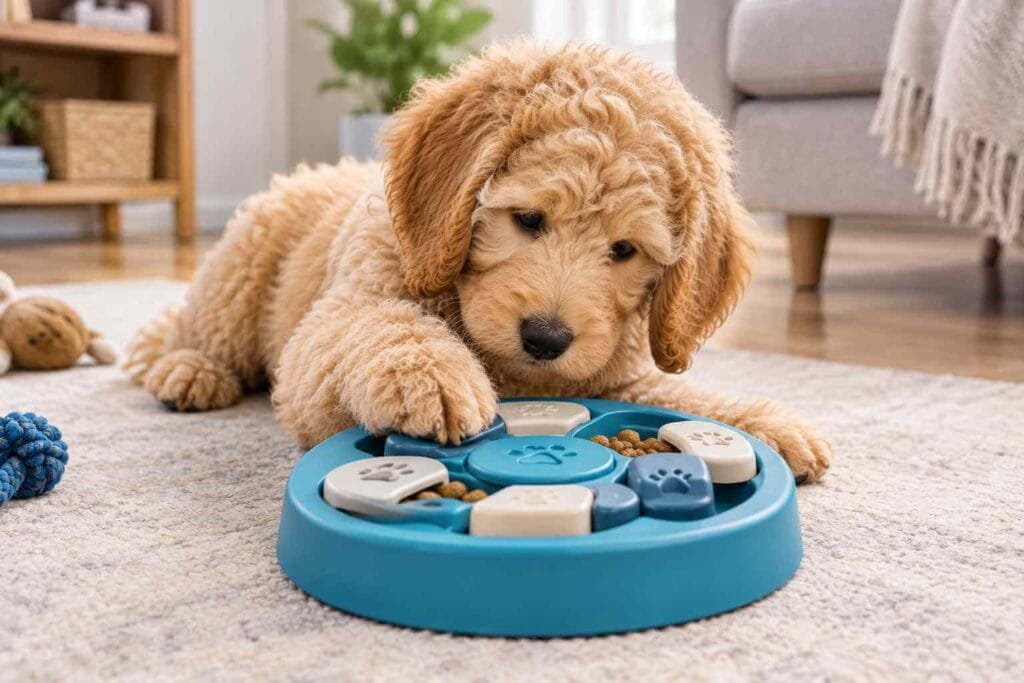
A walk or play session before departure, paired with a puzzle feeder or frozen treat to work on while you are gone, gives your puppy something constructive to focus on instead of your absence.
Avoid Reinforcing the Anxiety Accidentally
Comforting your puppy heavily right before leaving can unintentionally signal that something stressful is about to happen. Keep pre-departure routines calm and low-key instead.
Consider Calming Aids as a Support Tool
Pheromone diffusers and calming supplements can support training for some dogs, though they work best alongside behavioral training rather than as a standalone fix. Ask your vet before introducing any calming product, since individual dogs respond differently.
Common Mistakes That Make Separation Anxiety Worse
A few well-intentioned responses tend to backfire.
- Punishing accidents or destruction after the fact. Your puppy cannot connect delayed punishment with distress they felt while alone.
- Never practicing short absences. Going straight from constant togetherness to a full workday apart overwhelms most puppies.
- Giving in to whining before leaving. This can reinforce the exact behavior you are trying to reduce.
- Assuming it will resolve on its own with time. Left unaddressed, separation anxiety often stays the same or worsens rather than improving naturally.
When to Seek Professional Help
Most mild cockapoo puppy separation anxiety improves with consistent training and prevention. A few situations call for outside support.
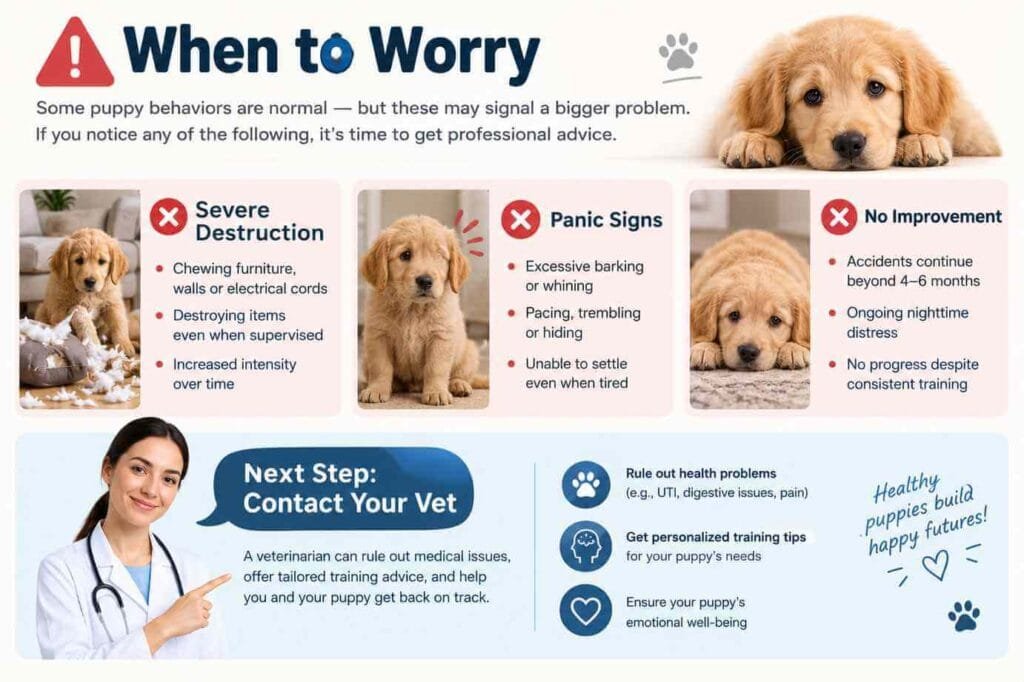
- Destructive behavior severe enough to cause injury or property damage
- Panic-level distress, including drooling, self-injury, or attempts to escape confinement
- No improvement after weeks of consistent, gradual desensitization
- Anxiety that seems to be worsening rather than gradually improving
The American Kennel Club describes Cockapoos as a breed developed specifically for companionship, which explains why isolation can feel especially difficult for them compared to more independent breeds. The American Veterinary Medical Association recommends consulting a veterinarian or veterinary behaviorist for separation anxiety that does not improve with standard training, since some cases benefit from a combined approach involving behavior modification and, in more severe situations, medication.
Frequently Asked Questions
Why are Cockapoos so clingy?
Both parent breeds, the Cocker Spaniel and the Poodle, were developed as companion dogs, making Cockapoos naturally prone to strong attachment and difficulty being alone.
What are the signs of separation anxiety in a Cockapoo puppy?
Common signs include destructive behavior, barking or crying when left alone, house accidents despite housetraining, and constant shadowing of their owner around the house.
Can Cockapoo puppy separation anxiety be prevented?
Yes, largely. Practicing gradual alone time from the very beginning, keeping departures calm, and introducing the crate properly all significantly reduce the risk.
How long does it take to fix separation anxiety in a Cockapoo?
Gradual desensitization training typically takes several weeks to a few months, with most dogs showing significant improvement, though some may always need ongoing management.
Should I get a second dog to fix my Cockapoo’s separation anxiety?
Not necessarily. While companionship can help some dogs, separation anxiety is often about missing you specifically, not just being alone, so a second dog is not a guaranteed fix.
When should I see a vet about my Cockapoo’s separation anxiety?
If destructive behavior is severe, distress seems panic-level, or there is no improvement after weeks of consistent training, a vet or veterinary behaviorist can help.
Final Takeaway
Cockapoo puppy separation anxiety is deeply tied to what this breed was bred for: genuine, close companionship with people. Prevention through gradual alone-time practice, calm departures, and proper crate introduction goes a long way, and existing anxiety usually responds well to consistent, patient desensitization.
Our general guide on Dog Separation Anxiety covers broader strategies that apply across breeds if you want additional detail. If grooming is also on your mind, our Cockapoo Puppy Grooming guide covers haircuts and coat care. For families weighing this breed against others, our Best Dog Breeds for Families guide is worth a look, along with our complete Cockapoo Puppy: Complete First-Year Guide.
Author Bio
David Jason is the founder of My Pet Care Tips and writes practical, research based guides to help pet owners raise healthier, happier dogs and cats. His content focuses on clear, beginner friendly advice backed by trusted veterinary resources and real world pet care best practices.