
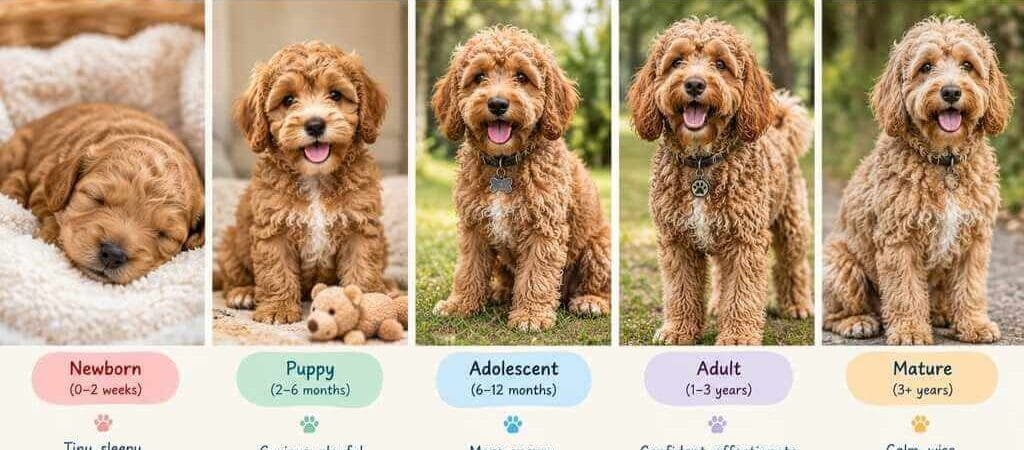
This cockapoo puppy guide walks you through everything that happens during your dog’s first 12 months, from a tiny newborn to a curly-coated, food-motivated companion who has probably already stolen at least one sock.
Cockapoos pack a lot of personality into a small package. Growth happens fast for this small breed, coat maintenance becomes a real commitment, and both parent breeds bring a genuine need for closeness that shapes almost every stage of puppyhood.
Quick answer: Expect the fastest physical growth in the first 5 months, adult weight and height reached by 10 to 12 months, and growth plates closing around that same window. Coat maintenance, separation-related clinginess, and ear health all deserve attention throughout the year, more so than with many other breeds.
Preparing for Your Cockapoo Puppy
Before diving into the month-by-month breakdown, a little preparation goes a long way. This cockapoo puppy guide assumes you already have your puppy, but a few basics are worth mentioning up front.
Cockapoos inherit traits unpredictably from the Cocker Spaniel and Poodle sides, meaning coat type, size, and even temperament can vary between puppies from the same litter. Puppy-proof your home, and prepare for a genuinely people-oriented dog who will want to be involved in everything you do.
Stock up on essentials ahead of time: a properly sized crate, a quality small-breed puppy food, a collar and leash, grooming basics like a slicker brush and metal comb, and a few interactive toys. Given how much this breed’s coat needs regular attention, having grooming tools ready from day one saves you from scrambling later.
Cockapoo Puppy Guide: Month-by-Month Overview
Every puppy develops on their own timeline, but this general pattern shows up consistently across the breed.
| Age | What’s Happening |
|---|---|
| 0-8 weeks | With mother and littermates, eyes and ears open, early social skills develop |
| 2-3 months | Home with you, rapid growth begins, training and socialization start |
| 3-5 months | Fastest physical growth, teething, coat texture starting to change |
| 5-10 months | Growth slows considerably, adolescence and testing boundaries begin |
| 10-12 months | Close to adult weight and height, growth plates closing |
Weeks 1-8: Before They Come Home
Newborn Cockapoo puppies are born blind and deaf, completely dependent on their mother. Eyes and ears open within the first couple of weeks, and mobility develops quickly after that.

By 4 to 5 weeks, puppies start interacting more with littermates, building early social skills that carry into their new home. By 8 weeks, most Cockapoo puppies are ready to leave for their new families, walking confidently and eating solid food.
Months 2-3: Settling In and Starting Training
The first weeks home set the tone for the rest of the year. There is no reason to wait for full vaccination before starting basic training and socialization, and Cockapoos generally respond well to positive, structured methods given their intelligence and eagerness to please.
This is also when the fastest growth begins. Most puppies weigh around 4.5 pounds at one month old and grow quickly from there. Our Cockapoo Puppy Grooming guide covers when to start introducing brushing and early coat care, well before the real coat transition begins.
Establishing an Early Feeding Schedule
Most breeders recommend 3 to 4 small meals a day from 8 to 12 weeks old, decreasing to 3 meals around 4 to 5 months, then down to 2 meals by 6 to 7 months. This gradual reduction matches your puppy’s slowing growth rate as the months go on.
Months 3-5: Fastest Growth and Coat Changes
This stretch brings the most dramatic physical changes of the entire first year. Growth is quick during these months, with many puppies reaching around 13 pounds by 5 months old before growth slows considerably afterward.
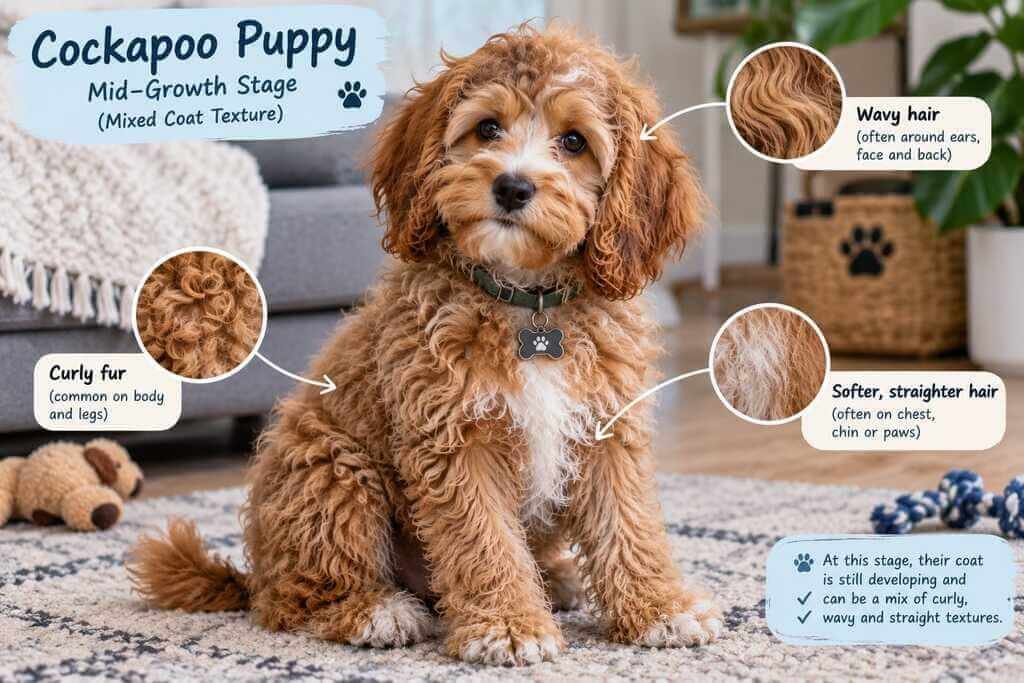
Coat Texture Starts Shifting
Somewhere in this window, many owners notice the first signs of coat change, as the soft puppy fur begins giving way to a texture closer to the adult coat. Whether that lands closer to loose Cocker Spaniel waves or tight Poodle curls depends heavily on genetics.
Teething and Early Boundary Testing
Teething peaks during this stage, sometimes bringing increased mouthing or chewing. Consistent redirection to appropriate toys, rather than punishment, works best for managing this normal developmental phase.
Months 5-10: Slower Growth and the Onset of Adolescence
Growth slows down considerably after 5 months, with puppies gaining weight more gradually from this point through the rest of the first year. This is also when many owners start noticing the classic “teenage” behavior other breeds go through too.

Why Adolescence Feels Different for a People-Oriented Breed
Testing limits, occasionally forgetting previously solid training, and general boundary-pushing are all normal here. For a breed this attached to their people, adolescence can also bring the first real signs of separation-related struggles if alone time was not practiced gradually from the start. Our Cockapoo Puppy Separation Anxiety guide covers why this breed is especially prone to clinginess and how to manage it.
Watch Ear Health Closely
Floppy, hair-covered ears combined with an increasingly active lifestyle raise the risk of ear infections during this stage. Our Are Cockapoo Puppies Prone to Ear Infections? guide covers the signs, causes, and prevention steps every Cockapoo owner should know.
Exercise Needs During This Stage
A simple guideline many trainers use is about 5 minutes of structured exercise per month of age, twice a day, until growth plates close around 10 to 12 months. Short sessions on soft ground protect developing joints better than longer, higher-impact activity.
Months 10-12: Approaching Adulthood
Most Cockapoos reach close to their adult weight and height by 10 to 12 months old, since small breeds generally mature faster than large ones. Growth plates typically close during this same window, which is why exercise guidelines shift around this age.
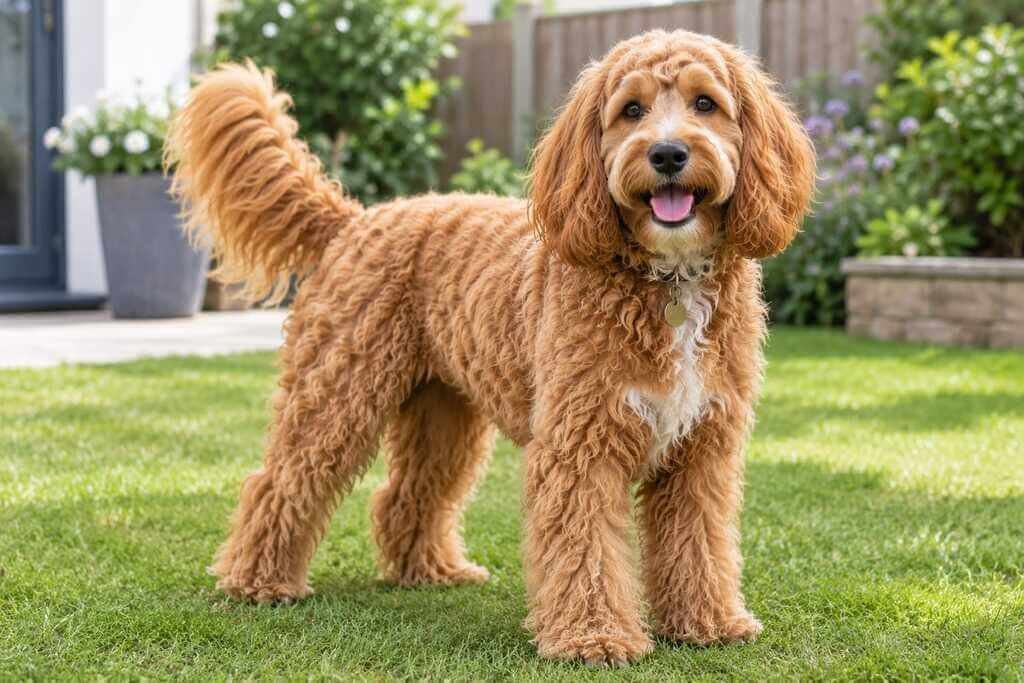
Adult males typically weigh between 12 and 25 pounds, while females typically weigh between 10 and 21 pounds, though bloodline and Poodle parent size influence the exact range. What sets this breed apart from many others covered in a typical first-year guide is that physical maturity arrives relatively quickly, while emotional maturity, much like with larger breeds, can take longer to fully settle.
Spaying and Neutering Timing
Discuss spay or neuter timing with your vet as your puppy approaches the end of their first year. Early spaying or neutering can sometimes delay growth plate closure, occasionally resulting in a slightly taller adult dog, while also carrying a higher lifetime risk of weight gain that needs monitoring afterward.
This decision depends on your individual puppy and household situation, so treat any general guideline as a starting point for a conversation with your vet rather than a fixed rule to follow blindly.
Common First-Year Challenges
A few issues come up again and again during a Cockapoo’s first year, and this cockapoo puppy guide would not be complete without covering them.
Coat Matting
The coat transition period, along with this breed’s naturally curl-prone genetics, makes matting a genuine ongoing concern. Daily brushing, especially around the ears, collar, legs, tail, and armpits, prevents most serious tangling before it starts.
Separation-Related Clinginess
Both parent breeds were developed purely for companionship, which makes Cockapoos genuinely prone to struggling with alone time. Practicing short, gradual absences from the very beginning heads off many problems before they develop.
Ear Infections
Floppy, hair-covered ears trap moisture and reduce airflow, creating conditions bacteria and yeast thrive in. Regular cleaning, thorough drying after baths, and routine checks reduce this risk significantly throughout the year.
Food Motivation and Weight Management
Cockapoos are often highly food-motivated, which makes portion control important throughout the entire first year, particularly around the time of spaying or neutering when metabolism can shift.
Cockapoo Puppy Guide: Training Milestones by Month
Training goals shift as your puppy grows. This table gives a general sense of what is realistic to work on at each stage.
| Age | Training Focus |
|---|---|
| 2-3 months | Name recognition, sit, gentle handling, early socialization |
| 3-4 months | Come, basic house manners, continued socialization |
| 4-6 months | Stay, leave it, structured obedience sessions, reliable potty training |
| 6-9 months | Impulse control around distractions, settle cue |
| 9-12 months | Reinforcing all commands around real-world distractions |
Most Cockapoo puppies are considered generally easy to train given their intelligence, though consistency and structure matter more than natural smarts alone. It rq
Health and Vet Checkpoints
Regular veterinary care matters throughout the first year, not just for vaccinations. The VCA Animal Hospitals recommends keeping growing puppies lean rather than heavy, since research has linked leaner body condition during growth to longer lifespans and better long-term joint health.
Weigh your puppy monthly and compare their progress to typical ranges for their age, checking body condition by feeling for ribs with light pressure rather than relying on weight alone. Talk to your vet if your puppy seems too thin, too heavy, or is not gaining weight appropriately for their age.
How Cockapoo Development Compares to Other Breeds
If you have raised a larger breed before, some parts of this cockapoo puppy guide may look different from what you are used to. As a small breed, Cockapoos reach physical maturity considerably faster, often within the first year, compared to large breeds that can take 18 to 24 months or longer.
Where Cockapoos genuinely stand out is in how much their mixed genetics shape daily life, similar to other Poodle-cross breeds. Coat type, shedding, and even temperament traits can vary meaningfully within a single litter, which is exactly why understanding both parent breeds gives you a more realistic picture than a single breed name ever could. The American Kennel Club does not recognize Cockapoos as an official breed for this same reason, since consistency across generations is still developing compared to established purebred lines.
Cockapoo Puppy Guide: First-Year Checklist
Use this cockapoo puppy guide checklist as a quick reference throughout the year.
- Start training and socialization from day one
- Feed a quality small-breed puppy formula and adjust meal frequency as your puppy grows
- Expect the fastest growth to happen before 5 months old
- Begin brushing routines early, before the coat transition fully begins
- Practice gradual alone time to prevent separation-related struggles
- Check and clean ears regularly to reduce infection risk
- Follow age-appropriate exercise guidelines until growth plates close around 10 to 12 months
- Discuss spay or neuter timing with your vet
Frequently Asked Questions
How big will my Cockapoo puppy get?
Most adult Cockapoos weigh between 10 and 25 pounds depending on sex and the size of the Poodle parent used in breeding, with growth largely complete by 10 to 12 months.
When does a Cockapoo puppy’s coat change?
Coat texture often begins shifting between 3 and 5 months old, moving from soft puppy fur toward the wavier or curlier adult coat.
Why are Cockapoos so prone to separation anxiety?
Both parent breeds, the Cocker Spaniel and the Poodle, were developed as companion dogs, making Cockapoos naturally prone to strong attachment and difficulty being alone.
Are Cockapoo puppies prone to ear infections?
Yes. Their floppy, hair-covered ears trap moisture and reduce airflow, creating conditions that let bacteria and yeast thrive more easily than in upright-eared breeds.
How much exercise does a Cockapoo puppy need?
A common guideline is about 5 minutes of structured exercise per month of age, twice daily, until growth plates close around 10 to 12 months.
Do Cockapoos make good family pets?
Yes, they are widely popular for their friendly, people-oriented temperament. Our Best Dog Breeds for Families guide covers how Cockapoos compare to other family-friendly options.
Final Takeaway
Raising a Cockapoo puppy through their first year means navigating fast early growth, a real coat transition, and a genuine need for closeness that shapes training and daily routine alike. This cockapoo puppy guide is meant as a starting point, and consistency in grooming, training, and gradual independence practice throughout the year makes the biggest difference in how your dog turns out.
For the full breakdown of each stage, our Cockapoo Puppy Grooming, Cockapoo Puppy Separation Anxiety, and Are Cockapoo Puppies Prone to Ear Infections? guides go deeper into each topic covered in this cockapoo puppy guide.
Author Bio
David Jason is the founder of My Pet Care Tips and writes practical, research based guides to help pet owners raise healthier, happier dogs and cats. His content focuses on clear, beginner friendly advice backed by trusted veterinary resources and real world pet care best practices.