
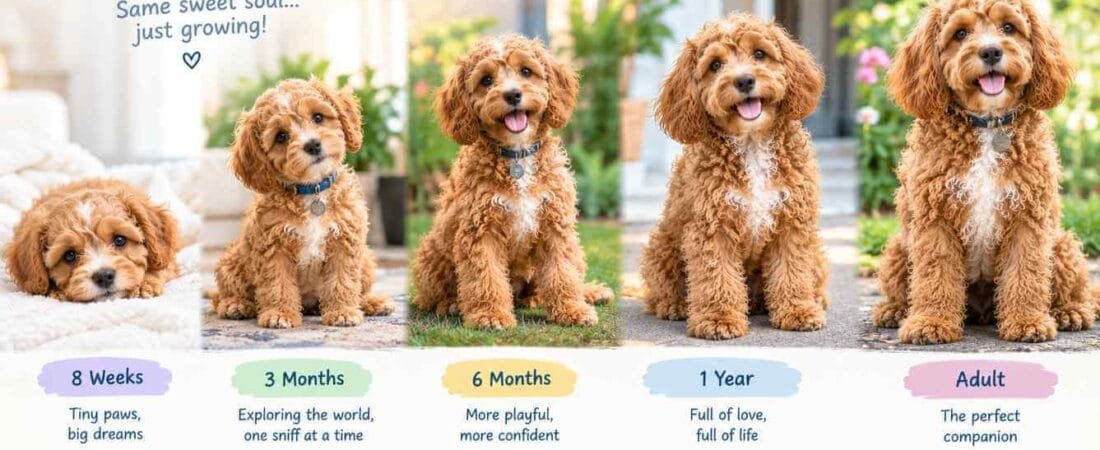
This cavapoo puppy guide walks you through everything that happens during your dog’s first 12 months, from a tiny, sleepy newborn to a curly-coated, affectionate companion who has probably already claimed a permanent spot on your lap.
Cavapoos bring a gentle, people-focused temperament inherited from both the Cavalier King Charles Spaniel and Poodle sides of their family tree. Growth happens quickly for this small breed, coat care becomes an ongoing task, and one health topic in particular deserves real attention throughout your dog’s life, not just during the puppy years covered in most typical first-year guides.
Quick answer: Expect the fastest weight gain between 4 and 6 months, roughly 90 percent of adult height by 7 months, and full physical maturity by 12 to 18 months depending on size category. Heart health monitoring matters more for this breed than many others, given inherited risk from the Cavalier side of the cross.
Preparing for Your Cavapoo Puppy
Before diving into the month-by-month breakdown, a little preparation goes a long way. This cavapoo puppy guide assumes you already have your puppy, but a few basics are worth mentioning up front.
Cavapoos inherit traits unpredictably from two very different breeds, meaning size, coat texture, and even some health tendencies can vary between puppies from the same litter. Puppy-proof your home, and prepare for a genuinely affectionate dog who will want to be close to you as much as possible.
Stock up on essentials ahead of time: a properly sized crate, a quality small-breed puppy food, a collar and leash, grooming basics like a slicker brush and metal comb, and a few interactive toys. Choosing a breeder who health tests for heart conditions on the Cavalier side is also worth prioritizing before you even bring your puppy home, since this single decision can meaningfully affect your dog’s long-term health outlook.
Cavapoo Puppy Guide: Month-by-Month Overview
Every puppy develops on their own timeline, but this general pattern shows up consistently across the breed.
| Age | What’s Happening |
|---|---|
| 0-4 weeks | With mother and littermates, eyes and ears open, rapid early weight gain |
| 4-12 weeks | Socialization window, exploring surroundings, home with you by 8 weeks |
| 3-6 months | Fastest growth and weight gain, teething, juvenile energy bursts |
| 6-12 months | Growth slows, approaching adult size, adolescent testing behavior |
| 12-18 months | Full physical maturity, though mental maturity can continue developing |
Weeks 1-8: Before They Come Home
Newborn Cavapoo puppies are born blind and deaf, completely dependent on their mother, and spend the vast majority of their time sleeping during the first couple of weeks. Eyes and ears open around 3 to 4 weeks old, and puppies begin exploring their surroundings shortly after.
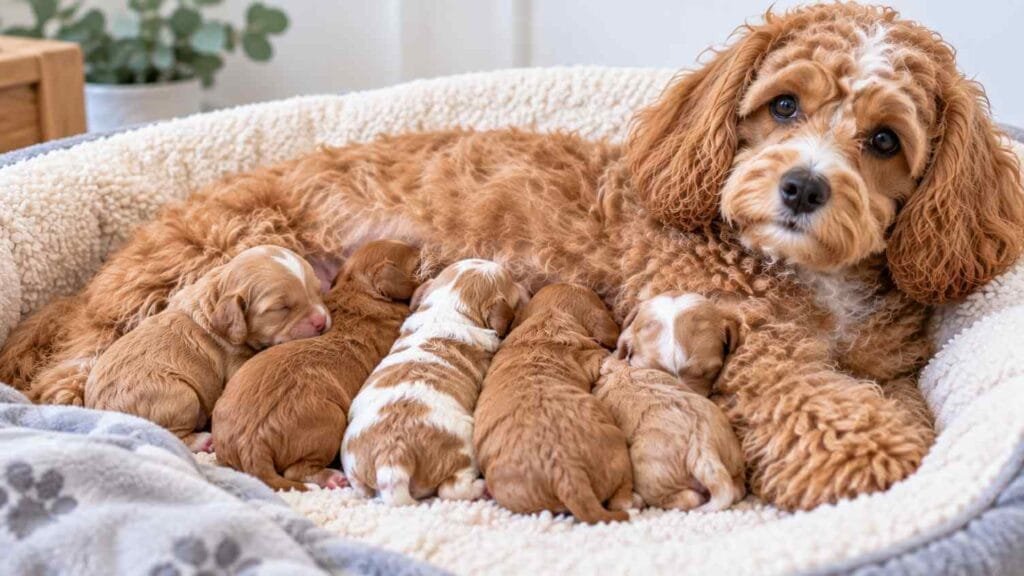
The socialization window, roughly 4 to 12 weeks old, is one of the most important stretches for behavioral development. By 8 weeks, most Cavapoo puppies are ready to come home, walking confidently and eating solid food.
Months 2-3: Settling In and Starting Training
The first weeks home set the tone for the rest of the year. Training should begin as soon as your puppy arrives, usually around 8 weeks old, focusing on basic commands, potty training, and continued socialization.
This is also when the first noticeable growth happens. Most puppies weigh between 2 and 7 pounds around this age, depending on their eventual size category. Our Cavapoo Puppy Size guide breaks down what determines whether your puppy lands closer to Toy, Miniature, or Standard size.
Establishing Early Vet Visits
Puppies should visit the vet every few weeks during the first six months for vaccinations, deworming, and growth monitoring. Given this breed’s inherited heart health considerations, establishing a relationship with a trusted vet early matters more than it might for some other, less health-sensitive breeds.
Months 3-6: Fastest Growth and Teething
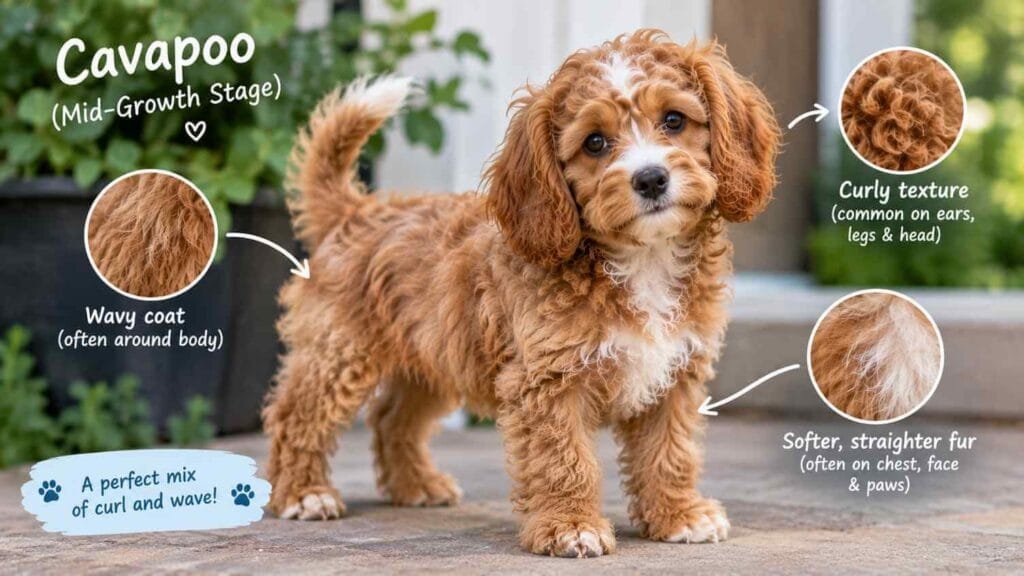
This stretch brings the most dramatic physical changes of the entire first year. Cavapoos gain the bulk of their adult weight during this window, with many puppies reaching around 75 percent of their total weight and roughly 90 percent of their total height by 7 months old.
Coat Texture Begins Changing
Somewhere in this window, many owners notice the soft puppy coat starting to shift toward a thicker, wavier or curlier adult texture. Regular brushing several times a week, along with professional trims every few months, helps prevent tangles as this transition happens.
Teething and Energy Bursts
Teething peaks during this stage, often paired with bursts of juvenile energy and curiosity. Consistent redirection to appropriate chew toys, along with continued training, helps manage this normal developmental phase.
Months 6-12: Slower Growth and Approaching Adulthood
Growth slows down noticeably after 6 months as your Cavapoo approaches their full height. Most reach their complete adult height by around their first birthday, though final adult weight can take until 18 months for larger Standard-sized Cavapoos.
Watching for Signs of Heart Health Concerns
This is an important stage to understand for any thorough cavapoo puppy guide, since it shapes how you approach veterinary care for the rest of your dog’s life. Mitral valve disease, inherited primarily from the Cavalier King Charles Spaniel side of this cross, is a genuine health consideration for this breed throughout life, not just in older age. Our Cavapoo Heart Health: Understanding Mitral Valve Disease Risk guide covers what this means for your puppy and how regular veterinary checkups help catch issues early.
Exercise Needs During This Stage
Regular exercise matters, but it needs to stay safe for still-developing joints. Too much hard exercise for a young Cavapoo can strain growth plates, so short walks and active play, letting your puppy set the pace, work better than long or intense sessions during this stage of development.
Spaying and Neutering Timing
Discuss spay or neuter timing with your vet as your puppy approaches the later part of their first year. This decision depends on your individual puppy’s size, growth pattern, and overall health, so treat any general guideline as a starting point for that conversation rather than a fixed rule to follow blindly without your vet’s input.
Months 12-18: Full Physical Maturity
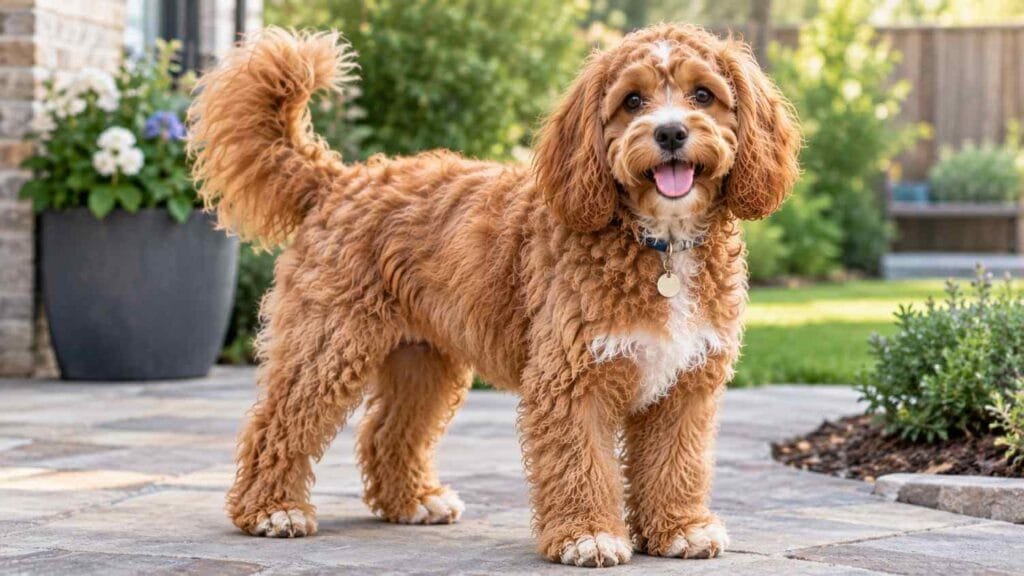
Most Cavapoos reach full physical maturity somewhere between 12 and 18 months old, with smaller Toy-sized dogs typically finishing earlier and larger Standard-sized dogs taking the longer end of that range. Mental maturity can continue developing for several more months even after physical growth is complete.
What sets this breed apart from many others covered in a typical first-year guide is the combination of relatively fast physical maturity, typical of small breeds, paired with a health consideration that requires attention throughout adulthood rather than just during the growth years covered in most puppy-focused resources.
Common First-Year Challenges
A few issues come up again and again during a Cavapoo’s first year, and this cavapoo puppy guide would not be complete without covering them.
Coat Matting
Cavapoos are not completely hypoallergenic, but they do shed very little compared to many breeds, which comes with a real tradeoff: their coat mats easily without consistent care. Daily brushing during the coat transition, focused on the ears, legs, and underarms, prevents most tangling before it starts.
Separation Sensitivity
Both parent breeds lean toward strong attachment to their people, and Cavapoos are no exception. Practicing gradual alone time from the beginning helps prevent distress-related behavior as your puppy matures.
Overfeeding and Growth Plate Stress
Overfeeding does not make a Cavapoo grow bigger. It simply leads to excess weight, which can strain developing joints and contribute to health issues later on down the road. Feeding an appropriate small-breed puppy formula in carefully measured portions matters throughout the entire first year.
Heart Health Awareness
Given the inherited risk from the Cavalier side of this cross, staying consistent with veterinary checkups throughout your dog’s life, not just during puppyhood, genuinely matters for this breed more than for many others.
Cavapoo Puppy Guide: Training Milestones by Month
Training goals shift as your puppy grows. This table gives a general sense of what is realistic to work on at each stage.
| Age | Training Focus |
|---|---|
| 2-3 months | Name recognition, sit, potty training routine, early socialization |
| 3-4 months | Come, basic house manners, continued socialization |
| 4-6 months | Stay, leave it, structured obedience sessions |
| 6-9 months | Impulse control around distractions, settle cue |
| 9-12 months | Reinforcing all commands, introduction to activities like agility if desired |
Positive reinforcement methods, using praise, treats, and play, tend to work especially well for this sensitive, people-pleasing breed.
Cavapoo Puppy Guide: Socialization and Early Experiences
Beyond basic commands, socialization deserves real emphasis in any thorough cavapoo puppy guide. The window between 4 and 12 weeks old is when puppies learn to interact confidently with new people, animals, sounds, and environments, and positive experiences during this stage shape temperament well into adulthood.
Introduce your Cavapoo puppy to a variety of calm, controlled situations early: different types of people, gentle handling, car rides, and safe interactions with vaccinated, friendly dogs. Given how attached this breed tends to become to their people, balanced early socialization also helps prevent excessive clinginess or anxiety from developing later, since puppies who learn the world is safe without you constantly present tend to handle alone time better as adults down the road.
Cavapoo Puppy Guide: Grooming and Coat Care
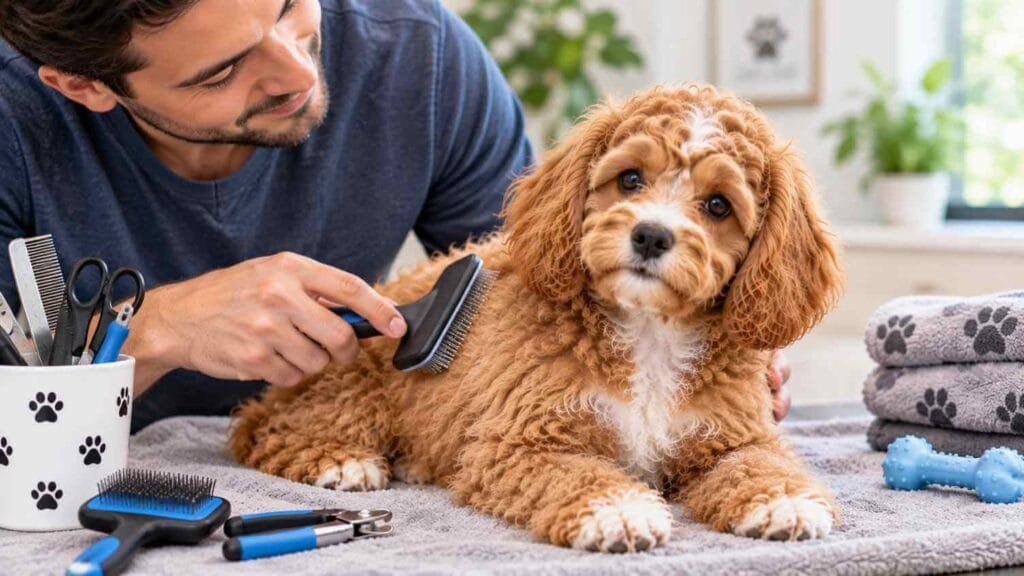
Grooming deserves its own section in any complete cavapoo puppy guide, since coat maintenance becomes a lifelong routine rather than a one-time task. Regular brushing several times a week, combined with professional trims every few months, keeps the coat healthy and free of mats.
A clean, well-maintained coat also helps reduce allergens around the house, even though this breed is not fully hypoallergenic. Getting your puppy comfortable with brushing, nail trims, and ear checks early makes every future grooming session considerably easier for both of you.
Cavapoo Puppy Guide: Vet Checkpoints and Heart Health
Regular veterinary care matters throughout the first year, and arguably matters even more for this breed given its inherited heart health considerations. The VCA Animal Hospitals recommends ongoing wellness exams that include a heart listen at every visit, since early detection of any concerns gives your vet the best chance to manage them effectively.
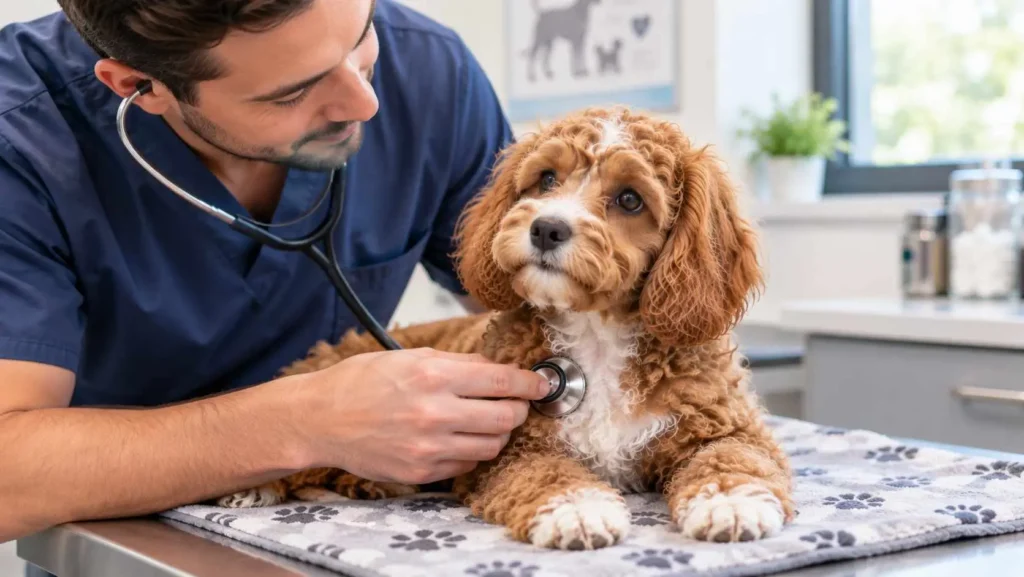
Track your puppy’s weight regularly rather than relying on memory alone, since sudden jumps or unexpected plateaus can sometimes signal a health issue worth mentioning to your vet during your next scheduled appointment. Many owners find keeping a simple weight journal during the first year genuinely useful for spotting patterns early.
Fun Activities and Enrichment for a Cavapoo Puppy
Beyond structured training, Cavapoos genuinely enjoy activities that combine their Poodle intelligence with their Cavalier affection for people. Short training games, puzzle feeders, and gentle fetch sessions all tap into this combination well, keeping your puppy mentally engaged without overdoing physical exertion during the growth window.
As your Cavapoo matures past the first year, many owners introduce more structured activities like basic agility, trick training, or obedience classes. These offer a fun outlet for their intelligence while strengthening the bond between you, and many Cavapoos take to these activities with real enthusiasm given how eager they are to work alongside their favorite person throughout their whole lives.
How Cavapoo Development Compares to Other Breeds
If you have raised a Cockapoo or Goldendoodle before, some parts of this cavapoo puppy guide may feel familiar, particularly the mixed-genetics unpredictability shared across Poodle-cross breeds. Our Cockapoo Puppy: Complete First-Year Guide covers a genuinely similar cousin breed if you want a side-by-side comparison.
Where Cavapoos genuinely stand apart is the heart health consideration inherited specifically from the Cavalier King Charles Spaniel side. Most other small Poodle-cross breeds do not carry this same elevated risk, which is exactly why veterinary attention to heart health deserves a permanent place in this breed’s care routine, not just a one-time mention during puppyhood. The American Kennel Club does not recognize Cavapoos as an official breed for this same genetic-variability reason, since consistency across generations is still developing compared to established purebred lines.
Cavapoo Puppy Guide: First-Year Checklist
Use this cavapoo puppy guide checklist as a quick reference throughout the year.
- Start training and socialization from day one, around 8 weeks old
- Feed a quality small-breed puppy formula in measured portions
- Expect the fastest growth to happen between 4 and 6 months
- Begin regular brushing before the coat transition fully begins
- Keep exercise safe and age-appropriate to protect developing joints
- Discuss spay or neuter timing with your vet
- Schedule regular vet visits that include heart health monitoring
- Choose a breeder who screens for heart conditions on the Cavalier side
Frequently Asked Questions
How big will my Cavapoo puppy get?
This depends on the size of the Poodle parent used in the cross, ranging from around 7 pounds for Toy Cavapoos to 30 pounds for the less common Standard size. Our Cavapoo Puppy Size guide covers this in detail.
When do Cavapoo puppies stop growing?
Most reach full height by around their first birthday, with final adult weight and muscle fill continuing until 18 months for some dogs.
Are Cavapoos prone to heart problems?
Yes. Mitral valve disease is a genuine inherited risk from the Cavalier King Charles Spaniel side of this cross, making regular veterinary heart checks important throughout life.
How much grooming does a Cavapoo puppy need?
Regular brushing several times a week, plus professional trims every few months, keeps the coat healthy and prevents matting as the adult coat comes in.
Are Cavapoos easy to train?
Generally yes, thanks to their intelligence and eagerness to please, though this sensitive breed responds best to positive reinforcement rather than harsh corrections.
Do Cavapoos make good family pets?
Yes, they are known for being affectionate and gentle. Our Best Dog Breeds for Families guide covers how Cavapoos compare to other family-friendly options.
Final Takeaway
Raising a Cavapoo puppy through their first year means navigating fast early growth, an ongoing coat care routine, and a genuine heart health consideration inherited from their Cavalier lineage. This cavapoo puppy guide is meant as a starting point, and consistency in training, grooming, and veterinary care throughout the year makes the biggest difference in how your dog turns out.
Author Bio
David Jason is the founder of My Pet Care Tips and writes practical, research based guides to help pet owners raise healthier, happier dogs and cats. His content focuses on clear, beginner friendly advice backed by trusted veterinary resources and real world pet care best practices.