

A puppy sleep schedule by age helps new puppy owners understand how many hours their puppy should sleep from 8 weeks to 1 year. Many new puppy owners worry because their puppy seems to sleep almost all day. The truth is that puppies need significantly more sleep than adult dogs, but their sleep schedule changes quickly as they grow. Understanding what is normal at each stage helps you build a routine that supports healthy development.
This guide includes age-by-age sleep schedules, detailed sleep charts, proven bedtime routines, and expert-backed advice for first-time puppy owners. You’ll also learn when your puppy should start sleeping through the night and what sleep problems warrant a veterinary visit.
For more on this topic, read our guide on Why Is My Puppy Sleeping So Much?
Why Do Puppies Need So Much Sleep?
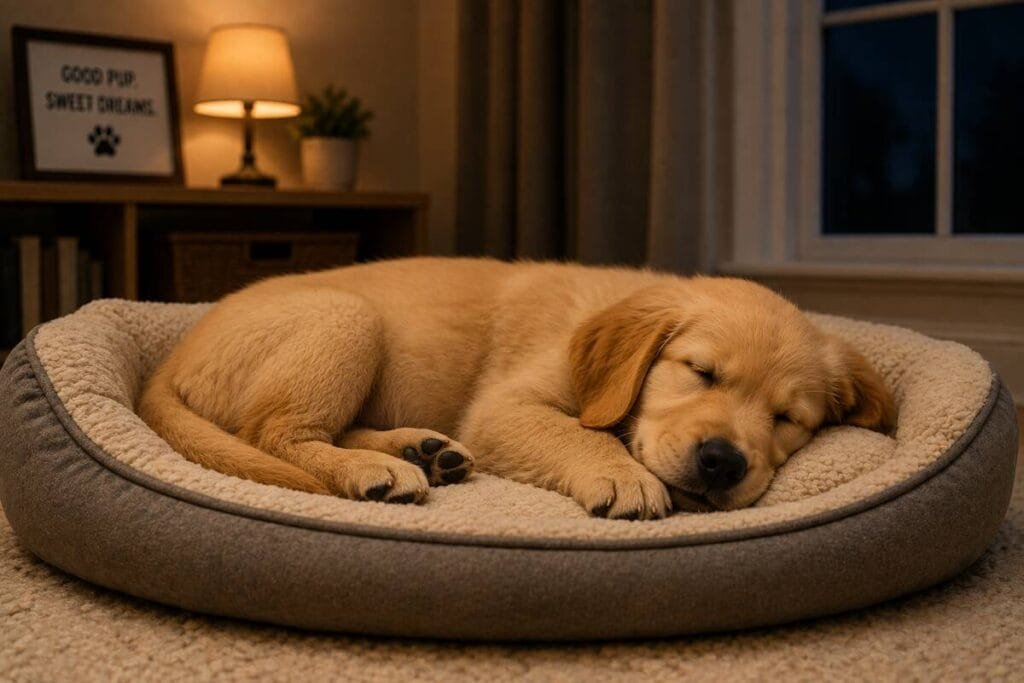
Puppies sleep so much because their bodies and brains are working hard to grow and develop. During sleep, the brain forms new connections, stores memories from training, and processes daily experiences. This is why a well-rested puppy learns faster than a sleep-deprived one.
Physical growth happens fastest during sleep, when growth hormones peak. The immune system also strengthens during rest, building the foundation for lifelong health. Energy recovery is essential too, since puppies burn through calories quickly with their short bursts of play and exploration.
Learning and memory consolidation depend almost entirely on sleep quality. A puppy that sleeps enough retains potty training better, responds faster to commands, and develops more reliable behavior. Sleep deprivation in puppies often shows up as biting, jumping, and difficulty concentrating during training.
Expert Tip: Quality sleep is just as important as proper nutrition for healthy puppy development. A consistent sleep routine directly impacts how quickly your puppy learns and how stable its behavior becomes.
Puppy Sleep Schedule by Age
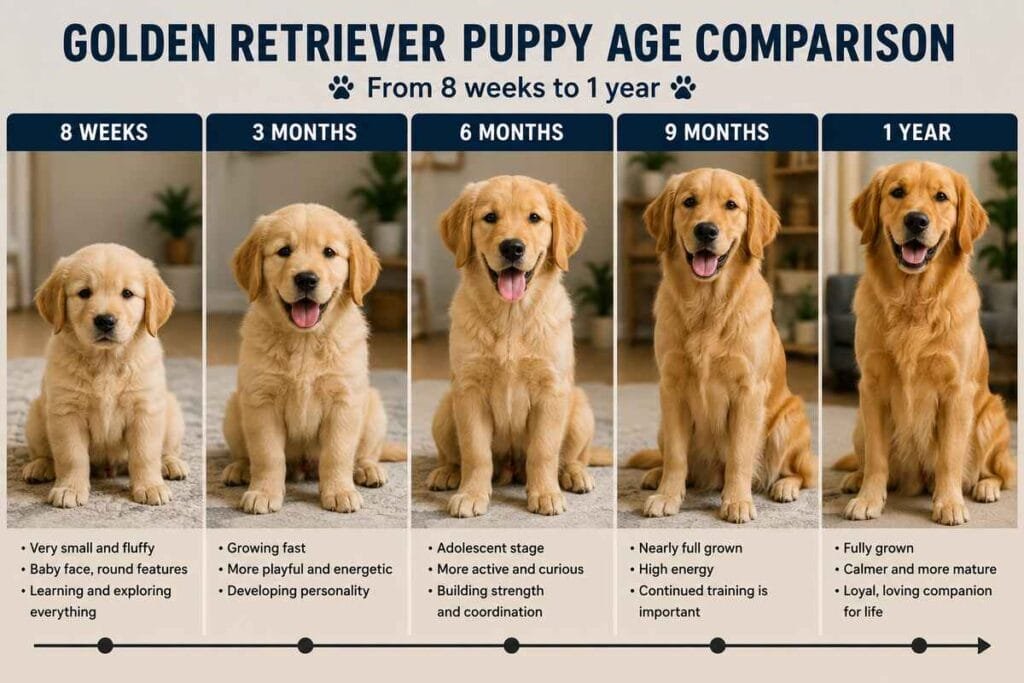
Puppy sleep needs change dramatically as they grow. Here’s what to expect at each stage, from 8 weeks through one year.
0 to 8 Week Puppy Sleep Schedule
Very young puppies sleep 18 to 22 hours per day, mostly in short bursts between feeding and potty breaks. They lack bladder control, so they cannot sleep for extended periods. At this age, puppies are still with their mother or breeder, learning basic behaviors and comfort from littermates.
Frequent waking is completely normal and necessary for survival. Puppies this young need to eat every two to three hours and potty after almost every activity. Their short sleep cycles support rapid brain development during this critical period.
8 to 10 Week Puppy Sleep Schedule
Most puppies move to their new homes around 8 weeks. Expect 18 to 20 hours of sleep per day, but recognize that frequent naps plus nighttime rest make up that total. The first nights in a new home are often rough since a puppy is adjusting to unfamiliar surroundings without littermates.
Short, consistent crate naps during the day help a puppy feel secure and build positive crate association. Bedtime typically happens between 7 and 8 p.m., with a final potty break right before settling into the crate. This age marks the start of structured sleep routines.
Learn more about the critical first night in our guide on Where Should a Puppy Sleep on Their First Night?
10 to 12 Week Puppy Sleep Schedule
By 10 weeks, puppies stay awake for longer stretches, though 18 to 20 hours of sleep per day is still normal. Naps become slightly more structured, often happening mid-morning, mid-afternoon, and early evening. Potty breaks happen after waking, eating, playing, and right before bed.
A puppy at this age has more awareness of its surroundings, which sometimes makes settling harder. A consistent routine still wins, and most puppies adjust quickly to predictable schedules. Daytime sleep patterns become more obvious as your puppy starts having favorite nap spots.
3 Month Puppy Sleep Schedule
Around 3 months, puppies need 15 to 18 hours of sleep per day. Naps are fewer but slightly longer, and many puppies can sleep through a 7 to 8 hour stretch at night with solid routine. Daytime naps typically happen two to three times per day.
Training sessions, play, and potty breaks now take up more awake time, so enriching those hours matters. Teething often begins around this age, which can disrupt sleep temporarily. Consistent bedtime routines prevent teething discomfort from derailing progress.
4 Month Puppy Sleep Schedule
By 4 months, most puppies need 14 to 16 hours of sleep per day. Nighttime sleep stretches longer, often reaching 8 to 9 hours, and many puppies are approaching full-night reliability. Daytime naps reduce to about two per day, reflecting shifts toward more mature sleep patterns.
Energy levels increase noticeably, making exercise and mental enrichment critical during awake time. Consistency with bedtime and wake time matters more at this stage, since disruptions can undo recent progress. A puppy at this age has better behavior control, making training far more effective.
5 to 6 Month Puppy Sleep Schedule
Puppies typically need 12 to 16 hours of sleep per day at this stage. Many are fully capable of sleeping through the night, though some still need a middle-of-the-night break if potty training is not fully solid. Adolescence often begins here, bringing behavioral changes that can disrupt previously solid sleep.
Daytime naps usually drop to one or two per day from the three or more needed just a few months earlier. Bedtime consistency remains critical, even as the puppy becomes more independent. Testing boundaries around sleep is normal adolescent behavior, but maintaining routine prevents tests from becoming habits.
6 to 12 Month Puppy Sleep Schedule
From 6 months onward, puppies transition toward adult sleep patterns, needing about 12 to 14 hours per day. Most are sleeping reliably through the night and may have dropped daytime naps entirely. Routine consistency is what keeps sleep stable at this age.
By 12 months, your puppy is essentially on an adult sleep schedule. Individual puppies still vary based on breed, activity level, and temperament. Most first-year puppies settle into a reliable overnight sleep pattern by this point.
Puppy Sleep Chart by Age
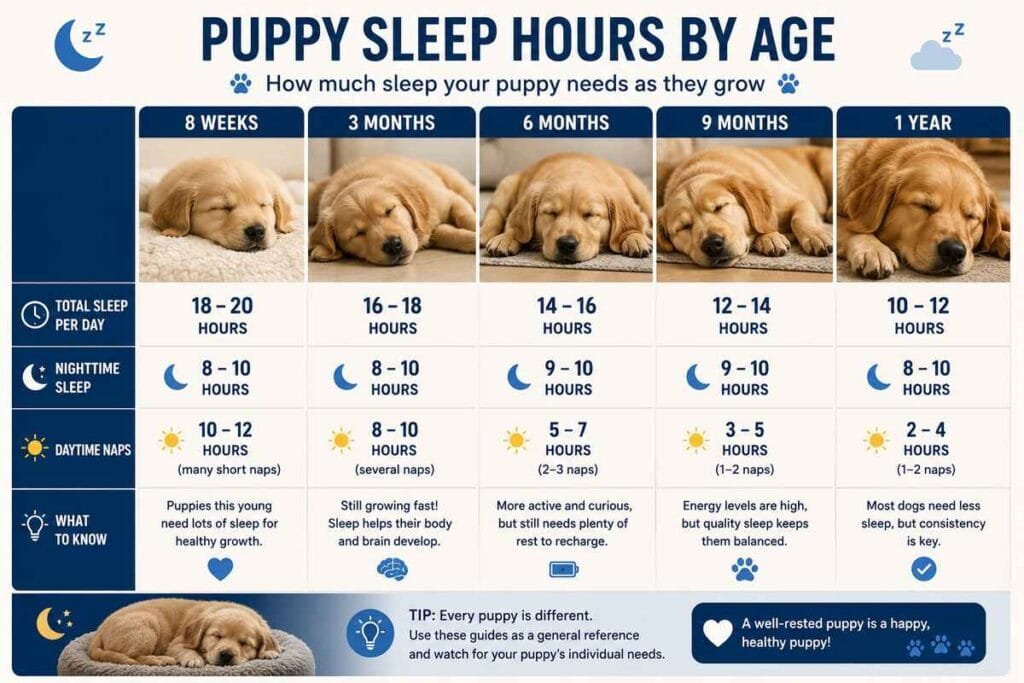
| Puppy Age | Total Sleep | Night Sleep | Daytime Naps | Notes |
|---|---|---|---|---|
| 8 weeks | 18–20 hours | 5–8 hours | 3–4 naps | New home adjustment; building crate comfort |
| 10 weeks | 18–20 hours | 6–8 hours | 3 naps | Longer awake periods; consistent routines help |
| 12 weeks | 15–18 hours | 7–8 hours | 2–3 naps | Teething may begin; training becomes easier |
| 3 months | 15–18 hours | 7–8 hours | 2–3 naps | Many approach full-night reliability |
| 4 months | 14–16 hours | 8 hours | 2 naps | Most sleep through full night |
| 5–6 months | 12–16 hours | 8 hours | 1–2 naps | Adolescence begins; sleep regression possible |
| 6–12 months | 12–14 hours | 8 hours | 0–1 nap | Adult sleep pattern emerging |
Sample Daily Puppy Sleep Schedule
Here’s a realistic day for a 3 to 4 month old puppy when daytime and nighttime sleep are balancing:
- 7:00 a.m.: Wake, potty, breakfast
- 7:30 a.m.: Morning nap (1 to 2 hours)
- 9:00 a.m.: Wake, potty, play or training
- 11:00 a.m.: Midday nap (1 to 2 hours)
- 1:00 p.m.: Wake, potty, lunch
- 2:00 p.m.: Afternoon nap (1 to 2 hours)
- 4:00 p.m.: Wake, potty, play
- 6:00 p.m.: Dinner
- 7:00 p.m.: Calm wind-down time
- 8:00 p.m.: Final potty break, then crate and bedtime
- Overnight: Zero to one potty break depending on age
How to Build a Healthy Puppy Bedtime Routine
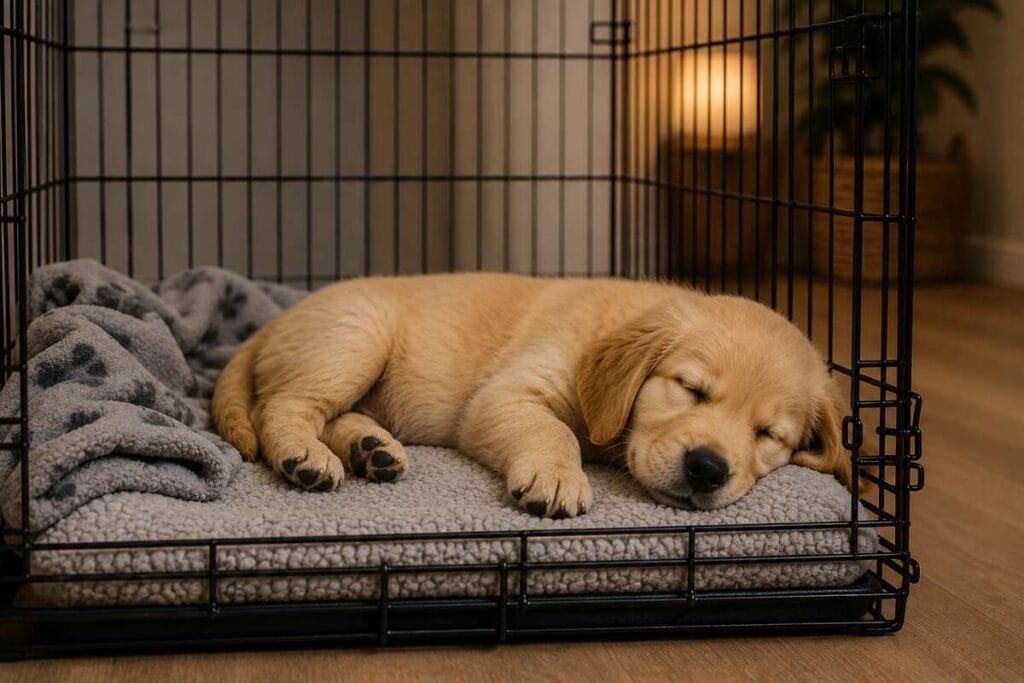
A consistent bedtime routine signals to your puppy that sleep is coming. The routine does not need to be complex, but it must be exactly the same every single night without exception.
Fixed bedtime: Pick a time that fits your household schedule and stick to it every night, including weekends. A puppy on a fixed schedule develops an internal rhythm that makes sleep easier and potty training more reliable.
Evening exercise: A walk or play session two to three hours before bed burns energy effectively. Timing matters—too close to bed causes overstimulation, while too far out allows energy to rebuild. Aim for the puppy to be tired but calm at bedtime.
Potty before bed: A calm trip outside right before settling into the crate gives the best chance of sleeping through the night. Keep this break brief with no playing or exciting interaction—just potty and return inside.
Calm environment: Dim lights, a quiet space, and a comfortable crate all support easier settling. White noise can mask household sounds that might otherwise wake a light sleeper.
Consistent schedule: The exact sequence matters less than doing the same things in the same order every night. Most puppies adjust within a week or two once they recognize the pattern.
Future reference: See Puppy Bedtime Routine for advanced techniques and troubleshooting strategies.
Is It Normal If My Puppy Sleeps More Than This Schedule?
Yes, in many cases puppies sleep more than the minimums listed here. Growth spurts, heavy exercise, cold weather, and recent vaccinations can all trigger extra sleepiness. A puppy sleeping more than typical but alert during awake time and eating well is usually fine.
Breed size plays a role too, since smaller breeds sometimes rest more than larger puppies. Individual temperament matters—some puppies are naturally more active while others are naturally calmer and sleep more. As long as your puppy is playful during awake time, this variation is normal.
Read our detailed guide on Why Is My Puppy Sleeping So Much? for when increased sleep signals a real concern.
When Puppies Start Sleeping Through the Night
Most puppies are physically capable of sleeping through the night somewhere between 3 and 4 months old. Capability is not the same as reliability though—a puppy might hold its bladder but still wake from habit or anxiety. Crate training plays a huge role since puppies naturally want to keep their sleeping area clean.
Potty training consistency also matters tremendously. A puppy on a predictable eating and potty schedule can anticipate when the next break is coming. Breed and size factor in too, since tiny breeds sometimes take longer than larger breeds to develop overnight control.
If your puppy is still waking multiple times after 4 months despite a solid routine, read our troubleshooting guide on Puppy Won’t Sleep Through the Night.
Puppy Sleep Problems to Watch For
Sleeping too much while also showing lethargy during awake time can signal illness rather than normal development. Difficulty falling asleep despite a consistent routine, especially with anxiety or restlessness, sometimes points to puppy sleep regression or environmental stress.
Restlessness or constant shifting without settling suggests discomfort, which could be physical (teething, wrong crate size) or emotional (anxiety). Night crying specifically is addressed in our guide on puppy crying in crate at night.
When Should You Call Your Veterinarian
Sleep disruption paired with other symptoms always warrants a vet call. The American Veterinary Medical Association (AVMA) notes that sudden changes in a puppy’s sleep paired with other symptoms are worth investigating promptly rather than assuming they will resolve.
Warning signs to contact your vet:
- Fever or unusual body temperature
- Vomiting or diarrhea
- Loss of appetite or refusal to eat
- Difficulty waking or seems very hard to rouse
- Signs of pain or discomfort
- Sudden, unexplained behavior changes
Sleep disruption is sometimes the first sign of illness, especially when accompanied by these symptoms. Early intervention prevents small issues from becoming serious.
For more information, see our guide on Common Pet Health Problems.
Frequently Asked Questions
How many hours should an 8-week-old puppy sleep?
An 8-week-old puppy typically needs 18 to 20 hours of sleep per day, split across multiple naps and nighttime rest with frequent waking.
How many hours should a 3-month-old puppy sleep?
A 3-month-old puppy needs approximately 15 to 18 hours of sleep per day, with fewer but slightly longer naps than younger puppies.
Is it normal for puppies to sleep 20 hours?
Yes, especially for puppies under 3 months old. Sleeping 18 to 22 hours per day is completely normal early on and supports healthy development.
Should I wake my puppy from naps?
No, generally let naps run their natural course. Waking a sleeping puppy disrupts rest and can cause unnecessary stress.
What time should puppies go to bed?
Any fixed time works as long as it’s consistent—most owners choose between 7 and 9 p.m. depending on their household schedule.
Why does my puppy sleep after eating?
Digestion requires energy, so puppies often feel tired after meals. This is completely normal and expected behavior.
Can puppies sleep too much?
Rarely, if the puppy is otherwise healthy and alert during awake time. Sleeping at the high end of the normal range is expected for growing puppies.
Do puppies sleep more during growth spurts?
Yes, puppies often sleep noticeably more during growth spurts as their body prioritizes development over activity.
Final Thoughts
Puppy sleep schedules change every month as your puppy grows and develops. Every puppy develops at its own pace within the typical range shown in this puppy sleep schedule by age guide, so some variation is completely normal. Building consistency around bedtime, maintaining a predictable daily routine, and staying patient through temporary disruptions like sleep regression will carry you through most sleep challenges.
Routine matters more than perfection. If sleep suddenly changes alongside signs of illness or distress, contact your veterinarian. Otherwise, trust that a solid routine and age-appropriate expectations are enough for most puppies to find their rhythm.
Author Bio
Written by David Jason Founder of My Pet Care Tips
David has spent years helping first-time puppy owners build reliable routines for house training, crate training, and daily care, drawing on real-world experience and trusted veterinary guidance to make the process less overwhelming.
Last Updated: July 28, 2026
Sources: American Kennel Club (AKC), American Veterinary Medical Association (AVMA), Merck Veterinary Manual
Note: Every puppy is an individual, and sleep needs can vary by breed size, health, and personality. If your puppy’s sleep pattern suddenly changes alongside other symptoms, consult your veterinarian.