

Introduction
Your puppy was sleeping beautifully. They’d go down at 8 PM, sleep through the night, and wake up refreshed. Life was good. Then suddenly, they’re waking every two hours, fighting bedtime, and you’re back to exhausted nights.This is puppy sleep regression, and it catches almost every new owner off guard.
Sleep regression isn’t a sign you’re doing something wrong. It’s not a permanent problem either. It’s a completely normal part of puppy development that happens as your puppy grows, learns, and adjusts to the world around them.
In this guide, I’ll walk you through what puppy sleep regression actually is, when to expect it, and exactly how to handle it when it happens. By the end, you’ll understand why your puppy’s sleep patterns shift and how to help them settle down again.
Quick Answer: Is Puppy Sleep Regression Normal?
Yes. Puppy sleep regression is completely normal and happens during developmental stages—typically around 8-10 weeks, 3-4 months, and 5-6 months old. It’s caused by growth spurts, teething, increased confidence, and environmental changes. Most sleep regressions last 1-3 weeks. Your puppy will return to normal sleep patterns with consistent routines, adequate exercise, and patience. However, sudden extreme changes warrant a vet check to rule out medical issues.
What Is Puppy Sleep Regression?
The Definition
Puppy sleep regression is a temporary period where your puppy’s previously established sleep patterns suddenly change. They wake more frequently, resist naps, fight bedtime, or refuse to sleep alone.
It’s called “regression” because it feels like your puppy is going backward. You had a routine that worked. Suddenly it doesn’t anymore.
Normal Development vs. Medical Problems
Sleep regression is a developmental phase. Your puppy isn’t broken. Their brain and body are changing rapidly, and sleep disruption is a side effect of that growth.
Medical problems present differently. If your puppy is also showing signs like loss of appetite, excessive panting, limping, or continuous distress (not just during sleep), contact your vet. But simple sleep changes—waking more, resisting naps, restlessness—usually indicate regression, not illness.
Why Routines Suddenly Change
Puppies develop predictably, but development isn’t linear. Growth happens in phases. During these phases, their comfort level changes. What felt secure last week might feel different this week.
Additionally, puppies get smarter. A 12-week-old puppy has different confidence and curiosity than an 8-week-old puppy. That new confidence sometimes means testing boundaries and resisting rules they previously followed without question.
Is Puppy Sleep Regression Normal?
Absolutely. Sleep regression is one of the most common developmental phases in puppies. It surprises owners because puppies can go from sleeping peacefully to waking constantly in just a day or two.
This dramatic shift makes owners question everything. Did I do something wrong? Is my puppy sick? Do I need to change the setup?
The answer to most of these questions is no. Your puppy is developing normally. Sleep regression is part of that process.
Puppy Sleep Regression by Age
8 to 10 Weeks
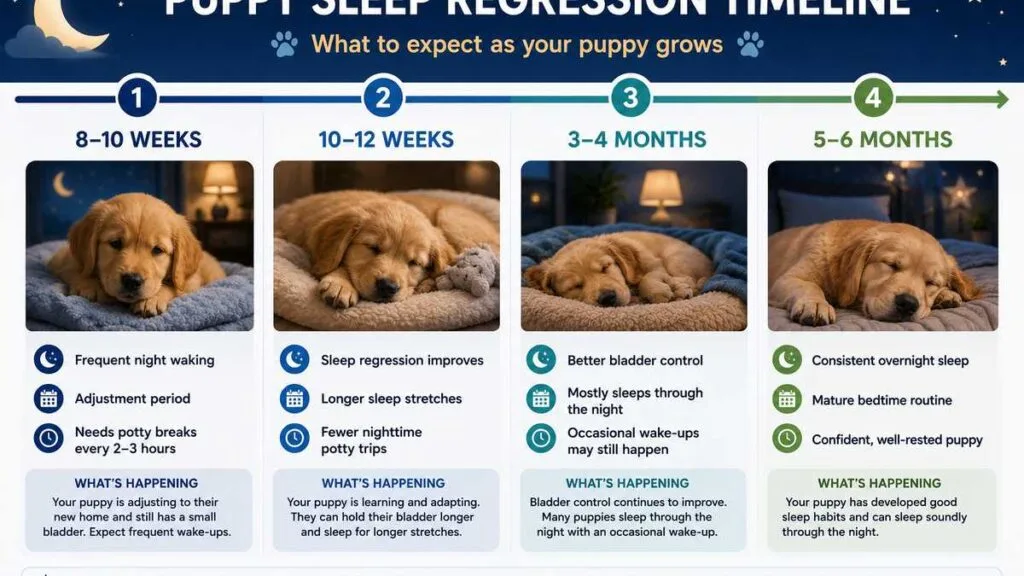
Most puppies first experience sleep regression around 8-10 weeks old. This is usually their first week or two in their new home.
They’re adjusting to new surroundings, new people, and separation from littermates. Their brain is processing massive amounts of new information. Sleep becomes restless because they’re anxious and overstimulated.
If you just brought your puppy home, some sleep disruption during the first week is completely normal. This isn’t true regression—it’s initial adjustment. By week two, most puppies settle down as they adjust to their new environment.
10 to 12 Weeks
Around 10-12 weeks, many puppies experience a second phase of sleep regression. They’ve settled into their home, so this feels confusing to owners. Why is my adjusted puppy suddenly waking again?
The reason: growing confidence. Your puppy feels more secure now. That security brings curiosity. They want to explore. They’re more interested in their surroundings and less content to just sleep.
Additionally, their bladder control is improving, which means they’re drinking more water and needing more bathroom trips during the day. These extra potty breaks can disrupt their sleep schedule.
3 to 4 Months
Sleep regression at 3-4 months is usually tied to teething. Your puppy’s baby teeth are falling out and adult teeth are coming in. This is uncomfortable and distracting.
Teething puppies wake more frequently because they’re uncomfortable. They also become more interested in chewing everything, including their bedding. Their activity level increases as they try to manage the discomfort.
This is also when puppies develop stronger personalities and more independence. They test boundaries more. Some puppies resist crate time or bedtime because they want to be part of the action.
5 to 6 Months
Around 5-6 months, puppies enter adolescence. Sleep regression at this age is often hormonal and behavioral. Their brains are developing rapidly. They have more energy and stronger personalities.
Additionally, if you’ve relaxed your routine at any point—maybe your schedule shifted or you let them skip a potty break—your puppy’s sleep suffers immediately. Puppies thrive on consistency. Any inconsistency disrupts their sleep.
Adolescent puppies also test rules more aggressively. A puppy who happily slept in their crate at 4 months might suddenly resist it at 6 months because they’re testing boundaries.
Common Causes of Puppy Sleep Regression
Teething
Teething causes significant sleep disruption. Puppies have uncomfortable, sore gums. They want to chew constantly. Sleep feels less important than managing the discomfort.
Teething typically starts around 3-4 months and continues until about 7-8 months when adult teeth fully come in. Peak teething discomfort is usually between 4-6 months.

Growth Spurts
Rapid growth is exhausting for puppies. During growth spurts, they might sleep more overall but the quality of sleep is disrupted. They wake frequently, shift positions constantly, and seem uncomfortable.
Growth spurts typically happen around 8 weeks, 12 weeks, 4 months, and 6 months old, though this varies by breed.
Potty Schedule Changes
As puppies get older, their bladder capacity increases. This means they can go longer between potty breaks, but the transition is disruptive. They might be waking out of habit when they no longer actually need to pee.
Conversely, some owners extend the time between outdoor breaks too quickly. The puppy’s bladder isn’t ready, so they wake because they genuinely need to go.
Overtired Puppies
This sounds backward, but overtired puppies sleep worse than rested puppies. When puppies get too much stimulation without adequate nap breaks, they become overstimulated and anxious. This anxiety manifests as poor sleep quality.
Under-Exercised Puppies
Conversely, puppies without enough daytime activity have excess energy at bedtime. They can’t settle because they haven’t burned off their energy.
The key is balance: appropriate activity during the day with adequate rest breaks, then consistent nighttime sleep routine.
Environmental Changes
New people in the house, moved furniture, different schedule—these changes disrupt puppies. They’re sensitive to their environment. Any change can trigger temporary sleep disruption.
New Home or Living Situation
If you’ve recently moved or changed your puppy’s sleep location, expect sleep regression. This is especially true if you moved the crate to a different room or changed bedding.
Illness
While not the main cause of most sleep regression, illness can disrupt sleep. If your puppy’s regression is accompanied by other symptoms—loss of appetite, lethargy, vomiting, diarrhea, or excessive panting—contact your vet.
Signs Your Puppy Is Going Through Sleep Regression
Sleep regression looks different for every puppy, but common signs include:
- Frequent nighttime waking when they previously slept through
- Fighting bedtime or resisting the crate
- Taking shorter naps than usual
- Whining or crying when trying to sleep
- More energy and restlessness at night
- Difficulty settling down despite being tired
- Waking early in the morning when they previously slept longer
If your puppy suddenly shows these signs after sleeping well, sleep regression is likely the cause.
How to Fix Puppy Sleep Regression
Keep a Consistent Bedtime
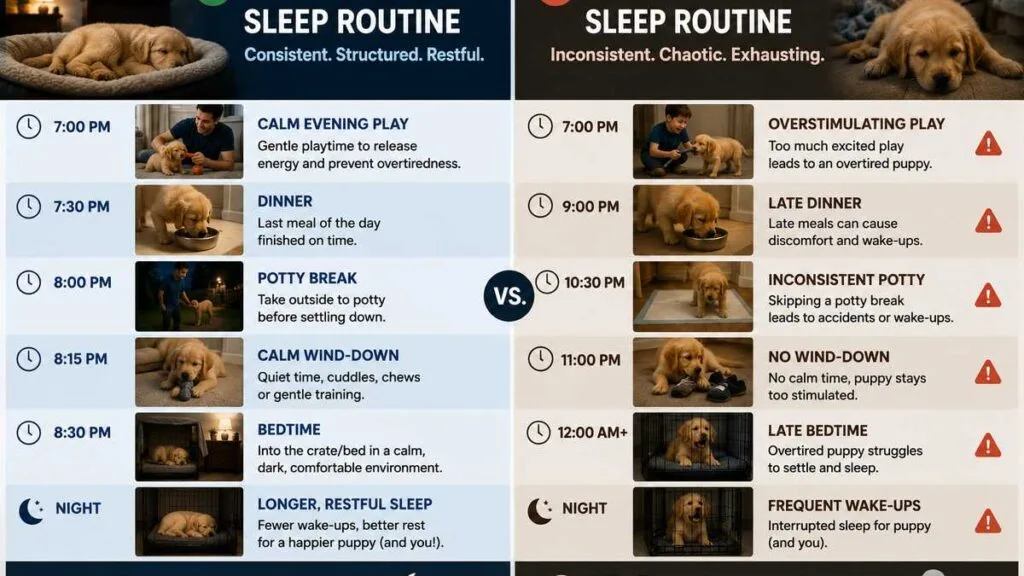
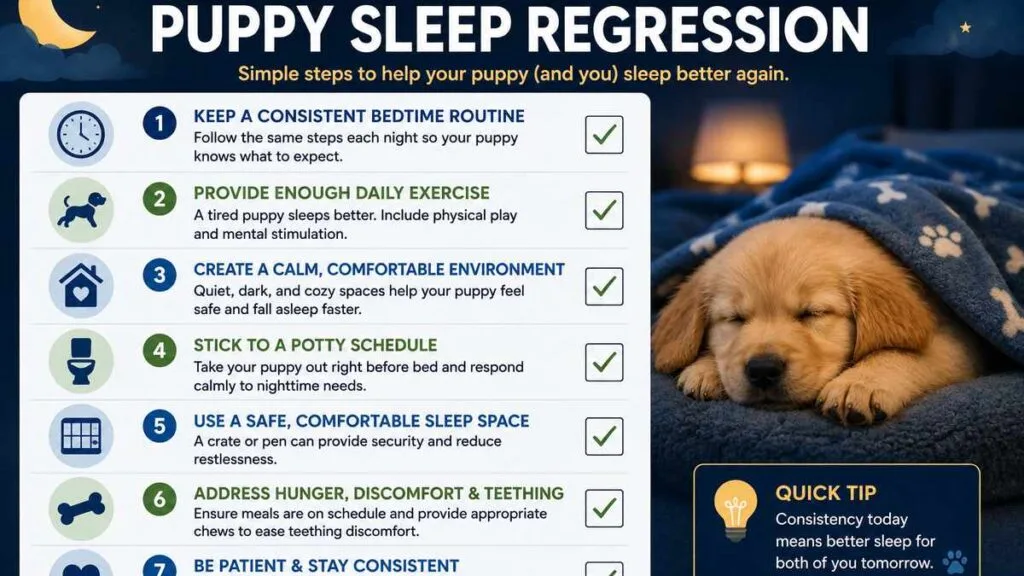
The most important thing you can do during sleep regression is maintain your routine. Same bedtime every night. Same wake time every morning. Same potty schedule.
Consistency helps your puppy’s internal clock stay stable. It also reassures your puppy that the world is predictable, which reduces anxiety.

Increase Daytime Enrichment
Make sure your puppy gets adequate physical exercise and mental stimulation during the day. Puppies with enriched days sleep better at night.
However, avoid stimulation within 1-2 hours of bedtime. You want your puppy tired but not overstimulated when they’re trying to sleep.
Maintain the Potty Schedule
Don’t change when you take your puppy outside. If regression happens, it’s tempting to assume your puppy doesn’t need a midnight potty break anymore. But pulling that break too early often makes regression worse.
Stick with your established schedule. As your puppy ages, their bladder control naturally improves, and you can gradually extend time between breaks.
Avoid Overstimulation Before Bed
Playtime should happen at least 1-2 hours before bedtime. Visitors, loud sounds, and new experiences should also be avoided close to sleep time.
Create a calm, quiet bedtime routine. This signals to your puppy that sleep time is coming.
Stay Calm During Nighttime Wake-Ups
When your puppy wakes during regression, respond calmly and neutrally. Take them outside for a potty break if needed, but keep interaction minimal.
Don’t play, talk excitedly, or offer comfort beyond what’s necessary. Return your puppy to their sleeping area quickly and calmly.
Reacting with frustration or excessive attention teaches your puppy that waking gets a big response. That’s the opposite of what you want.
Know When Regression Will Pass
Most sleep regression phases last 1-3 weeks. Knowing that helps. You can endure almost anything for two weeks if you know it’s temporary.
Track your puppy’s sleep patterns. Most owners notice improvement by day 10-14 if they maintain consistency. This gives you hope when things feel hard.
Mistakes That Make Sleep Regression Worse
Changing Bedtime Daily
During regression, it’s tempting to adjust bedtime hoping to find a time when your puppy will sleep better. Avoid this. Changing bedtime multiple times confuses your puppy’s internal clock and makes regression last longer. For more details read our article on Puppy Sleep Schedule by Age
Too Much Evening Play
Playing close to bedtime overstimulates your puppy. Even if you think tire them out, it often has the opposite effect. Save vigorous play for earlier in the day.
Rewarding Attention-Seeking Barking
If your puppy barks or whines during sleep regression and you respond by going to them, playing, or offering comfort, you’re accidentally training them that noise works.
Respond only to genuine needs (potty breaks). Ignore attention-seeking cries.
Skipping Exercise
Some owners reduce their puppy’s exercise during regression, thinking a calmer day will help them sleep. It usually backfires. Exercise supports good sleep. Maintain normal activity levels.
Too Many Naps Late in the Evening
If your puppy takes a long nap at 4 or 5 PM, they won’t be tired at 8 PM bedtime. Manage nap timing. Puppies need plenty of sleep, but not right before bedtime.
When Should You Contact a Vet?
Sleep regression is usually developmental and temporary. However, contact your vet if:
- Your puppy shows signs of pain (limping, yelping, excessive licking at one spot)
- Sleep regression is accompanied by loss of appetite or refusal to drink
- You notice excessive panting, drooling, or difficulty swallowing
- Vomiting or diarrhea accompanies the sleep changes
- Sleep regression lasts longer than 3 weeks despite consistent routines
- Regression seems extreme—your puppy is literally unable to sleep, not just resisting sleep
Your vet can rule out medical issues like ear infections, digestive problems, or pain that might be causing sleep disruption.
Frequently Asked Questions
Is Puppy Sleep Regression Normal?
Yes, completely. Sleep regression is a normal part of puppy development. It happens because puppies are growing, developing new skills, and adjusting to their environment. Most puppies experience at least one regression phase between 2-12 months old.
At What Age Does Puppy Sleep Regression Happen?
Most commonly at 8-10 weeks, 10-12 weeks, 3-4 months, and 5-6 months. However, timing varies by puppy. Some puppies regress earlier or later, or experience regressions at different ages than others.
How Long Does Puppy Sleep Regression Last?
Most sleep regressions last 1-3 weeks. Some pass in just a few days. Occasionally, one might last up to a month if circumstances (like illness or environmental changes) complicate the phase. Consistency usually speeds recovery.
Why Is My Puppy Suddenly Waking Up at Night?
Sleep regression, teething, growth spurts, potty needs, overtiredness, under-exercise, environmental changes, or illness. Check your routine for inconsistencies, increased stimulation, or recent changes. Usually, addressing routine consistency resolves the issue within days.
Will Puppy Sleep Regression Go Away on Its Own?
Yes, regression typically passes on its own with time and consistency. However, the speed at which it passes depends on how you respond. Maintaining routines, avoiding overstimulation, and staying calm speeds recovery. Changing routines or responding inconsistently can extend regression.
Should I Ignore My Puppy During Sleep Regression?
Ignore attention-seeking cries and whining, but respond to genuine needs like potty breaks. The key is distinguishing between the two. After a recent potty break, ignored whining usually stops within minutes if it’s attention-seeking. Genuine distress often escalates.
Conclusion
Puppy sleep regression feels like failure. It’s not. It’s proof your puppy is developing normally.
Your puppy’s brain is growing. Their body is changing. They’re adjusting to new experiences and building independence. Sleep disruption is a side effect of all that growth.
The good news: regression is temporary. It passes. Most puppies return to normal sleep patterns within weeks if you maintain consistency.
Stay patient. Keep your routine rock-solid. Respond calmly to nighttime waking. Exercise your puppy appropriately. And know that many puppies before yours have gone through this exact phase and come out the other side sleeping beautifully.
For foundational sleep setup, review our guide on where puppies should sleep on their first night. If regression includes excessive crying, our article on puppy crying in the crate at night provides additional strategies and more related articles: Puppy Won’t Sleep Through the Night: Complete Fix and Why Is My Puppy Sleeping So Much? When to Worry
You’ve got this. The regression will pass.
Author Bio
David Jason is the founder of My Pet Care Tips and writes practical, research-based guides to help pet owners raise healthier, happier dogs and cats. His content focuses on clear, beginner-friendly advice backed by trusted veterinary resources and real-world pet care best practices. With a passion for helping first-time pet owners, David covers everything from puppy training to senior dog care with honest, actionable strategies.
Sources: American Kennel Club (AKC),VCA Animal Hospitals,RSPCA and Blue Cross.