
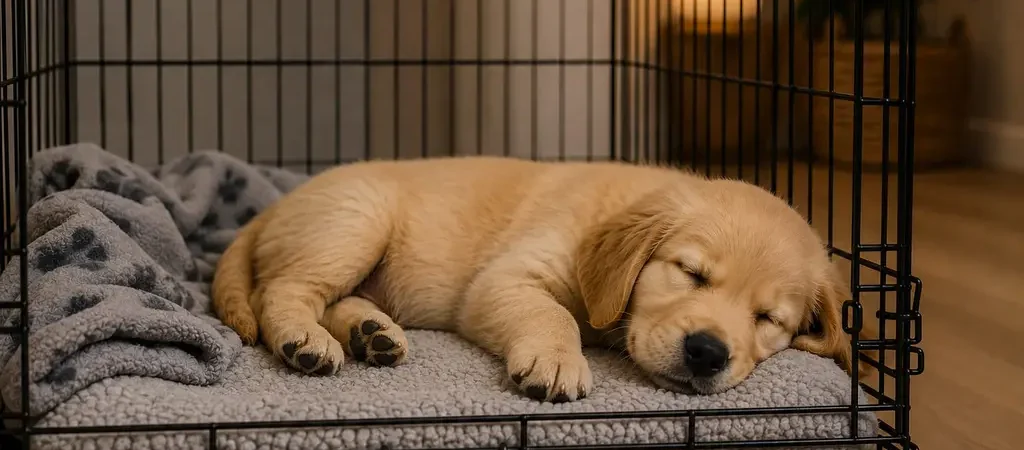
If you’re wondering why is my puppy sleeping so much, you’re not alone.Many new puppy owners feel a small wave of panic the first time they watch their puppy sleep the entire afternoon away. It can look like something is wrong, especially compared to how alert and playful a puppy seems during their short bursts of awake time. One moment your puppy is bouncing around the living room chasing a toy, and twenty minutes later they are completely passed out in the middle of the floor, seemingly unbothered by anything happening around them.
In most cases, this is completely normal. Puppies sleep significantly more than adult dogs, often 18 to 20 hours a day during the earliest months. This guide explains exactly why puppies sleep so much, what counts as normal, the warning signs that point toward something more serious, and when it is time to call your veterinarian.
Puppies also need a consistent daily sleep setup and routine, which supports healthy development alongside everything else. Our where should a puppy sleep on their first night guide covers the foundational sleeping setup, and our puppy sleep schedule by age pillar article provides comprehensive guidance as your puppy grows.
Why Is My Puppy Sleeping So Much?
Puppies typically sleep between 18 and 20 hours a day during their first few months of life. This heavy sleep schedule supports rapid physical growth, brain development, energy recovery from short bursts of intense activity, and a developing immune system. Sleep is when much of a puppy’s growth and learning actually consolidates, which is why naps make up such a large part of a young puppy’s day.
Growth
Puppies grow at a remarkable pace in their first several months, and much of that physical growth happens during sleep, when growth hormone release is at its highest.
Brain Development
A puppy’s brain is processing an enormous amount of new information every day, from new smells to new experiences. Sleep plays a key role in consolidating everything they are learning.
Energy Recovery
Puppies tend to play in short, intense bursts rather than steady activity throughout the day. These bursts use a surprising amount of energy relative to a puppy’s small body, which requires substantial recovery time afterward.
Learning
New experiences, whether it is meeting a new person or exploring a new room, take real mental effort for a young puppy to process. Sleep supports this ongoing learning process.
Immune System
A developing immune system, particularly important during the early vaccination period, also benefits significantly from adequate rest.
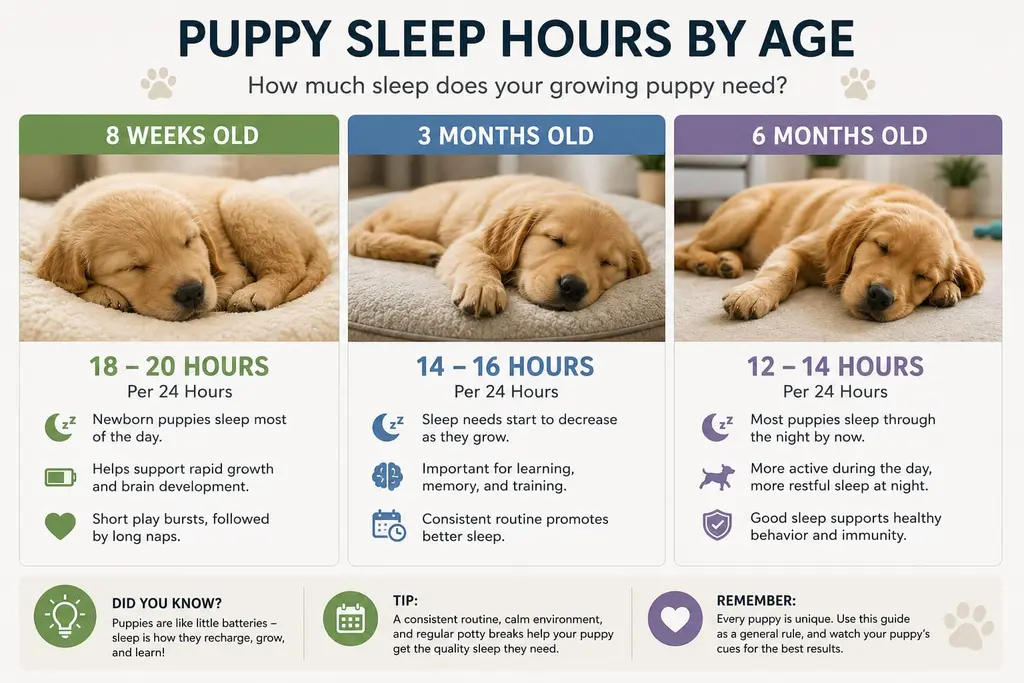
How Many Hours Should a Puppy Sleep?
| Age | Expected Sleep |
|---|---|
| 8 weeks | 18 to 20 hours |
| 2 months | 18 to 20 hours |
| 3 months | 16 to 18 hours |
| 4 to 6 months | 14 to 18 hours |
| Adult | 12 to 14 hours |
These ranges are general guidelines. Individual puppies vary somewhat based on breed, activity level, and overall health, so use this table as a reference point rather than a strict rule.
8 Normal Reasons Puppies Sleep So Much
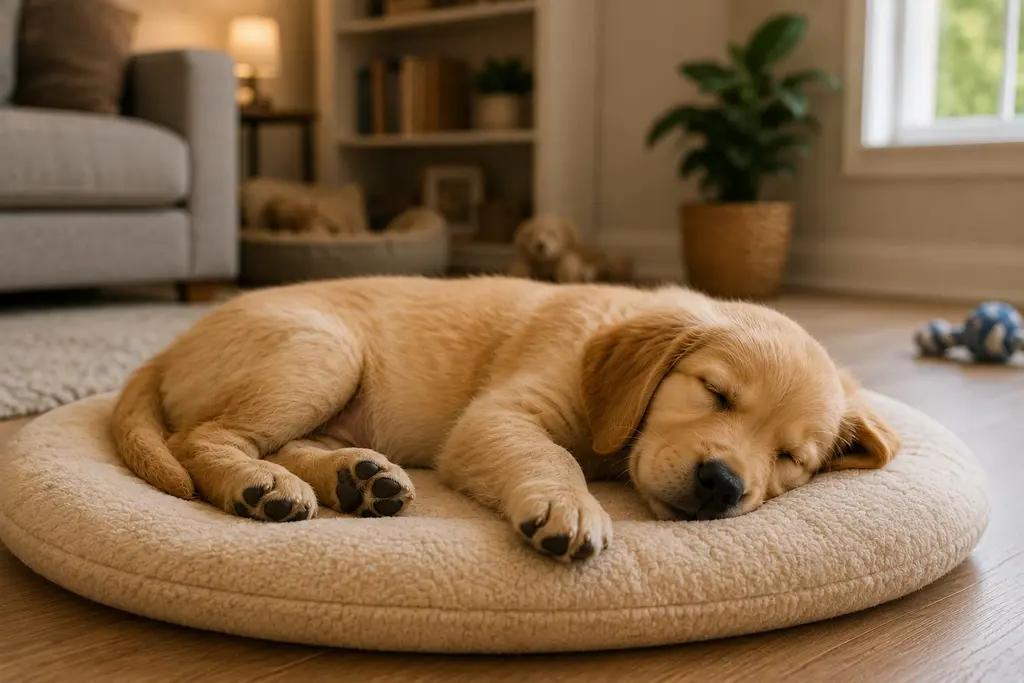
Rapid Growth
Puppies can nearly double or triple their birth weight within the first several weeks, and this rapid physical development requires substantial rest to support it. Bones, muscles, and organs are all developing quickly during this window, and much of that work happens while your puppy is resting rather than active.
Brain Development
As mentioned above, a puppy’s brain is doing significant work behind the scenes during sleep, strengthening the neural connections built during waking hours. This is similar to how human infants also require far more sleep than adults during periods of rapid cognitive development.
Physical Activity
Even a short 10 to 15 minute play session can genuinely exhaust a young puppy, leading to a long nap afterward. Matching exercise and mental stimulation to your puppy’s current age and energy level helps support healthy sleep patterns overall.
Learning New Experiences
Every new sight, sound, and smell requires mental processing for a young puppy. A busy day full of new experiences, such as meeting new people or visiting a new place, often leads to a longer nap afterward as your puppy’s brain catches up and processes everything that happened.
Breed Differences
Some breeds, particularly larger or working breeds, tend to sleep somewhat more during puppyhood due to faster physical growth demands. A large breed puppy growing toward a much bigger adult size often needs more recovery time than a smaller breed puppy at the same age.
Growth Spurts
Puppies go through noticeable growth spurts throughout their first year, and increased sleep often accompanies these periods of accelerated physical development. You may notice your puppy seems to sleep even more than usual for a few days, then return to their typical pattern once the growth spurt passes.
Vaccination Recovery
It is common for puppies to sleep somewhat more in the day or two following a vaccination appointment, as their immune system responds and builds protection. Mild, temporary fatigue after a vaccine is a normal response and generally resolves on its own within a day or two.
Warm Weather
Like many dogs, puppies often sleep more during warm weather, since heat naturally lowers activity levels and encourages rest. This is a normal seasonal pattern rather than a cause for concern.
Is It Normal If My Puppy Is Sleeping So Much Every Day?
Normal
Yes, sleeping the majority of the day, including multiple long naps, is completely normal for a young puppy. This is expected behavior, not a cause for concern on its own.
Not Normal
What is not typical is sleep paired with other concerning signs, such as refusing to wake for meals, unusual lethargy that does not improve with rest, or a noticeable change in your puppy’s normal energy pattern once awake.
Signs Everything Is Okay
A puppy who wakes readily for meals, potty breaks, and play, and who seems bright and engaged during their awake periods, is almost certainly sleeping a normal, healthy amount, even if that amount feels like a lot to you.
Why Is My Puppy Sleeping So Much And Not Eating?
This combination deserves closer attention than sleep alone. A few possible explanations include:
- Stress, particularly during the first days in a new home
- Teething, which can temporarily reduce appetite due to mouth discomfort
- Minor illness, such as a mild stomach upset
- Parvo, a serious and potentially life threatening viral illness, especially in unvaccinated or partially vaccinated puppies
- Parasites, which can affect both appetite and energy levels
- Pain, from an injury or other source not immediately obvious
If your puppy is sleeping unusually much and also refusing food, especially alongside vomiting, diarrhea, or lethargy that does not improve, this combination should be treated as a potential emergency rather than something to simply monitor. Our common pet health problems guide covers a broader range of symptoms worth understanding, including digestive issues that can affect appetite and energy.
Why Is My Puppy Sleeping So Much All Of A Sudden?
A sudden increase in sleep, especially compared to your puppy’s usual pattern, can have several explanations:
- A growth spurt, which can temporarily increase sleep needs
- An unusually busy or stimulating day, requiring more recovery time than normal
- A recent vaccination, with mild fatigue as a common short term response
- Warm weather, naturally encouraging more rest
- Medication, if your puppy is currently taking something with drowsiness as a side effect
- Illness, particularly if paired with other symptoms
- Injury, especially if your puppy also seems reluctant to move normally
If the sudden change is not clearly explained by one of the more benign reasons above, it is worth watching closely for additional symptoms over the following day. Our puppy sleep regression guide covers predictable developmental stages where temporary sleep disruption is completely normal.
Warning Signs Your Puppy May Be Sick
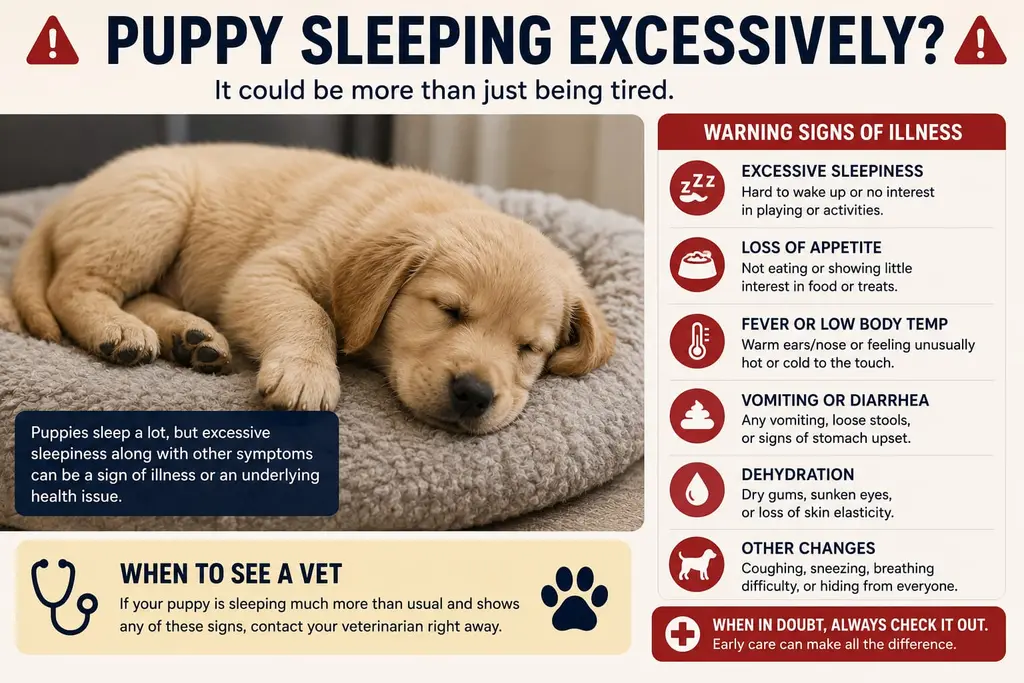
Watch for these signs alongside excessive sleep:
- Loss of appetite
- Vomiting
- Diarrhea
- Noticeable weight loss
- Weakness beyond typical puppy tiredness
- Fever
- Trouble breathing
- Difficulty waking your puppy up
- Signs of pain, such as whimpering or reluctance to move
If your puppy shows several of these signs together, this moves beyond normal puppy sleep and into territory worth addressing promptly with your veterinarian.
Should I Let My Puppy Sleep As Much As It Wants?
In general, yes. Puppies regulate their own sleep needs fairly well, and interrupting rest unnecessarily can actually work against healthy development. There are only a few situations where waking a sleeping puppy makes sense:
- For a scheduled feeding
- For a needed potty break
- For medication that must be given at a specific time
- When your veterinarian has specifically advised monitoring or waking
Outside of these situations, it is generally best to let a sleeping puppy sleep.
How To Help Your Puppy Sleep Better
- Provide a comfortable bed that supports your puppy’s size and gives them a consistent, cozy space to settle into. Our where should a puppy sleep on their first night guide covers proper sleeping setup in detail.
- Keep a consistent daily routine, since predictability helps puppies settle into sleep more easily.
- Match exercise to your puppy’s age and energy level, avoiding both under-stimulation and overtiring activity right before rest periods.
- Offer mental stimulation through short training sessions or puzzle toys, which supports healthy tiredness alongside physical activity.
- Provide a quiet, low stimulation room for naps and nighttime sleep, away from excessive noise or foot traffic.
- Stick to a correct feeding schedule, since irregular meal timing can disrupt overall daily rhythm.
- Offer a potty break before bedtime, which supports more restful, uninterrupted overnight sleep.
Crate training is also highly effective for supporting healthy sleep, as our how to crate train a puppy guide covers. If nighttime sleep specifically continues to be a struggle rather than daytime napping, our puppy won’t sleep through the night guide covers that topic in much greater depth, including solutions for puppies crying in the crate.
When To Call Your Veterinarian If your puppy is Sleeping so much?
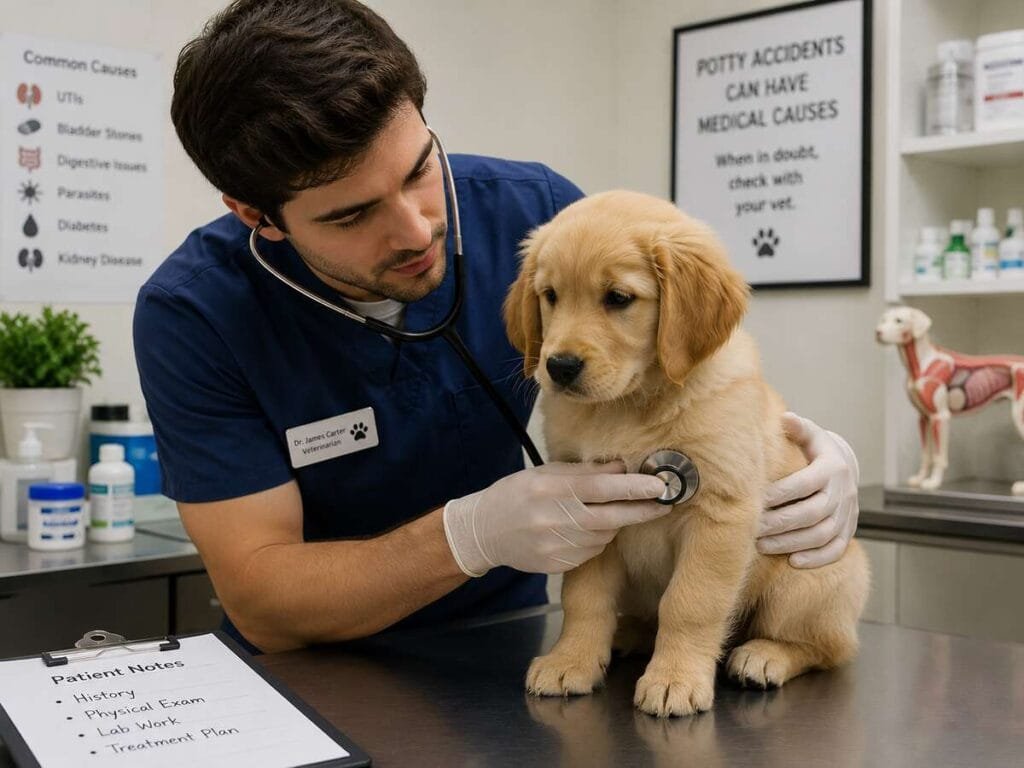
Contact your veterinarian promptly if your puppy shows any of the following:
Excessive sleep paired with vomiting, diarrhea, refusal to eat for more than a few hours, extreme lethargy, difficulty waking, fever, pain, or trouble breathing. These combinations can point toward a serious underlying issue that needs prompt evaluation rather than a wait-and-see approach.
If you are ever genuinely uncertain whether your puppy’s sleep pattern falls within normal range, a quick call to your veterinarian’s office for guidance is always a reasonable step.
Frequently Asked Questions
Is it normal for puppies to sleep 20 hours?
Yes. Puppies commonly sleep 18 to 20 hours a day during their first couple of months, which supports the rapid growth and development happening during this stage. This can feel surprising to first-time owners, but it is well within the expected range.
Can puppies sleep too much?
Excessive sleep on its own, without other symptoms, is usually not a concern. Sleep becomes worth addressing when it is paired with other warning signs like loss of appetite, vomiting, or unusual lethargy that does not match your puppy’s normal behavior once awake.
Should I wake my puppy?
Generally no, except for scheduled feedings, potty breaks, medication, or specific veterinary guidance. Puppies typically regulate their own sleep needs well on their own, and interrupting rest unnecessarily can work against the recovery their body needs.
Why is my puppy suddenly sleeping more?
This is often explained by a growth spurt, a particularly active or stimulating day, recent vaccination, or warm weather. If the change is not clearly explained by one of these factors, monitor closely for additional symptoms over the following 24 hours.
Why is my puppy sleeping so much and not eating?
This combination is worth taking seriously, since it can point toward stress, teething, minor illness, or in more serious cases, conditions like parvo or parasites. Persistent appetite loss alongside excessive sleep, especially lasting more than a few hours, deserves veterinary attention rather than a wait-and-see approach.
At what age do puppies sleep less?
Sleep needs gradually decrease as puppies grow, dropping from around 18 to 20 hours at 8 weeks old to closer to adult levels of 12 to 14 hours by around a year old, depending on the individual dog and breed.
Conclusion
Sleeping a large portion of the day is completely normal for a young puppy, supporting the rapid growth, brain development, and energy recovery happening behind the scenes. Most of the time, there is nothing to worry about. Pay closer attention when excessive sleep is paired with other symptoms like appetite loss, vomiting, or unusual lethargy, and do not hesitate to reach out to your veterinarian if something feels off. Trusting your instincts alongside the guidance in this article will help you tell the difference between a completely normal nap-filled day and a situation that needs closer attention.
For a comprehensive age-by-age breakdown of normal sleep expectations as your puppy grows, our puppy sleep schedule by age guide provides detailed guidance from 8 weeks through one year.
According to the American Kennel Club (AKC), extensive sleep is a normal and expected part of healthy puppy development. The American Veterinary Medical Association (AVMA) recommends veterinary evaluation whenever excessive sleep is paired with other concerning symptoms rather than occurring on its own. Both the Merck Veterinary Manual and VCA Animal Hospitals offer additional detail on normal puppy development timelines and the warning signs that distinguish routine tiredness from a genuine medical concern.
Author Bio
David Jason is the founder of My Pet Care Tips and writes practical, research based guides to help pet owners raise healthier, happier dogs and cats. His content focuses on clear, beginner friendly advice backed by trusted veterinary resources and real world pet care best practices.