
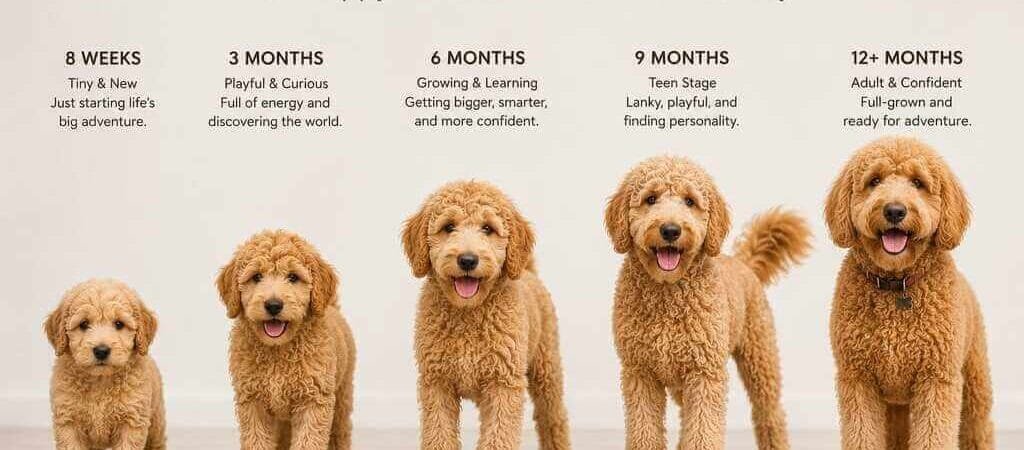
This goldendoodle puppy guide walks you through everything that happens during your dog’s first 12 months, from a tiny newborn to a curly-coated, food-motivated almost-adult who has probably already tested every boundary in your house.
Goldendoodles bring their own unique mix of traits to puppyhood. Genetics from two very different parent breeds mean size, coat, and even temperament can vary more than with a purebred dog. Rapid early growth, a dramatic coat transition, and a real question mark around shedding all overlap during this first year.
Quick answer: Expect the fastest physical growth in the first 6 months, most height reached by 10 to 12 months, and continued filling out until 18 to 24 months depending on size. The coat transition typically happens between 4 and 8 months, and true shedding levels depend heavily on genetics rather than the Goldendoodle name alone.
Preparing for Your Goldendoodle Puppy
Before diving into the month-by-month breakdown, a little preparation goes a long way. This goldendoodle puppy guide assumes you already have your puppy, but a few basics are worth mentioning up front.
Goldendoodles inherit traits unpredictably from both parent breeds. That means grooming needs, energy levels, and even final size can differ meaningfully between two puppies from the same litter. Puppy-proof your home, and prepare for a curious, food-motivated dog who investigates everything within reach.
Stock up on essentials ahead of time: a properly sized crate, a quality puppy food, a collar and leash, durable chew toys, and grooming basics like a slicker brush and metal comb. Given how much this breed’s coat can change, having grooming tools ready from day one saves you from scrambling later.
Goldendoodle Puppy Guide: Month-by-Month Overview
Every puppy develops on their own timeline, but this general pattern shows up consistently across the breed.
| Age | What’s Happening |
|---|---|
| 0-8 weeks | With mother and littermates, eyes and ears open, early social skills develop |
| 2-3 months | Home with you, growth ramps up, training and socialization begin |
| 3-6 months | Fastest physical growth, teething, size becoming more predictable |
| 4-8 months | Coat transition from soft puppy fur to adult texture |
| 6-12 months | Sexual maturity, adolescence, near-adult height for many puppies |
| 12 months and beyond | Close to full height, though weight and coat continue developing |
Weeks 1-8: Before They Come Home
Newborn Goldendoodle puppies are born blind and deaf, completely dependent on their mother. Eyes and ears open within the first couple of weeks, and mobility develops quickly after that.

By 4 to 5 weeks, puppies start interacting more with littermates, building early social skills. Litter size can also affect individual puppy size at this stage. Puppies from smaller litters often have more room to grow and less competition for milk, sometimes arriving home slightly larger than puppies from bigger litters.
Months 2-3: Settling In and Starting Training
The first weeks home set the tone for the rest of the year. There is no reason to wait for full vaccination before starting basic training and socialization, and Goldendoodles generally respond well to positive, food-based methods given their food motivation from the Golden Retriever side.
This is also when growth ramps up noticeably. If you are trying to predict whether your puppy will land closer to mini or standard size, our Mini vs Standard Goldendoodle guide breaks down what determines final size based on the Poodle parent used in the cross.
Establishing an Early Routine
Treat an 8-week-old puppy the way you would a very young toddler. Close supervision matters, along with a predictable schedule for potty breaks, feeding, and naps. A puppy who has not been outside within the last 45 minutes should not have free access to the floor, since this simple rule prevents a large share of avoidable accidents.
Months 3-6: Fastest Growth and Predictable Sizing
This stretch brings the most dramatic physical changes. Growth happens rapidly during these first several months before slowing into smaller, steadier increments afterward.
Feeding During Rapid Growth
Meal frequency shifts as your puppy matures, starting around 3 to 4 feedings a day at 8 weeks and gradually reducing to 2 meals by around a year old. Choose a puppy food rich in protein and appropriate fatty acids to support this rapid growth phase, and keep a close eye on body condition rather than chasing an exact number on the scale.
Size Becomes More Predictable
By this stage, many owners have a clearer sense of where their puppy will land on the size spectrum. Genetics from the Poodle parent play the biggest role here, more than anything from the Golden Retriever side.
Months 4-8: The Coat Transition Begins
Somewhere in this window, most Goldendoodle puppies begin shedding their soft puppy coat in favor of the denser, often wavier or curlier adult coat underneath. Our Goldendoodle Puppy Coat Transition guide covers exactly what to expect and how to prevent matting during this stage.
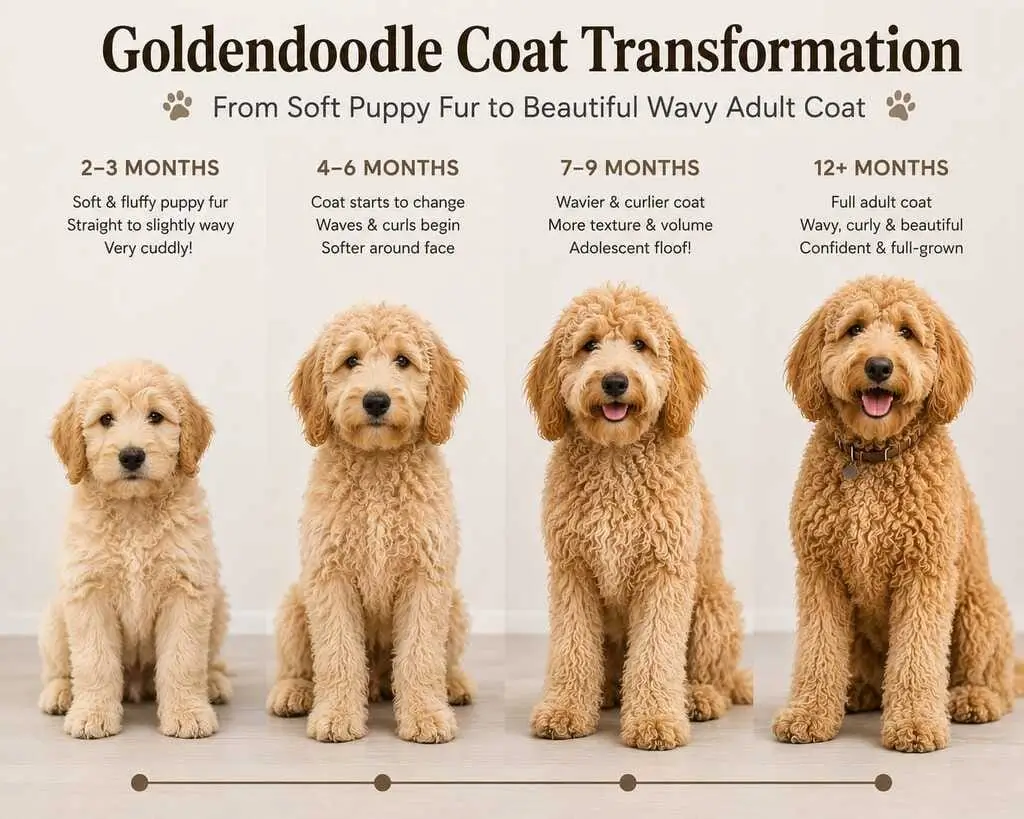
Does Every Puppy Really Shed Less?
Not necessarily. The idea that Goldendoodles are automatically hypoallergenic oversimplifies a genuinely complex genetic story tied to something called the furnishing gene. Our Do Goldendoodle Puppies Shed? The Hypoallergenic Myth guide breaks down what actually determines shedding levels, and why two puppies from the same litter can turn out very differently.
Grooming Routines Start Mattering More
Regular brushing becomes especially important once the coat transition begins. Adult Goldendoodles typically need grooming appointments every 4 to 6 weeks, though puppies can usually go a bit longer between trims while their coat is still settling.
Months 6-12: Sexual Maturity and Adolescence
By 6 months, your Goldendoodle puppy is approaching sexual maturity, and many owners describe this stretch, roughly 8 to 12 months and sometimes into the second year, as the most challenging part of puppyhood.
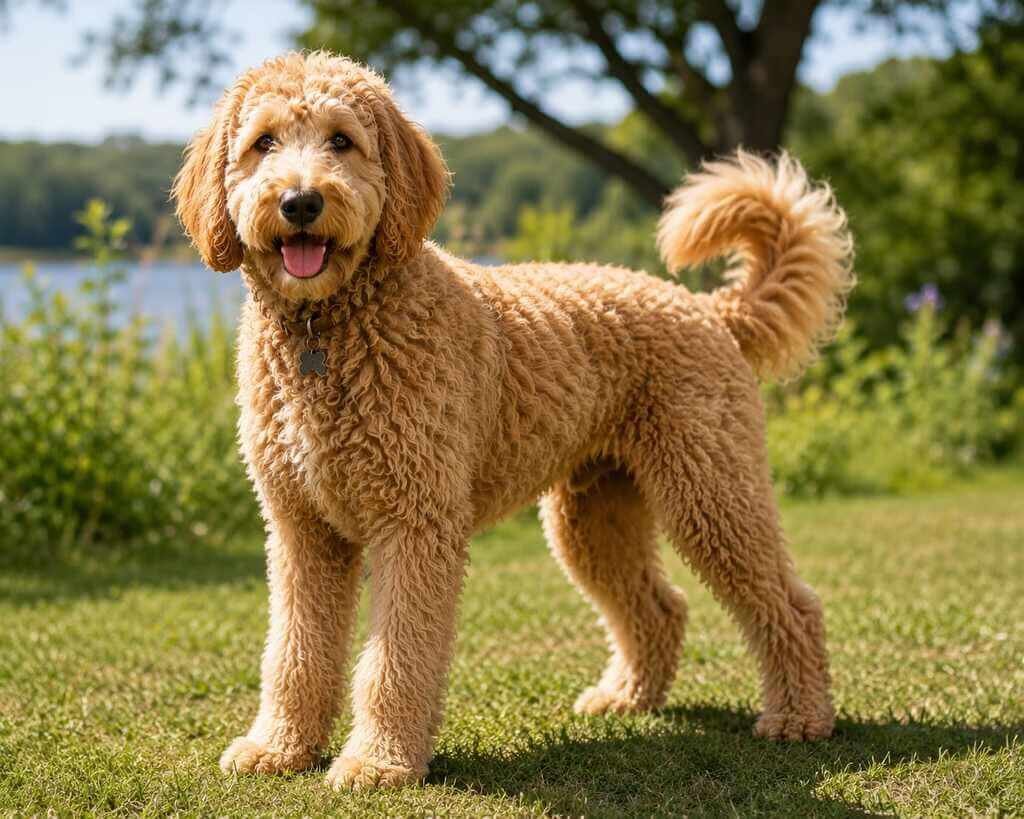
Why Adolescence Feels So Hard
Testing boundaries, selective listening, and bursts of stubbornness are all normal here, not signs that training has failed. This is a near-universal stage across breeds, and Goldendoodles are no exception despite their generally easygoing reputation.
When Do Goldendoodles Calm Down?
Most Goldendoodles start showing real signs of maturity between 12 and 24 months old. Many stay playful and energetic throughout their lives even after settling, which is part of what makes this breed so popular with active families.
Exercise and Spay/Neuter Timing
Structured exercise should still stay conservative during this stage, since joints are not fully developed yet, particularly in larger Standard Goldendoodles. Discuss spay or neuter timing with your vet, since decreased activity or hormonal changes around this procedure can also affect caloric needs and portion sizing.
Around 12 Months: Approaching Adulthood
Most Goldendoodles reach close to their adult height around their first birthday, though this varies by size category. Mini Goldendoodles often reach adult height between 10 and 12 months, sometimes continuing to fill out until 18 months. Standard Goldendoodles frequently take longer, not fully settling into their adult weight until closer to 2 years old.
What sets this breed apart from many others covered in a typical first-year guide is just how much individual variation exists, even within the same size category. Physical growth and mental maturity also do not always align, so your Goldendoodle may look fully grown well before they start acting like it.

Common First-Year Challenges
A few issues come up again and again during a Goldendoodle’s first year, and this goldendoodle puppy guide would not be complete without covering them.
Unpredictable Genetics
Since Goldendoodles combine two different breeds, individual puppies can vary more than owners expect in size, coat type, shedding, and even temperament. Setting realistic expectations early, rather than assuming every trait matches breeder marketing, makes the whole year smoother.
Coat Matting
The coat transition period is when mats form most easily, especially around the ears, armpits, and tail. Daily brushing during this stretch prevents most problems before they start.
Food Motivation and Portion Control
Given how food-driven this breed tends to be, especially with Golden Retriever genetics in the mix, portion control matters throughout the entire first year. Monitor body condition monthly and adjust portions as needed, particularly during growth spurts or after spay and neuter surgery.
Separation-Related Struggles
Goldendoodles are typically people-oriented dogs, which can make alone time genuinely difficult without gradual practice. Building up short, positive periods of independence early helps prevent separation-related distress as your puppy matures.
Goldendoodle Puppy Guide: Training Milestones by Month
Training goals shift as your puppy grows. This table gives a general sense of what is realistic to work on at each stage.
| Age | Training Focus |
|---|---|
| 2-3 months | Name recognition, sit, socialization, routine building |
| 3-4 months | Come, basic house manners, continued socialization |
| 4-6 months | Stay, leave it, loose-leash walking, reliable potty training |
| 6-9 months | Impulse control around distractions, settle cue |
| 9-12 months | Reinforcing all commands around real-world distractions |
Most Goldendoodle puppies are reliable with potty training by 4 to 6 months old, though occasional accidents can still happen until full maturity.
Health and Vet Checkpoints
Regular veterinary care matters throughout the first year, not just for vaccinations. The VCA Animal Hospitals recommends ongoing wellness exams during a growing puppy’s first year to monitor weight, joint development, and overall health, since mixed breeds like Goldendoodles can inherit health tendencies from either parent breed.
Watch for visible ribs, low energy, or a sudden loss of appetite, and talk to your vet promptly if your puppy is not gaining weight appropriately or seems too thin for their age and size category.
How Goldendoodle Development Compares to Other Breeds
If you have raised a purebred Golden Retriever or Labrador before, some parts of this goldendoodle puppy guide may feel familiar, particularly the food motivation and friendly temperament shared with retriever breeds. Where Goldendoodles genuinely differ is in how much individual variation exists within a single litter.
A purebred puppy’s growth, coat, and temperament follow a fairly predictable breed standard. A Goldendoodle puppy’s development depends heavily on which specific genes they inherited from each parent, which is exactly why two siblings can grow into noticeably different adult dogs. The American Kennel Club does not recognize Goldendoodles as an official breed for this reason, since consistency across generations is still developing compared to established purebred lines.
Goldendoodle Puppy Guide: First-Year Checklist
Use this goldendoodle puppy guide checklist as a quick reference throughout the year.
- Start training and socialization from day one
- Feed a quality puppy food and monitor body condition monthly
- Expect the coat transition to begin somewhere between 4 and 8 months
- Brush daily once the coat transition starts to prevent matting
- Do not assume automatic hypoallergenic status without knowing the genetics
- Keep structured exercise conservative until joints are more developed
- Discuss spay or neuter timing with your vet
- Prepare for adolescence to test your patience around 8 to 12 months
Frequently Asked Questions
How big will my Goldendoodle puppy get?
This depends heavily on which size of Poodle was used in the cross, ranging from around 15 pounds for minis to up to 90 pounds for standards. Our Mini vs Standard Goldendoodle guide covers this in detail.
When does a Goldendoodle puppy’s coat change?
Most puppies begin the coat transition between 4 and 8 months old, shedding their soft puppy fur for a denser adult coat.
Are Goldendoodle puppies really hypoallergenic?
Not automatically. Shedding and allergen levels depend on specific genetics, particularly the furnishing gene inherited from the Poodle parent, rather than the Goldendoodle name alone.
When do Goldendoodles calm down?
Most start showing real signs of maturity between 12 and 24 months old, though many stay playful throughout their lives even after settling.
How much exercise does a Goldendoodle puppy need?
Keep structured exercise conservative during the growth window, since joints are still developing, particularly in larger Standard Goldendoodles.
Do Goldendoodles make good family pets?
Yes, they are widely popular family dogs. Our Best Dog Breeds for Families guide covers how Goldendoodles compare to other family-friendly options.
Final Takeaway
Raising a Goldendoodle puppy through their first year means navigating unpredictable genetics, a real coat transition, and a shedding question that is more complicated than the name suggests. This goldendoodle puppy guide is meant as a starting point, and consistency in training, feeding, and grooming throughout the year makes the biggest difference in how your dog turns out.
Since the Golden Retriever side of this cross shapes so much of the temperament and coat, our Golden Retriever Puppy: Complete First-Year Guide is a useful companion resource. For the full breakdown of each stage covered here, our Mini vs Standard Goldendoodle, Goldendoodle Puppy Coat Transition, and Do Goldendoodle Puppies Shed? The Hypoallergenic Myth guides go deeper into each topic in this goldendoodle puppy guide.
Author Bio
David Jason is the founder of My Pet Care Tips and writes practical, research based guides to help pet owners raise healthier, happier dogs and cats. His content focuses on clear, beginner friendly advice backed by trusted veterinary resources and real world pet care best practices.