Leaving a new puppy alone can feel difficult when you have work, school, or even a quick trip to the grocery store. The good news is that you can teach a puppy to feel comfortable without you. The important part is knowing what they are ready for today, rather than expecting them to cope with a full workday from the start.
How long can you leave a puppy alone? Very young puppies need frequent toilet breaks, meals, supervision and company. Start with absences of a few seconds or minutes and gradually build up only while your puppy remains relaxed. Older puppies may manage longer stretches, but a puppy’s age alone does not tell you how long they can comfortably stay home without care. For the youngest puppies, plan care in short intervals, often an hour or less while awake. Arrange help rather than leaving a young puppy alone for an entire workday.
How long can puppies be left alone at each age?
A puppy that can wait for its next toilet break may still become frightened when you walk out the door. Think of bathroom needs and emotional readiness as two separate limits. The shorter of the two matters when you plan an absence.
The American Kennel Club’s age guidance describes how bladder control generally increases as puppies mature. It is not a promise that every puppy can be alone for the same number of hours. Dogs Trust recommends building independence gradually, watching behavior and arranging help for longer absences.
| Puppy age | What to prioritize when planning an absence |
|---|---|
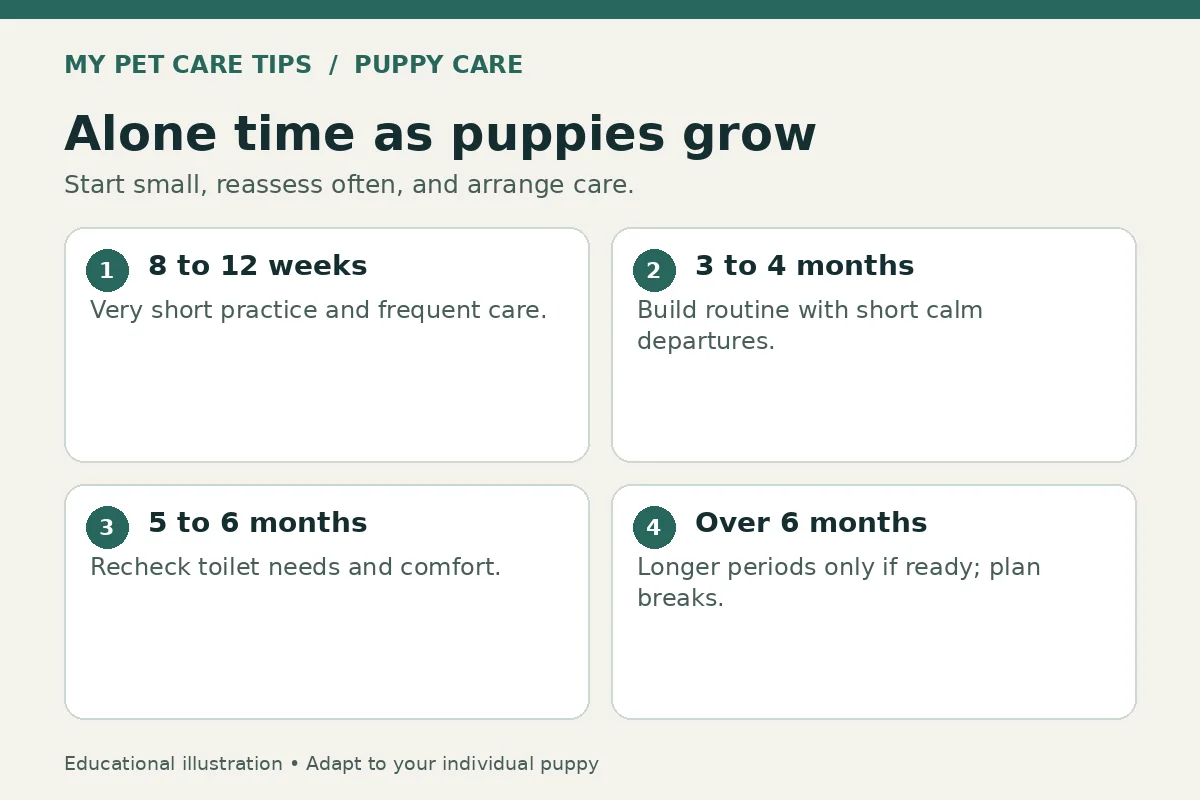
| 8 to 10 weeks | Frequent care and supervised adjustment. Begin with very short practice while someone is nearby. |
| 10 to 12 weeks | Maintain regular toilet breaks and meals. Increase practice only if relaxed behavior is consistent. |
| 3 to 4 months | Build a routine of short departures and returns. Arrange another person to cover longer absences. |
| 5 to 6 months | Reassess toilet needs, meals and observed comfort. Do not assume age makes a long absence suitable. |
| Over 6 months | A trained, relaxed older puppy may cope with longer periods. Plan daytime care breaks rather than making an entire work shift the goal. |
For a rough daytime care plan, the AKC estimates that puppies younger than 10 weeks may need a toilet opportunity within an hour, with some puppies aged 10 to 12 weeks managing about two hours. At three months its general bladder estimate rises to roughly three hours. These are approximate bathroom intervals, not recommended minimums or permissions to leave a puppy alone that long. Plan visits sooner whenever your puppy needs them. For an individual bathroom schedule, use our puppy potty training schedule by age alongside the advice from your veterinarian. Puppies with health concerns or unusual toilet needs may require more frequent care.
Can you leave an 8 week old or 10 week old puppy home alone?
At this stage, a new puppy is learning where to sleep, where to go potty, and how the people in the house behave. A few comfortable moments apart while you are still home are a useful first goal. If possible, arrange to be home more during those early days, or have a trusted adult help with care.
Do not turn a grocery trip or a work shift into the first alone time lesson. If you have to leave before your puppy is ready, ask someone to stay with them. Practical help is often more useful than another training exercise.
How to tell whether your puppy is ready for a longer absence
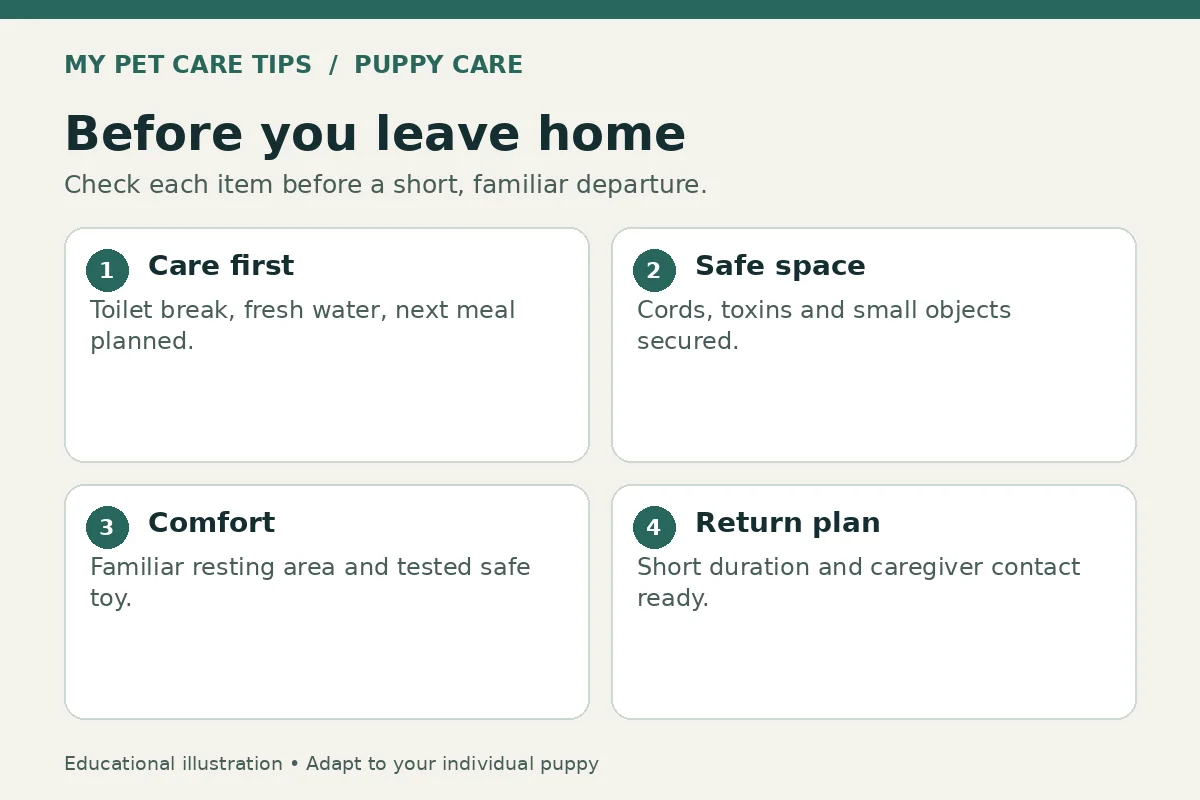
Before you leave, ask four questions. Can your puppy settle when you are out of sight? Will they have access to water and a safe resting area? When do they next need food, a toilet break or other care? Who can help if you cannot return in time?
A pet camera can help you see what happens once the door closes. Look for whether your puppy rests, calmly explores a safe area or engages with an appropriate toy. If they pace, vocalize repeatedly, pant when the room is comfortable, or repeatedly try to escape, shorten the exercise and work at an easier level. A camera does not replace a caregiver.
Leaving a puppy alone at home for the first time
The first successful departure may be so short that you are still standing outside the room. That is fine. You are teaching your puppy that brief separation is ordinary and that you return.
- Choose a safe, comfortable place that your puppy has explored with you. Offer water and age appropriate rest and play.
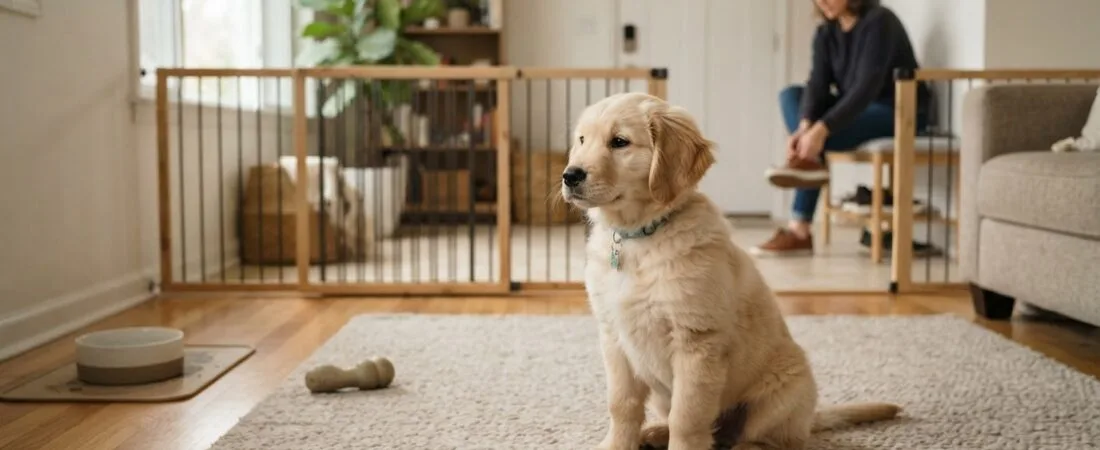
- Practice stepping behind a gate or out of sight for a moment. Return while your puppy is still comfortable.
- Repeat at an easy duration. Increase gradually only when your puppy can settle, and vary practice so every session is not harder than the last.
- Practice touching your keys, putting on shoes and opening the door without always leaving. If these actions cause worry, make the practice easier.
- Try a brief step outside the house after the indoor practice is going well. Observe your puppy’s response and return promptly if they become distressed.
If crying escalates or your puppy appears panicked, do not make them wait through it to complete a timer. Dogs Trust recommends reducing the time apart when signs of anxiety appear. A qualified reward based trainer or veterinarian can help if very short separations are consistently difficult.
Where should a puppy stay when you leave the house?
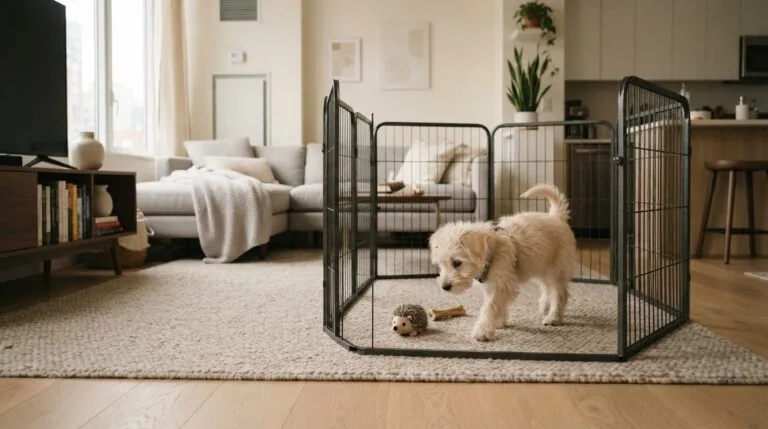
A suitable puppy area depends on the dog’s comfort and the risks in your home. A gated room or exercise pen can give a puppy more room to change position and move around than a crate. It must still be secure: remove accessible hazards, secure cords, check gate stability, and offer fresh water in a bowl your puppy can use safely. Select only toys you have already assessed during supervised play.
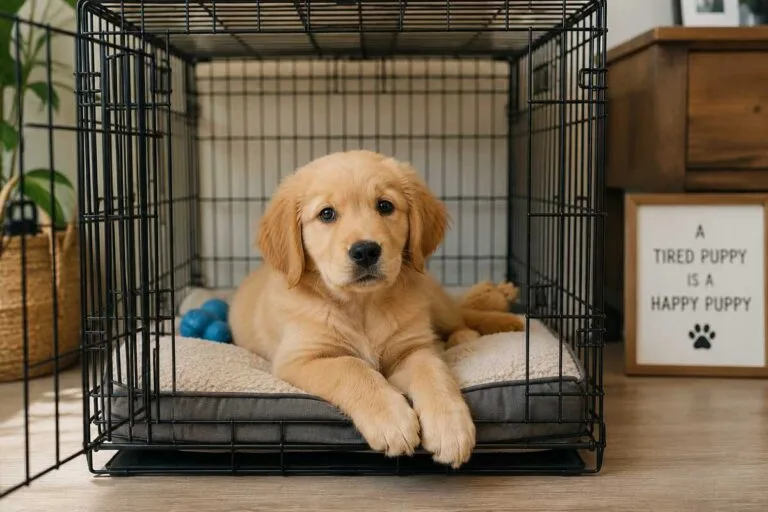
A crate may work for short periods if your puppy is comfortable in it, but do not use it as a way to make an absence longer. If your puppy is distressed by confinement, choose an appropriate alternative and seek advice. The crate training guide explains how to introduce the crate, and our guide to crate time by age addresses confinement specifically.
If your puppy will use a gated area in an apartment, check the room for cords, cleaning products, small objects, windows, and balcony access before leaving. Our room-by-room puppy-proofing check can help you cover those safety risks.
What if you have to leave a puppy alone while at work?
An eight hour shift is not simply eight hours away from your puppy. Add your commute, unexpected delays, and the time it takes to return home. A puppy that is learning independence still depends on you to arrange care throughout that period.
Consider a family member, neighbor, pet sitter or dog walker who can visit as often and as long as your puppy needs. Agree on feeding, bathroom breaks, water, and what to do if the puppy appears unwell or worried. For a very young puppy, a caregiver who can stay for extended periods may be necessary. Discuss daycare suitability and vaccination timing with your veterinarian before choosing group care.
An example of arranging care during a workday
Imagine a person working away from home from 9 a.m. to 5 p.m. with a recently adopted puppy. Instead of trying to train the puppy to tolerate that entire period, the person arranges for a caregiver to stay for the periods they cannot cover. They share the puppy’s normal meal and toilet routine, leave clear contact details, and practice tiny departures when they are home.
Once the puppy consistently feels relaxed during short absences, the household can reassess the plan. The caregiver’s timing should reflect the puppy’s needs, not an arbitrary schedule copied from an adult dog’s routine.
Signs that a puppy is not coping well when left alone
A puppy may be quiet one day and struggle the next. Watch for persistent barking or howling, frantic attempts to get through a door or gate, repeated pacing, heavy panting without heat or exercise, distress related accidents, or an inability to settle. These are reasons to reassess the absence, not reasons to punish a puppy.
Medical needs, discomfort and fear can produce overlapping signs. Do not assume every accident or bark means separation anxiety. If the behavior persists, consult your veterinarian or an appropriate qualified behavior professional. Our dog separation anxiety guide provides additional context. The American Veterinary Society of Animal Behavior recommends humane, reward based training methods.
Frequently asked questions
Can I leave my puppy alone for eight hours if I provide water and toys?
Water and suitable toys are important, but they do not replace bathroom breaks, meals, supervision when needed, and social contact. Arrange care during a full workday instead of expecting a young puppy to manage the entire time without help.
Is it okay to leave a puppy alone while it sleeps?
A puppy that is resting calmly in a secure area may be able to manage a brief, familiar absence. Puppies wake at unpredictable times, so sleep is not a reliable way to extend an absence beyond the puppy’s demonstrated comfort or care needs.
How do I know when to increase alone time?
Increase time only after your puppy has repeatedly handled the current duration comfortably and you can still meet all their needs. If a longer attempt leads to worry, return to shorter practice rather than pushing ahead.
What should I do if my puppy cries as soon as I leave?
Return and check their needs, then plan much shorter separations that they can tolerate. If your puppy becomes distressed even with very brief practice, ask your veterinarian or a qualified reward based behavior professional for support.
Will my puppy get used to being alone automatically as they grow?
Not necessarily. Maturity may help with bathroom control, but confidence when alone is something to practice at a pace that suits the individual dog. Make short, comfortable separations part of an ordinary routine.
A simple rule for tomorrow's departure
Before leaving, compare how long your puppy has been comfortable alone with when they next need care. Choose an absence shorter than both limits, and arrange reliable help if your schedule demands more time. It is a small planning habit that can make daily life easier for you and your puppy.
For more first year care advice, see our beginner’s puppy care guide.
Editorial information
This educational guide is based on published puppy care and animal behavior guidance from the American Kennel Club, Dogs Trust and the American Veterinary Society of Animal Behavior. The illustrations are original educational graphics, not photographs of a tested training session. This guide is not an individual veterinary assessment. Seek advice from your veterinarian for concerns about your puppy’s health or behavior.