
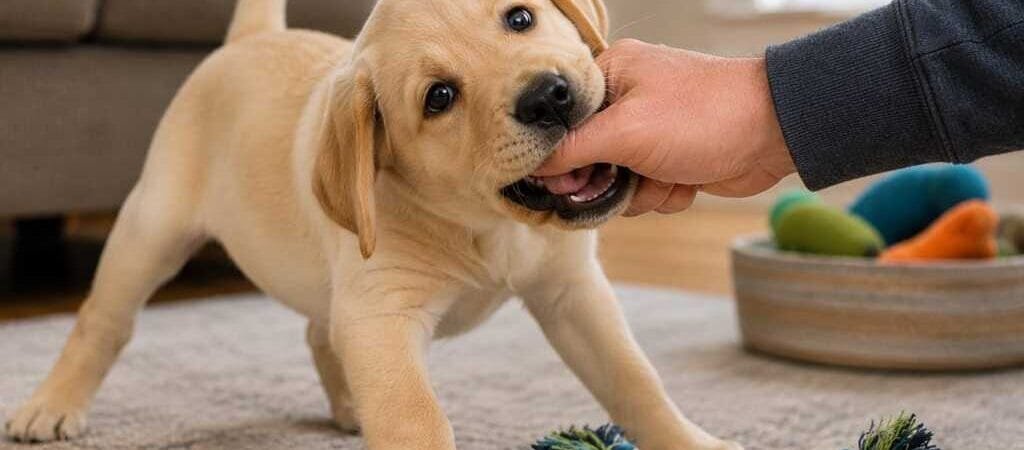
If your hands, sleeves, and shoelaces have all become chew toys, you are living through the labrador puppy biting phase, and you are far from alone. Labradors are known for being one of the mouthier breeds during puppyhood, and there is a real reason behind it.
The good news is that this phase does pass, even when it feels endless in the moment. Understanding why it happens and how long it typically lasts makes it much easier to get through.
Quick answer: Labrador puppy biting usually peaks between 3 and 6 months old during teething, then gradually improves. Most Labs significantly reduce mouthing between 8 and 10 months, with some retriever-typical biting continuing in a milder form until around 12 to 14 months.
Why Do Labrador Puppies Bite So Much?

Labradors were bred as retrievers, meaning generations of dogs selected specifically for their drive to carry things in their mouths. That instinct shows up early, and it shows up strong.
A few overlapping reasons explain why Labs tend to bite more than many other breeds.
- Retriever instinct: Labs are genetically inclined to explore and interact with the world using their mouths
- Teething discomfort: Sore gums make chewing feel soothing, especially between 2 and 6 months
- Exploration: Puppies learn about new objects and textures largely through mouthing
- Leftover littermate habits: Puppies play-bite with siblings before coming home, and that habit does not disappear immediately
Labrador Puppy Biting Timeline by Age
| Age | What to Expect |
|---|---|
| 8-10 weeks | Mouthing begins in earnest, often intense right from the start |
| 3-4 months | Peak biting phase, often called the “piranha puppy” stage |
| 4-6 months | Adult teeth come in, teething discomfort starts easing |
| 6-9 months | Gradual, noticeable improvement with consistent training |
| 9-14 months | Most Labs have largely outgrown mouthing, though retriever instincts can linger |
Some individual Labradors continue mild mouthing well past a year old, especially if biting was accidentally reinforced earlier on. This does not mean training failed. It usually just means a bit more consistency is needed.
Is It Normal for My Labrador Puppy to Bite This Much?
Yes. Retriever breeds, including Labradors and Golden Retrievers, are widely recognized as mouthier than average during puppyhood specifically because of their breeding purpose. A Lab puppy that seems obsessed with putting everything in their mouth is behaving exactly as their genetics intend.
This is not the same as aggression. Puppy biting during this stage is almost always rooted in teething, play, and exploration rather than any intent to cause harm.
How to Reduce Labrador Puppy Biting
You cannot stop the biting phase entirely, but you can shape how your puppy bites and speed up the improvement.
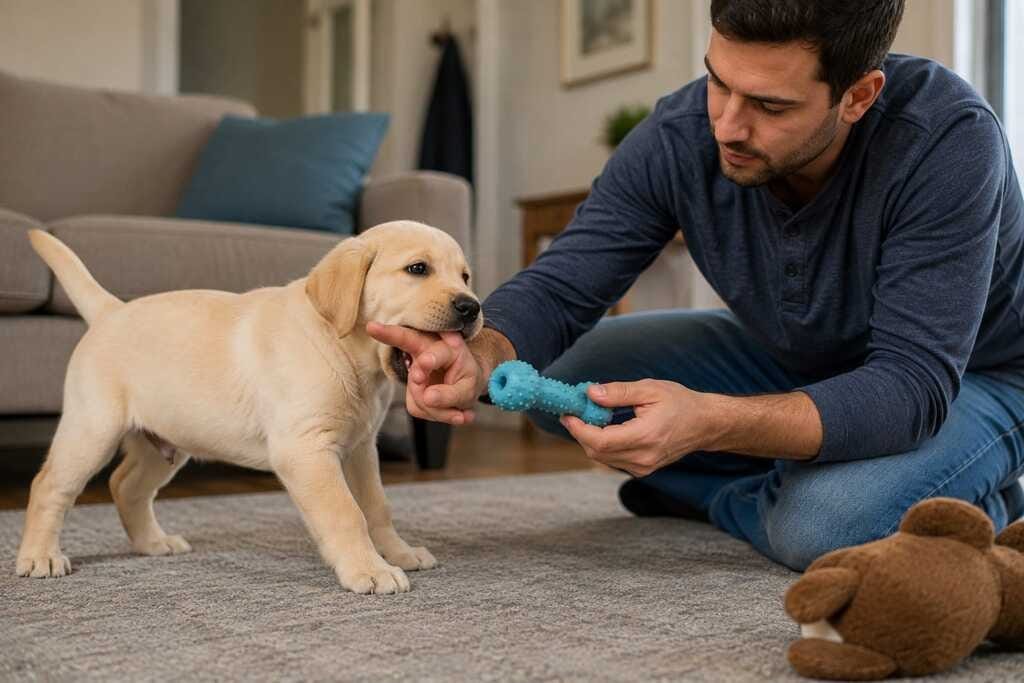
Redirect to Appropriate Toys
Keep chew toys within reach at all times so you can quickly swap your hand or sleeve for something your puppy is allowed to bite. Consistency here matters more than any single training trick.
Teach Bite Inhibition
A simple, sharp “ouch” followed by briefly withdrawing attention teaches your puppy that biting ends the fun. This mimics how puppies learn from littermates and tends to work well for most Labs.
Avoid Encouraging Rough Hand Play
Wrestling with bare hands or wiggling fingers near your puppy’s face can unintentionally reward biting. Use toys as the go-between instead of your hands.
Practice the “Leave It” Command
Teaching a reliable leave it command gives you a way to interrupt biting before it escalates, and it is useful well beyond the puppy stage.
Stay Consistent Across the Household
Every family member needs to respond to biting the same way. Mixed signals, like one person allowing rough play and another discouraging it, slow down progress significantly.
Teething and Biting: What’s the Connection
The VCA Animal Hospitals notes that teething drives much of the intense biting seen in young puppies, since chewing helps relieve sore, irritated gums. This is why the biting phase often peaks right alongside the heaviest teething period, roughly 2 to 6 months old.

Once adult teeth are fully in, usually by 6 months, biting intensity typically starts to ease, even if full bite inhibition takes a few more months of consistent practice.
When Biting Becomes a Concern
Most Labrador puppy biting is completely normal and resolves with time and consistent redirection. A few signs point to something beyond typical puppy mouthing.
- Biting paired with growling, stiff body language, or resource guarding
- Biting that seems to intensify with age rather than gradually improve
- Bites that break skin repeatedly despite consistent training
- Fear-based biting triggered by specific people, sounds, or situations

The American Veterinary Medical Association recommends reward-based training methods for addressing biting behavior, and suggests consulting a veterinarian or certified trainer if biting seems aggressive rather than playful, or is not improving with consistent effort.
Frequently Asked Questions
At what age do Labrador puppies stop biting?
Most significantly reduce mouthing between 8 and 10 months, with continued improvement through 12 to 14 months as bite inhibition fully develops.
Why is my Labrador puppy so mouthy compared to other breeds?
Labradors are retrievers bred to carry things in their mouths, which makes them naturally mouthier than many other breeds during puppyhood.
Is it normal for my 6-month-old Lab to still bite?
Yes. Six months is still within the typical range for improving but not fully resolved biting, especially for retriever breeds.
Does teething cause Labrador puppy biting?
Yes, teething is a major driver of biting intensity, particularly between 2 and 6 months old when puppies are actively losing and growing teeth.
Should I punish my Labrador puppy for biting?
No. Reward-based redirection to appropriate toys, combined with consistent responses like a sharp “ouch,” works better than punishment and avoids creating fear or mistrust.
When should I worry about my Labrador puppy’s biting?
If biting is paired with aggression signals like growling or stiff body language, seems to be getting worse rather than better, or breaks skin repeatedly, it is worth consulting a vet or certified trainer.
Final Takeaway
The labrador puppy biting phase is intense, but it is temporary and deeply tied to this breed’s natural instincts and teething timeline. Redirecting to toys, staying consistent as a household, and giving it time will get you through to the other side, usually by somewhere between 8 and 14 months.
If you are also tracking your puppy’s physical growth during this stage, our Labrador Puppy Growth Chart covers what to expect for weight and height. For broader training foundations that pair well with this stage, our How to Train a Puppy at Home: Beginners Guide, How Much Exercise Does a Labrador Puppy Need?, When Do Labrador Puppies Calm Down? And Labrador Puppy: Complete First-Year Guide is a helpful next stop.
Author Bio
David Jason is the founder of My Pet Care Tips and writes practical, research based guides to help pet owners raise healthier, happier dogs and cats. His content focuses on clear, beginner friendly advice backed by trusted veterinary resources and real world pet care best practices.