
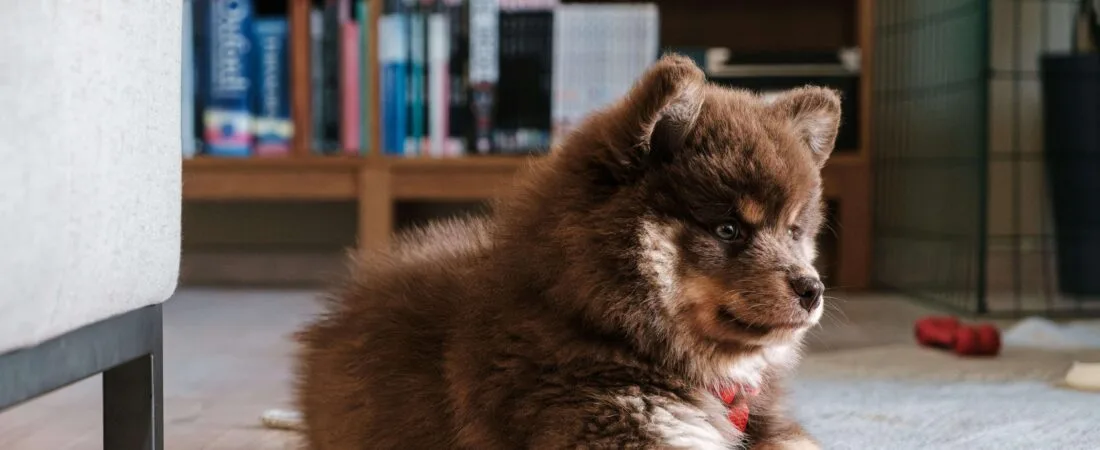
It was 2 AM and my new puppy Bruno was crying non-stop in his crate.I had read articles, watched YouTube videos, and bought every product the pet store recommended. But nothing had prepared me for that moment. Bruno was howling, I was exhausted, and I genuinely had no idea what I was doing wrong.If you are bringing a new puppy home and feeling the exact same way right now, I want you to take a breath. Training a puppy at home is completely possible, even if you have never owned a dog in your life. You do not need an expensive trainer or a fancy program. You need the right information, a little patience, and a whole lot of consistency.
This guide covers everything from potty training and crate training to basic commands and fixing problem behaviors, all using simple positive reinforcement methods that actually work in real homes. By the time you finish reading, you will have a clear plan to start today.
When Should You Start Training a Puppy at Home?
Best Age to Begin Puppy Training
The answer is simple. Start the day your puppy comes home.
Most puppies arrive with their new families between eight and twelve weeks of age. This is not too young to begin training. In fact, it is the perfect time. Puppies at this age are absorbing information constantly, whether you are intentionally teaching them or not.
Waiting until your puppy is six months old before starting training is one of the most common mistakes new owners make. By then, the puppy has already been learning on their own for months, and many of those habits are ones you will have to work very hard to undo.
The Critical Socialization Window — 8 to 16 Weeks
According to the American Kennel Club, the period between eight and sixteen weeks is called the socialization window for good reason. During these weeks, puppies are uniquely open to new experiences, people, sounds, textures, and environments.
Positive exposure during this window builds confidence and dramatically reduces fear-based behavior problems later in life. This does not mean throwing your puppy into overwhelming situations. It means gently introducing them to the normal things they will encounter throughout their life, one at a time, at a pace that feels safe for them.
Realistic Timeline — How Long Does Puppy Training Take?
Here is what most people do not tell you upfront. Puppy training is not a one-week project.
- Potty training typically takes two to four months of consistent effort
- Basic commands like sit and come can be learned within a few days to weeks
- Loose leash walking and impulse control take several months
- Full reliable behavior in distracting environments can take up to a year
Every puppy learns at their own pace. Some breeds pick up commands in two repetitions. Others need fifty. What matters more than speed is consistency. Daily short training sessions always beat occasional long ones.
Essential Tools and Setup for Puppy Training at Home
Must Have Puppy Training Supplies
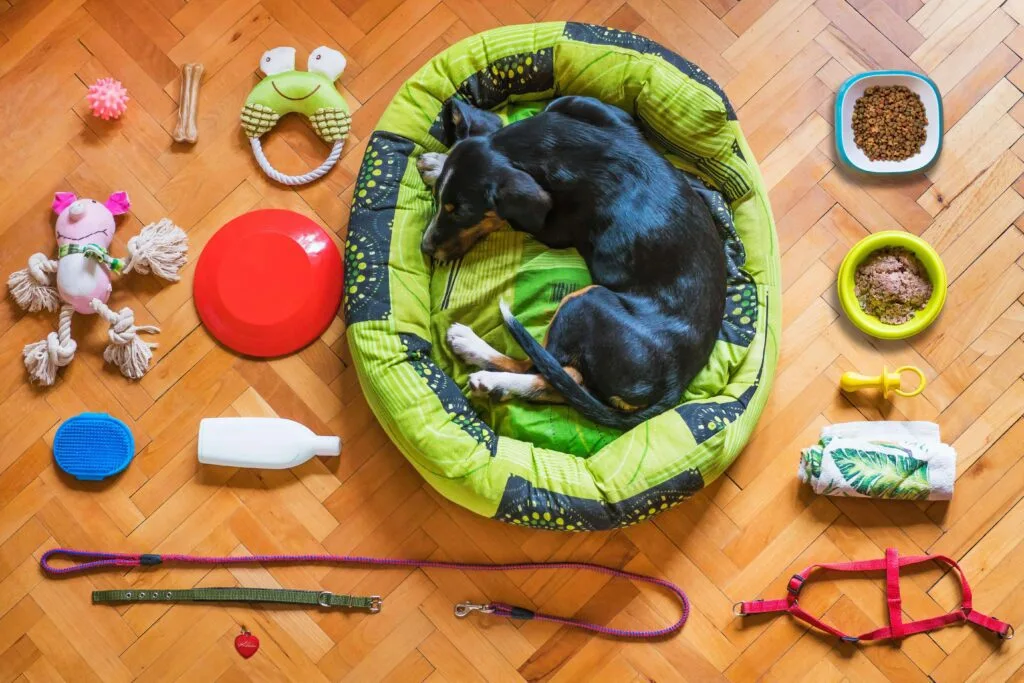
You do not need to spend a fortune. But having the right basics makes training significantly easier and more effective.
- A properly sized crate — just large enough for your puppy to stand, turn around, and lie down comfortably
- High value treats — small, soft, and something your puppy goes absolutely wild for
- A six foot standard leash — not a retractable leash, which teaches puppies to pull
- A properly fitted collar or harness
- Enzyme-based cleaning spray — for accidents, because they will happen
- Chew toys — several options to redirect inappropriate chewing
How to Puppy Proof Your House
Before your puppy roams freely, do a quick safety walkthrough of every space they will access.
- Tuck away all electrical cords
- Remove toxic plants from reach (check the ASPCA toxic plant list)
- Store shoes, remote controls, and anything chewable out of reach
- Use baby gates to limit access to areas where supervision is not possible
A smaller and more manageable space is actually better for a new puppy than full access to a large house. Less space means fewer opportunities for accidents and less chance of getting into trouble when you are not looking.
Creating a Safe Training Space
Choose one consistent area of your home as your main training spot. This should be a low distraction space where your puppy can focus on you. Keep training sessions in this area until your puppy understands a command reliably, then gradually practice in busier environments.
Creating a Daily Puppy Training Schedule
Structure and routine are your two most powerful tools when training a puppy at home. Puppies thrive when they know what to expect.
Sample Puppy Routine for 8 to 12 Weeks Old
| Time | Activity |
| 7:00 AM | Wake up, immediate potty break outside |
| 7:15 AM | Breakfast, then potty break 15 minutes after eating |
| 8:00 AM | Short play session, 10 to 15 minutes |
| 8:30 AM | Nap time in crate |
| 10:30 AM | Potty break, short training session 5 minutes |
| 11:00 AM | Supervised playtime |
| 12:00 AM | Lunch, potty break after |
| 12:30 AM | Nap time in crate |
| 3:00 AM | Potty break, socialization activity |
| 5:30 AM | Dinner, potty break after |
| 7:00 AM | Calm play and short training session |
| 9:00 AM | Final potty break, bedtime in crate |
Sample Schedule for 3 to 6 Months Old
By this age your puppy can hold their bladder a little longer and has more focus for training.
- Morning potty break and 10 minute training session
- Midday potty break and supervised free time
- Afternoon training session focusing on commands learned earlier
- Evening walk practice with loose leash basics
- Bedtime routine with final potty break
How to Balance Training, Play and Rest
Young puppies need a lot of sleep. A puppy aged eight to twelve weeks needs up to eighteen hours of sleep per day. Overtired puppies become cranky, distracted, and much harder to train.
Keep training sessions short. Five to ten minutes maximum for young puppies. End every session on a success, even if you have to make the last task easier to guarantee your puppy gets it right. A puppy that ends training feeling successful is eager to train again next time.
Potty Training a Puppy at Home — The Most Important Step
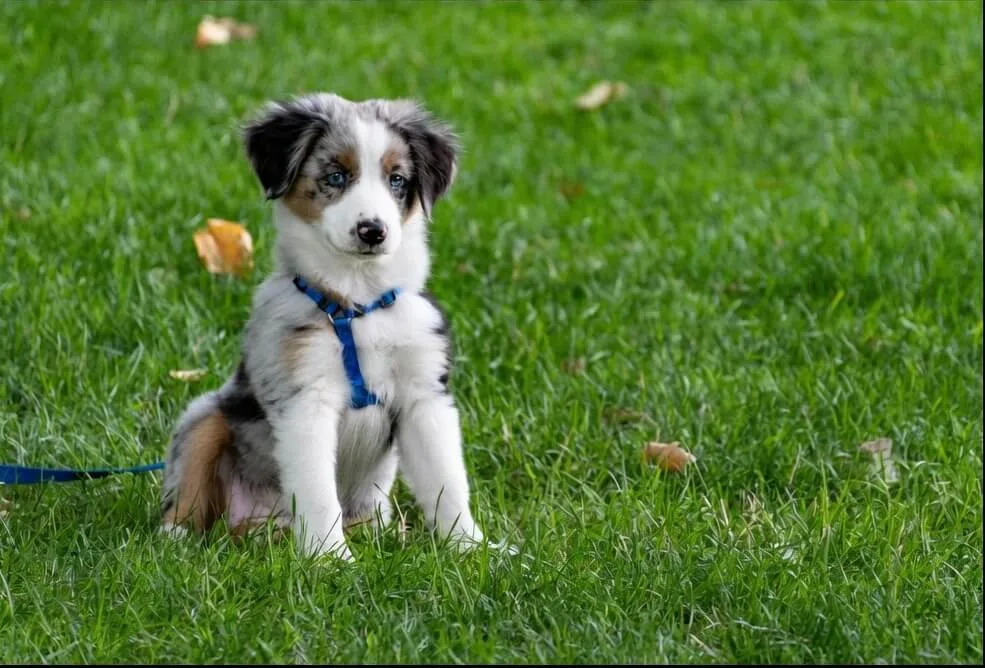
Potty training is the foundation of everything else. Get this right and the rest of your training journey becomes significantly easier.
Step by Step Potty Training Method
The core principle is simple. Prevent accidents before they happen and reward every single success outside immediately.
- Take your puppy outside first thing every morning before anything else
- Take them out after every meal, every nap, every play session, and right before bed
- In the early weeks, go outside every one to two hours
- When your puppy eliminates outside, reward with enthusiastic praise and a treat right at that moment, not after you go back inside
- Use the same outdoor spot every time so the familiar smell triggers the behavior
- Use a consistent phrase like “go potty” so your puppy associates the words with the action
Nighttime Potty Training Tips
Nighttime is the hardest part for most new puppy owners. Here is what actually works.
- Limit water intake two hours before bedtime
- Take your puppy out immediately before you go to sleep
- Set an alarm to take them out once during the night for puppies under twelve weeks
- Use the crate overnight because puppies naturally avoid eliminating where they sleep
- As your puppy gets older, gradually stretch the nighttime gap
Most puppies can sleep through the night without an accident by around four months of age with consistent crate training. For more details read our article on How to take care of Puppy.
How to Handle Accidents Without Punishment
Accidents will happen. This is guaranteed. How you respond matters enormously.
If you catch your puppy mid-accident, calmly interrupt them with a gentle sound, take them outside immediately, and praise them if they finish out there. If you find an accident after the fact, say absolutely nothing to your puppy. They cannot connect a punishment to something that happened even thirty seconds ago. Simply clean thoroughly with enzyme-based cleaner and move on.
Punishing a puppy for potty accidents always makes training take longer. It teaches fear instead of understanding.
Crate Training and Basic Obedience Commands
How to Crate Train a Puppy Successfully
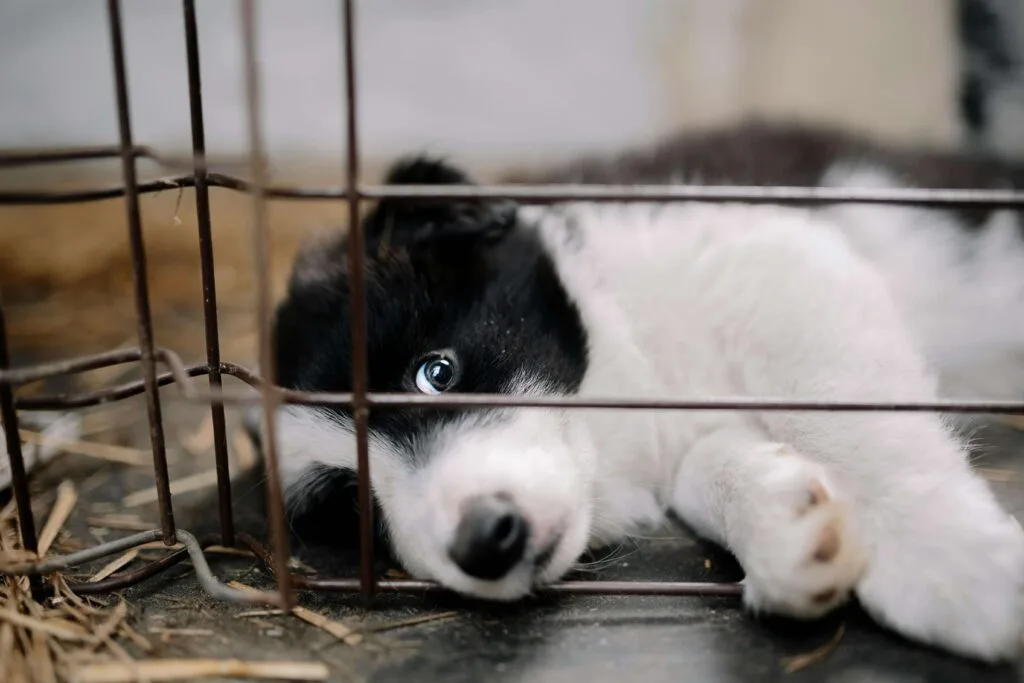
A crate is not a punishment. When introduced correctly, it becomes your puppy’s favorite safe space. Bruno, who cried all night in his crate that first week, now walks into his crate voluntarily every single night.
Here is how to get there.
- Place the crate in a common area where your puppy can see and hear the family
- Leave the door open initially and put comfortable bedding and a treat inside
- Let your puppy explore on their own terms without being pushed inside
- Once they enter willingly, begin closing the door for very short periods while you stay in the room
- Gradually increase the time over several days
- Never use the crate as punishment
For puppies crying at night, avoid responding to the crying with attention. Instead, make the crate as comfortable as possible with a covered top, a warm blanket, and a piece of your clothing nearby. Most puppies fully adjust within one to two weeks. For detailed guide read our article: How to crate train a puppy.
5 Essential Commands Every Puppy Should Learn
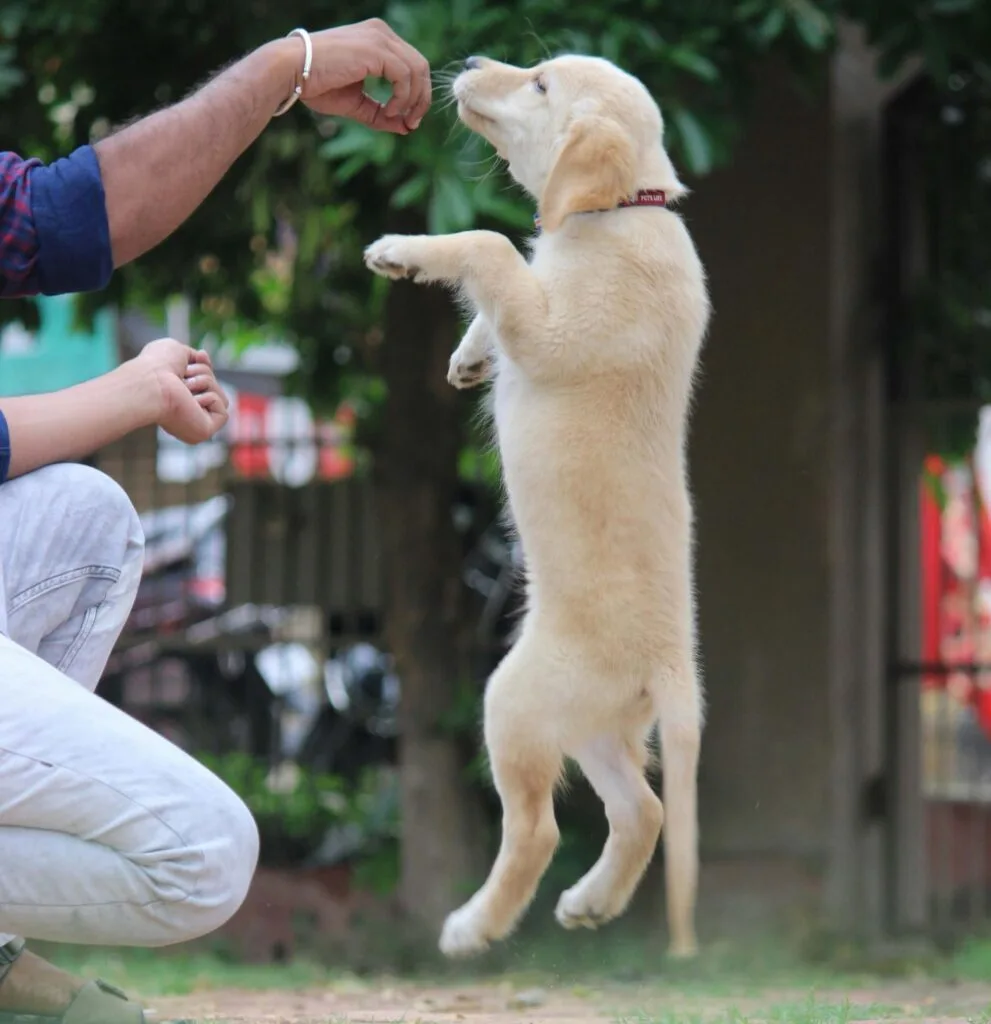
1. Name Recognition
Say your puppy’s name once in a happy tone. The moment they look at you, reward immediately. Practice fifteen times daily. Most puppies learn this within two to three days.
2. Sit
Hold a treat close to your puppy’s nose, move it slowly upward, and as their nose follows the treat their bottom will lower naturally. The moment they sit, say “sit” and reward. Never push their bottom down.
3. Come When Called
Crouch to your puppy’s level, say their name plus “come” in an excited tone, and reward generously when they reach you. Never call your puppy to come and then do something unpleasant. Come should always predict something wonderful.
4. Leave It
Hold a treat in your closed fist and let your puppy sniff and paw at it. The moment they pull back slightly, say “leave it” and reward from your other hand. This builds impulse control that is useful for the rest of their life.
5. Down — Lie Down
Ask your puppy to sit first, then slowly lower a treat from their nose toward the floor. As they follow the treat their elbows will lower. When they are fully down, say “down” and reward.
Leash Training Basics at Home
Start indoors before ever going outside. Let your puppy wear the collar and leash for short periods indoors so they get comfortable with the feeling. Begin walking inside and stop completely every time the leash becomes tight. When your puppy returns to your side, reward and continue. This teaches them that pulling makes all forward movement stop.
How to Stop Common Puppy Behavior Problems
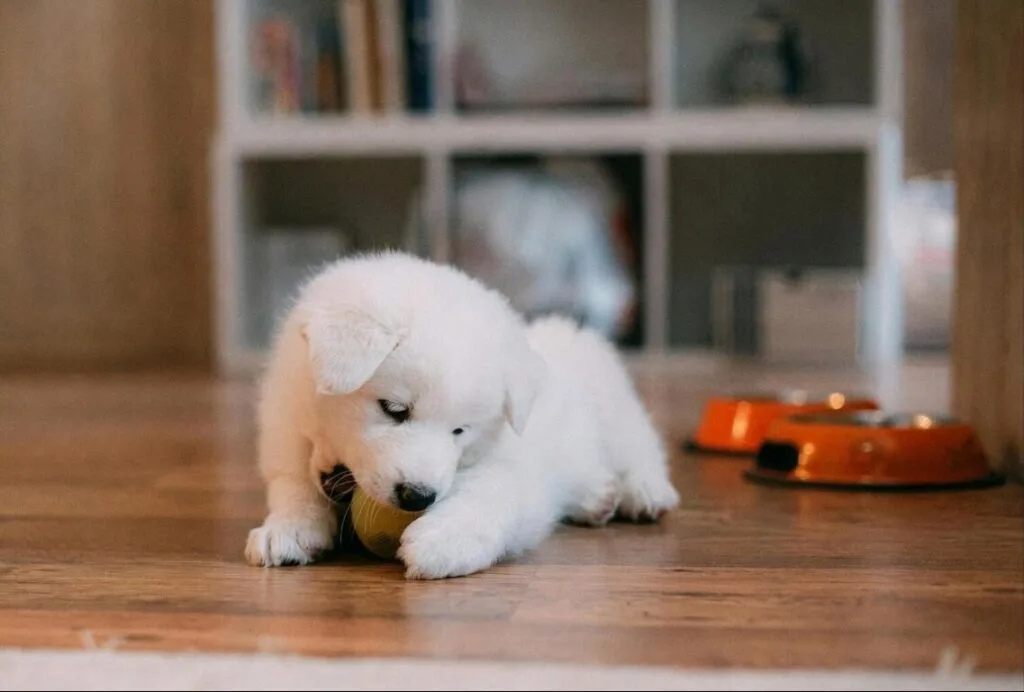
Stopping Puppy Biting and Nipping
Puppy biting is completely normal. Puppies explore the world with their mouths and also use biting to initiate play with their littermates. The goal is not to eliminate mouthing entirely but to teach your puppy to control how hard they bite.
When your puppy bites too hard, make a sharp yelp sound and immediately stop playing for thirty seconds. This mimics the feedback they would receive from another puppy. Be consistent every single time, and make sure everyone in your household responds the same way. Inconsistency is why this method fails for most families.
Most puppies grow out of heavy biting by four to five months of age with consistent handling.
Dealing with Excessive Barking and Jumping
For attention barking, the solution is complete and total ignoring until there is quiet, then reward the silence. Rewarding quiet is always more effective than trying to stop the barking directly.
For jumping, teach everyone in your household to turn away the moment four paws leave the floor. No eye contact, no pushing down, no talking. Four paws on the floor get all the attention. Jumping gets nothing at all. Consistency from every person your puppy meets is what makes this work.
Preventing Destructive Chewing
Puppies chew because they are teething and exploring. The answer is management and redirection, not punishment.
Keep inappropriate items out of reach and always have several appropriate chew toys available. When your puppy chews something they should not, calmly remove it and replace it with a proper toy. Praise them when they engage with it. Over time your puppy learns what is theirs to chew and what is not.
If you want to learn more about keeping your puppy safe at home, read our guide on human foods that are dangerous for dogs so you know exactly what to keep out of reach.
Frequently Asked Questions
How long does it take to train a puppy at home?
Basic commands can be learned in days to weeks with daily practice. Potty training typically takes two to four months of consistent effort. Full reliable behavior in all environments, including distracting ones, can take up to a year. Every puppy is different and consistency matters far more than speed.
What is the best age to start training a puppy?
The day they come home, which is usually around eight weeks of age. The period between eight and sixteen weeks is the single most impactful training window in a dog’s life. Starting during this period makes everything that follows significantly easier.
How do I potty train a puppy at night?
Limit water two hours before bed, take your puppy out immediately before sleeping, and use a crate overnight. Set an alarm for a nighttime trip outside for puppies under twelve weeks. Most puppies can sleep through the night without an accident by around four months of age with consistent crate training.
Should I use treats when training my puppy at home?
Absolutely, especially in the beginning. Treats are the clearest way to communicate to your puppy that they did exactly the right thing. As training progresses and your puppy understands commands reliably, you can gradually phase treats out and replace them with praise, play, and affection.
How can I stop my puppy from biting me?
Yelp and withdraw all attention for thirty seconds every time biting is too hard. Be completely consistent and make sure everyone in your home responds the same way. Provide appropriate chew toys as an alternative outlet. Most puppies significantly reduce biting by four to five months with consistent handling.
Final Thoughts
Training a puppy at home takes patience, consistency, and a lot of love. But the results are genuinely one of the most rewarding experiences of dog ownership.
Bruno, who kept me awake crying at 2 AM during that first week, eventually became the most well-trained and trustworthy dog I have ever had. Not because he was naturally easy, but because we put in consistent work during the early months when it mattered most.
Every puppy learns at their own pace. Celebrate every small win. Do not get discouraged during the hard phases because every single puppy owner goes through them.
The key is starting early, staying consistent, and using positive reinforcement. Your puppy genuinely wants to please you. With the right guidance and a little patience, you will build a bond that lasts for the rest of their life.
Ready to begin? Pick one thing from this guide today, whether it is potty training, crate introduction, or name recognition, and start right now. Share your biggest puppy training challenge in the comments below. I would love to help you through it.
Also read: Dog Exercise Routine Guide , Best Dog Toys for Active Dogs and Common Dog Health Problems , Human Foods Dangerous for Dogs and Best Dog Food for Bone Health
Author Bio
Written by David Jason, founder of My Pet Care Tips.
A passionate pet owner with years of hands-on experience training and caring for dogs at home. Every guide on this site is based on real experience and thorough research to help everyday pet owners succeed with their pets.
Note: For serious behavioral issues always consult a certified professional dog trainer or veterinary behaviorist.