
Labradors are famous for their energy, but figuring out labrador puppy exercise by age is trickier than it sounds. The American Kennel Club describes Labradors as an active, outgoing breed built for both work and play, which is exactly why so many owners underestimate how much structure their exercise actually needs. Too little and you have a bored, restless puppy. Too much, and you risk real damage to joints that are still developing.
The short version is that puppy exercise needs to scale with age, not enthusiasm. A young Labrador’s growth plates stay open far longer than most new owners expect, which changes how much structured activity is actually safe.
Quick answer: Use the 5-minute rule: about 5 minutes of structured exercise per month of age, up to twice a day, until your Labrador is close to 18 months old. Free play in a yard is fine at any age, but avoid forced runs, jumping, and hard surfaces until growth plates close.
Labrador Puppy Exercise Chart by Age
| Age | Recommended Exercise |
|---|---|
| 8-12 weeks | Gentle free play only, no structured walks needed |
| 3 months | About 15 minutes, up to twice daily |
| 4 months | About 20 minutes, up to twice daily |
| 6 months | About 30 minutes, up to twice daily |
| 9-12 months | Gradually increasing toward 45-60 minutes total daily |
| 12-18 months | Continued gradual increase, still avoiding high-impact activity |
| 18 months and older | Full adult exercise, typically 45 minutes to 2 hours daily depending on energy level |
The 5-Minute Rule Explained
The most widely used guideline for Labrador puppy exercise is simple: about 5 minutes of structured exercise per month of age, up to twice a day. A 4-month-old puppy, for example, gets roughly two 20-minute sessions rather than one long walk.
This rule mainly applies to structured activity like leashed walks. Free play in a securely fenced yard is generally fine at any age, since puppies naturally pace and rest themselves during unstructured play in a way they cannot on a forced walk.
Why Over-Exercising a Labrador Puppy Is Risky
Labrador growth plates typically do not fully close until around 18 months old. Until then, the cartilage at the ends of growing bones is still soft and vulnerable to damage from repetitive stress or high-impact activity.
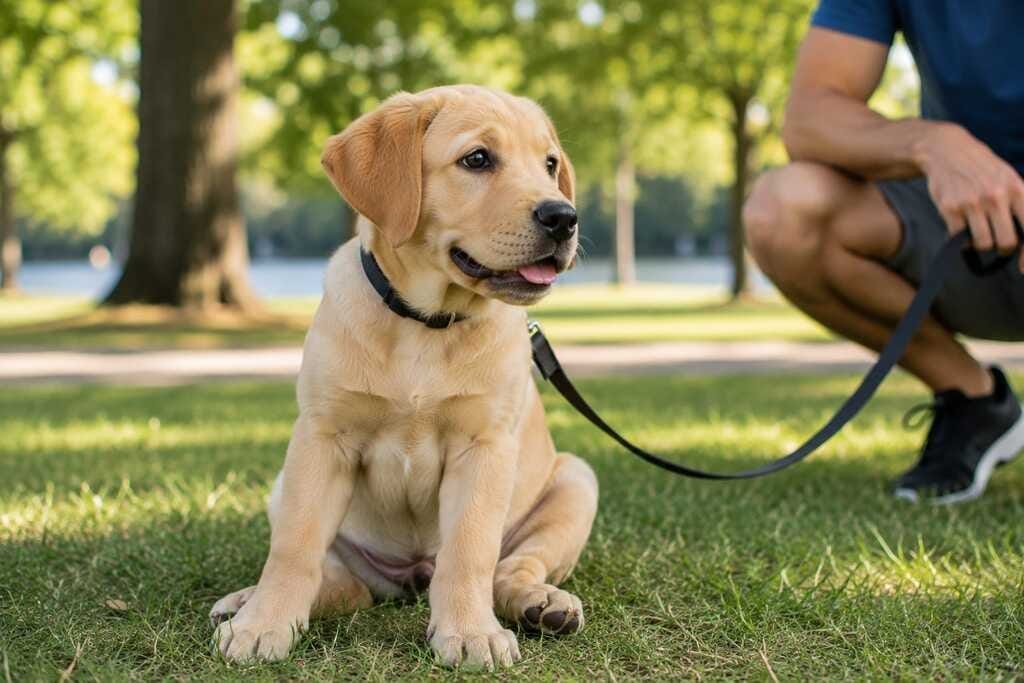
Labradors are also a breed with a higher lifetime risk of hip and elbow dysplasia. The VCA Animal Hospitals notes that environmental factors, including over-exercise during growth, can contribute to joint problems later in life on top of any genetic predisposition.
A few specific things to avoid until your puppy is closer to 18 months old:
- Forced running or jogging alongside you
- Repeated jumping, including in and out of vehicles
- Long walks or hikes on hard surfaces like concrete
- Using stairs repeatedly as part of daily routine
- High-impact games like intense fetch on hard ground
Best Low-Impact Exercise Options for Labrador Puppies
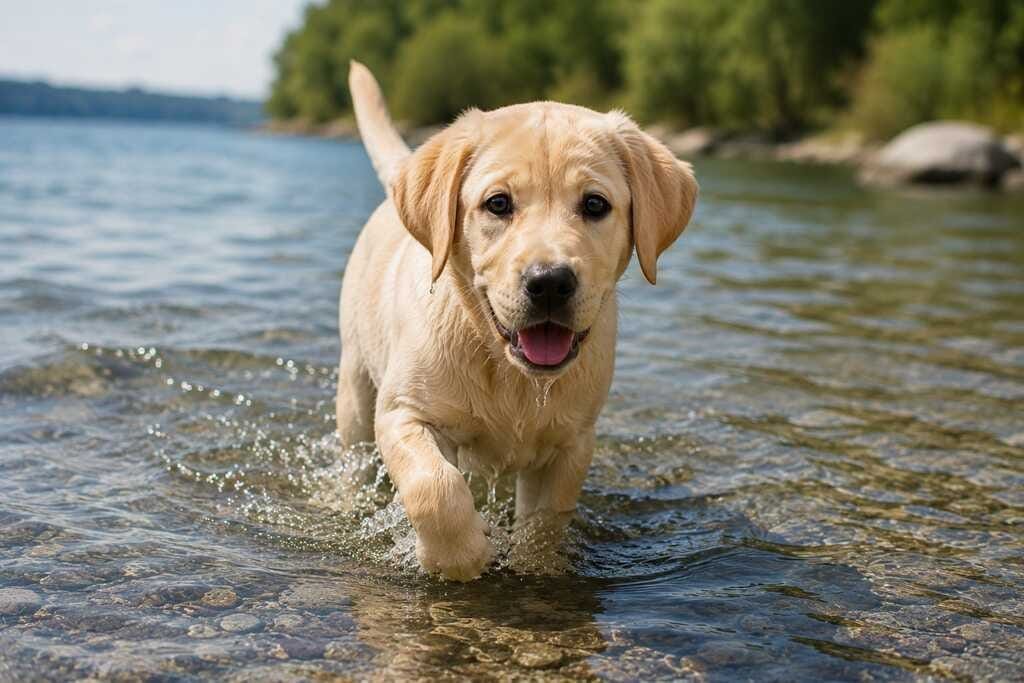
Not all exercise carries the same joint stress. A few options let your puppy burn energy safely during the growth window.
- Swimming: Excellent for cardiovascular fitness with almost no joint impact, once your vet clears it
- Short, structured walks: Following the 5-minute rule on soft, even ground
- Sniff walks: Slow, exploration-focused walks that tire puppies out mentally as much as physically
- Gentle fetch on grass: Short sessions on soft surfaces rather than concrete or pavement
- Free play in a secure yard: Puppies naturally self-regulate better here than on leash
Mental Stimulation Matters Just as Much
Labradors are working dogs at heart, and physical exercise alone often is not enough to fully satisfy them. Training sessions, puzzle feeders, and scent games tire out a Labrador’s brain in a way that pure physical activity cannot match.
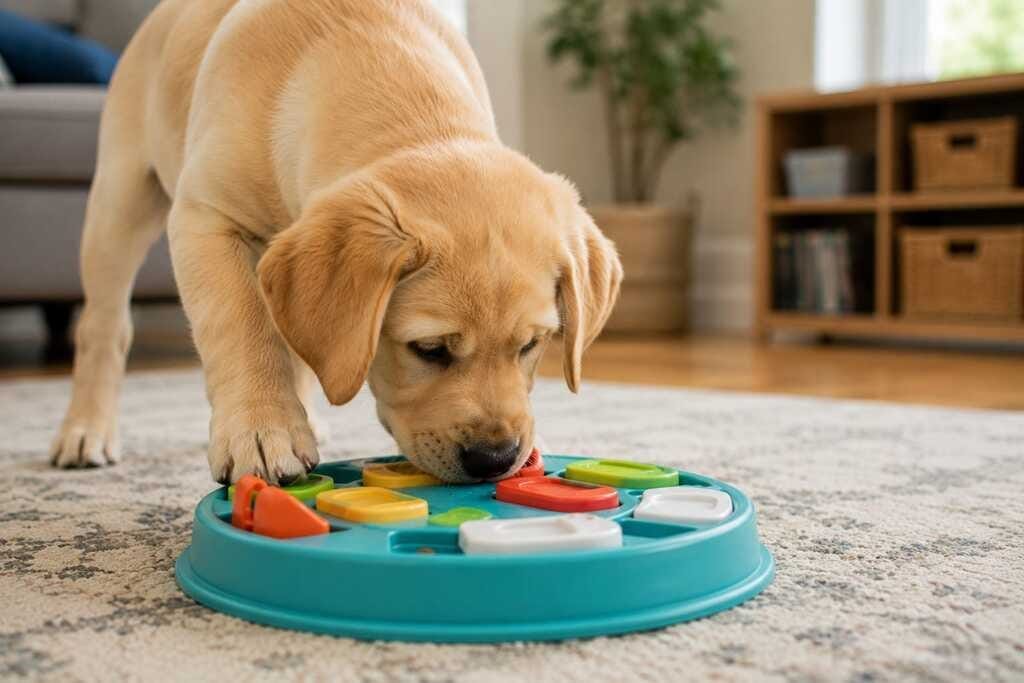
A puppy who seems restless even after exercise may actually need more mental engagement, not more time on a leash.
Signs Your Puppy Has Had Enough
Labrador puppies often keep going past the point they should stop, especially during play with people or other dogs. Watch for these signs that it is time to wind down.
- Lagging behind or slowing down noticeably on a walk
- Excessive panting that does not settle quickly
- Reluctance to keep playing or sitting down mid-activity
- Stumbling, favoring a leg, or looking unsteady

If your puppy shows any of these signs regularly, scale back structured exercise and talk to your vet if it continues.
When Can You Start Running or Jogging with Your Labrador?
Most vets and trainers recommend waiting until around 18 months old before starting structured running or jogging with a Labrador. This lines up with when growth plates are typically closed and joints are more prepared to handle repetitive, higher-impact activity.
Every dog is different, so it is worth confirming with your vet before starting a running routine, especially for a larger or heavier-boned Labrador.
If you are also managing your puppy’s biting phase alongside exercise and training, our Labrador Puppy Biting Phase guide covers what is normal and how to work through it.
Frequently Asked Questions
How much exercise does an 8-week-old Labrador puppy need?
At 8 to 12 weeks old, gentle free play is enough. Structured walks are not necessary yet, and over-exercising at this age carries real risk to developing joints.
What is the 5-minute rule for puppy exercise?
It is a guideline suggesting about 5 minutes of structured exercise per month of age, up to twice a day, until your puppy is close to fully grown.
When can Labrador puppies start going on long walks?
Long, structured walks should wait until closer to 12 to 18 months old, once growth plates are further along in closing.
Is swimming safe for a Labrador puppy?
Yes, once cleared by your vet. Swimming is one of the lowest-impact exercise options and works well for growing joints.
How much exercise does an adult Labrador need?
Most adult Labradors do well with 45 minutes to 2 hours of daily exercise, depending on individual energy level and health.
Can too much exercise hurt my Labrador puppy?
Yes. Over-exercising during the growth window can contribute to joint damage and increase the risk of conditions like hip or elbow dysplasia later in life.
Final Takeaway
Figuring out how much exercise your labrador puppy needs comes down to balancing their famous energy with joints that are still developing. The 5-minute rule, low-impact activity, and plenty of mental stimulation will keep your puppy happy and healthy without risking long-term damage.
If you are also tracking your puppy’s physical growth alongside their exercise needs, our Labrador Puppy Growth Chart covers what to expect for weight and height by age, and our Dog Exercise Routine Guide covers exercise needs once your Labrador reaches adulthood.
Author Bio
David Jason is the founder of My Pet Care Tips and writes practical, research based guides to help pet owners raise healthier, happier dogs and cats. His content focuses on clear, beginner friendly advice backed by trusted veterinary resources and real world pet care best practices.