
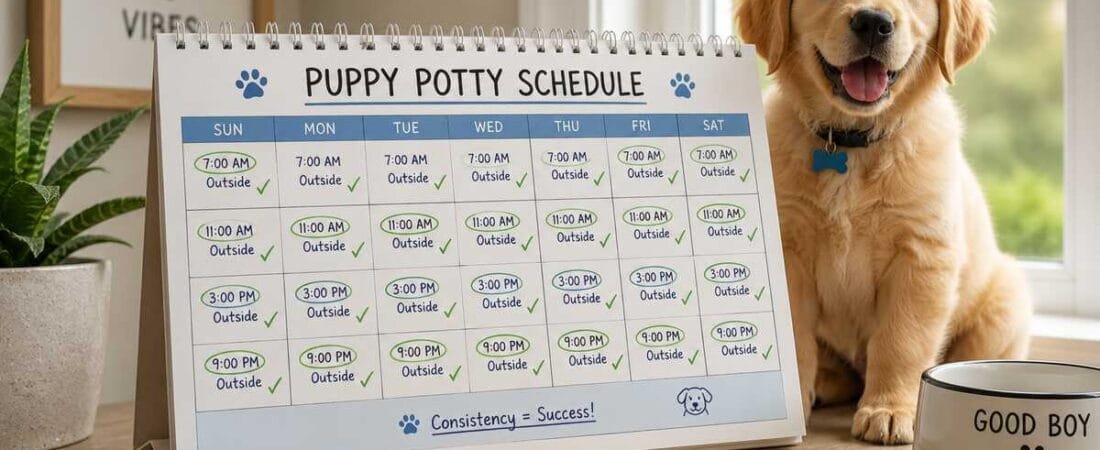
A puppy potty training schedule by age matters more than most new owners expect. Without one, potty breaks become guesswork, and guesswork is where most accidents happen. Every age stage comes with a different level of bladder control, so a schedule that works for a 12 week old puppy will not work for one just a few weeks younger.
This guide walks through a puppy potty training schedule by age, from the earliest weeks through the point most puppies become reliable, along with sample daily routines and the most common mistakes that throw a good schedule off track. If you are building a broader puppy potty training chart or routine for your home, the age breakdown below is the foundation to start from.
How Long Can Puppies Hold Their Bladder?
Bladder control develops gradually and predictably as a puppy grows, which is why a schedule based on age works better than one based on guesswork.
| Age | Hold Time | Potty Break Frequency |
|---|---|---|
| 6 to 8 weeks | 1 to 2 hours | Every 1 to 2 hours |
| 10 weeks | 2 to 3 hours | Every 2 to 3 hours |
| 12 weeks | 3 hours | Every 3 hours |
| 3 months | 3 to 4 hours | Every 3 to 4 hours |
| 4 months | 4 to 5 hours | Every 4 hours |
| 5 to 6 months | 5 to 6 hours | Every 5 to 6 hours |
These numbers are a general guideline rather than a strict rule, since individual puppies and breed sizes vary. Our how to take care of a puppy guide covers the broader daily routine this schedule fits into, and if a puppy that was doing well suddenly starts having more accidents than this table suggests, our guide to puppy potty training regression covers the most common reasons why.
Puppy Potty Training Schedule by Age
6 Week Old Puppy Schedule
At 6 weeks, most puppies are still with their mother or breeder rather than in a new home, and bladder control is extremely limited at this stage. If you are researching ahead of picking up your puppy, this is a good time to plan your routine rather than start active training. A dedicated guide on 6 week old puppy potty training and a bringing home an 8 week old puppy checklist can help you prepare before the actual homecoming.
8 Week Old Puppy Schedule
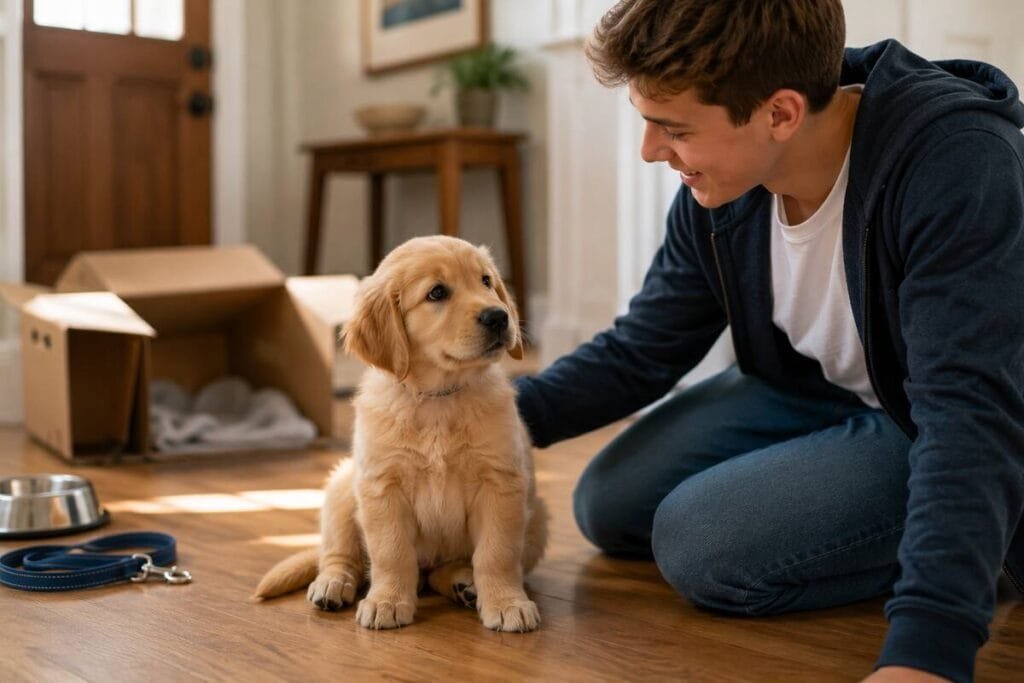
This is the age most puppies arrive in their new home, and active potty training typically starts here. Expect a bathroom break every 1 to 2 hours, plus immediately after waking, eating, and playing. Learning to spot signs your puppy needs to go potty early makes this stage significantly easier, since an 8 week old puppy often cannot hold it long enough to signal far in advance. A closer look at 8 week old puppy potty training specifically covers this stage in more depth.
10 Week Old Puppy Schedule
Control improves gradually here, with most puppies able to stretch to every 2 to 3 hours. Consistency at this stage starts to pay off noticeably. More detail on 10 week old puppy potty training is worth a look if this stage feels especially difficult.
12 Week Old Puppy Schedule
By 12 weeks, many puppies show real, noticeable progress with a solid schedule in place, typically managing about 3 hours between breaks. A deeper look at 12 week old puppy potty training covers what realistic expectations look like at this specific age.
3 Month Puppy Schedule
Three months lines up closely with the 12 week mark, and this is often when daytime accidents start dropping off meaningfully for puppies on a consistent routine. Our guides on how to train a puppy at home and puppy potty training mistakes are worth reviewing around this age, since habits formed now tend to stick.
4 Month Puppy Schedule
Most puppies can hold it for 4 to 5 hours by this point, and many are approaching daytime reliability. If accidents increase after a period of progress rather than decrease, it is worth reading about puppy potty training regression, since this age overlaps with early adolescence for many breeds.
5 to 6 Month Puppy Schedule
Many puppies are close to fully reliable by this stage, needing breaks only every 5 to 6 hours. A second wave of puppy potty training regression sometimes shows up here too, tied to adolescence, so occasional setbacks at this age are not unusual. For a deeper answer on when are puppies fully potty trained, most reach full reliability, including overnight, somewhere in this range.
Sample Daily Puppy Potty Schedule
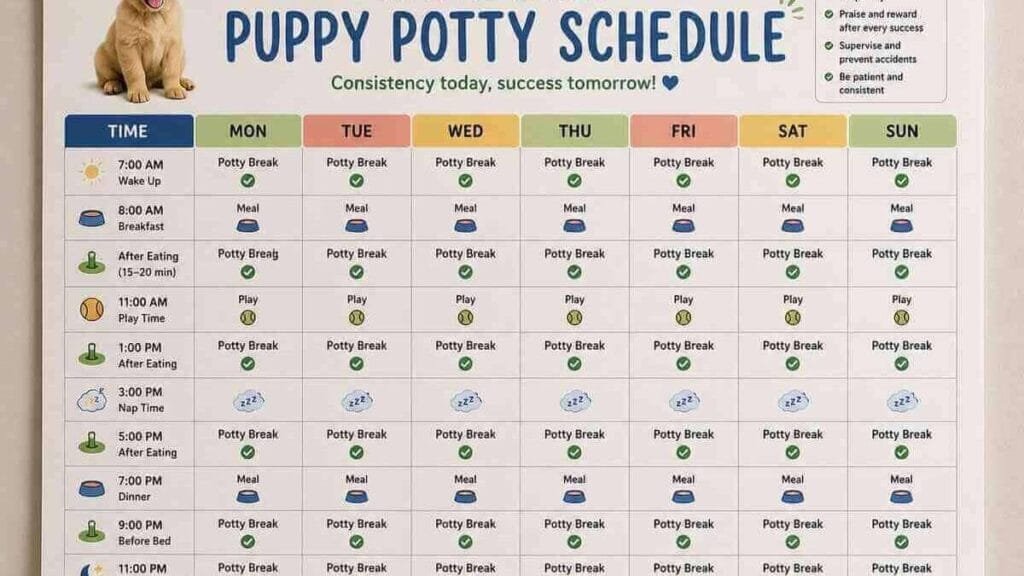
A basic daily routine, adjusted for your puppy’s current age within the puppy potty training schedule by age above, generally follows this order:
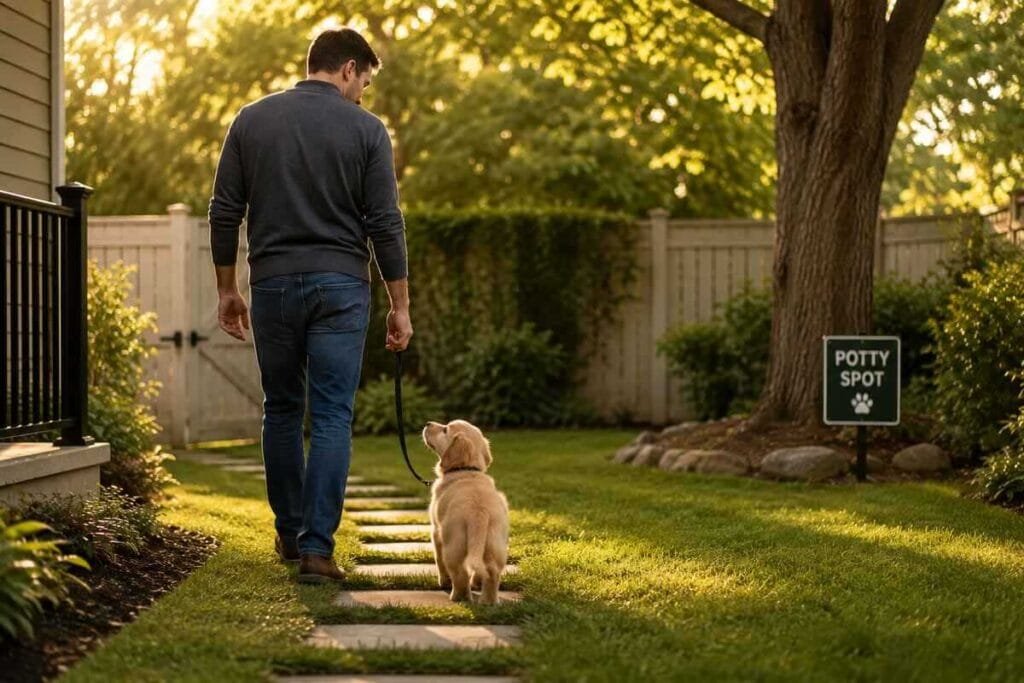
- Morning: Immediately after waking up
- After breakfast: Within 15 to 20 minutes of eating
- After naps: As soon as your puppy wakes
- After play: Right after active play ends
- Before bed: One final trip right before lights out
Printable Puppy Potty Training Schedule
Keeping a written puppy potty training schedule, whether on a wall calendar, a printable puppy potty training schedule PDF, or a simple notes app, makes it much easier to stay consistent, especially with more than one person in the house handling potty breaks. A visual puppy potty training chart also makes it easier to spot patterns, like accidents clustering around a specific time of day.
Puppy Potty Schedule for Apartment Living
Apartment living adds a few extra variables, mainly distance to an outdoor spot and managing stairs or elevators with a puppy that needs to go urgently. An apartment puppy potty schedule usually needs slightly more frequent breaks scheduled in advance, rather than relying on last-minute signals alone, since there is less margin for delay. For more details read our article on How to Potty Train a Puppy in an Apartment. If you are still choosing a puppy with apartment life in mind, our guide to best apartment dog breeds covers which temperaments tend to adapt best.
Common Puppy Potty Schedule Mistakes
A few habits quietly undo an otherwise solid schedule:
- Waiting too long between breaks for the puppy’s current age
- Skipping breaks after naps or play, not just after meals
- Assuming one good week means the schedule can loosen up
- Inconsistent timing between different family members
Our full breakdown of puppy potty training mistakes covers these in more detail, and if your puppy seems to be struggling more than the schedule alone would suggest, stubborn puppy potty training and puppy potty training regression cover two of the more common reasons why.
Signs Your Puppy Needs to Go
A schedule works best alongside close attention to your puppy’s actual behavior. Sniffing, circling, whining, or heading toward the door are all signals worth acting on immediately, even between scheduled breaks. Our full guide to signs your puppy needs to go potty covers all of the common cues in detail.
Potty Schedule Tips That Speed Up House Training
A few adjustments make a consistent schedule even more effective:
- Reward every successful outdoor potty break immediately
- Keep the schedule consistent on weekends too, not just weekdays
- Adjust the crate schedule as your puppy grows, since a crate training schedule by age should tighten alongside the potty schedule
- Address nighttime accidents specifically if they persist, since our guide on why is my puppy pooping in the crate at night covers causes that a daytime schedule alone will not fix
For more details read our articles: Puppy Potty Pads: Pros, Cons & When to Use Them and Bell Training: Teach Your Puppy to Ring the Bell
Frequently Asked Questions
At what age are puppies fully potty trained?
Most puppies are fully reliable, including overnight, somewhere between 4 and 6 months old, though this varies by breed size and consistency at home.
What is the 10-10-10 rule for puppy potty training?
Take your puppy outside, wait about 10 minutes for it to go, reward within 10 seconds of success, then allow about 10 minutes of supervised freedom before returning to a confined space.
Can a puppy go 5 hours without peeing?
Puppies around 5 to 6 months old can often manage 5 hours, but younger puppies usually cannot without an accident, especially overnight before bladder control has fully developed.
How often should puppies go outside?
It depends heavily on age, ranging from every 1 to 2 hours for very young puppies to every 5 to 6 hours for puppies approaching full reliability.
Should I wake my puppy to pee at night?
For very young puppies, a scheduled middle-of-the-night wake-up can prevent accidents until natural bladder control catches up, then can be phased out gradually.
How long can an 8-week-old puppy hold pee?
Around 1 to 2 hours during the day, though this can be shorter right after eating, drinking, or waking from a nap.
Is a potty training schedule really necessary?
It is one of the most effective tools available. A predictable schedule removes the guesswork that leads to most avoidable accidents, especially in the first few months.
Final Thoughts
Every puppy learns at a different pace, and no puppy potty training schedule by age replaces patience entirely. Consistency beats speed every time, so follow the schedule daily, adjust it as your puppy grows, and stay patient through the occasional setback.
For more on building strong habits from day one, read our how to train a puppy at home guide. To catch accidents before they happen, check out signs your puppy needs to go potty. And if progress suddenly slips after a good stretch, our guide to puppy potty training regression covers exactly what to do next.
Written by David Jason Founder of My Pet Care Tips
David has spent years helping first-time puppy owners build reliable routines for house training, crate training, and daily care, drawing on real-world experience and trusted veterinary guidance to make the process less overwhelming.
Last Updated: July 28, 2026
Sources: American Kennel Club (AKC), American Veterinary Medical Association (AVMA)
Note: A puppy that suddenly needs far more frequent bathroom breaks than its age would suggest should be checked by a veterinarian to rule out a medical cause.