

Your puppy was doing so well. Days, maybe weeks, without an accident, and then suddenly the accidents started again, seemingly out of nowhere. If this sounds familiar, what you are seeing has a name: puppy potty training regression, and it is far more common than most owners expect, even in puppies that seemed fully trained.
The good news is that regression is usually temporary and rarely means the earlier training was wasted. This guide covers why regression happens, how to tell if it is normal for your puppy’s age, and a clear plan to get back on track without starting from zero. Many of the same fixes covered in our guides on puppy potty training mistakes to avoid and signs your puppy needs to go potty apply here too, since regression and everyday accidents often share the same root causes.
What Is Puppy Potty Training Regression?
Puppy potty training regression is when a puppy that was previously reliable starts having accidents again after a period of real progress. It is not the same as a puppy that was never fully trained in the first place, and the distinction matters for how you respond.
It happens because learning in puppies is rarely a straight line. Growth spurts, changes in routine, and new stressors can all temporarily disrupt a habit that seemed solid, even when nothing about the training itself was done wrong. A puppy’s body and brain are both still developing quickly during this period, and either one can throw a wrench into an otherwise steady routine.
Owners tend to panic unnecessarily when this happens, assuming something has gone seriously wrong or that months of effort have been undone. In reality, most cases of regression resolve within days to a few weeks once the underlying cause is addressed, often without needing to relearn anything from scratch.
Is Puppy Potty Training Regression Normal?
Yes, in many puppies it is a completely normal part of development. It is a temporary setback far more often than a sign of a real problem, since learning simply is not always linear for a young dog.
Puppy Potty Training Regression at 3 to 4 Months
This age often coincides with a growth spurt and increased independence, which can briefly disrupt an otherwise steady routine.
Regression at 5 to 6 Months
Adolescence typically begins around this age, bringing distraction and testing of boundaries that can spill over into house training.
Regression at 7 to 10 Months
Regression at this stage is less common but still happens, often tied to a specific trigger like a move, a new pet, or a schedule change rather than general development.
What Causes Puppy Potty Training Regression?
Several distinct triggers can cause this pattern, and identifying which one applies makes the fix much faster.
Growth and Developmental Changes
Rapid physical growth can temporarily affect bladder capacity and coordination, leading to accidents that were not happening a few weeks earlier.
Adolescence
Around 5 to 6 months, many puppies go through a phase of increased independence and distraction, similar to a human teenager testing limits.
Changes in Routine
A new work schedule, a different walker, or shifted meal times can all quietly disrupt the internal rhythm a puppy had built, even if every individual change seems minor on its own.
Stress and Anxiety
A stressful event, even a small one from an adult’s perspective, can be enough to disrupt a puppy’s habits. Things like a loud thunderstorm, a vet visit, or a change in the household can all register as stress to a young dog. If accidents cluster around times your puppy is left alone, it is worth reading about dog separation anxiety, since the underlying issue and the fix are different from a simple routine slip.
Moving to a New Home
A change in environment resets a puppy’s sense of familiar spots and routine, both of which house training depends on heavily.
Medical Problems
A urinary tract infection, intestinal parasites, or digestive upset can all cause accidents that look exactly like a training regression but need medical treatment instead. Our guides to common pet health problems and pet emergency signs cover the specific symptoms worth watching for.
Regression After Neutering or Spaying
Some puppies show a brief period of house training regression after the procedure, likely tied to hormonal changes, recovery-related confinement, and temporary changes in routine.
Signs Your Puppy Is Experiencing Potty Training Regression
A few patterns distinguish regression from a puppy that was never fully trained:
- Random accidents after a solid stretch of reliability
- Asking to go outside less often than before
- Indoor accidents appearing in new spots, not just old habits
- Accidents specifically at night after previously sleeping through
Our guide to signs your puppy needs to go potty covers the early cues to watch for, which become even more useful during a regression period since catching the signal early prevents most accidents outright.
How to Fix Puppy Potty Training Regression

Go Back to the Basics
Treat the first week like early training again. Fewer assumptions, more supervision, and a tighter schedule.
Increase Potty Breaks
Add extra trips outside temporarily, even if your puppy previously needed fewer. This is not a step backward, it is a short-term adjustment.
Reward Immediately
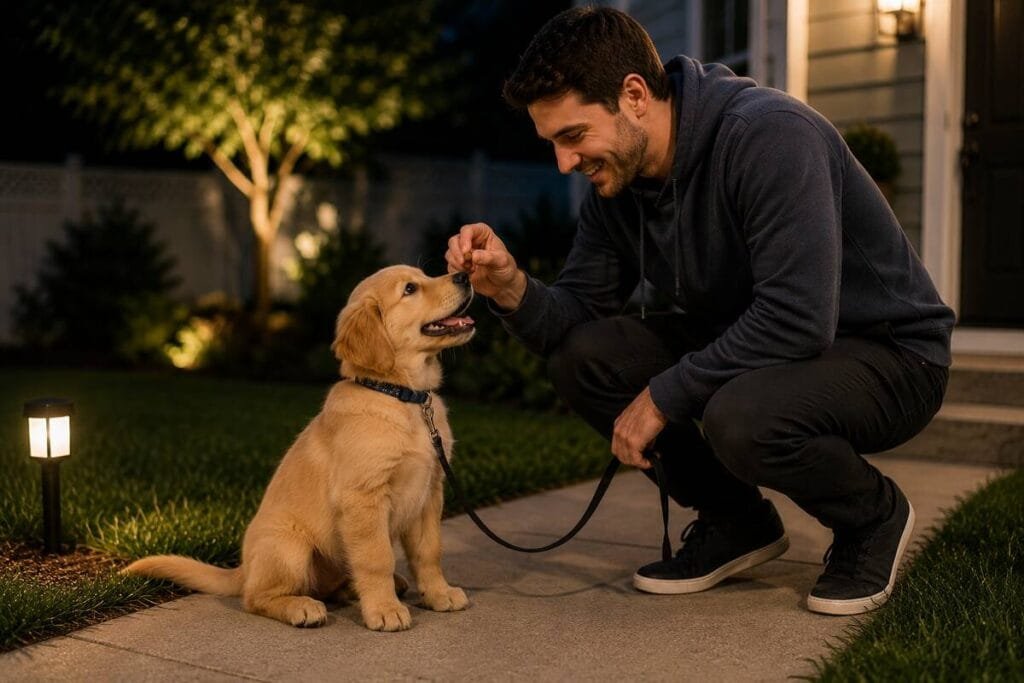
Praise or a small treat within seconds of a successful outdoor potty break reinforces the behavior you want to see return.
Clean Accidents Properly
Leftover scent draws a puppy back to the same spot. An enzymatic cleaner removes it completely rather than just masking it.
Supervise Indoors
Close supervision closes the gap where most regression-related accidents happen, the same way it does during initial training. The approach covered in potty training a stubborn puppy applies directly here too.
Return to Crate Routine if Needed
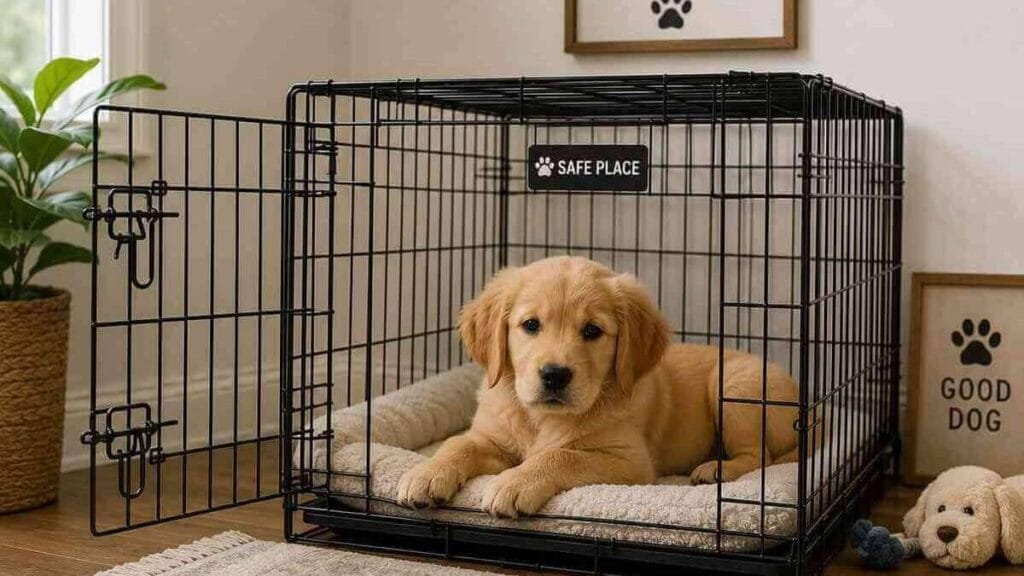
A consistent crate schedule can rebuild structure quickly. If accidents are showing up specifically overnight, our guide on why is my puppy pooping in the crate at night covers nighttime-specific causes and fixes.
How Long Does Puppy Potty Training Regression Last?
Most cases resolve within a few days to a few weeks, depending on the cause. Growth-related regression tends to pass quickly on its own with a little extra consistency. Regression tied to a bigger change, like a move or a new pet, can take a bit longer since the puppy is adjusting to more than just bathroom habits.
When Should You Call a Veterinarian?
Most regression is behavioral rather than medical, but a few signs point to something that needs veterinary attention:
- Blood in urine or stool
- Visible pain while urinating
- Vomiting alongside accidents
- Diarrhea that persists more than a day or two
- Sudden, severe regression with no clear trigger
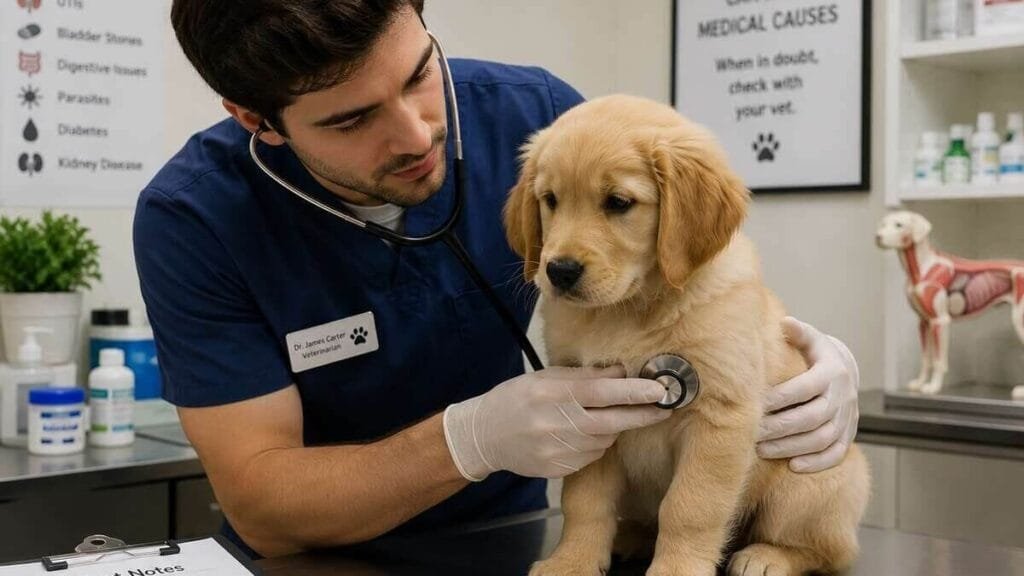
Our pet emergency signs guide covers which symptoms are urgent versus which can reasonably wait for a scheduled visit.
Can You Prevent Potty Training Regression?
Regression cannot always be avoided entirely, but a few habits lower the odds significantly:
- Keeping a consistent schedule even through changes at home
- Sticking to routine as closely as possible during transitions
- Using positive reinforcement consistently, not just during initial training
- Providing enough daily exercise, since a well-exercised puppy settles more easily
- Feeding a consistent, appropriate diet to support predictable digestion
Our guides on how to train a puppy at home for beginners and how to take care of a puppy cover the daily habits that make regression less likely in the first place, while our dog exercise routine and best dog food for healthy growth guides support the physical side of a steady routine.
Frequently Asked Questions
Is puppy potty training regression normal?
Yes. It is a common part of puppy development, especially around growth spurts and adolescence, and does not mean earlier training failed.
How long does puppy potty training regression last?
Typically a few days to a few weeks, depending on the underlying cause and how quickly the routine is tightened back up.
What causes puppy potty training regression?
Growth changes, adolescence, routine disruptions, stress, moving homes, medical issues, and sometimes spaying or neutering can all trigger it.
Why has my 7-month-old puppy started peeing in the house again?
At this age, it is often tied to a specific trigger like a schedule change or stress rather than general development, though a medical cause is always worth ruling out if it happens suddenly.
When does puppy potty training regression usually happen?
Most commonly around 3 to 4 months and again around 5 to 6 months, though it can happen at other ages tied to specific events.
Does neutering cause potty training regression?
It can, temporarily, due to hormonal shifts and changes in routine during recovery, though it usually resolves within a couple of weeks.
What is the 10-10-10 rule for potty training puppies?
Take your puppy outside, wait about 10 minutes for it to go, reward within 10 seconds, then allow about 10 minutes of supervised freedom before returning to a confined space.
When should I seek professional help?
If regression persists beyond a few weeks despite a consistent routine, or if medical causes have been ruled out and accidents continue, a professional trainer can help identify what a routine adjustment alone might be missing.
Final Thoughts
Puppy potty training regression feels discouraging in the moment, but it rarely means training has failed. Stay patient, go back to the basics for a short stretch, and remember that consistency wins over frustration every time.
Written by David Jason Founder of My Pet Care Tips
David has spent years helping first-time puppy owners build reliable routines for house training, crate training, and daily care, drawing on real-world experience and trusted veterinary guidance to make the process less overwhelming.
Last Updated: July 28, 2026
Sources: American Kennel Club (AKC), American Veterinary Medical Association (AVMA), Animal Humane Society
Note: Sudden or severe regression, especially alongside pain, blood, or vomiting, always warrants a veterinary check to rule out an underlying medical cause.