

Introduction
Seeing your pet in distress is one of the most terrifying moments any pet owner experiences.
One minute they are normal. The next they are collapsed on the floor, breathing strangely, or crying in pain. Your mind goes blank. Is this serious? Do I go now? Can it wait until morning?
Knowing pet emergency signs before you need them makes that moment less panicked and more decisive. Every minute matters in a genuine emergency. The difference between acting immediately and waiting two hours can literally be the difference between life and death.
This guide gives you a clear, simple system. Go Now. Within 24 Hours. Monitor at Home. You will know exactly which category your pet’s symptoms fall into and exactly what to do next.
Why Every Pet Owner Should Know These Emergency Signs
Pets cannot tell you when something is seriously wrong.
They hide pain instinctively. A cat that seems slightly off might be in kidney failure. A dog that is quieter than usual might be bleeding internally. By the time symptoms become obvious to most owners, the condition has often progressed significantly.
According to the ASPCA, thousands of pets die every year from conditions that were treatable when caught early but fatal when treatment was delayed.
Knowing the warning signs changes that outcome.
Critical Pet Emergency Signs — Go to Vet Immediately
These symptoms require emergency veterinary care right now. Do not wait. Do not monitor overnight. Go immediately.
Red Flag Emergency Signs Table
| Symptom | Severity | Action |
| Cannot breathe or gasping | Critical | Emergency vet now |
| Blue or white gums | Critical | Emergency vet now |
| Seizure lasting over 2 minutes | Critical | Emergency vet now |
| Collapse or cannot stand | Critical | Emergency vet now |
| Male cat straining with no urine | Critical | Emergency vet now |
| Suspected poisoning | Critical | Call poison hotline then vet |
| Bloated hard abdomen | Critical | Emergency vet now |
| Heatstroke with collapse | Critical | Cool down then vet now |
| Uncontrolled bleeding | Critical | Emergency vet now |
| Suspected broken bone | Critical | Emergency vet now |
Breathing Difficulties and Respiratory Distress

Normal breathing is quiet and effortless.
Emergency breathing looks and sounds completely different. Watch for open-mouth breathing in cats, which is almost never normal. And watch for visible effort in the chest and belly with each breath. Watch for blue, purple, or white colored gums, which indicate oxygen deprivation.
Noisy breathing, gasping, extended neck stretching to breathe, and sitting in a hunched position with elbows out are all signs of respiratory distress.
Do not wait to see if it improves. Respiratory emergencies deteriorate within minutes.
Seizures or Convulsions
A seizure is terrifying to witness but your response matters enormously.
Do not put your hands near your pet’s mouth during a seizure. They cannot swallow their tongue but they can bite you involuntarily without any intention to do so.
Move furniture away from your pet to prevent injury. Time the seizure. A single seizure under two minutes, while alarming, may not be an emergency depending on your pet’s history. Call your vet immediately after it ends.
A seizure lasting more than two minutes is a medical emergency. Multiple seizures within twenty-four hours require same-day emergency care. A pet that does not return to normal within thirty minutes of a seizure needs emergency evaluation.
Signs of Internal Bleeding or Collapse
Internal bleeding has no visible wound. That is what makes it so dangerous.
Signs include sudden collapse, extreme weakness, pale or white gums, rapid shallow breathing, distended or painful abdomen, and blood in vomit or stool. A pet that was walking fine and suddenly cannot stand requires immediate emergency care regardless of what you can or cannot see externally.
Heatstroke Symptoms in Dogs and Cats

Heatstroke can develop within fifteen minutes in the wrong conditions.
Signs include extreme panting that will not slow down, bright red gums, drooling thick ropy saliva, glazed eyes, weakness, vomiting, and collapse.
If you suspect heatstroke, move your pet to a cool area immediately. Apply cool water, not ice cold water, to the body especially the neck, armpits, and groin. Use a fan if available. Offer small sips of cool water if conscious.
Then go to the vet. Even if your pet seems to recover quickly, internal organ damage from heatstroke is not visible from the outside and requires professional evaluation.
For prevention and more detail, read our guide on dog summer care tips.
Urinary Blockage — Especially in Male Cats
This is one of the most time-critical emergencies in veterinary medicine.
A male cat that cannot urinate can die within twenty-four to forty-eight hours without treatment. The blockage causes toxins to build up in the bloodstream at a rate that is rapidly fatal.
Signs include visiting the litter box repeatedly and producing nothing or only drops. Crying or vocalizing in the box. Licking excessively at the genitals. Lethargy and loss of appetite alongside straining.
Any male cat showing these signs is a same-day emergency. Do not wait until morning.
Serious Symptoms — Urgent Vet Care Within 24 Hours
These symptoms are not immediate emergencies but require same-day or next-morning veterinary attention.
Persistent Vomiting and Diarrhea
One episode of vomiting is usually not an emergency.
Vomiting more than three times in one day, vomiting blood, diarrhea with blood, or vomiting combined with lethargy and loss of appetite requires veterinary attention within twenty-four hours.
Persistent diarrhea lasting more than forty-eight hours causes dangerous dehydration, particularly in kittens, puppies, and senior pets who have less physiological reserve.
Severe Lethargy or Weakness
Every pet has quiet days.
But a pet that cannot get up for their food, refuses to walk, shows no response to their name, or seems mentally foggy and unresponsive requires evaluation. Sudden severe lethargy is one of the most common presentations of serious underlying illness including organ disease, internal infection, and anemia.
Sudden Behavior Changes or Hiding
A social cat that suddenly hides for more than a day. A playful dog that suddenly growls when touched. These behavioral shifts are often the first sign of pain or illness.
Cats in particular hide when they are unwell. Finding your cat in an unusual hiding spot and being reluctant to emerge is worth a veterinary call.
Eye Injuries or Sudden Blindness
Eye injuries deteriorate rapidly without treatment.
A pet squinting, pawing at one eye, showing visible discharge or cloudiness, or walking into furniture requires same-day evaluation. Eyes can be permanently damaged within hours without appropriate treatment.
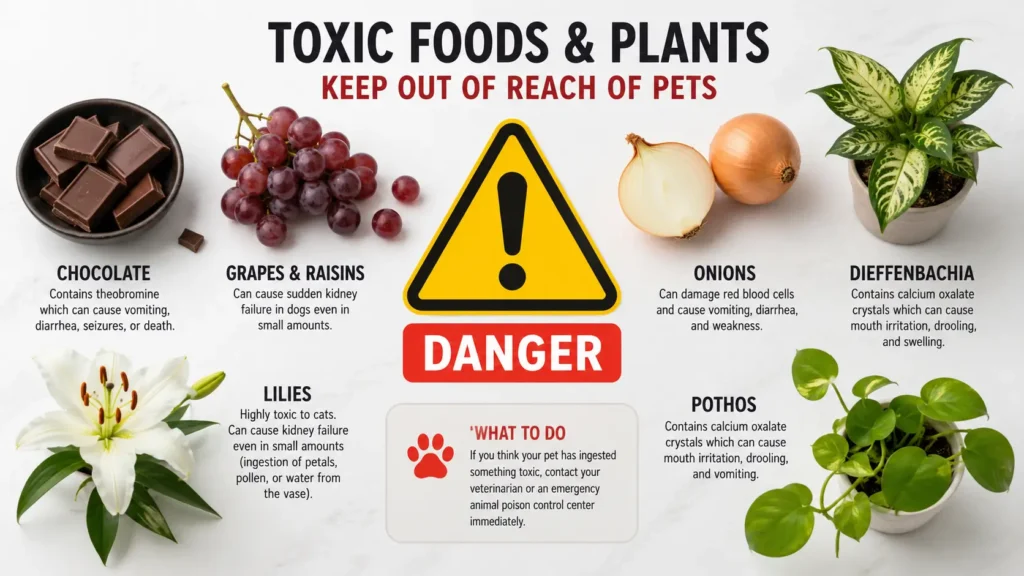
Common Pet Poisoning Signs and What to Do
Dog vs Cat Emergency Signs Comparison
| Symptom | Dogs | Cats |
| Urinary blockage | Less common | Very common especially males |
| Heatstroke | More common | Less common |
| Bloat | Common in large breeds | Very rare |
| Poisoning reaction | Often faster onset | Often delayed onset |
| Hiding when unwell | Sometimes | Almost always |
| Breathing emergency | Respiratory signs obvious | Often subtle until severe |
| Seizures | Multiple causes | Often toxin or disease related |
Toxic substances affect pets faster than most owners expect.
Common household toxins include chocolate, xylitol in sugar-free products, grapes and raisins, onions and garlic, certain medications, antifreeze, and many houseplants including lilies which are fatal to cats even in small amounts.
Signs of poisoning include sudden vomiting, excessive drooling, muscle tremors, disorientation, dilated pupils, pale gums, rapid heart rate, and collapse.
What to do immediately:
Do not try to induce vomiting without professional guidance. Some substances cause more damage coming back up. Call the ASPCA Animal Poison Control Center at 1-888-426-4435 immediately. Have the substance or its packaging ready to describe. Follow their instructions and go to the emergency vet if directed.
Save this number in your phone right now before you ever need it.
Pain Recognition in Pets — Subtle Emergency Signs

Pets hide pain instinctively.
By the time pain becomes obvious to most owners, it has often been present for some time. Learning subtle pain signals helps you catch problems earlier.
Signs of pain in dogs:
- Reluctance to be touched in a specific area
- Unusual posture or guarded movement
- Panting without heat or exercise
- Whimpering or groaning when moving
- Loss of appetite alongside behavioral change
- Aggression when approached in a way that was previously fine
Signs of pain in cats:
- Hunched body posture
- Ears flattened to the side
- Half-closed or squinting eyes
- Reduced grooming or excessive grooming of one area
- Dilated pupils at rest
- Growling or hissing when normally quiet
- Changed facial expression with tightened whisker pads
A cat pain assessment tool called the Feline Grimace Scale has been developed by veterinary researchers and is worth looking up to understand what feline pain actually looks like compared to what most owners expect.
How to Prepare for Pet Emergencies
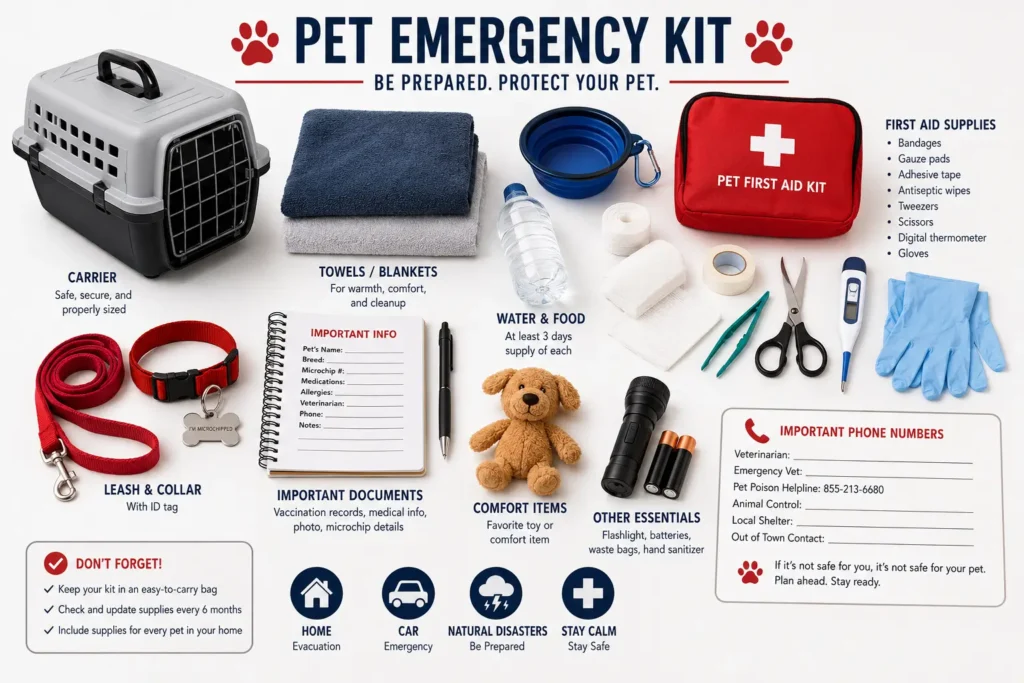
The worst time to look for your emergency vet’s phone number is at 2 AM with a sick pet in your arms.
Build your emergency plan now:
Save these numbers in your phone today:
ASPCA Poison Control:1-888-426-4435
Pet Poison Helpline:1-855-764-7661
Your regular vet number
Your nearest 24-hour emergency animal hospital name and address
Basic pet emergency kit:
- Your pet’s medical records and vaccination history
- A list of current medications and dosages
- Your vet’s contact information
- ASPCA poison control number
- Clean towels for wound pressure
- A muzzle in the appropriate size for your dog
- A carrier for your cat always accessible
- Your pet’s photo for identification
Know the route to your nearest emergency animal hospital before an emergency occurs. GPS systems fail and minds go blank in a crisis. Knowing where you are going without thinking about it saves precious minutes.
When to Go to Emergency Vet vs Regular Vet
This is the question every pet owner faces at some point.
Go to emergency vet right now:
Any symptom from the critical list above. And any situation where you genuinely believe your pet’s life may be in danger. Any situation where your pet is in obvious severe pain.
Call your regular vet in the morning:
Mild symptoms that started during the night and are not worsening. Behavioral changes without other physical symptoms. Minor wounds that are not actively bleeding. Mild digestive upset in otherwise healthy adults.
Monitor at home and call vet if worsens:
Single vomiting episode with no other symptoms. Mild loose stool in an otherwise normal pet. Slight limping that improves with rest. Minor sneezing without discharge.
When in doubt, call. Most emergency animal hospitals have triage nurses available by phone who can help you assess whether your pet needs immediate care.
Frequently Asked Questions
What are the most important pet emergency signs?
The most critical signs requiring immediate emergency care are breathing difficulty, blue or white gums, collapse, seizures lasting more than two minutes, suspected poisoning, a distended hard abdomen, uncontrolled bleeding, and a male cat straining without producing urine.
How do I know if my dog or cat needs emergency vet care?
Use this simple test. Ask yourself: if this symptom gets worse overnight, could my pet die or suffer permanent harm? If the answer is yes or even maybe, go to the emergency vet now. When in doubt, always call the emergency clinic. They would rather reassure you over the phone than have you wait on a critical situation.
What are signs of heatstroke in pets?
Extreme panting, bright red gums, thick drooling, glazed eyes, weakness, vomiting, and collapse are all heatstroke signs. Move to a cool area immediately, apply cool water to the body, offer small sips of cool water, and go to the emergency vet even if your pet appears to recover.
Is my cat’s vomiting an emergency?
One episode with no other symptoms is usually not an emergency. Three or more episodes in one day, blood in vomit, vomiting combined with lethargy and no appetite, or vomiting in a cat that has not eaten for over twenty-four hours requires veterinary attention. Kittens and senior cats need evaluation sooner.
What should I do if my pet is having a seizure?
Stay calm. Do not put hands near the mouth. Move furniture away to prevent injury. Time the seizure. Call your vet immediately after it ends. A seizure over two minutes or multiple seizures within twenty-four hours requires emergency care. Keep the environment quiet and dim while your pet recovers.
How can I tell if my pet is in severe pain?
Panting without heat or exercise, guarded movement, reluctance to be touched, changed posture, aggression in a normally gentle pet, loss of appetite, and hiding are all pain indicators. In cats, flattened ears, squinting eyes, and a tightened facial expression indicate pain even when vocalization is absent.
What are common urinary emergency signs in cats?
Repeated trips to the litter box with little or no output, crying while trying to urinate, licking excessively at the genitals, lethargy, loss of appetite, and a hard or painful abdomen. Any male cat showing these signs needs same-day emergency care without exception.
How much does emergency vet care cost in the USA?
Emergency consultation fees start at one hundred to three hundred and fifty dollars. Common emergencies including urinary blockages cost one thousand five hundred to three thousand dollars. Bloat surgery costs two thousand to seven thousand dollars. For a complete cost breakdown, read our guide on vet costs in USA.
Final Thoughts
You cannot prevent every emergency. But you can be prepared for one.
Save the poison control number. Know where your emergency vet is. Build your emergency kit. And spend five minutes learning the warning signs in this guide so that when something happens, your brain has the information it needs to act quickly.
Your pet cannot call for help. They cannot describe their symptoms. They cannot tell you how bad it is. That responsibility belongs entirely to you. And now you have the knowledge to handle it.
Have you ever faced a pet emergency? Share your experience in the comments below. What happened, how did you respond, and what would you tell other pet owners to watch for? Your story might save another pet’s life.
Also read:
→ Common Pet Health Problems
→ Vet Costs in USA
→ Dog Summer Care Tips
→ Cat Behavior Problems Solutions
→ Indoor Cat Care Guide
Author Bio
Written by David Jason
Founder of My Pet Care Tips
Dog and cat owner with over 8 years of experience navigating pet health emergencies first hand. This guide reflects real situations and trusted veterinary sources to help US pet owners respond quickly and confidently when it matters most.
Last Updated: June 15, 2026
Sources: ASPCA, AVMA, Cornell Feline Health Center, VCA Hospitals
Note: This guide is for informational purposes only. Always contact a licensed veterinarian for diagnosis and treatment of any health concern.