Puppy proofing an apartment means making the rooms your puppy can reach safer before they start exploring on their own. Focus first on electrical cords, medicines, cleaning products, small objects, food, trash, plants, windows, and balcony access. You do not need to renovate a rental. A secure puppy area, careful storage, and a repeatable room-by-room check can prevent many avoidable accidents.
Quick answer: Choose one puppy-safe area, move or secure hazards, use stable gates where needed, and check every room from your puppy’s eye level. Pay special attention to the kitchen, bathroom, laundry area, windows, balcony, and apartment entrance. Keep supervising your puppy because no checklist can make a room completely risk-free.
Start with a quick apartment puppy-proofing checklist
Before your puppy comes home, walk through every room they may enter. Keep this short list nearby and use it again whenever you move furniture or give your puppy access to another space.
- Cover, move, or block access to electrical cords and chargers.
- Store medicines, cleaning products, laundry detergent, and pest-control products behind secure doors.
- Remove small objects that could be swallowed, including coins, batteries, hair ties, and children’s toys.
- Put food, trash, and unsafe household items out of reach.
- Check houseplants against a reliable pet-toxicity list.
- Secure windows and blind cords. Do not allow unsupervised access to an open window or balcony.
- Use a stable gate or exercise pen to create a manageable safe area.
- Plan a toilet routine that works with your building, elevator, and outdoor access.
The American Kennel Club’s puppy-proofing checklist covers many of these common indoor hazards. The ASPCA’s preparation checklist also highlights medicines, plants, pesticides, cords, cleaning supplies, windows, and trash.
Create one safe zone before giving your puppy the whole apartment
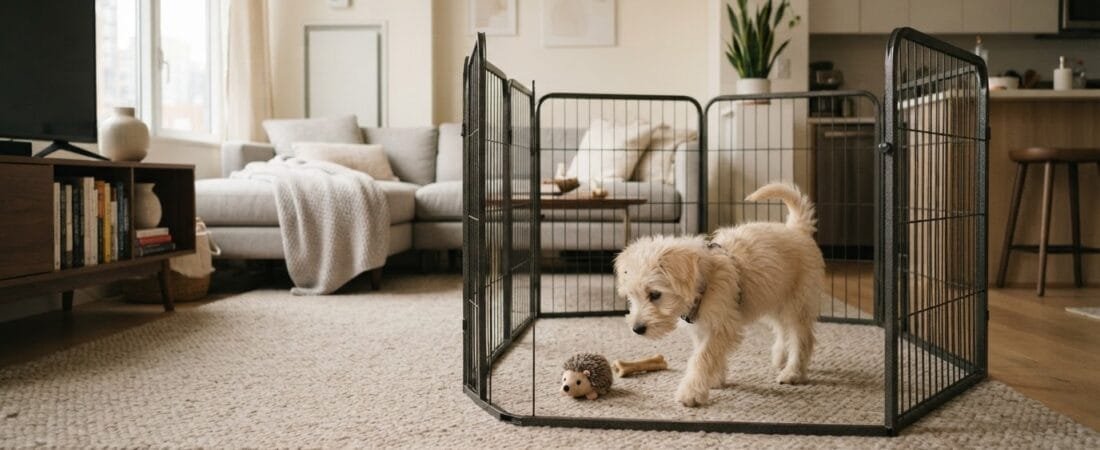
A new puppy does not need access to every room on the first day. Start with a small, easy-to-supervise area that has a comfortable resting place, fresh water, and a few suitable toys you have already checked during supervised play. Remove loose cables, small objects, exposed cleaning products, and anything the puppy could pull down.
An exercise pen or a properly installed gate can help define the area. Check the height, stability, gaps, and locking mechanism. A puppy should not be able to push the gate over, squeeze through a gap, or climb onto nearby furniture and get over it. Do not use a barrier that blocks an emergency exit or violates your lease or building rules.
Keep the area comfortable rather than treating it as long-term storage. Your puppy still needs interaction, toilet breaks, exercise suited to their age, and supervision. For the wider first-week setup, our complete guide to taking care of a puppy covers supplies, feeding, rest, and basic routines.
Once the space is ready, practice simple home skills such as settling on a mat, responding to their name, and moving calmly through doorways. Our step-by-step guide to training a puppy at home covers those early lessons.
Living room: secure cords, furniture, and small objects
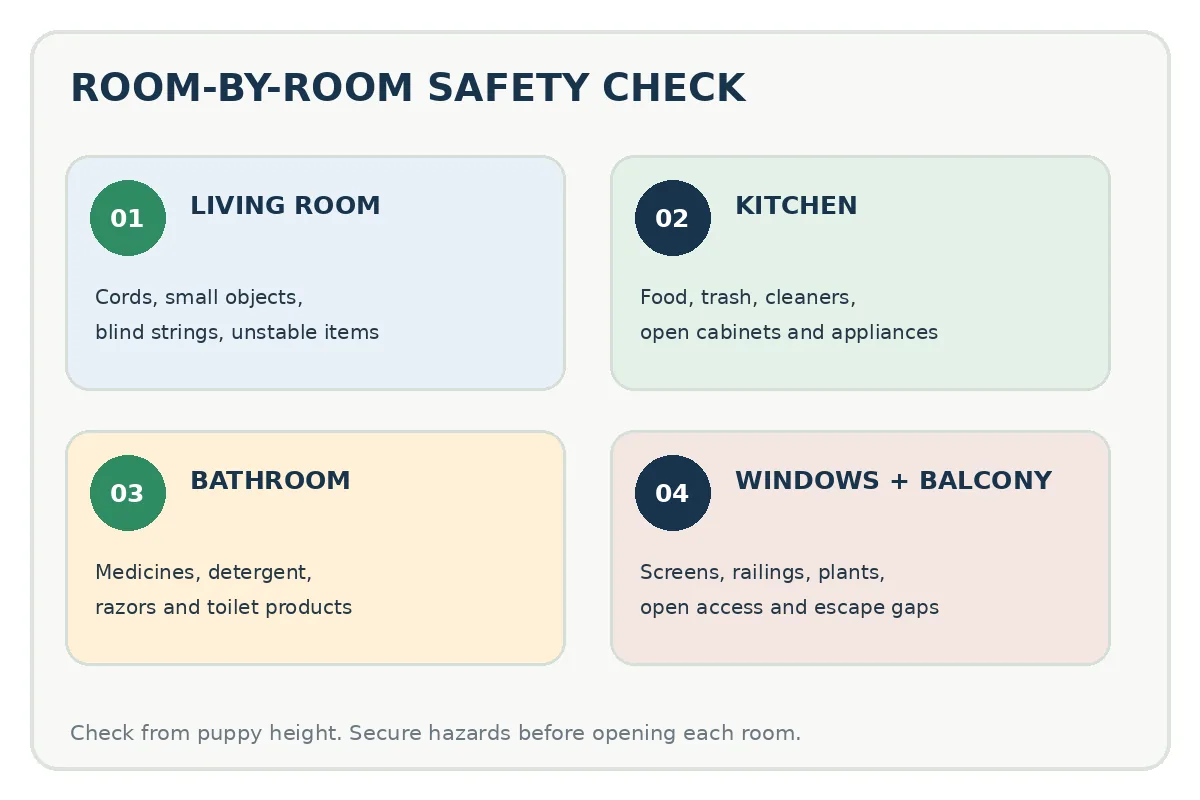
The living room often contains more puppy hazards than owners notice at first. Get down near floor level and look for phone chargers, extension cords, game controllers, remote controls, loose batteries, coins, shoes, and small decorative objects. Move them to closed storage or block access. Use cord covers where appropriate, and unplug items that do not need to remain connected.
Check the space around sofas, recliners, bookcases, and side tables. A puppy may crawl behind furniture, chew a loose fabric edge, or pull an item down. Keep blind and curtain cords secured well out of reach. Move unstable lamps, candles, and breakable decorations. If you use a baby gate to keep the puppy in one part of the room, make sure it is installed according to the manufacturer’s directions and cannot fall when pushed.
Look at rugs and floor mats too. Loose edges may encourage chewing or become a tripping hazard. Keep shoes and laundry baskets out of reach. A puppy that is chewing furniture may need a safer chew option, more supervision, or a smaller accessible area, not punishment.
Kitchen: secure food, trash, and cleaning products
Do not leave food on low counters, tables, or within reach of an open cabinet. Dogs can be harmed by foods such as chocolate, grapes, raisins, onions, garlic, alcohol, and products containing xylitol. Store food in closed containers and keep the trash can secured behind a cabinet door or in a location your puppy cannot reach.
Cleaning sprays, dishwasher pods, detergents, disinfectants, and other household chemicals belong in a closed, secure cabinet. Follow each product’s label about use, dilution, drying time, and keeping pets away from treated surfaces. Never assume a product is safe just because it is used in a kitchen. The AVMA household hazards guide explains why cleaners, food, medicines, cords, and other everyday items need careful storage. The ASPCA also has a specific guide to poisonous household products.
Keep your puppy away from a hot stove, oven, open dishwasher, and any food preparation area. Close doors and drawers after use. If your kitchen has a gap behind an appliance, block access rather than assuming a small puppy cannot fit into it.
For a more detailed list of foods to keep away from dogs, read our guide to human foods that are dangerous for dogs. Do not wait for symptoms if you know your puppy has eaten a potentially toxic food. Contact a veterinarian or animal poison control for advice.
Bathroom and laundry area: lock away medicines and detergents
Store prescription medicines, pain relievers, vitamins, supplements, razors, dental products, and personal-care items in a closed cabinet. A dropped pill can be difficult to spot, so check the floor after taking medication. Keep toilet lids closed if your puppy can reach the bathroom. Toilet cleaners and other products may leave residues that are not meant to be swallowed.
Laundry detergent pods, liquid detergents, bleach, stain removers, dryer sheets, and cleaning cloths should be stored securely. Keep the washer and dryer doors closed when they are not in use, and check inside before starting a cycle. Puppies may crawl into an open appliance or chew on a loose item left nearby.
Put towels, socks, underwear, hair ties, cotton swabs, and small bathroom items away. Swallowed fabric or objects can cause serious problems. If you think your puppy has swallowed something, call your veterinarian rather than trying to make them vomit unless a veterinary professional specifically instructs you to do so.
Bedroom: protect against cords, laundry, and personal items
Bedrooms can look tidy but still contain many chewable items. Keep phone cables, laptop chargers, headphones, jewelry, coins, medication, hair ties, and small accessories in drawers or closed containers. Pick up socks and laundry rather than leaving them beside the bed. Secure blind cords and keep candles or other items that could fall out of reach.
Check under the bed and behind furniture. A puppy may find dust-covered objects, dropped medication, or loose packaging that you did not notice. If the bedroom is outside the puppy’s safe zone, use a secure gate and supervise any time you allow access.
Windows, balcony, front door, and shared hallways
Apartment living adds a few risks that a house checklist may not cover. Check that windows have secure locks and intact screens. Do not rely on a screen to hold a puppy’s weight. Keep furniture away from open windows if it could help the puppy climb up, and do not leave the puppy alone near an open window.
A balcony should be treated as an area that needs special supervision. Check railings and gaps, remove climbable furniture and toxic plants, and keep chemicals and cords out of reach. Never leave a puppy unattended on a balcony, even if it appears enclosed. If the railing or layout cannot be made reliably safe, keep the balcony off limits. The AKC’s balcony safety guide offers additional precautions.
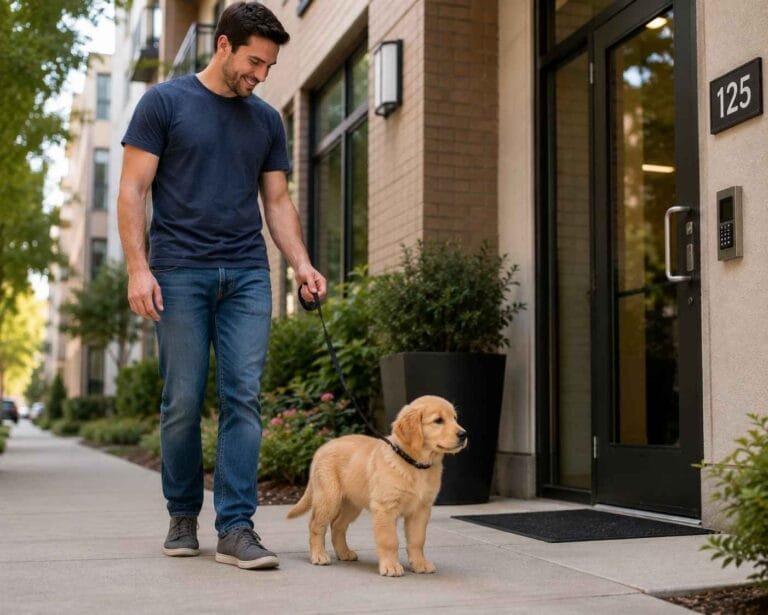
At the apartment entrance, use a leash before opening the door if your puppy might bolt into the hallway. Make sure household members know not to leave the door propped open. In shared corridors and elevators, keep your puppy close and avoid allowing them to approach people or dogs without permission. If your puppy needs help with calm greetings, our guide on how to stop a puppy from jumping on people will cover a reward-based visitor routine.
Renter-friendly ways to make an apartment safer
You can make many improvements without drilling holes or changing permanent fixtures. Try removable cord covers, closed storage bins, cabinet latches that are appropriate for the cabinet design, and a freestanding exercise pen. A pressure-mounted gate may work in some doorways, but check the manufacturer’s instructions, wall surfaces, and stability before relying on it. Do not use a gate at the top of stairs unless it is specifically designed and installed for that location.
Ask your landlord or building manager before attaching hardware, changing door fixtures, or installing anything that could damage the property. Keep fire exits, hallways, and shared spaces clear. A solution that is convenient but blocks an exit or creates a trip hazard is not a safe choice.
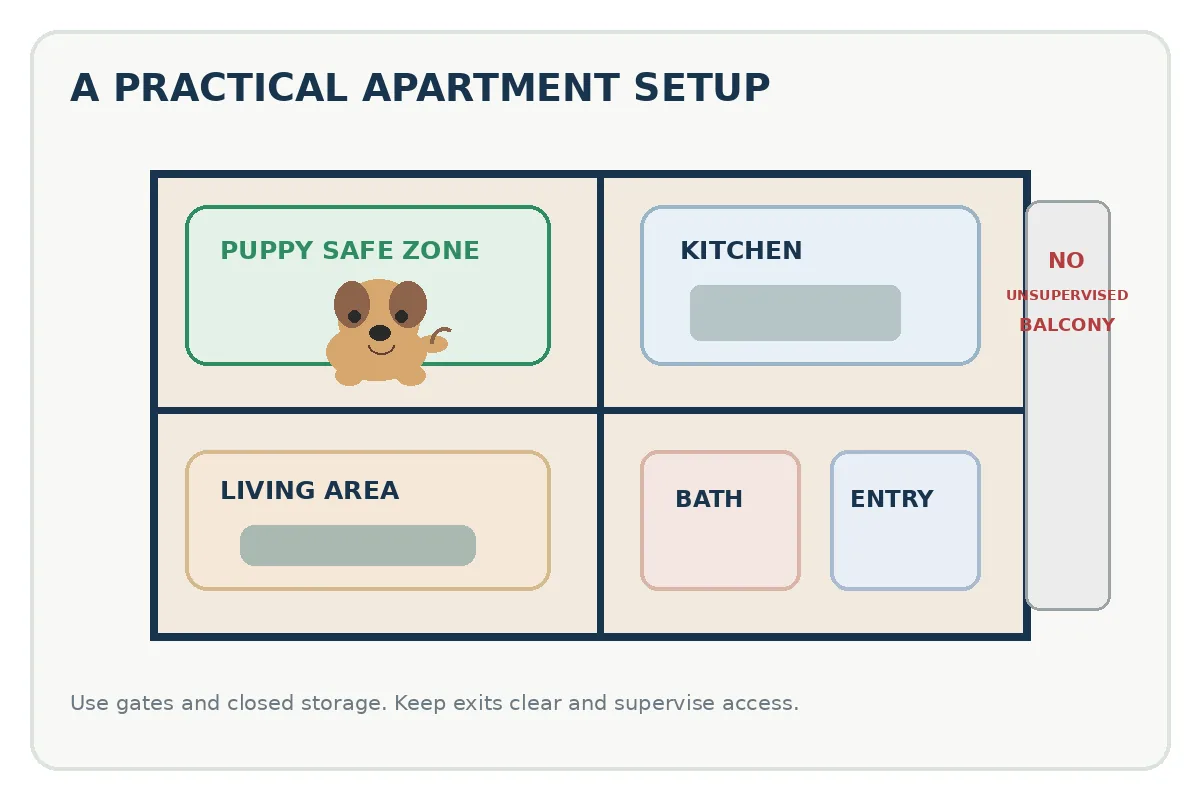
If your apartment is small, use furniture placement to reduce access to risky corners, but do not create narrow gaps where a puppy could become trapped. Choose a safe zone that allows you to supervise easily and that can be adjusted as your puppy grows.
Inspect the apartment from your puppy’s point of view
A standing adult sees a different room from a puppy. Get down near floor level and look under furniture, behind curtains, around electrical outlets, and along the edges of cabinets. Check whether the puppy can reach a hanging cord, pull down a tablecloth, open a low cupboard, or squeeze behind an appliance.
Repeat the check after moving furniture, bringing home a new product, or giving your puppy access to another room. Puppies grow quickly, and something that was out of reach last week may be reachable now. A short daily scan is easier than trying to remember every hazard once the puppy is already exploring.
A simple first-week apartment safety routine
Before arrival: Set up the safe zone, secure chemicals and medicines, remove unsafe plants, and store food and trash.
First day: Keep the puppy in the prepared area while you supervise. Introduce one room at a time rather than opening every door.
Days two to three: Check how the puppy interacts with gates, toys, cords, and furniture. Adjust the setup if they can reach or move anything unsafe.
Days four to seven: Expand access only when you can supervise. Repeat the room-level inspection and keep the apartment entrance, windows, and balcony controlled.
Apartment toilet access also needs a plan. Elevators, stairs, and distance to an outdoor area can affect how quickly you can take a puppy out. Our apartment puppy potty-training guide explains how to choose a consistent toilet location and build a routine that fits a smaller home.
What if your puppy chews or swallows something dangerous?
Move the puppy away from the item and keep the packaging or product label if it is safe to do so. Contact your veterinarian promptly. If you suspect poisoning in the United States, call the ASPCA Animal Poison Control Center at 888-426-4435. Its service is available 24 hours a day, and a consultation fee may apply. If your puppy is having trouble breathing, collapses, has seizures, or is seriously unwell, contact an emergency veterinary clinic immediately.
Do not induce vomiting, give home remedies, or wait for symptoms unless a veterinary professional tells you what to do. The right response depends on the substance, amount, time since exposure, and the puppy’s condition. The ASPCA’s poisonous household products guidance explains when to contact a veterinarian or poison control.
Frequently asked questions
How do I puppy proof a small apartment?
Start with one secure area, then remove or lock away cords, medicines, cleaners, food, trash, plants, and small objects in every room your puppy can reach. Use stable barriers and supervise as you gradually introduce more space.
What should I remove before bringing a puppy home?
Move electrical cords, medicines, cleaning products, toxic foods, unsafe plants, small objects, laundry, and unsecured trash out of reach. Check windows and balcony access, then prepare a safe resting area.
Can I use a baby gate in a rental apartment?
Often, but check the gate’s installation instructions and your lease or building rules. Choose a model suited to the doorway and avoid any setup that can fall, create a gap, or block an exit.
Is a balcony safe for a puppy?
Only if the area has been assessed carefully and the puppy is directly supervised. A puppy should never be left alone on a balcony. If gaps, railings, furniture, plants, or other hazards cannot be controlled, keep the puppy off the balcony.
How often should I puppy proof my apartment again?
Check the space daily while your puppy is young and repeat a full room-by-room review whenever your puppy grows, furniture moves, or a new item enters the home. Access should expand only when the area is safe and supervision is available.
A safer apartment starts with a smaller space
You do not have to make every room available at once. Prepare one comfortable safe zone, secure the most common hazards, and expand access as your puppy learns the home. A simple routine of checking cords, cabinets, food, trash, windows, and doors can make apartment life safer without changing the entire rental.
Editorial information
This article is educational and is not a substitute for veterinary advice. Household products and plants vary, so check the exact product or plant and contact a veterinarian or animal poison control service when exposure is suspected. No veterinary review is claimed for this article.