Puppies often jump up because they are excited to greet someone, want attention, or have learned that jumping makes people look at them, talk to them, or touch them. The most useful way to change the habit is to prevent unsafe greetings, teach a simple alternative, and reward that alternative every time it happens.
Quick answer: To stop a puppy from jumping on people, reward four paws on the floor or a calm sit, practice with one familiar helper, and use a gate or leash to manage greetings while your puppy learns. Ask visitors to follow the same routine. Avoid kneeing, pushing, shouting, leash jerks, or forcing the puppy into position.
Why do puppies jump on people?
Jumping is a common greeting behavior. A puppy is small, and a person’s face and hands are higher up. Jumping can bring the puppy closer to the person, and even an unplanned reaction can reward the behavior. Laughing, talking, pushing the puppy away, or petting them may all provide the attention they wanted.
Excitement is not the only possible reason. Some puppies jump when they feel uncertain, overwhelmed, or unsure what to do around a new person. Look at the whole situation. A loose, wiggly puppy who approaches willingly may simply need a clearer greeting routine. A puppy who backs away, freezes, hides, growls, or repeatedly tries to escape needs space rather than a closer greeting.
Jumping does not mean a puppy is trying to dominate a person. It is more useful to identify what happens just before and after the jump, then change the setup so calm behavior is easier to practice.
Choose the behavior you want instead
Before training starts, decide what a polite greeting looks like in your home. For many puppies, the simplest rule is four paws on the floor. You can also teach a sit if your puppy is comfortable sitting around people. A sit is not compulsory. Some dogs find it difficult to stay seated when excited, so calmly standing with all four paws down can be a perfectly good alternative.
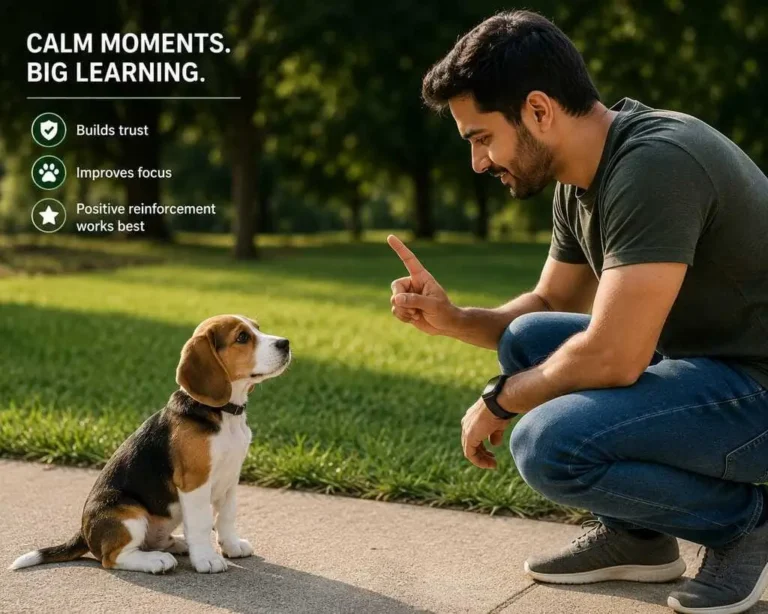
Reward the behavior you want to see. Use small treats, a calm voice, or access to greet a person. Keep the reward low-key enough that it does not make the puppy leap up again. The American Veterinary Society of Animal Behavior’s humane training guidance recommends reward-based methods and does not support aversive tools or physical punishment for dog training.
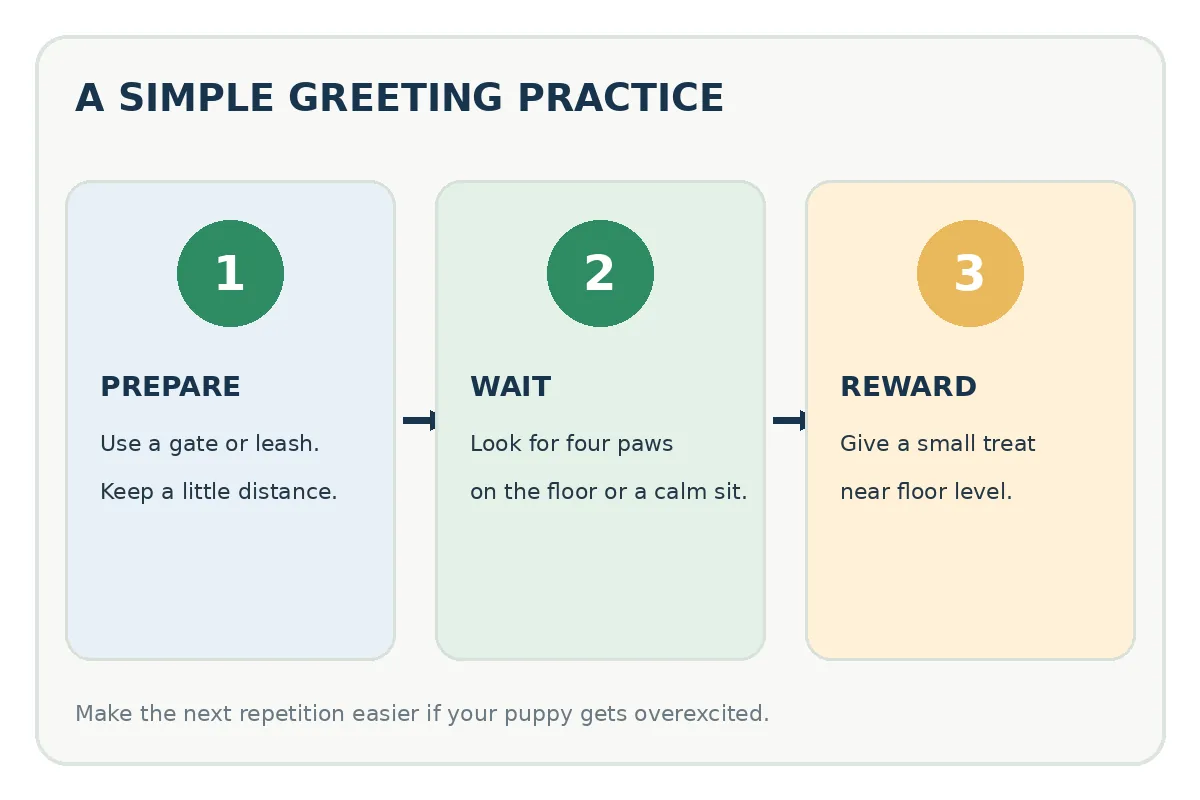
How to stop a puppy from jumping on people
1. Set up the greeting before the person arrives
Do not wait until your puppy is already bouncing at the door. Put treats in an easy-to-reach place, and decide where the puppy will wait. A baby gate, exercise pen, or closed interior door can create space while visitors enter. Check that the barrier is stable and that the puppy cannot climb over, squeeze through, or become caught in it.
If your greeting practice takes place in a small apartment, use our apartment puppy-proofing checklist to secure cords, medicines, windows, and balcony access before visitors arrive.
If your puppy is too excited to respond, give them a little more distance. The goal is not to make them sit while they are overwhelmed. It is to create a situation where they can notice the visitor and still think, eat a treat, and respond to you.
2. Reward four paws on the floor
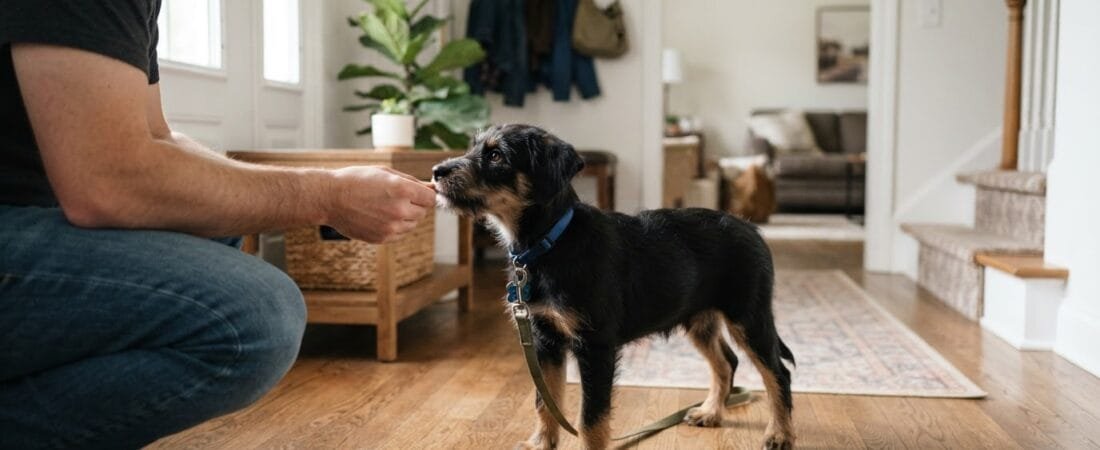
When your puppy approaches without jumping, mark the moment with a short word such as “yes,” then give a small treat near floor level. You can also offer calm attention if your puppy enjoys it. If they jump, pause the greeting and make the situation easier. Turn slightly sideways or step behind the barrier if it is safe to do so. Avoid pushing the puppy down or grabbing their paws.
The timing matters. Reward the calm moment as soon as it happens. If you wait too long, your puppy may not connect the reward with keeping their paws on the floor.
3. Teach a sit as an optional greeting routine
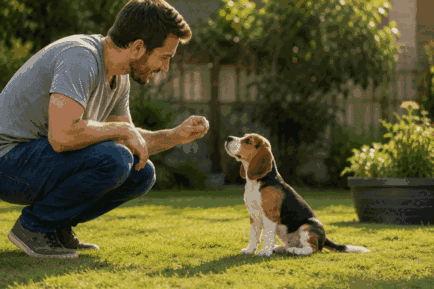
Practice “sit” away from the front door first. Say the cue once, wait for your puppy to offer the position, and reward it. Keep sessions short. When your puppy can sit comfortably in a quiet room, practice with a familiar person at a distance.
Ask the helper to approach only while the puppy remains calm. If the puppy stands up or starts jumping, the helper can pause or move back. When the puppy settles again, the greeting can continue. Do not repeatedly push the puppy into a sit. Let them choose the behavior and reward it.
4. Practice with one calm helper
Start with a person your puppy already knows. Have the helper stand at a comfortable distance and avoid leaning over the puppy. Ask them to wait while you reward calm behavior. If your puppy stays relaxed, the helper can take one step closer and offer a brief greeting.
Keep the first practice short. Several easy repetitions are more useful than one long greeting that ends with the puppy getting overexcited. Change only one part at a time, such as the visitor’s distance, movement, or level of excitement.
5. Use a gate or leash when you need more control
A gate or exercise pen can prevent repeated jumping while you teach the new routine. For outdoor greetings, use a well-fitted harness or collar and a normal leash that gives you safe control without pulling the puppy toward the person. Keep enough distance for the puppy to remain comfortable.
Do not use the leash to jerk the puppy down or force them to sit. If the puppy is too excited to respond, calmly increase the distance and try again later. A leash is for safe management, not punishment.
If you live in a smaller home, the same gate and safe-zone setup can help keep greetings predictable. Before visitors arrive, secure the entryway, loose cords, and the puppy’s safe area.
6. Make greetings short and predictable
Let the puppy greet for a few seconds, then call them back to you and reward them. Give them a break before they become overexcited. If they jump again, pause the interaction and reset the distance. End the greeting while the puppy is still coping well.
The same routine should apply when you return home. Keep your arrival calm, reward four paws on the floor, and give attention once your puppy can greet without jumping. If you sometimes encourage jumping because it seems cute, your puppy may struggle to understand why it is not allowed with other people.
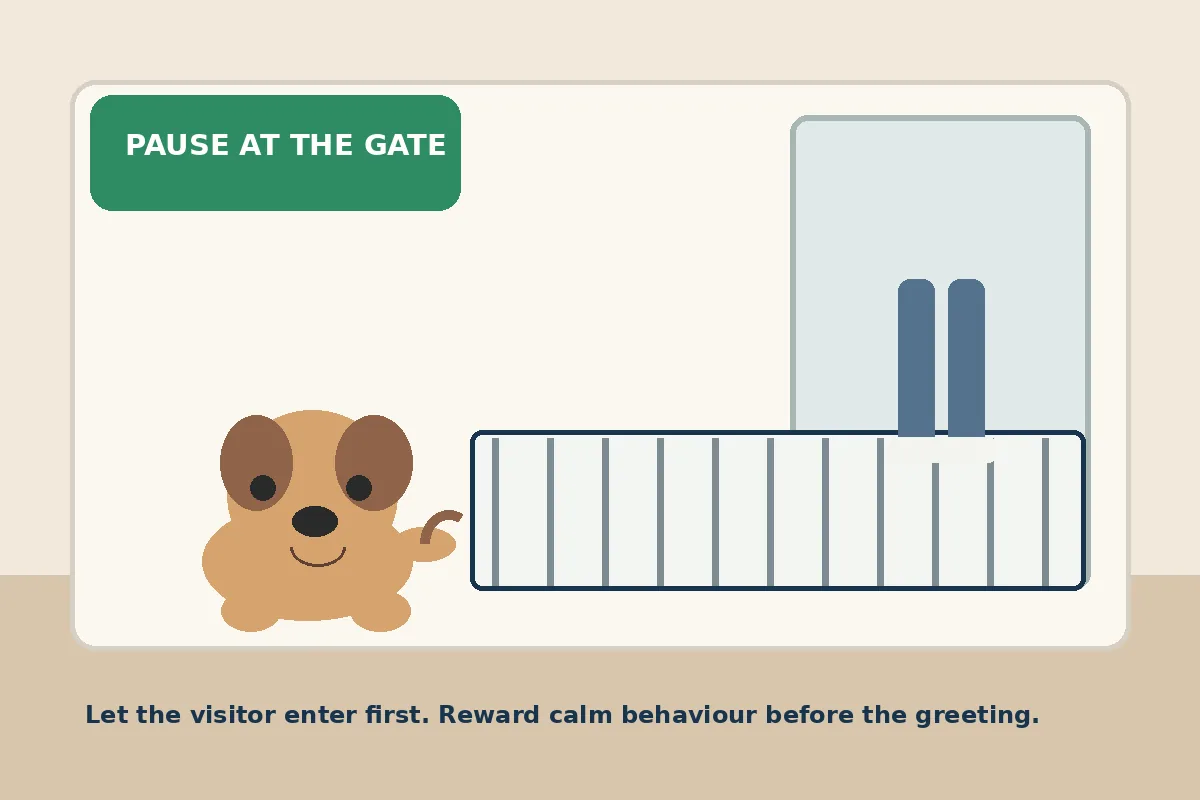
What should visitors do when a puppy jumps?
Tell visitors the plan before they enter. Ask them to avoid eye contact, talking, touching, or leaning over the puppy while the puppy is jumping. When all four paws are on the floor, they can offer a calm greeting or toss a small treat onto the floor if you have approved the treat.
If the puppy cannot settle, keep the barrier in place and let them enjoy a safe activity away from the visitor. Not every guest needs to greet the puppy. A puppy can learn to remain comfortable around people without being touched by everyone who enters the home.
A short visitor routine can help:
- The visitor enters while the puppy is behind a secure gate or at a comfortable distance.
- You reward the puppy for looking at the visitor calmly or keeping four paws on the floor.
- The visitor waits until you say it is okay to interact.
- The greeting lasts only while the puppy stays relaxed.
- You give the puppy a break before excitement builds again.
Consistency matters more than asking every visitor to use the exact same words. The important part is that jumping does not earn attention, while calm behavior makes the greeting possible.
How to handle jumping on people outside the home
On walks, do not let your puppy rush up to strangers. Keep a comfortable distance and ask the other person to wait before approaching. Reward your puppy for looking at the person and staying with you. If the puppy is calm and the person agrees, allow a brief greeting. If the puppy starts jumping, move away and reset rather than pulling them toward the person.
Your puppy does not need to greet everyone. Dogs Trust recommends giving dogs a choice to move away and using distance, barriers, and rewards to manage jumping. Its guide to training dogs not to jump up also explains how to prepare visitors and keep greetings calm.
For puppies still learning how to meet people and experience new places, our puppy socialization guide explains how to introduce new experiences without overwhelming them.
Keep children and vulnerable visitors safe
Do not ask a young child to manage an excited puppy. Use a secure barrier, keep an adult in control of the leash, and supervise every interaction. A puppy can accidentally scratch or knock over a child, an older adult, or someone who has balance or mobility concerns.
Let the puppy approach only when the person is comfortable and the puppy is calm. If the puppy is too excited, keep them separated and try another time. Never leave a child alone with a puppy, even if the puppy is small or usually friendly.
Common mistakes that make jumping harder to change
- Pushing the puppy down: Physical contact can feel like attention or play and may increase excitement.
- Shouting or scolding: Some puppies find this exciting, while others may become worried. Neither teaches a clear greeting alternative.
- Using knee bumps or leash corrections: These methods can cause fear, discomfort, or injury and are not needed to teach a calm greeting.
- Letting some people encourage jumping: Mixed responses make the rule difficult to understand.
- Practising with too many visitors at once: Busy greetings can be too difficult for a young puppy. Begin with one calm helper.
- Expecting a sit in every situation: Reward calm standing if that is easier for your puppy.
- Ignoring signs of fear: A puppy that is hiding, freezing, growling, or trying to move away needs more space, not more pressure.
The Best Friends Animal Society guide to stopping dogs from jumping on people and VCA’s training guidance both describe teaching an alternative greeting and managing the environment rather than rewarding the jump.
How long does it take to teach a puppy not to jump?
There is no reliable number of days that applies to every puppy. Progress depends on how often the puppy practices, how excited they become, how consistent people are, and whether the greeting environment is manageable. Some puppies learn the basic routine quickly but still jump when visitors arrive or when they meet someone outdoors.
Track small signs of progress. Does your puppy keep four paws down for one second longer? Can they wait behind a gate while a visitor enters? Can they greet one familiar person calmly? Build from the behavior your puppy can already manage. If jumping returns in a harder setting, make the next practice easier instead of assuming the training has failed.
When should you get professional help?
Speak with your veterinarian if jumping begins suddenly, seems linked to pain or discomfort, or occurs alongside other unusual behavior. Seek help from a qualified reward-based trainer or veterinary behavior professional if your puppy growls, snaps, bites, becomes frightened around visitors, or cannot remain comfortable even at a distance. Keep people safe by using barriers and avoiding forced greetings while you arrange support.
A puppy that jumps because they are worried needs a different plan from a puppy that is simply overexcited. If your puppy is showing broader fear during early development, our guide to the puppy fear period at eight weeks may help you understand why gentle, controlled experiences matter. For broader home routines and early skills, see our beginner’s guide to training a puppy at home.
Frequently asked questions
Should I ignore my puppy when they jump on me?
If it is safe, briefly remove attention by turning sideways or stepping behind a barrier. Then reward the puppy as soon as their paws are back on the floor. Do not ignore signs of fear, distress, or a safety risk. Create more distance when needed.
Should I teach my puppy to sit instead of jumping?
A sit can be a useful greeting behavior if your puppy is comfortable doing it. Four paws on the floor is also a valid goal. Reward the calm behavior your puppy can offer rather than forcing a position.
Should visitors give treats to a puppy that jumps?
Wait until the puppy is calm before offering a treat. Deliver it low or toss it onto the floor so the puppy does not need to jump to reach it. Use only treats that suit your puppy and fit their normal diet.
Is jumping a sign of dominance?
Jumping during greetings is not evidence that a puppy is trying to dominate a person. Look at the puppy’s motivation, the environment, and what happens after the jump. Teach a safer greeting and reward it consistently.
What if my puppy jumps and mouths visitors?
Use a barrier and stop direct greetings for now. Avoid pulling clothing or wrestling with the puppy. If mouthing is forceful, persistent, or paired with fear, growling, or snapping, ask your veterinarian or a qualified reward-based behavior professional for an individual plan.
A simple greeting rule to practice today
Choose one calm person, keep your puppy at a comfortable distance, and reward four paws on the floor. Let the person approach only while your puppy stays relaxed. End the greeting before excitement takes over. Repeat the same simple routine with family members and visitors, and use a gate or leash whenever you need help keeping everyone safe.
Editorial information
This article is educational and is not a substitute for advice from your veterinarian or a qualified animal behavior professional. Training recommendations are based on the sources listed below. No individual puppy has been assessed for this guide.