
Introduction
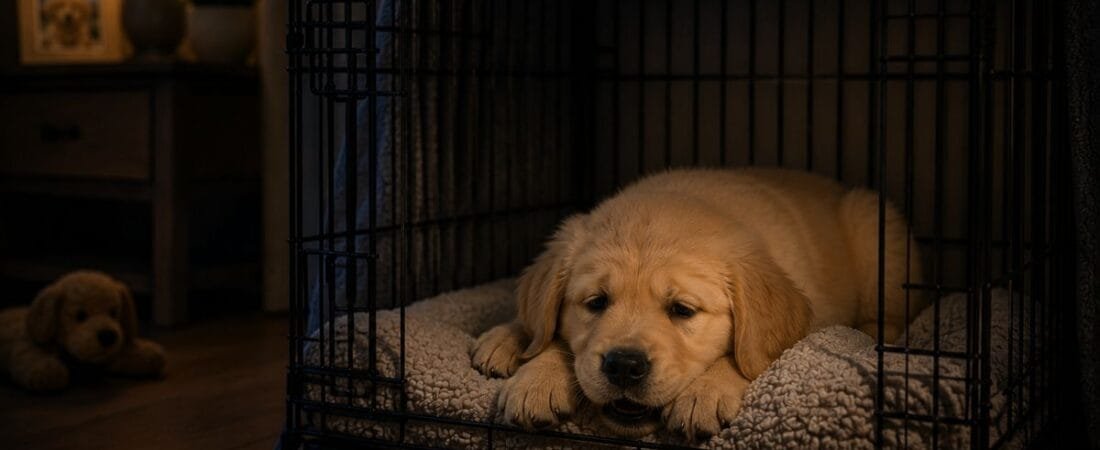
Your puppy’s crate is supposed to be their safe space. But when 2 AM rolls around and all you hear is heartbreaking crying and whining, it can feel like your crate training strategy completely failed.Here’s the truth: puppy crying in the crate at night is almost always normal. Your puppy isn’t broken. You’re not doing anything wrong. They’re just adjusting to a brand new world.
In this guide, I’ll walk you through exactly why puppies cry at night, what you should actually do about it, and nine practical strategies that veterinarians recommend to help your puppy sleep through the night.
By the end of this article, you’ll understand your puppy’s crate behavior and have real, actionable solutions that actually work.
Quick Answer: Why Is My Puppy Crying in the Crate at Night?
Puppies cry in their crates at night for several normal reasons: they’re adjusting to a new environment away from their littermates, they need a potty break, they’re scared or lonely, or they’re simply overtired. Most puppies settle down within 1-3 weeks as they adjust. However, sudden excessive crying can signal medical issues, so contact your vet if the behavior changes unexpectedly or other symptoms appear.
Why Puppies Cry in Their Crate at Night
First Night in a New Home
Everything about your home is overwhelming to a new puppy. The sounds are different. The smells are completely foreign. The darkness feels scary. Your puppy spent weeks surrounded by littermates in a familiar breeder’s home. Suddenly they’re alone in a crate in a dark room with you sleeping nearby.
That adjustment is a massive change. Crying is how they communicate that they’re scared and confused.
Missing Littermates
Puppies don’t sleep alone in the wild. They pile up with their littermates for warmth, comfort, and security. When your puppy first arrives at your home, they’re experiencing isolation for the first time.
That loneliness triggers crying and whining. It’s completely normal and completely temporary.
Needs a Potty Break
Young puppies have tiny bladders. An 8-week-old puppy can typically hold their pee for about 2-3 hours. At night, they often need at least one potty break, sometimes more.
If your puppy cries and you take them outside and they immediately pee, that was a legitimate potty need. Always take those cries seriously.
Too Much Energy Before Bed
A puppy with zoomies at bedtime won’t sleep peacefully in the crate. If your puppy was playing intensely right before bed or didn’t get enough exercise during the day, they’ll be restless and vocal.
Overtired puppies actually cry more, not less. It sounds backwards, but it’s true.
Crate Discomfort
Is the crate actually comfortable? A hard plastic floor without bedding feels cold and uninviting. If your puppy’s crate isn’t cozy, they’ll complain about it.
A soft bed, a blanket, and maybe a heating pad designed for pets can make a huge difference.
Hunger or Thirst
Puppies eat frequently throughout the day. If your puppy’s last meal was 4-5 hours before bedtime, they might be hungry. Thirst is also common, especially if they were playing hard.
A small meal a few hours before bed (not right before) can help them settle down.
Fear and Separation Anxiety
Some puppies are naturally more anxious. They experience genuine fear when separated from their owners. This isn’t spoiling them or creating bad habits—some puppies just have more sensitive temperaments.
For these puppies, gradual desensitization and patience are essential.
Medical Problems
Occasionally, excessive crying signals something medical. If your puppy seems to be in pain, is vomiting, has diarrhea, or is showing other symptoms, a veterinary visit is necessary.
Most nighttime crying is behavioral, but ruling out health issues should always be your first step with a new puppy.
Is It Normal for a Puppy to Cry in the Crate at Night?
Yes. It’s completely normal. But there’s normal variation depending on your puppy’s age and how long they’ve been with you.
The First Night
Expect significant crying on night one. Your puppy has been separated from everything familiar. They’re scared, confused, and lonely. Some puppies cry for hours.
This is not a sign that crate training won’t work. This is expected and temporary.
The First Week
Crying usually decreases noticeably by night three or four. By the end of the first week, most puppies cry less frequently and for shorter periods.
The intensity typically drops significantly, even if some whining remains.
The Adjustment Timeline
Most puppies adjust to sleeping in a crate within 1-3 weeks. Some adapt faster. Others take a full month. Both are normal.
Consistency during these weeks determines how quickly your puppy adjusts. Inconsistent responses will extend the crying phase.
What’s Actually Normal
Normal crate crying is sporadic, decreases over time, and responds to potty breaks or comfort measures. Your puppy cries, you respond appropriately (potty break or brief reassurance), and they settle back down.
Concerning crying is constant, intense, accompanied by other symptoms, or doesn’t improve after a few weeks.
9 Vet-Approved Ways to Stop Puppy Crying in the Crate at Night
1. Take Your Puppy Outside Before Bedtime
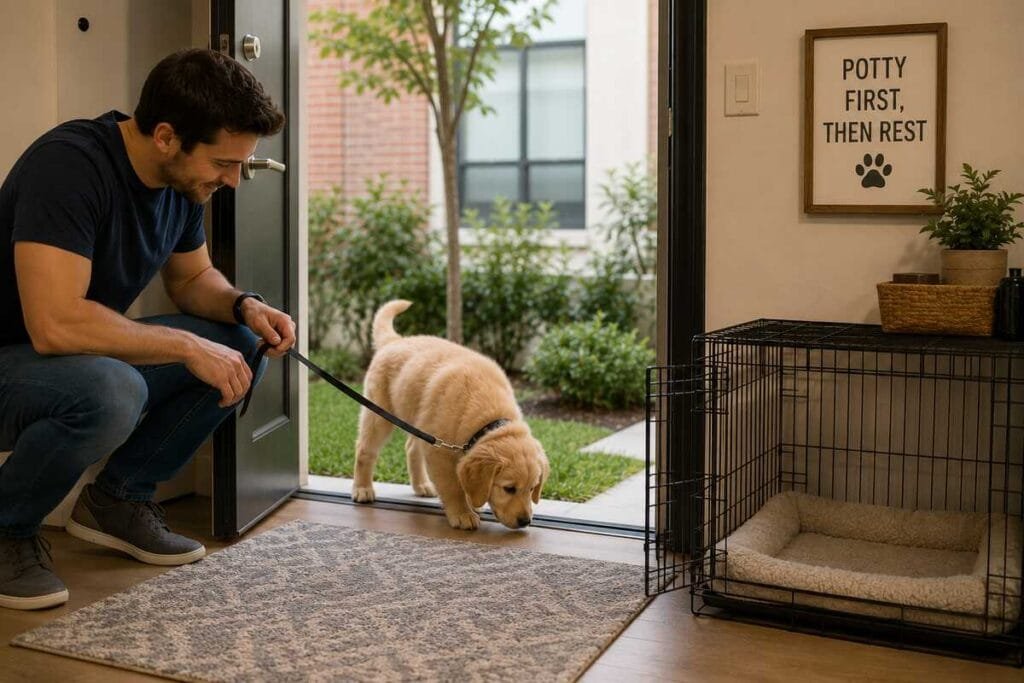
A potty break 30-45 minutes before bed is essential. Take your puppy outside, let them fully relieve themselves, and then bring them back in for crate time.
Don’t play or stimulate your puppy during this pre-bed potty break. Keep it calm and quiet. The goal is helping them empty their bladder and bowels so they can sleep.
Your puppy will cry less if they don’t have a genuine need to go outside.
2. Make the Crate Comfortable
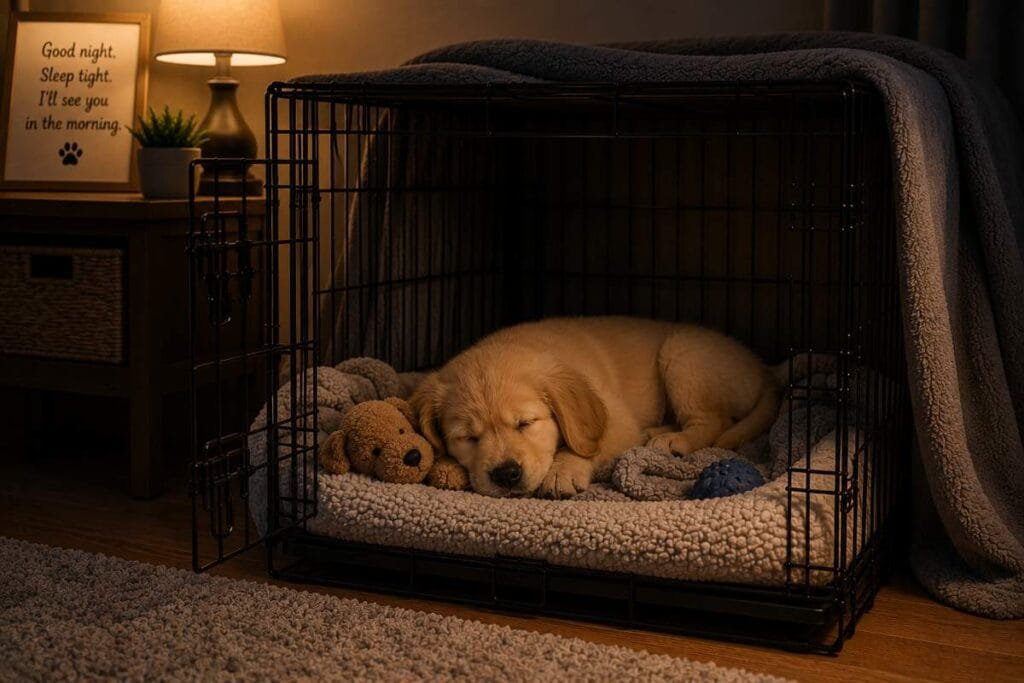
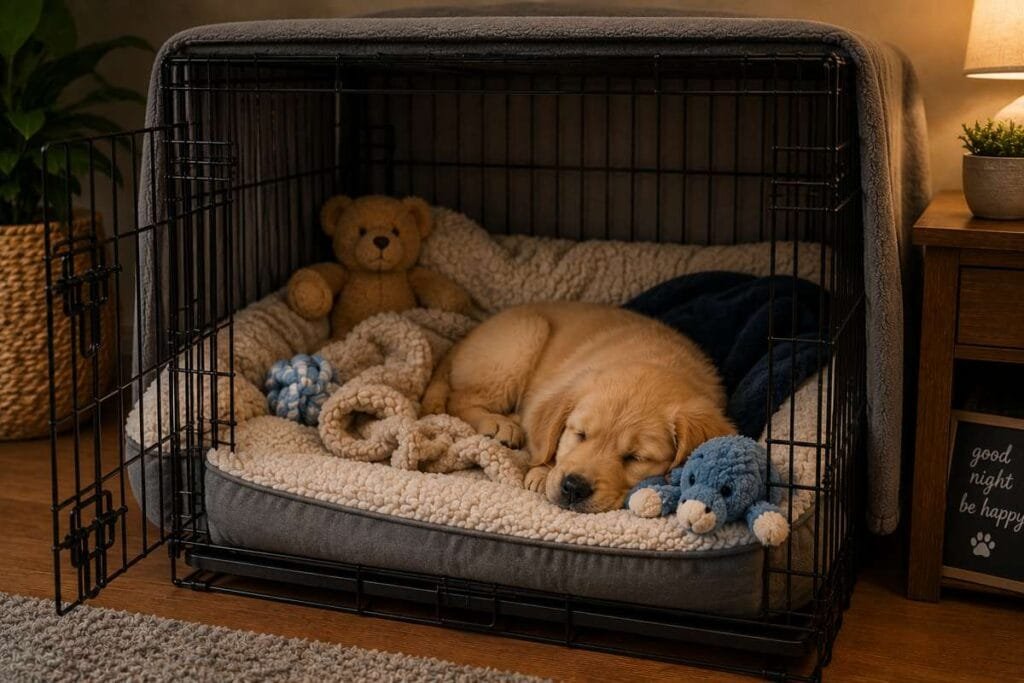
A comfortable crate is half the battle. Add a soft dog bed, blankets, and consider a pet-safe heating pad to replicate the warmth of littermates.
Many pet owners forget that puppies are coming from warm environments. A cold, hard crate feels nothing like home.
Make sure the crate is the right size—big enough for your puppy to stand, turn around, and lie down, but not so big that they can potty in one corner and sleep in another.
3. Place the Crate Near Your Bed
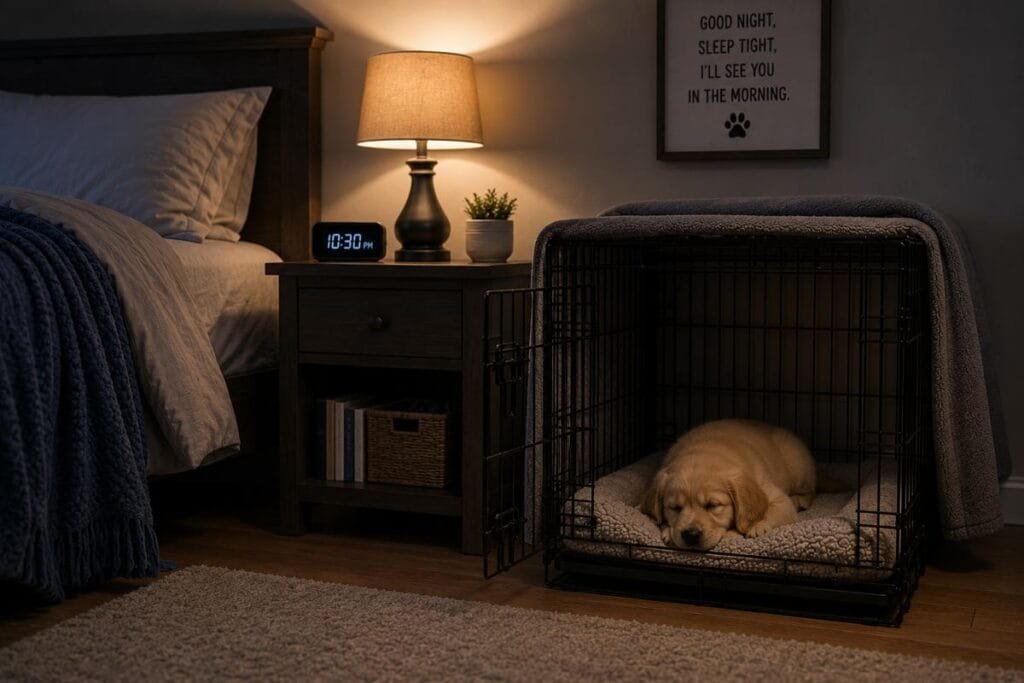
Your scent and your presence are incredibly comforting to a new puppy. Placing the crate in your bedroom (not your bed—in the crate) helps them feel less alone.
You can also respond faster to legitimate potty needs. When you hear whining, you can quickly assess whether it’s a real emergency or just adjustment crying.
As your puppy gets older and more confident, you can gradually move the crate to another room.
4. Build Positive Crate Associations
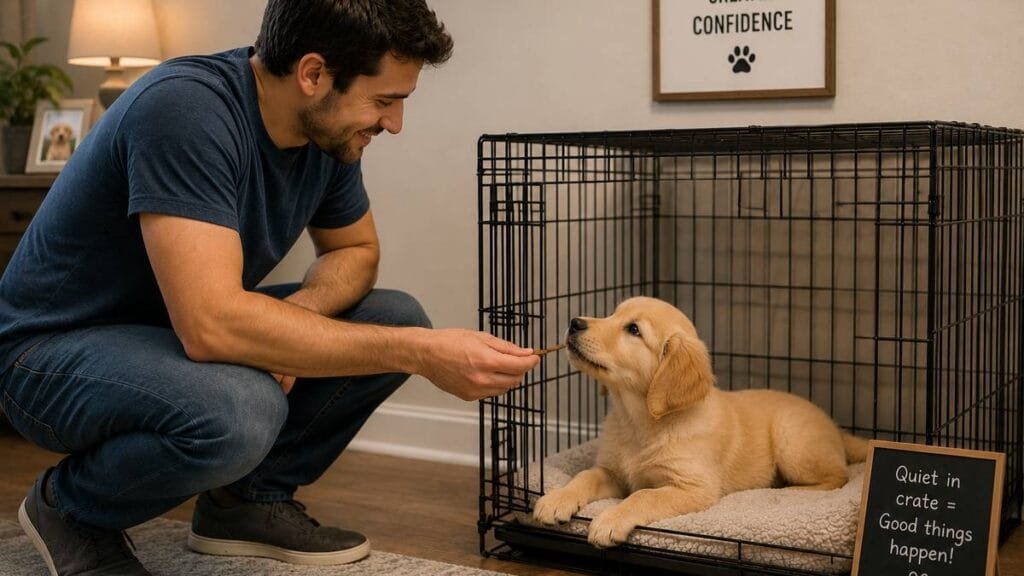
Your puppy shouldn’t see the crate as punishment or a place where they’re abandoned. Build positive associations through treats, toys, and calm time.
Feed your puppy meals inside the crate during the day with the door open. Toss treats in randomly. Let your puppy nap in it during the day without closing the door.
Check out our guide on how to stop puppy barking in the crate for detailed strategies on building these positive associations. The same principles apply to nighttime crying.
5. Provide Enough Daytime Exercise
A tired puppy sleeps better. Make sure your puppy gets appropriate exercise during the day—not so much that they’re exhausted and overstimulated, but enough that they’re genuinely tired at bedtime.
Puppies need around 5 minutes of exercise per month of age, twice daily. An 8-week-old puppy needs about 20 minutes of structured activity, split into shorter sessions.
Follow our dog exercise routine guide to understand age-appropriate activity levels for your puppy.
6. Follow a Consistent Bedtime Routine
Puppies thrive on routine. Do the same things every night: potty break, short calm playtime, a small snack, bedtime potty break, then crate.
Consistency signals to your puppy’s body that sleep is coming. Their internal clock adjusts faster when the routine never changes.
Even on weekends, keep the routine identical. This is the single most important thing you can do to speed up adjustment.
7. Use Safe Comfort Items
A soft toy, a blanket that smells like the breeder’s home, or a ticking clock can help your puppy feel less alone. Some puppies bond with a specific toy that becomes their comfort object.
Make sure any toys in the crate overnight are completely safe—no small pieces that could be swallowed, no stuffing that could be torn out.
A Kong stuffed with puppy food and frozen can also provide comfort and distraction.
8. Avoid Rewarding Attention-Seeking Crying
This is where many puppy owners struggle. If your puppy cries and you rush over, pick them up, or play with them, you’re teaching them that crying works.
Ignore attention-seeking crying (not potty-related crying). Stay calm. Don’t make eye contact. Don’t talk to your puppy. Let them cry until they settle.
The moment they’re quiet, calmly reward them with a treat through the bars. This teaches them that quiet gets your attention, not crying.
9. Visit Your Veterinarian If Crying Suddenly Changes

Puppies who were sleeping peacefully and suddenly start crying excessively might have a health problem. Schedule a vet visit to rule out ear infections, urinary tract infections, pain, or other medical issues.
Your veterinarian can also evaluate whether your puppy’s crying is normal adjustment behavior or something requiring intervention.
Should You Ignore a Puppy Crying in the Crate at Night?
Not always. You need to know the difference between attention-seeking crying and genuine distress.
When Ignoring Is Appropriate
If your puppy just had a potty break, is in a comfortable crate, and is crying for your attention, ignoring is the right move. Your puppy is trying to manipulate the situation.
Stay strong. Ignoring will feel cruel, but it’s the kindest thing you can do. Every time you cave and respond, you extend the crying phase.
Most puppies cry less within 3-7 days if owners stay consistent with ignoring attention-seeking cries.
When You Should Respond
If your puppy needs a potty break, they need a potty break. If they’re injured, sick, or in genuine distress, respond immediately.
Trust your instincts. You know your puppy. If the crying sounds panicked or pained rather than frustrated or lonely, take action.
The Difference Between Attention-Seeking and Distress
Attention-seeking crying is intermittent. Your puppy cries, pauses, cries again. They’re testing whether you’ll respond. Distress crying is typically continuous and higher-pitched.
After a potty break, attention-seeking crying should immediately decrease if your puppy really needed to go. If they just wanted attention, they’ll cry again within minutes of returning to the crate.
Puppy Crying After a Potty Break
You took your puppy outside, they peed, and they’re still crying when you put them back in the crate. What’s happening?
Your Puppy Wants Comfort
Potty breaks are stimulating, even brief ones. Your puppy woke up, went outside, had a novel experience, and now they’re more awake and wanting comfort from you.
Keep the potty break boring. No talking, no playing, no excitement. Just outside, pee, and back to the crate.
Still Adjusting
Your puppy might legitimately need the potty break but also still be adjusting to crate sleeping. They’re not crying because they still need to pee. They’re crying because sleeping alone is hard.
Patience and consistency are the only solutions. Every night, the adjustment gets easier.
Routine Changes
If you’ve been responding to every cry by taking your puppy outside multiple times per night, they expect it. Suddenly ignoring cries feels unfair to them.
If you need to adjust your response, do it gradually. This might mean your puppy cries harder for a few nights while they adjust to the new boundary.
Puppy Cries in the Crate at Night But Not During the Day
Daytime crating is totally different from nighttime crating. Here’s why your puppy acts fine all day but falls apart at bedtime.
Darkness Is Scary
During the day, the crate is in a lit room with activity and people around. At night, it’s dark and quiet. Darkness triggers fear in many puppies.
A nightlight or leaving on a dim lamp nearby can help tremendously. This simple fix works for many puppies.
Separation Feels Worse
During the day, you might be home, working, or nearby. Your puppy hears you moving around. At night, everything is silent and still. The separation feels more complete.
Having the crate in your bedroom helps, but even that takes adjustment.
Less Stimulation Means More Anxiety
During the day, there’s visual and auditory stimulation. Your puppy’s brain is occupied. At night, there’s nothing to focus on except their own fear.
A ticking clock, white noise machine, or soft background music can provide comforting sound.
Bedtime Routine Signals Sleep
Your puppy knows that nighttime routine means they’ll be alone for hours. During the day, crate time might only be 30 minutes. That knowledge can trigger anxiety.
As your puppy realizes they’ll survive the night, this anxiety usually fades.
Puppy Suddenly Started Crying in the Crate at Night
Your puppy was sleeping through the night perfectly, and suddenly they’re crying again. This is different from initial adjustment crying.
Illness or Pain
Ear infections, urinary tract infections, parasites, and other health issues can develop suddenly. If your puppy suddenly starts crying when they weren’t before, a vet visit is necessary.
Don’t assume behavioral causes. Rule out medical causes first.
Growth Spurts and Developmental Changes
Sometimes puppies go through phases where they’re uncomfortable or anxious. Teething, growth spurts, and developmental milestones can all trigger temporary sleep disturbances.
These usually pass within a week or two.
Stress or Environmental Changes
Did you move the crate? Is there new noise in your home? Did your schedule change significantly? Even small changes can trigger temporary regression in a sensitive puppy.
Return to basics: potty break before bed, consistent routine, and patience.
Common Mistakes That Make Nighttime Crate Crying Worse
Using the Crate as Punishment
Never put your puppy in the crate as a punishment. This creates negative associations that take months to overcome. The crate should always be a safe place.
Use it for sleep, rest, and safety—never discipline.
Keeping Your Puppy in the Crate Too Long
Puppies have limited bladder control. Leaving them in the crate for 8+ hours overnight when they’re under 12 weeks old sets them up to fail. They’ll cry because they need to pee.
Adjust your expectations based on your puppy’s age. An 8-week-old can hold it for maybe 3 hours. A 12-week-old can go 4-5 hours.
Skipping Daytime Exercise
Tired puppies sleep. Active puppies cry and keep you awake. If your puppy isn’t getting enough exercise during the day, nighttime crate behavior will suffer.
But remember: puppies have limited exercise capacity. More isn’t always better.
Responding to Every Single Cry
If you run to your puppy every time they whimper, they’ll keep crying because they know it works. You’re essentially training them to cry louder and longer.
Learning to ignore attention-seeking cries is hard, but it’s essential.
Inconsistent Routine
If bedtime is 9 PM on weekdays and 11 PM on weekends, your puppy won’t adjust properly. If you ignore cries one night and respond the next, they’ll keep trying because sometimes it works.
Consistency is everything with puppies. Everyone in your household needs to follow the same rules every single night.
Not Setting Up the Crate Properly
A hard, cold crate with no bedding is uncomfortable. If the crate is in a cold room, your puppy will cry. If it’s next to a loud appliance, they’ll be anxious.
Take the time to create a genuinely comfortable sleeping space. Soft bedding, appropriate temperature, and a calm location make a massive difference.
If you’re crate training in an apartment where space is limited, our guide on crate training a puppy in an apartment offers specific strategies for small spaces.
When Should You Call a Veterinarian?
Red Flags for Medical Issues
Contact your vet if your puppy is:
- Vomiting or has diarrhea alongside the crying
- Refusing food or water
- Having trouble breathing
- Showing signs of pain (whimpering, limping, excessive licking at one spot)
- In continuous, intense distress despite potty breaks and comfort
- Showing sudden behavior changes (sleeping puppy who suddenly won’t sleep)
These symptoms suggest your puppy needs medical evaluation, not just behavioral adjustment strategies.
When to Contact Your Vet for Advice
Even if nothing seems medically wrong, your vet can provide guidance specific to your puppy. They know your puppy’s health history and can offer personalized advice.
Call if crying persists beyond 3-4 weeks despite consistent, appropriate training strategies.
Puppy Nighttime Crate Training Timeline: What to Expect by Age
| Puppy Age | What to Expect |
|---|---|
| 8 weeks | Frequent crying, especially first few nights. Expect 1-2 potty breaks per night. Adjustment is normal and expected. |
| 10 weeks | Crying decreases noticeably. Your puppy is beginning to adjust but still wakes for potty. Typically 1 break per night. |
| 12 weeks | Longer sleep periods. Your puppy can hold bladder for 4-5 hours. May still have occasional crying but usually settles faster. |
| 16 weeks | Most puppies can sleep through the night without potty breaks. Crying is minimal or resolved. Some may still adjust to the crate. |
Keep in mind that every puppy is different. Some settle faster. Others need more time. This timeline is what we typically see, not a guarantee.
Frequently Asked Questions
How Long Is Too Long for a Puppy to Cry in a Crate at Night?
If your puppy is crying for hours non-stop on night one or two, that’s expected. By night three, crying should decrease noticeably. By week two, most puppies cry significantly less.
If your puppy is still crying excessively (hours per night) after 3-4 weeks of consistent training, contact your vet. Something might need adjustment.
Should I Ignore My Puppy Crying at Night?
Depends on the cause. If they’ve had a recent potty break and the crying is attention-seeking, yes, ignore it. If they need a potty break or are in genuine distress, respond immediately.
Learning to tell the difference takes practice, but you’ll get there.
Why Is My Puppy Suddenly Crying in the Crate?
Sudden crying after a period of quiet sleep indicates something changed. Possible causes: medical issue (ear infection, UTI, pain), anxiety triggered by environmental change, developmental phase, or increased separation anxiety.
See your vet if the sudden change is accompanied by other symptoms or doesn’t resolve within a few days.
Do Puppies Eventually Stop Crying in the Crate?
Yes. With consistent training, patience, and appropriate management, almost all puppies stop crying in the crate. Most adjust within 1-4 weeks.
Some puppies settle faster. Some need longer. Consistency matters far more than speed.
Can I Cover My Puppy’s Crate with a Blanket?
Yes, with caution. A blanket can help your puppy feel safer and more den-like. However, make sure air circulation is adequate and your puppy can’t pull the blanket into the crate and chew it.
Never use a blanket if your puppy overheats easily. Monitor your puppy’s comfort level with the blanket.
Is It Okay to Keep the Crate in My Bedroom?
Absolutely. Keeping the crate in your bedroom during the adjustment phase is actually recommended. It helps your puppy feel secure, lets you hear genuine distress, and speeds up adjustment.
As your puppy gets older and more confident, you can gradually move the crate to another room. Most puppies are ready for this around 4-6 months old.
Conclusion
Puppy crying in the crate at night is frustrating, exhausting, and completely normal. You’re not doing anything wrong, and your puppy isn’t broken.
The secret is patience, consistency, and understanding that this phase is temporary. Within a few weeks, most puppies adjust beautifully. By a few months, nighttime crate sleeping is completely normal for them.
Focus on the fundamentals: appropriate potty breaks, a comfortable crate, consistent routine, and ignoring attention-seeking crying. Your veterinarian can help if you’re concerned about medical issues.
If you haven’t already, review our guide on stopping puppy barking in the crate. Many of these strategies overlap, and that article covers additional behavioral techniques.
You’ve got this. Your puppy will sleep through the night. Give it time.
Author Bio
David Jason is the founder of My Pet Care Tips
David writes practical, research-based guides to help pet owners raise healthier, happier dogs and cats. His content focuses on clear, beginner-friendly advice backed by trusted veterinary resources and real-world pet care best practices. With a passion for helping first-time pet owners, David covers ev from puppy training to senior dog care with honest, actionable strategies.
Last Updated: July 31,2026
Sources: American Kennel club (AKC), American Veterinary Medical Association (AVMA).