
Quick Answer: Where Should a Puppy Sleep on the First Night?
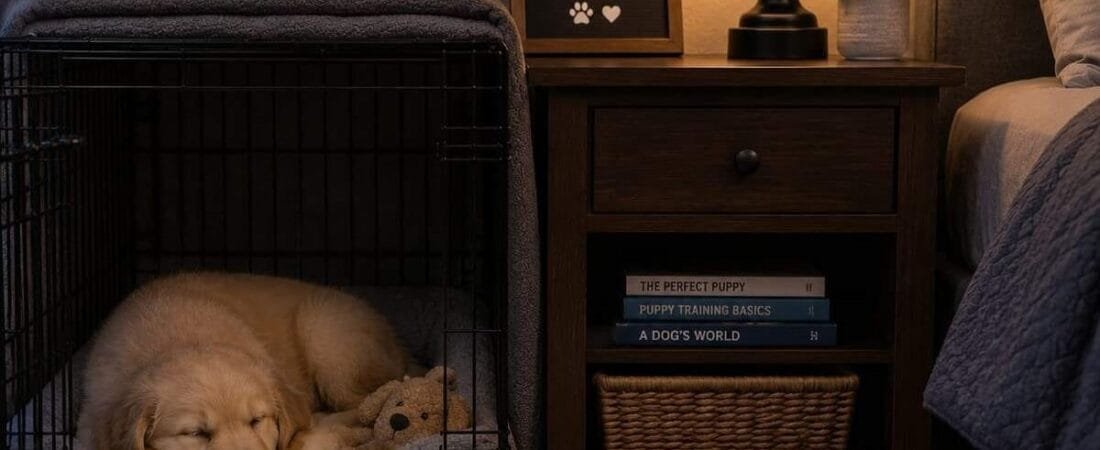
Your puppy should sleep close to you on the first night—ideally in a crate placed beside your bed in your bedroom. This balance gives your puppy security through your presence while establishing healthy sleeping habits. The bedroom keeps your puppy nearby for potty breaks, reduces separation anxiety, and helps you monitor their safety. Most puppies sleep best in a crate with comfortable bedding, positioned in your room rather than isolated in another part of the house.
Why the First Night Is So Difficult for Puppies
Leaving Their Littermates
Your puppy spent weeks with their littermates. They piled on top of each other for warmth, comfort, and security. Suddenly, they’re completely alone. That’s a massive transition.
Puppies are pack animals. Isolation feels threatening to them, even though they’re actually safe. This instinct is hardwired.
New Smells and Sounds
Everything in your home is foreign. Your house doesn’t smell like the breeder’s home or the puppy’s mother. The sounds are different too—appliances running, neighbors, traffic outside.
A puppy’s sense of smell is incredibly powerful. When nothing smells familiar, it triggers anxiety.
Stress and Anxiety
Moving to a new home is stressful for puppies. They don’t understand what’s happening. They’re in a new space with new people, and their littermates are gone.
Some puppies handle this better than others. But all puppies experience some level of stress on the first night.
Crying Is Completely Normal
Expect crying. Lots of it. Your puppy isn’t sick or traumatized—they’re just adjusting. The crying usually peaks on the first night and decreases significantly by night three or four.
This is one of the hardest parts of bringing home a new puppy. But it’s also completely temporary.
Best Place for a Puppy to Sleep the First Night
Near Your Bed (Most Recommended)
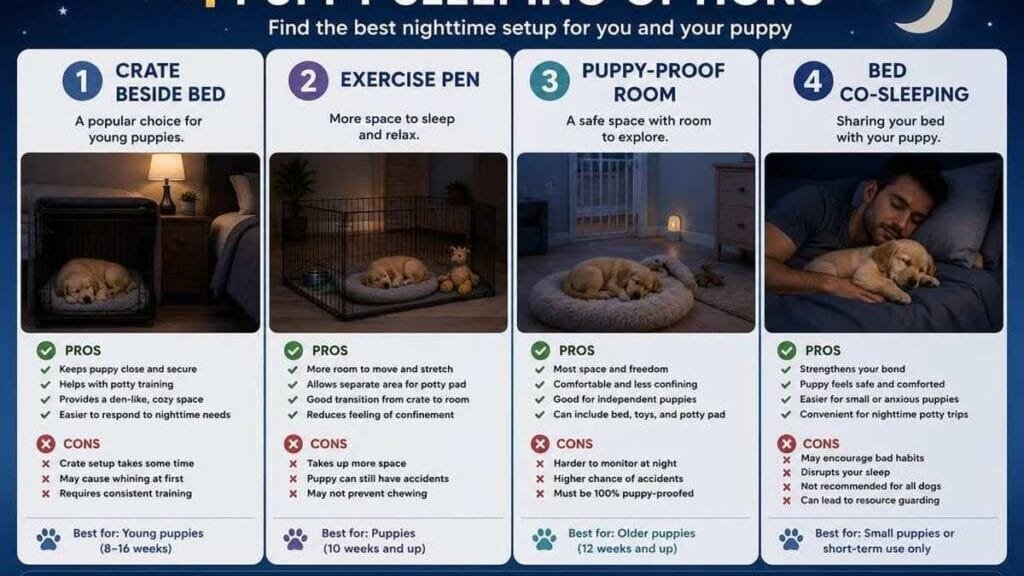
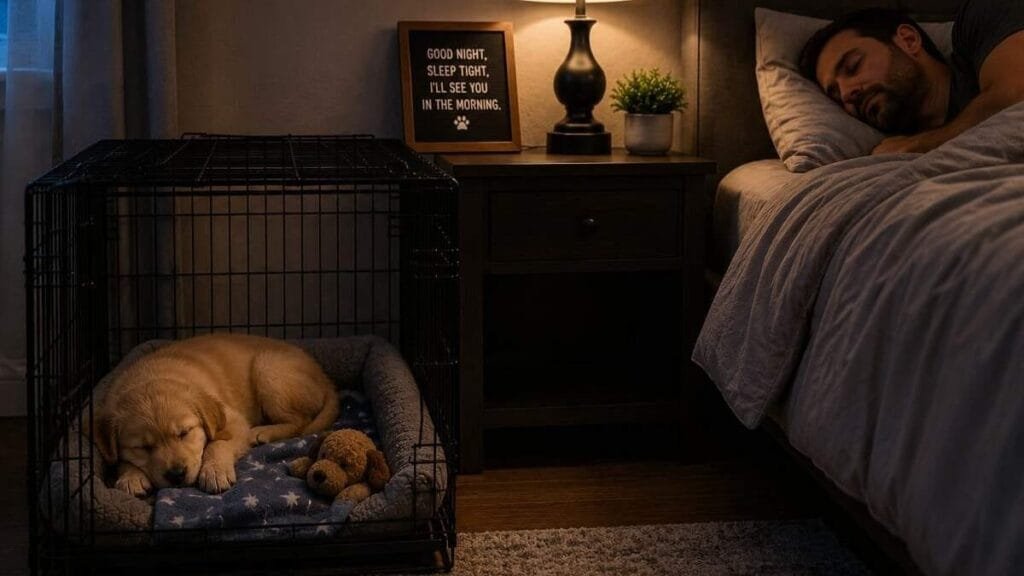
Placing your puppy’s crate beside your bed is the gold standard for the first night. Here’s why: your puppy can hear you, smell you, and see you. They know they’re not alone.
You’re also right there for legitimate potty breaks. An 8-week-old puppy might need to pee 2-3 times during the night. Being able to respond quickly prevents accidents and teaches them it’s okay to ask for help.
Your proximity also helps you distinguish between attention-seeking crying and real distress. You’ll learn your puppy’s different cries within the first few nights.
Inside a Crate
A crate gives your puppy a den-like space that feels secure. Dogs naturally prefer enclosed spaces. A properly-sized crate (big enough to stand, turn, and lie down, but not so big they can potty in one corner) helps them feel safe and contained.
The crate also prevents accidents during the night. Puppies instinctively don’t want to soil their sleeping area, which supports housebreaking efforts.
Puppy Exercise Pen as Alternative
If you’re not ready for full crate training, a small exercise pen (4×4 feet or smaller) can work. Line it with puppy pads on one end and a bed on the other. This gives your puppy a small, manageable space without the psychological pressure some puppies feel in a crate.
The downside? It’s harder to prevent accidents and it takes longer to housetrain. But it’s a valid option if crate training feels wrong for your situation.
Puppy-Proof Room
Some owners set up a puppy-proofed bedroom or bathroom for the first night. Remove anything dangerous, cover electrical cords, block off areas they could hide in.
This option works, but it’s harder on you. Your puppy can wander freely, which means more nighttime accidents and less predictability. You’ll wake up more often.
Avoid Isolated Areas
Don’t put your puppy in the basement, garage, or a back bedroom on the first night. Isolation increases anxiety. Your puppy doesn’t have the emotional maturity to handle being completely alone.
Even if you’re trying to establish independence, the first night isn’t the time. Your puppy needs security first. Independence can come later, gradually.
Should Your Puppy Sleep in a Crate the First Night?
Benefits of Crate Sleeping
A crate provides structure, safety, and accelerates housebreaking. Your puppy has a defined space they learn to love. Over time, the crate becomes a safe haven, not a prison.
Puppies in crates also sleep better. They know the boundaries. There’s no endless exploring or getting into trouble during the night.
From a practical standpoint, a crate means fewer nighttime accidents on your floors. It’s protective for your puppy and your home.
When a Crate Is Appropriate
A crate is appropriate from day one if you’re committed to consistent crate training. This means the crate is never used as punishment. It’s always a safe, positive space.
If you’re planning to crate train eventually, starting on the first night is actually easier. Your puppy doesn’t have to unlearn bad sleeping habits.
When to Avoid Forcing a Crate
If your puppy is extremely anxious, a crate might escalate panic. Some puppies respond better to an open pen or a room setup initially. If crate training feels traumatic for your specific puppy, back off and try again in a few weeks.
Forcing a scared puppy into a crate can create lasting negative associations. Trust your instincts about your individual puppy.
For more detailed crate training strategies, read our guide on how to crate train a puppy at home.
Should You Let Your Puppy Sleep in Your Bed?
Pros of Co-Sleeping
Your puppy feels secure. They’re right next to you. The warmth, your heartbeat, and your scent are incredibly comforting. Many puppies sleep better when physically touching their owner.
Co-sleeping also makes potty breaks easier. You wake naturally when your puppy moves and needs to go outside.
Cons of Co-Sleeping
Once your puppy is in your bed, getting them out later is extremely difficult. At 8 weeks, a puppy is tiny and adorable. At 8 months, they’re bigger but still want the same arrangement. At 2 years, you have a full-grown dog in your bed and no simple way to change it.
There’s also a safety concern. You could roll over on a tiny puppy during sleep. It’s unlikely, but it’s a real risk.
Additionally, puppies in bed often have more accidents. Without the natural crate instinct, they’re more likely to pee during the night.
Long-Term Habits to Consider
Whatever sleeping arrangement you choose on the first night often becomes the long-term pattern. If you only intend for the crate to be temporary, commit to a timeline for transition. Don’t let temporary become permanent unless that was your plan.
Starting in your bed and moving to the crate later creates confusion for your puppy. Consistency matters far more than where they sleep.
How to Prepare Your Puppy’s Sleeping Area Before Bedtime
Comfortable Bedding
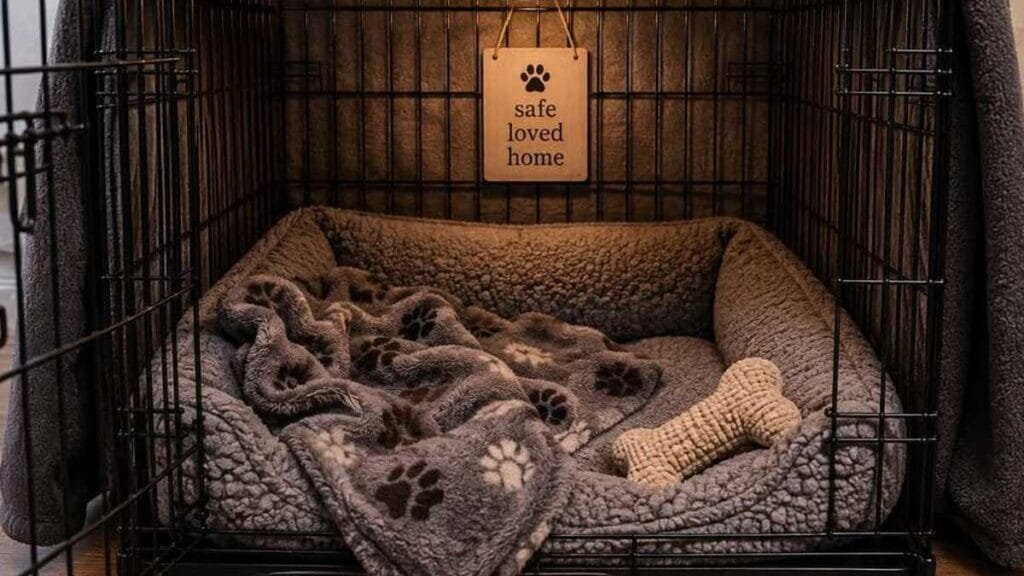
Soft bedding is essential. A crate with a hard plastic floor feels cold and uninviting. Add a washable dog bed, blankets, or a large towel inside.
Your puppy spent weeks on soft bedding with littermates. Recreate that comfort. Soft surroundings help them feel secure and sleep better.
Right Temperature
Puppies get cold easily. Their body temperature regulation isn’t fully developed. A sleeping area that’s cool to you might be uncomfortable for your puppy.
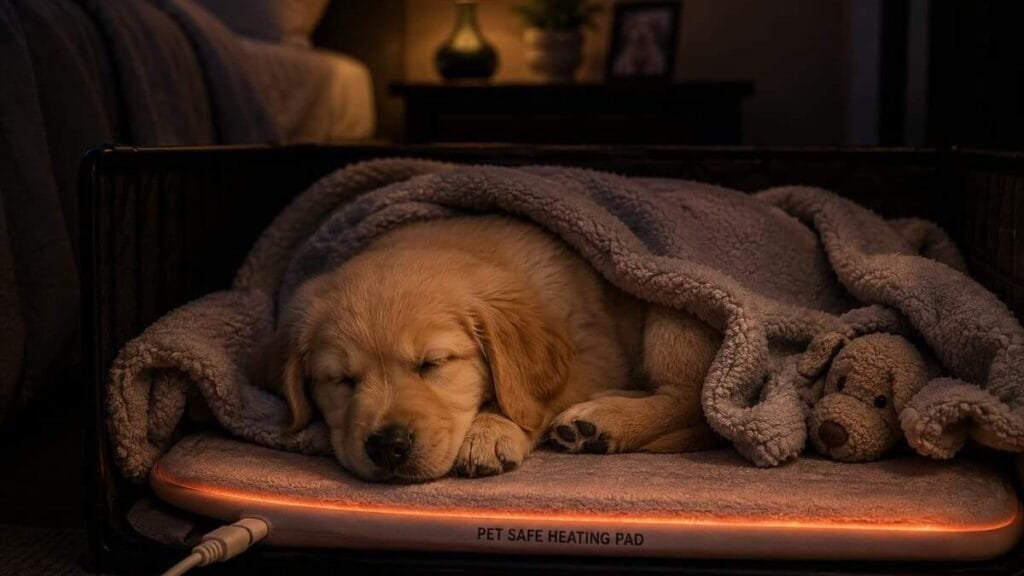
Keep the bedroom between 65-75 degrees Fahrenheit. If your home is cooler, consider a pet-safe heating pad designed for puppies. Never use human heating pads—they can overheat puppies.
Fresh Water Available
Your puppy needs access to water, but you also want to control potty accidents. Leave water in the crate or nearby, but remove it about 1-2 hours before bedtime.
This reduces nighttime bathroom needs while still ensuring your puppy isn’t desperately thirsty.
Potty Break Before Bed
Take your puppy outside 30-45 minutes before bedtime. Let them fully relieve themselves. Keep this outing calm and quiet—no playing, no stimulation.
A puppy with an empty bladder and bowels sleeps better and has fewer accidents. This single step makes an enormous difference on the first night.

White Noise (Optional)
Some puppies settle better with background noise. White noise, soft music, or a ticking clock masks household sounds that might startle them.
If your home is completely quiet at night, adding gentle background noise can help your puppy adjust. A white noise machine or app on your phone works well.
Safe Chew Toy
A Kong or other durable toy gives your puppy something to focus on if they’re anxious. Make sure it’s completely safe for unattended chewing. No small parts that could break off and cause choking.
A frozen Kong is especially helpful—it takes longer to work through and keeps your puppy occupied.
What to Do If Your Puppy Cries the First Night
Understanding Normal Whining
Crying on the first night is expected. Your puppy is adjusting to massive change. The crying will feel heartbreaking, but it’s normal and temporary.
Most puppies cry less by night two. By night three or four, many owners notice a significant decrease. By the end of the first week, most puppies are settling down noticeably.
When to Comfort and When to Ignore
If your puppy just had a potty break and is crying for attention, brief ignoring is appropriate. Don’t pick them up or play with them. Briefly acknowledge their presence with a calm hand on the crate, then turn away.
If your puppy is crying because they need a genuine potty break (they’ve been in the crate for 2-3 hours), take them outside immediately. Always respond to real needs.
The key is teaching your puppy that some crying gets ignored (attention-seeking) while legitimate needs are met (potty breaks).
Potty Needs vs. Attention-Seeking
After a potty break, attention-seeking crying should stop within minutes of returning to the crate. If your puppy settles down after going outside, they genuinely needed the break.
If they cry again immediately after returning from the yard, they’re looking for attention or comfort, not a bathroom break. That’s when ignoring is appropriate.
Avoid Rewarding Attention-Seeking Crying
This is the hardest part of the first night. Every fiber of your being wants to comfort your crying puppy. But if you pick them up or cuddle them when they cry, you’re teaching them that crying works.
Stay consistent. If ignoring attention-seeking cries on night one, do it on night two, three, and every night. Inconsistency extends the crying phase dramatically.
For comprehensive strategies on managing nighttime crying, read our detailed guide on puppy crying in the crate at night.
Common First-Night Sleeping Mistakes
Sleeping Too Far Away
If you put your puppy in a different room, they feel abandoned. Isolation on the first night intensifies anxiety and crying. Keep your puppy close, especially night one.
You can gradually move the crate away from your bed over weeks and months. But the first night is not the time to test independence.
Changing Sleeping Location Repeatedly
Some owners move the crate to different rooms each night, trying to find the perfect spot. This inconsistency confuses your puppy. They can’t establish routines or feel secure.
Choose a location before the first night. Stick with it for at least 2-3 weeks. Your puppy needs consistency to adjust.
Giving Too Much Freedom
Letting your puppy roam freely in your bedroom means more accidents, more chaos, and a puppy who’s overstimulated at bedtime. Boundaries help puppies feel secure.
A confined space (crate or exercise pen) is actually comforting for puppies because it removes the burden of infinite choices.
Skipping the Pre-Bed Potty Break
If you skip the potty break before bed, your puppy is guaranteed to cry and need bathroom time during the night. That 30-minute investment prevents hours of frustration.
Make the pre-bed potty break non-negotiable, every single night.
Punishing Crying or Accidents
Never punish your puppy for crying or accidents on the first night. Your puppy isn’t being bad. They’re overwhelmed and learning. Punishment creates fear and destroys trust.
Accept that the first night is messy. Accidents happen. Crying happens. That’s normal puppy behavior, not misbehavior.
First Night Sleeping Checklist
Use this checklist to prepare for the first night:
- Potty break 30-45 minutes before bedtime
- Comfortable bedding in the sleeping area
- Crate positioned beside your bed in your bedroom
- Calm, consistent bedtime routine established
- Safe, appropriate chew toys in the sleeping area
- Plan for midnight potty breaks (set an alarm if needed)
- Water removed 1-2 hours before bed
- Temperature controlled (65-75°F)
- Puppy-proof bedroom completed
- Mental preparation for possible crying
Frequently Asked Questions
Where Should My New Puppy Sleep the First Night?
In a crate placed beside your bed in your bedroom. This gives your puppy security through your proximity while establishing healthy sleeping habits and facilitating potty breaks.
Where Should a Puppy Sleep at Night Long-Term?
After the adjustment period (2-4 weeks), your puppy’s sleeping location depends on your preference. Many owners keep the crate in their bedroom. Others gradually move it to another room. Some continue co-sleeping. The best arrangement is whatever you can commit to consistently and your puppy adapts to well.
Should Puppies Sleep in the Dark at Night?
Complete darkness can increase anxiety for some puppies. A nightlight or dim lighting helps many puppies feel more secure. As your puppy adjusts, you can gradually reduce lighting. Some puppies eventually sleep fine in complete darkness. Others always prefer some light available.
Should I Ignore My Puppy Crying at Night?
Ignore attention-seeking crying, but always respond to legitimate potty needs. If your puppy cries briefly and settles, they’re testing. If they cry continuously or cry after going without a potty break for 2-3 hours, respond with an outside break.
Is It Okay If My Puppy Sleeps Beside My Bed?
Having the crate beside your bed is actually recommended for the first several weeks. Your puppy benefits from your proximity. However, make sure your puppy is still in their own crate or bed, not in your actual bed, to prevent the habit from becoming permanent and to ensure safety.
Can an 8-Week-Old Puppy Sleep Alone?
An 8-week-old puppy shouldn’t be completely isolated on the first night. They need proximity to their new family to feel secure and to facilitate potty breaks. Puppies around 12-16 weeks old are better equipped to handle being in a separate room, though many still do better with owners nearby.

Conclusion
The first night is one of the hardest nights of puppy ownership. You’ll likely hear more crying than you expected. You’ll question your decisions. You’ll worry you’re doing something wrong.
Here’s the truth: you’re probably doing just fine. Every puppy struggles the first night. It’s completely normal. By night three, things get noticeably better. By the end of the first week, most puppies are sleeping much more peacefully.
The key is consistency. Keep your puppy close. Maintain your routine every single night. Respond to real needs and ignore attention-seeking cries. Your puppy will adjust faster than you think.
Before your puppy arrives, read our guides on how to get a puppy to sleep through the night and how to stop puppy crying at night so you’re fully prepared for the adjustment period ahead.
You’ve got this. The first night is temporary. Better sleep is just around the corner.
Author Bio
David Jason is the founder of My Pet Care Tips and writes practical, research-based guides to help pet owners raise healthier, happier dogs and cats. His content focuses on clear, beginner-friendly advice backed by trusted veterinary resources and real-world pet care best practices. With a passion for helping first-time pet owners, David covers everything from puppy training to senior dog care with honest, actionable strategies.
Sources: American Kennel Club (AKC),RSPCA (Royal Society for Prevention of Cruelty to Animals)and The Humane Society of the United States