
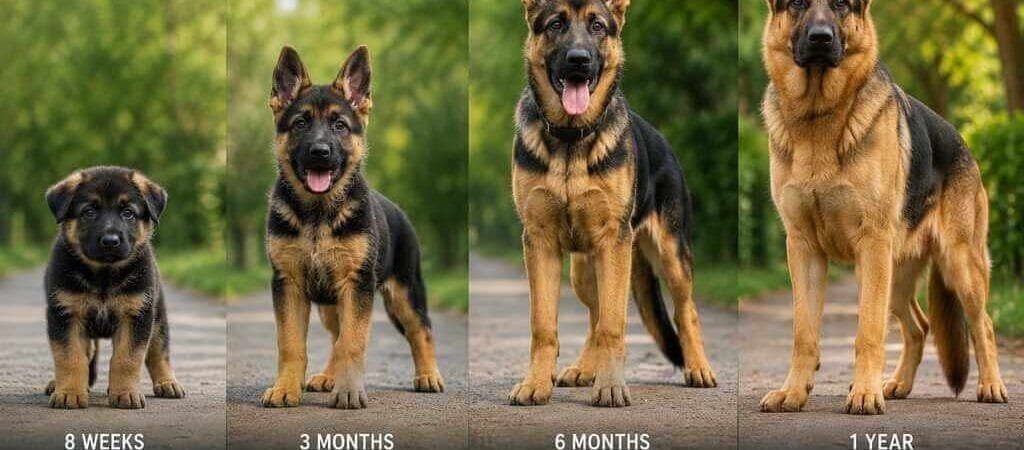
This german shepherd puppy guide walks you through everything that happens during your dog’s first 12 months, from a tiny, uncoordinated newborn to a nearly full-grown adolescent still figuring out how to use that big new body.
German Shepherds pack an enormous amount of change into their first year. This german shepherd puppy guide covers growth, teething, ear development, training, and temperament shifts, all of which often overlap in ways that can feel overwhelming for a first-time owner.
Quick answer: Expect rapid physical growth through 6 months, ears settling upright between 5 and 9 months, an intense adolescent stage from 6 to 18 months, and noticeably calmer behavior starting around 18 months to 2 years. Training and socialization matter most in the first 4 months.
German Shepherd Puppy Month-by-Month Overview
Every puppy develops on their own timeline, but this general pattern shows up consistently across the breed.
| Age | What’s Happening |
|---|---|
| 0-8 weeks | With mother and littermates, eyes and ears opening, early crawling and walking |
| 2-3 months | Home with you, rapid growth begins, early training and socialization start |
| 3-6 months | Fastest physical growth, teething, ears going up and down unpredictably |
| 6-12 months | Adolescence begins, testing boundaries, near-adult size but still maturing mentally |
| 12 months | Close to adult height, though muscle and emotional maturity continue |
Weeks 1-8: Before They Come Home
Newborn German Shepherd puppies are born blind and deaf, relying completely on their mother for warmth and food. Eyes and ears open around 2 weeks, and basic mobility develops quickly after that.
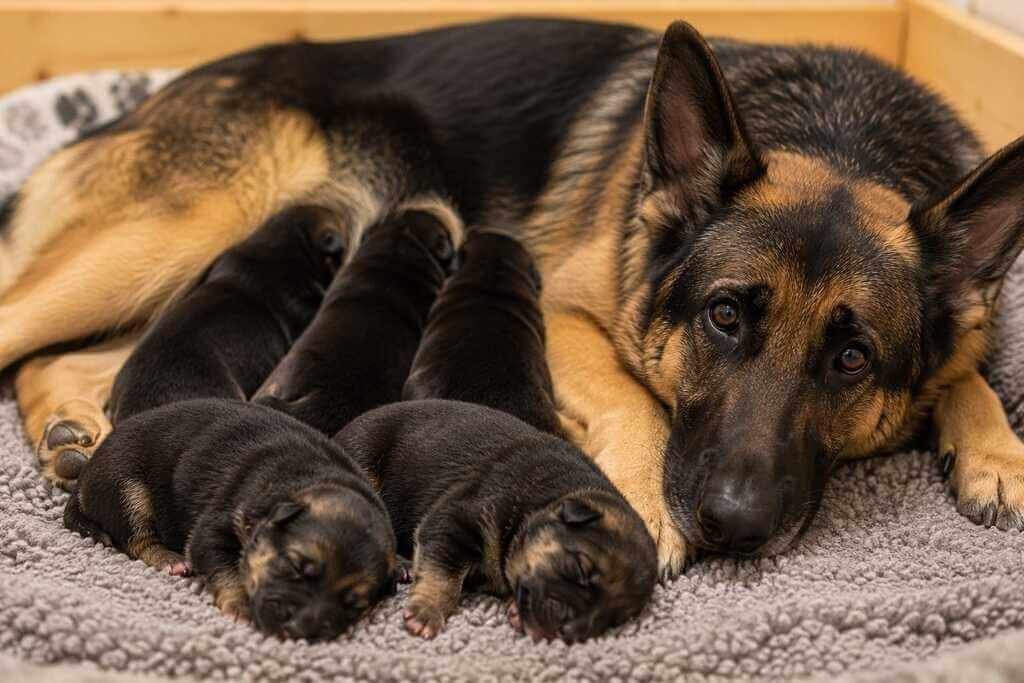
By 8 weeks, most puppies are eating solid food, walking confidently, and ready to leave their littermates. This is typically when they come home with a new family.
Months 2-3: Settling In and Starting Training
The first weeks home are about routine, safety, and beginning gentle training right away. There is no reason to wait for full vaccination before starting basic obedience and socialization.
This is also when the fastest phase of physical growth begins. Our German Shepherd Puppy Growth Chart breaks down what to expect for weight and height during this stage.
Training should start immediately too. Name recognition, sit, and gentle handling are realistic goals for a puppy this age. Our German Shepherd Puppy Training Tips for First-Time Owners guide covers exactly where to begin.
Months 3-6: Fastest Growth and Teething
This stretch brings the most dramatic physical changes. Puppies often gain 8 to 10 pounds a month, and the “giraffe phase,” where legs and ears grow faster than the rest of the body fills in, is common during this window.
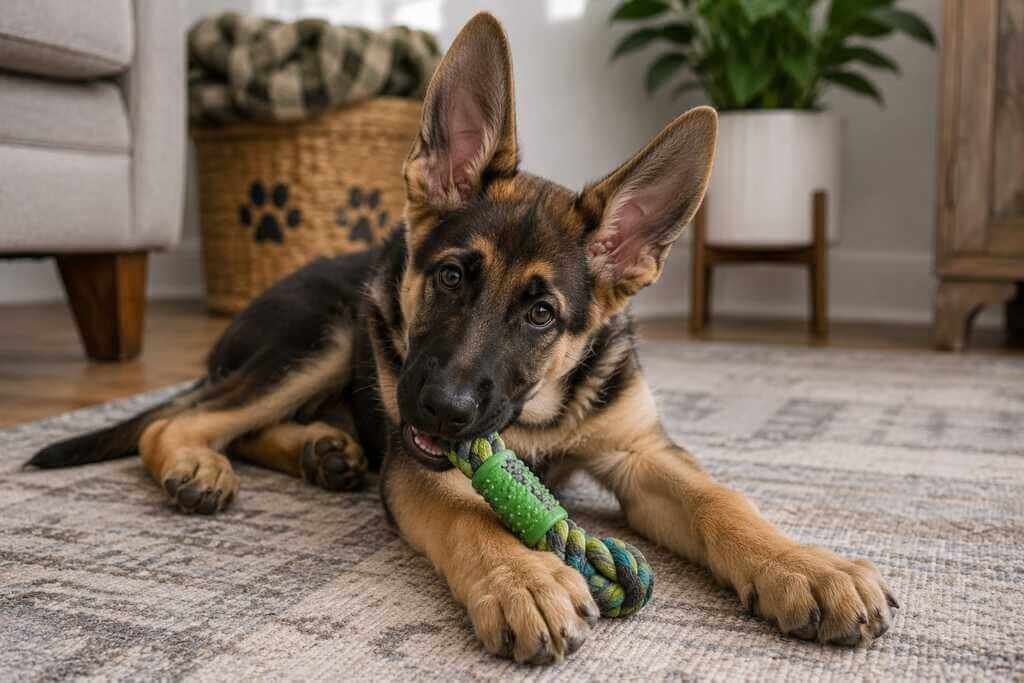
Teething also happens here, typically between 3 and 6 months. This is directly connected to one of the most common questions new owners have.
Why Are My Puppy’s Ears Still Not Standing Up?
The body redirects calcium toward growing adult teeth during teething, which can temporarily slow ear cartilage development. This is completely normal and usually resolves once teething finishes. Our German Shepherd Puppy Ears: When Do They Stand Up? guide covers the full timeline and what to watch for.
Feeding During Rapid Growth
A large-breed puppy formula with controlled calcium and phosphorus supports steady bone development instead of growth that outpaces the joints. Most puppies do well on 3 meals a day until around 6 months, then a switch to 2 meals a day afterward.
Overfeeding during this stage can add unnecessary stress to developing joints, so resist the urge to increase portions just because your puppy is growing fast. Checking body condition, meaning being able to feel ribs with light pressure, is a better guide than any fixed number.
Months 6-12: The Adolescent Stage
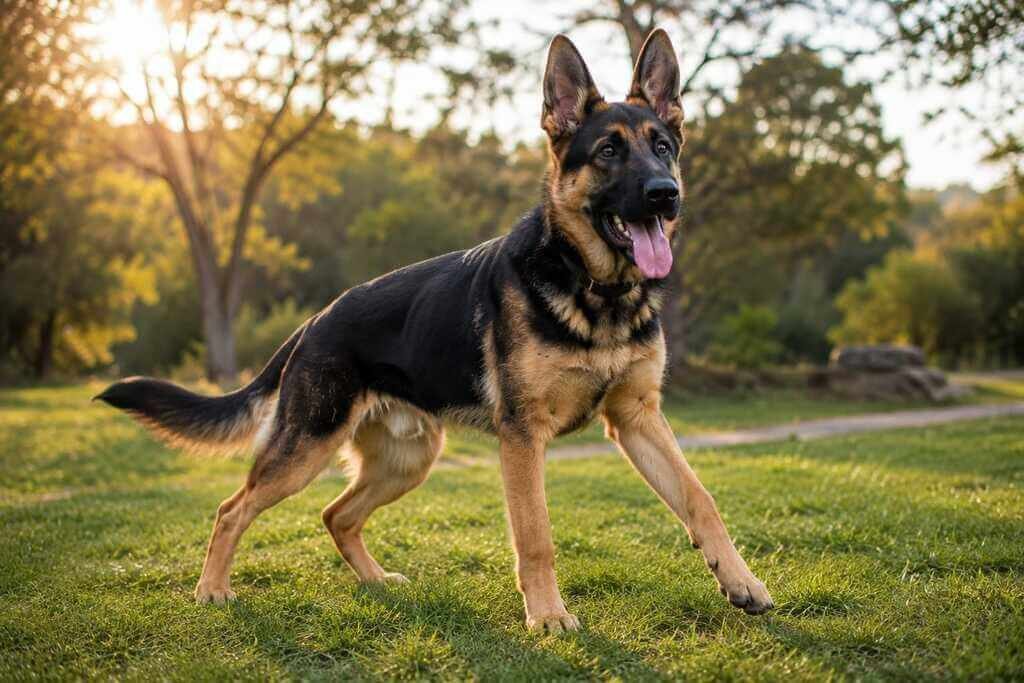
Adolescence is often the most challenging part of the first year. Your puppy now has a near-adult body but a brain that is still catching up, which is why previously reliable training sometimes seems to fall apart during this stage.
Why Adolescence Feels Like a Step Backward
Testing boundaries, selective hearing, and bursts of energy are all normal here, not signs that training failed. This stage typically runs from 6 to 18 months, with the most intense stretch often falling between 8 and 14 months.
Our When Do German Shepherds Calm Down? guide breaks down the full timeline and practical ways to help your puppy through this stage, including exercise guidelines, mental stimulation, and structured routines.
Exercise and Mental Stimulation
A simple guideline many trainers use is about 5 minutes of structured exercise per month of age, twice a day, until growth plates close around 14 to 18 months. Mental work matters just as much as physical activity for a working breed like this one.
Puzzle feeders, ongoing training, and scent games tire out a German Shepherd’s brain in a way that running alone cannot match.
Continued Socialization
Socialization does not stop once your puppy is fully vaccinated. Ongoing exposure to new people, dogs, sounds, and environments throughout adolescence helps prevent fear or reactivity from developing later.
Around 12 Months: Approaching Adulthood
Most German Shepherds reach close to their adult height by 12 to 14 months, though full muscle fill and chest depth continue developing until 2 to 3 years old. According to the American Kennel Club breed standard, adult males typically stand 24 to 26 inches at the shoulder, with females at 22 to 24 inches.
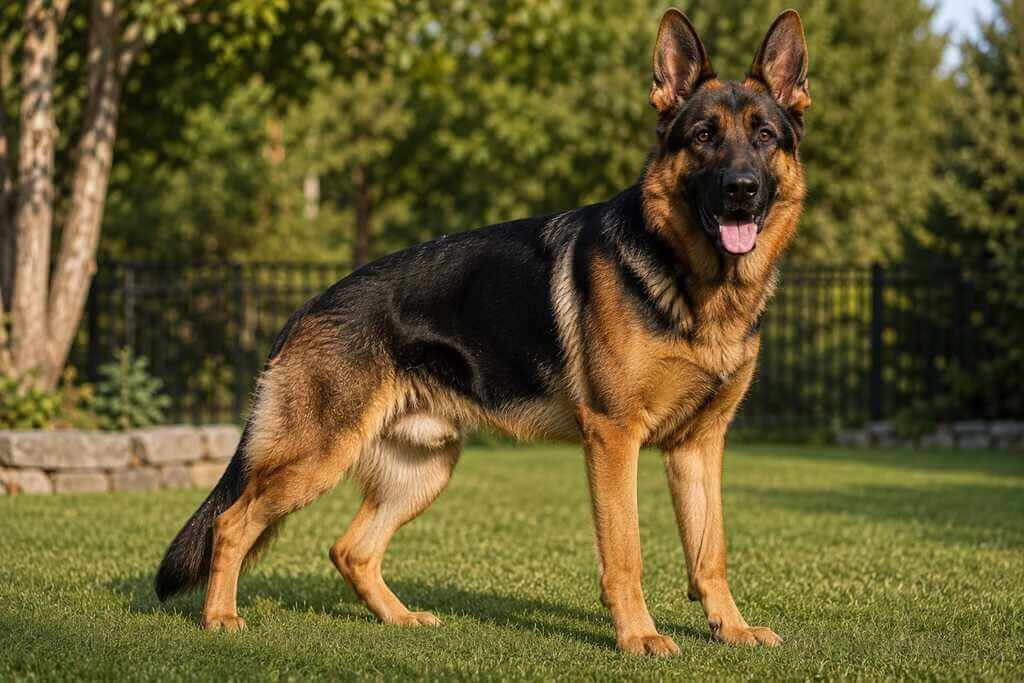
Emotionally, a 1-year-old German Shepherd is still far from fully mature. Most dogs continue settling into calmer, more balanced behavior through their second and third years.
Common First-Year Challenges
A few issues come up again and again during a German Shepherd’s first year.
- Mouthing and nipping: Common through early puppyhood, usually improving with consistent bite inhibition training and redirection to chew toys
- Housetraining setbacks: Occasional regressions are normal, especially during growth spurts or routine changes
- Ear development anxiety: Floppy or lopsided ears through much of the first 6 months are typical, not a cause for concern on their own
- Adolescent defiance: A near-universal stage that improves with consistency, not punishment
- Overfeeding: Fast visible growth can tempt owners to feed more than needed, which adds unnecessary joint stress
Health and Vet Checkpoints
Regular veterinary care matters throughout the first year, not just for vaccinations. The VCA Animal Hospitals recommends ongoing wellness exams during a large breed puppy’s first year to monitor growth, joint development, and overall health, since this breed carries a higher risk of hip and elbow issues later in life if growth is not well managed.
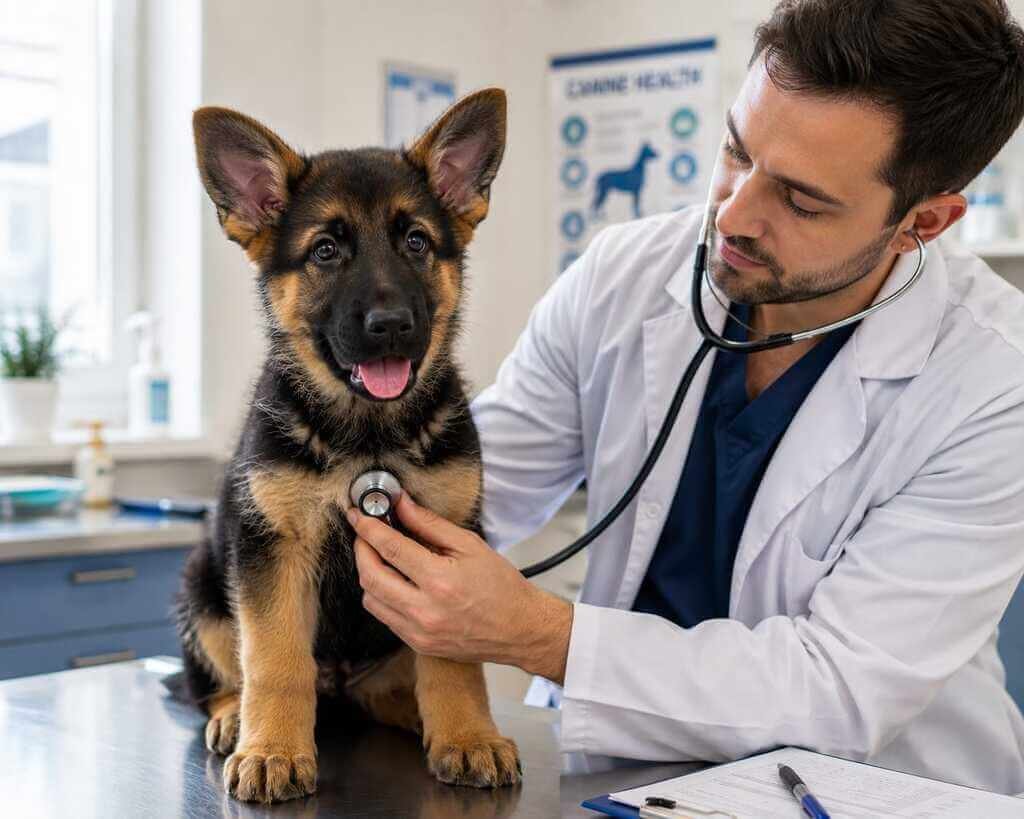
Keep an eye on body condition, energy levels, and any signs of pain or lameness, especially during the fastest growth months. When something feels off, or when growth, ear development, or behavior falls well outside the typical ranges covered in this guide, a vet visit is worth it rather than waiting to see if it resolves on its own.
German Shepherd Puppy Guide: First-Year Checklist
- Start training and socialization from day one
- Feed a large-breed puppy formula with controlled calcium
- Track growth against typical ranges, not a fixed number
- Expect teething and ear fluctuation between 3 and 6 months
- Prepare for adolescence to hit hardest between 8 and 14 months
- Keep exercise structured until growth plates close
- Schedule regular vet check-ins throughout the year, not just for vaccines
- Stay consistent with training through the full 12 months, not just the early weeks
German Shepherd Puppy: Frequently Asked Questions
How big will my German Shepherd puppy get?
Most adult German Shepherds weigh between 50 and 90 pounds depending on sex, with males on the larger end, and stand 22 to 26 inches at the shoulder.
When do German Shepherd puppies calm down?
Most show real self-control between 18 months and 3 years old, with the adolescent stage from 6 to 18 months being the most intense period.
At what age do German Shepherd puppy ears stand up?
Most ears stand between 8 weeks and 6 months, though some take until 8 or 9 months, especially with heavier ears or a longer teething stage.
What is the hardest stage of raising a German Shepherd puppy?
Adolescence, roughly 6 to 18 months, is generally considered the most challenging stage due to boundary testing, high energy, and a body that has outgrown a puppy’s impulse control.
How much exercise does a German Shepherd puppy need?
A common guideline is about 5 minutes of structured exercise per month of age, twice daily, until growth plates close around 14 to 18 months, plus regular mental stimulation.
Do German Shepherds need a special diet as puppies?
Yes. A large-breed puppy formula with controlled calcium and phosphorus supports healthy bone and joint development during their rapid first-year growth.
Final Takeaway
Raising a German Shepherd puppy through their first year is a lot of change packed into a short amount of time, from rapid growth and teething to ears that seem to have a mind of their own and an adolescent stage that tests everyone’s patience. This german shepherd puppy guide is meant as a starting point, and consistency in training, feeding, and exercise throughout the year makes the biggest difference in how your dog turns out.
For the full breakdown of each stage, our German Shepherd Puppy Growth Chart, German Shepherd Puppy Ears: When Do They Stand Up?, When Do German Shepherds Calm Down?, and German Shepherd Puppy Training Tips for First-Time Owners guides go deeper into each stage covered here.
Author Bio
David Jason is the founder of My Pet Care Tips and writes practical, research based guides to help pet owners raise healthier, happier dogs and cats. His content focuses on clear, beginner friendly advice backed by trusted veterinary resources and real world pet care best practices.