
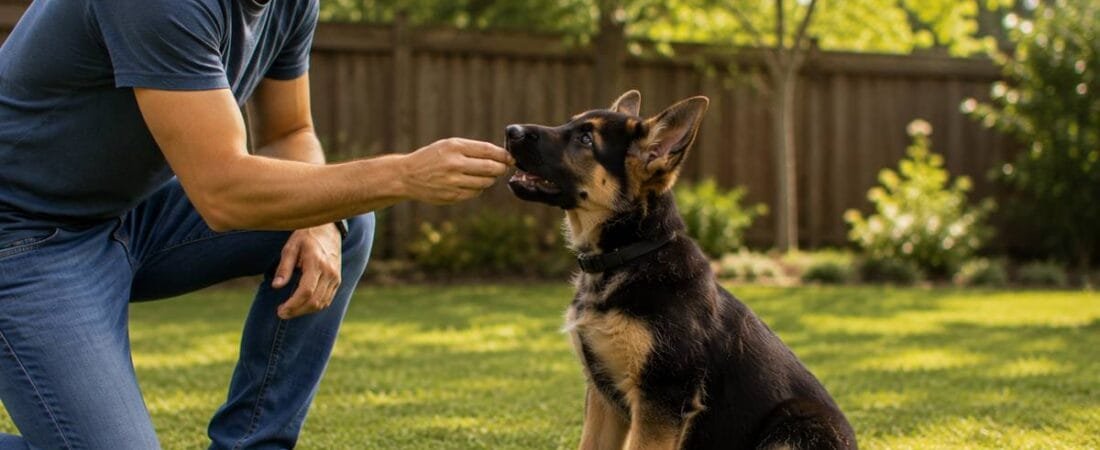
Bringing home a German Shepherd puppy is exciting, but the number of training decisions can feel overwhelming fast. These german shepherd puppy training tips cover exactly where to start, what to prioritize, and how to avoid the mistakes that trip up most first-time owners.
German Shepherds are one of the most trainable breeds out there. They are smart, eager to work, and genuinely want to understand what you are asking of them. The challenge is rarely the dog. It is knowing where to focus your energy first.
Quick answer: Start training the day your puppy comes home, well before vaccinations are complete. Focus on name recognition, basic commands, crate training, and gentle socialization using short, positive sessions several times a day.
When to Start Training Your German Shepherd Puppy
There is no reason to wait. Most puppies come home between 8 and 12 weeks old, and that early window is exactly when foundational training matters most.
Name recognition, basic obedience, crate training, and gentle exposure to new people, sounds, and environments should all begin on day one. Waiting for full vaccination before starting training creates a real gap in a puppy’s most important learning period.
Core Commands to Teach First
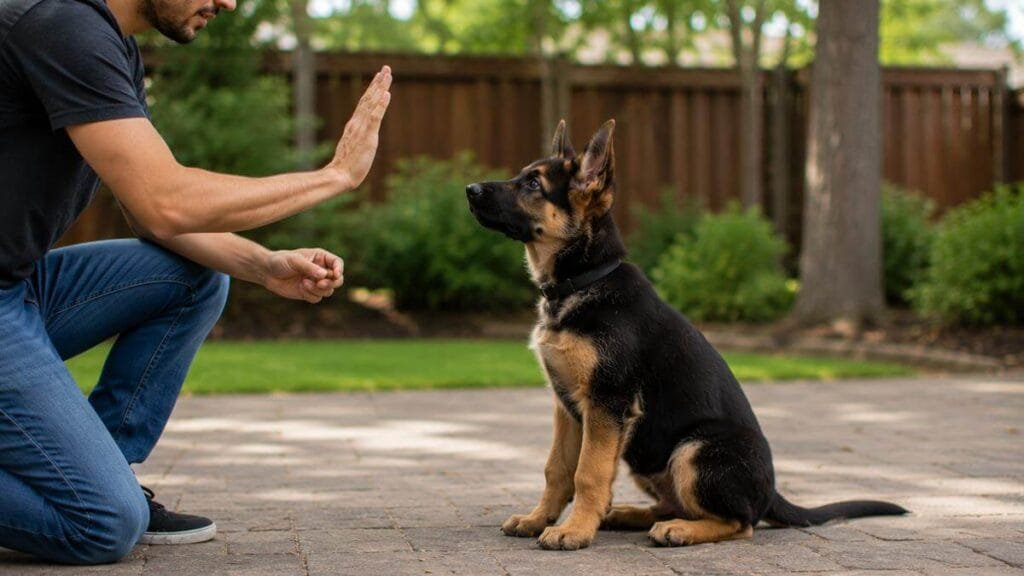
Do not try to teach everything at once. Five commands cover most of what a young puppy needs for safety and basic manners.
- Name recognition: The foundation for every other command
- Sit: Usually the fastest command for puppies to pick up
- Come: Critical for safety, especially around doors and yards
- Leave it: Prevents your puppy from grabbing something dangerous
- Stay: Builds impulse control, which German Shepherds need plenty of practice with
Master these before moving on to more advanced training. Trying to rush ahead usually creates gaps in the basics.
Positive Reinforcement: Why It Works Best for German Shepherds
German Shepherds respond best to reward-based training rather than punishment or forceful correction. The American Veterinary Medical Association recommends reward-based methods over punishment-based training, since they improve learning and reduce fear-driven behavior.
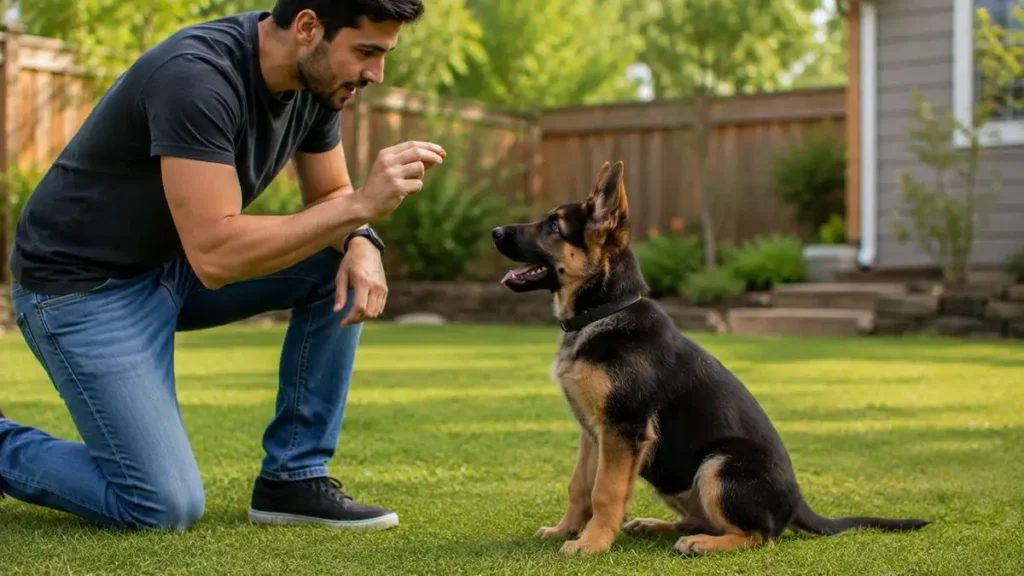
Use small, low-calorie treats, along with praise and play as rewards. Treats should make up no more than about 10 percent of your puppy’s daily calorie intake to avoid overfeeding.
Keep training sessions short, around 5 to 10 minutes, two to three times a day. Puppies lose focus quickly, and ending a session while your puppy is still engaged builds far better habits than pushing until they check out.
Crate Training and Housetraining Basics
Crate training and housetraining go hand in hand, and both should start immediately. A crate gives your puppy a safe space and speeds up potty training significantly.
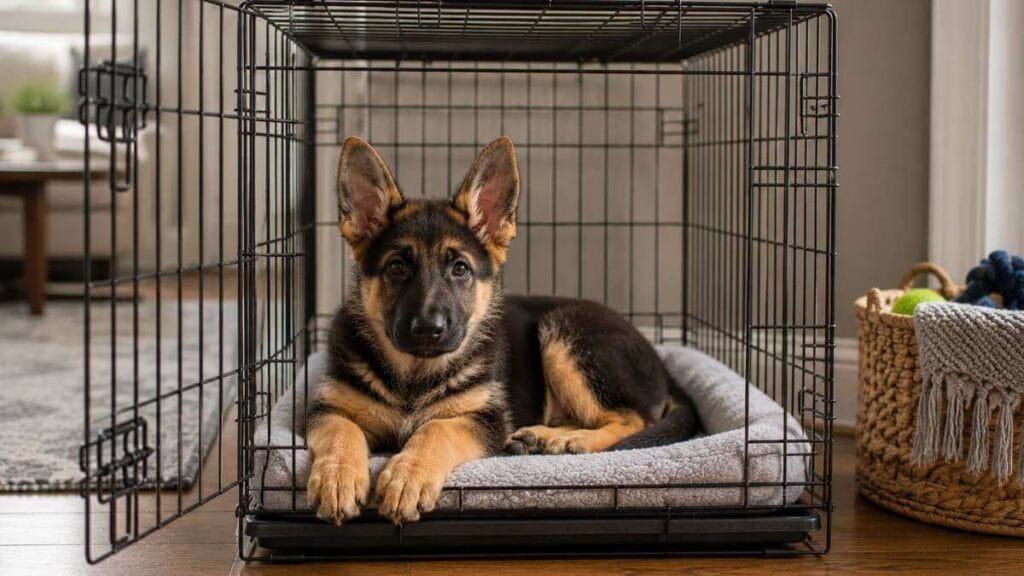
Take your puppy outside at least every 2 hours, and always after waking up, eating, or drinking. Pick one consistent spot in the yard so your puppy associates that location with going to the bathroom.
For a full walkthrough of getting started, our How to Crate Train a Puppy and How to Potty Train a Puppy guides cover the process step by step.
Socialization: The Most Important Early Step
Socialization and training work together, not separately. A well-socialized puppy is easier to train because they are calmer and more confident in new situations.
The early weeks, roughly 3 to 14 weeks old, are considered the most important socialization window. Puppies who meet new people, sounds, and environments during this stage tend to grow into calmer, more confident adult dogs.
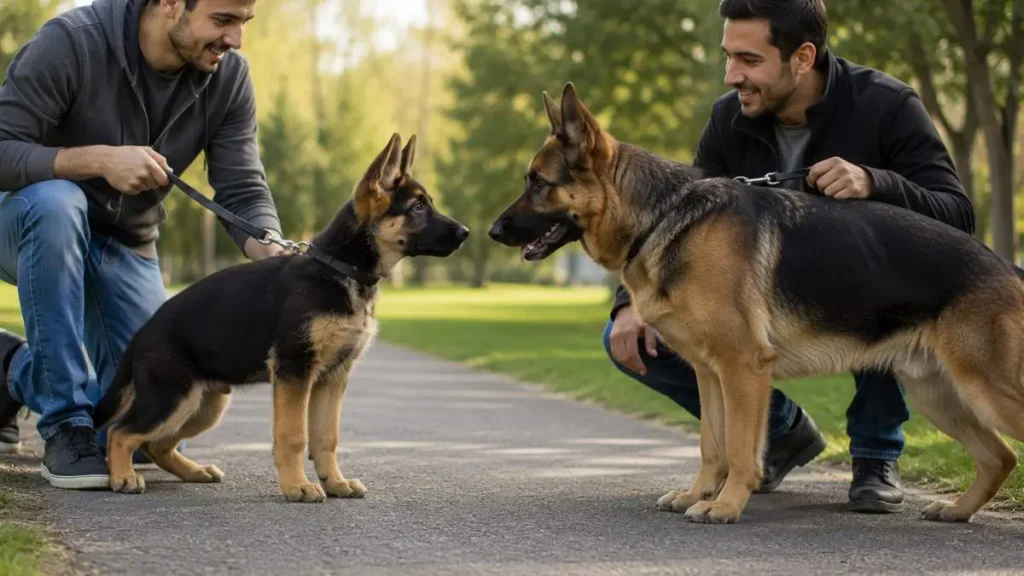
Our complete How to Socialize a Puppy: Complete Age-by-Age Checklist covers exactly how to introduce your German Shepherd puppy to the world safely.
Daily Training Schedule for a First-Time Owner
A simple daily rhythm makes training far less overwhelming.
| Time of Day | Focus |
|---|---|
| Morning | Potty break, short training session (5-10 min) |
| Midday | Crate time, mental enrichment or puzzle feeding |
| Afternoon | Second short training session, socialization exposure |
| Evening | Calm play, gentle handling practice, final potty break |
Common First-Time Owner Training Mistakes
A few mistakes show up again and again with new German Shepherd owners.
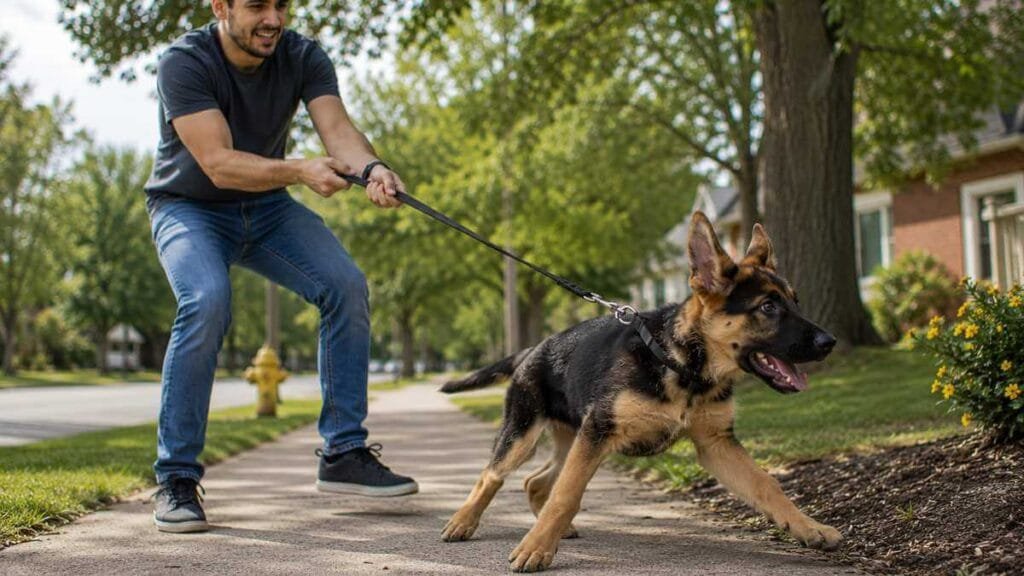
- Inconsistent rules between household members. Everyone needs to use the same commands and boundaries.
- Waiting too long to start. Training should begin the day your puppy comes home.
- Sessions that run too long. Short and frequent beats long and drawn out.
- Skipping crate training. This makes housetraining and later independence much harder.
- Overwhelming socialization. Too many new experiences at once can backfire.
- Relying on punishment. This tends to increase fear and reduce trust rather than improve behavior.
How Training Ties Into Managing Energy and Calm Behavior
Consistent training does more than teach commands. It gives your German Shepherd puppy mental work, which matters just as much as physical exercise for a working breed like this one.
Puppies who get regular training and mental stimulation tend to settle more easily as they grow. If your puppy still seems constantly wound up despite consistent training, our guide on When Do German Shepherds Calm Down? breaks down what is normal for this stage and what genuinely helps.
When to Consider Professional Training Help
Most first-time owners can handle basic obedience with patience and consistency. A few situations are worth bringing in a professional trainer.
- Your puppy shows fear-based aggression
- You are struggling with leash reactivity
- Training feels overwhelming despite consistent effort
- Behavior issues are getting worse instead of better
Look for trainers who use reward-based methods. Groups like the American Kennel Club offer class listings and guidance for finding qualified, positive-reinforcement trainers in your area.
German Shepherd Puppy Training Tips: Frequently Asked Questions
What age should I start training my German Shepherd puppy?
Start the day your puppy comes home, usually between 8 and 12 weeks old. There is no need to wait for vaccinations to be complete.
How long should training sessions be for a puppy?
Keep sessions short, around 5 to 10 minutes, two to three times a day. Puppies lose focus quickly, so shorter and more frequent sessions work better than long ones.
Are German Shepherds easy to train?
Yes. German Shepherds are highly intelligent and eager to work, which makes them one of the more trainable breeds, though they do need consistency and mental stimulation.
Should I use treats to train my German Shepherd puppy?
Yes, small, low-calorie treats paired with praise work well for positive reinforcement training, as long as treats stay under about 10 percent of daily calorie intake.
What is the most important command to teach first?
Name recognition comes first, since it is the foundation every other command builds on.
Can training help with my puppy’s energy level?
Yes. Mental stimulation from training tires out a working breed like the German Shepherd just as much as physical exercise, and often helps puppies settle more easily.
Final Takeaway
These german shepherd puppy training tips boil down to a few core habits: start early, keep sessions short and positive, stay consistent across your household, and pair training with genuine socialization. German Shepherds want to work with you, not against you, and the right foundation now pays off for years.
For more on what to expect during this stage, our German Shepherd Puppy Growth Chart and German Shepherd Puppy Ears: When Do They Stand Up? guides round out the rest of your puppy’s first year, along with our complete German Shepherd Puppy: Complete First-Year Guide.
Author Bio
David Jason is the founder of My Pet Care Tips and writes practical, research based guides to help pet owners raise healthier, happier dogs and cats. His content focuses on clear, beginner friendly advice backed by trusted veterinary resources and real world pet care best practices.