
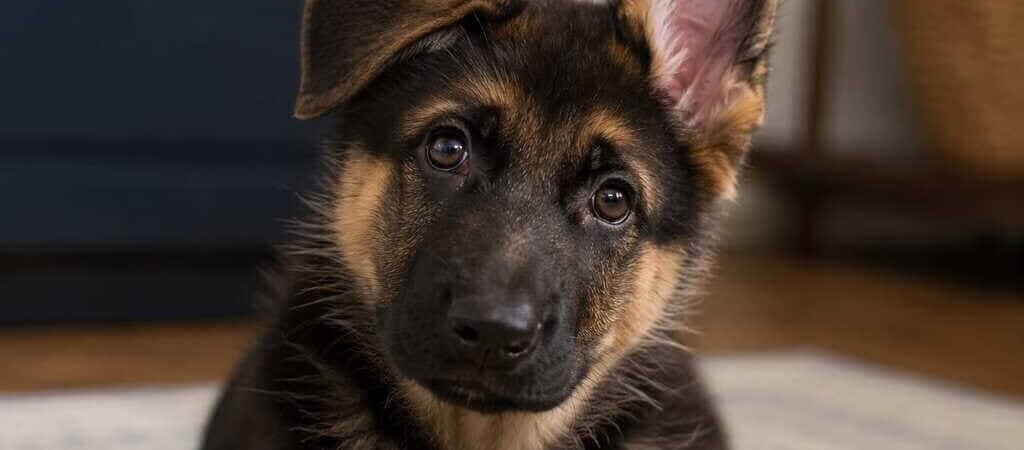
If you are checking your puppy’s head every morning wondering if today is the day, you are not alone. German shepherd puppy ears standing up is one of the most common questions new owners search for, and the timeline is wider than most people expect.
Floppy, lopsided, or one-up-one-down ears do not mean anything is wrong with your puppy. It usually just means their ear cartilage is still developing.
Quick answer: Most German Shepherd puppy ears start standing up between 8 weeks and 6 months old, with most settling into place once teething finishes around 5 to 6 months. Some puppies take up to 8 or 9 months.
German Shepherd Puppy Ears: Standing Up Timeline
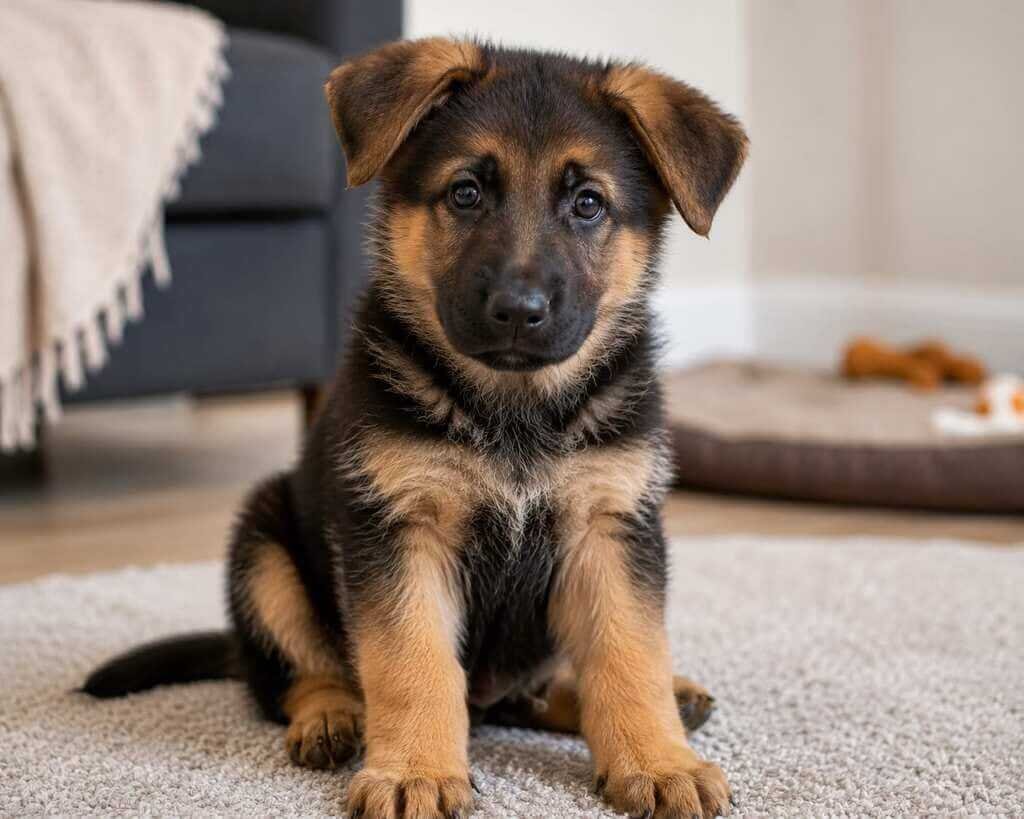
Ear development follows a rough pattern, though every puppy moves through it a little differently.
| Age | What to Expect |
|---|---|
| Birth to 8 weeks | Ears are fully soft and folded, no lift yet |
| 8 to 12 weeks | Ears may start lifting briefly, often flopping back down |
| 3 to 5 months | Teething stage, ears often go up and down unpredictably |
| 5 to 6 months | Most ears settle upright as teething finishes |
| 6 to 9 months | Later bloomers usually fully stand by this point |
If your puppy’s ears have never gone up at all by around 5 to 6 months, or if they were once standing and drop for good with no sign of coming back up, that is when a vet conversation is worth having.
Why Do German Shepherd Puppy Ears Take So Long to Stand?
A German Shepherd puppy is born with completely soft ear cartilage. That cartilage needs to harden gradually before it can support the weight of those large ear flaps.
This is not a fixed schedule. It depends on genetics, nutrition, and how quickly each individual puppy develops.
The Teething Connection
Between roughly 3 and 6 months, your puppy is teething. The body redirects calcium toward growing adult teeth during this stage, which can temporarily slow ear cartilage development.
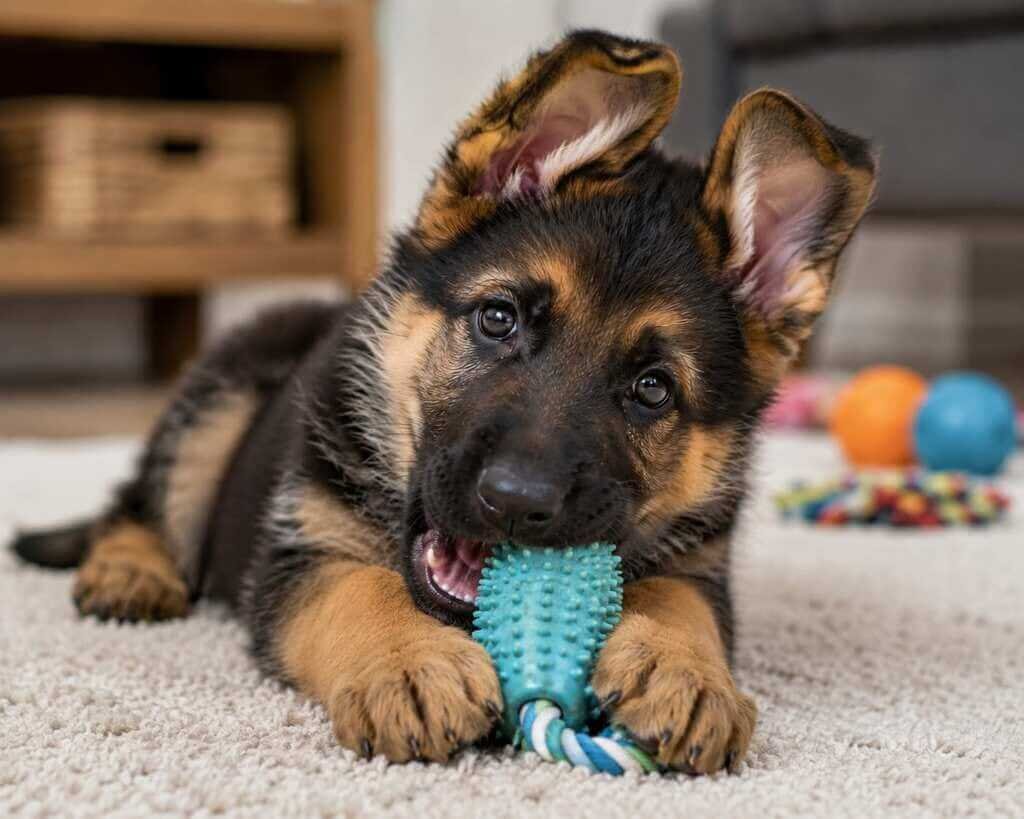
This is why so many puppies have ears that go up one week and flop down the next. It is a normal, temporary part of the process rather than a setback.
Factors That Affect When Ears Stand Up
A few things influence the exact timeline for your puppy.
- Genetics: Parents with strong, upright ears often pass that trait along, though it is not guaranteed.
- Ear size: Puppies with larger, heavier ears sometimes take longer since there is more cartilage to strengthen.
- Nutrition: A quality large-breed puppy food with proper calcium and phosphorus levels supports healthy cartilage development.
- Teething: As mentioned above, this stage often causes temporary ups and downs.
- Trauma: Rough play, ear pulling, or repeated tugging on the ears during development can affect cartilage growth.
Should You Tape Your German Shepherd Puppy’s Ears?
Ear taping is a common topic in German Shepherd owner groups, but it is not something to attempt without guidance. Taping too early, too tightly, or with the wrong method can cause lasting damage to the ear cartilage.
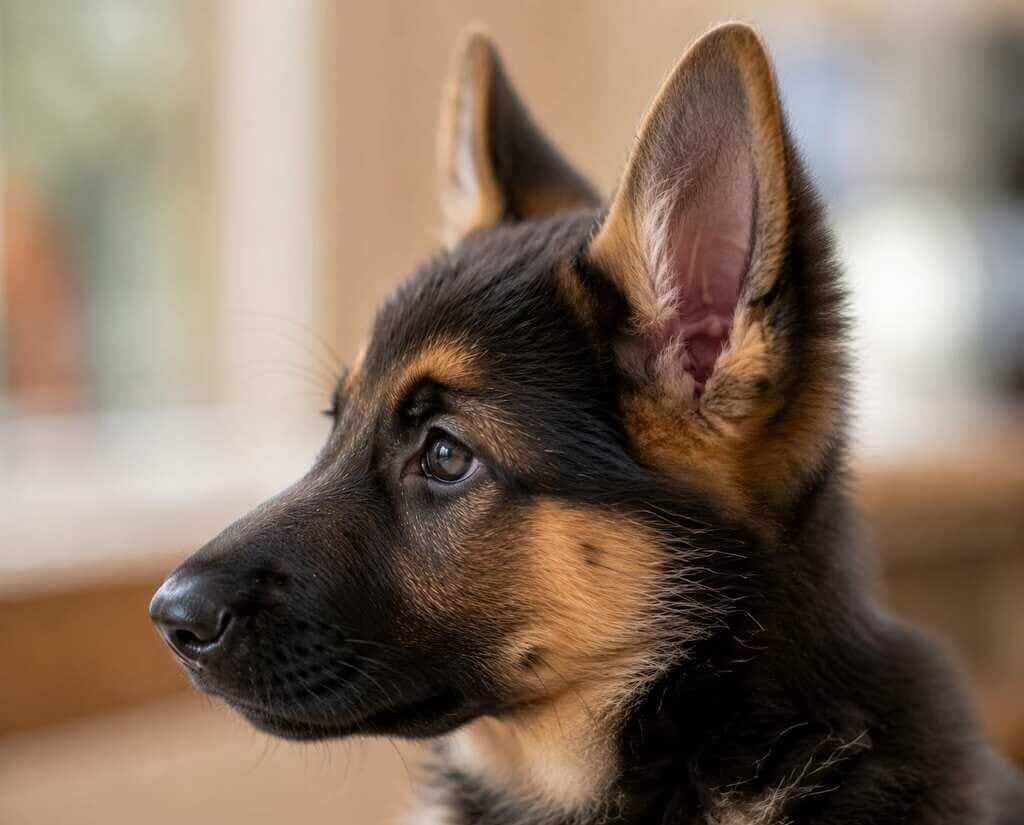
Most breeders and vets recommend giving your puppy’s ears time to develop naturally first, especially before teething finishes. If your puppy’s ears are still not standing by around 5 to 6 months and you are considering taping, talk to your vet or an experienced breeder rather than trying it based on general advice found online.
How to Support Healthy Ear Development
There is not much you need to actively do, since most of this process happens on its own. A few things can help along the way.
- Feed a large-breed puppy formula with balanced calcium and phosphorus
- Avoid letting other dogs or children pull, tug, or bite at your puppy’s ears
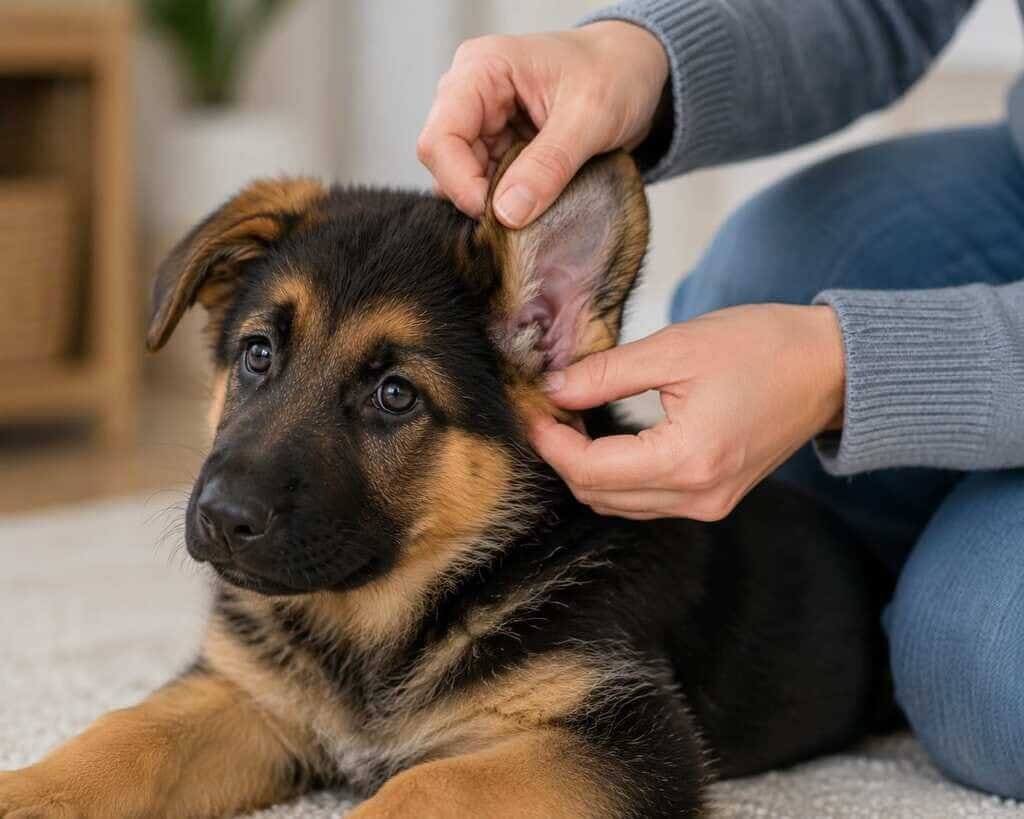
- Handle your puppy’s ears gently during grooming or check-ups rather than not at all, since calm handling now builds tolerance for later vet and grooming visits
- Be patient, since forcing or rushing the process is more likely to cause harm than help
If you are also tracking your puppy’s overall size and weight during this stage, our German Shepherd Puppy Growth Chart breaks down what to expect month by month.
When Should You Worry About Your Puppy’s Ears?
Most puppies just need more time. A few signs are worth a vet visit rather than waiting it out.
- Ears have never lifted at all by 6 months
- One or both ears show swelling, heat, or an unpleasant odor
- Your puppy seems to be in pain when their ears are touched
- Ears were standing and then dropped permanently with no improvement over several weeks
The American Kennel Club describes the adult German Shepherd standard as having moderately pointed ears, carried erect and open toward the front, but that standard describes the finished adult dog, not the process every puppy goes through to get there.
If anything about your puppy’s ear development seems unusual or is paired with signs of discomfort, the VCA Animal Hospitals recommends a veterinary exam to rule out infection, injury, or an underlying issue rather than assuming it will resolve on its own.
German Shepherd Puppy Ears: Frequently Asked Questions
At what age do German Shepherd puppy ears usually stand up?
Most start showing signs of lifting between 8 weeks and 6 months, with the majority settling by the time teething finishes around 5 to 6 months.
Is it normal for one ear to stand and not the other?
Yes, this is very common during development. Ears often stand unevenly for weeks or months before both settle into place.
Why do my puppy’s ears keep going up and down?
This usually happens during teething, when the body redirects calcium toward growing adult teeth, temporarily affecting ear cartilage strength.
Should I tape my German Shepherd puppy’s ears?
Only with guidance from your vet or an experienced breeder. Taping done incorrectly or too early can cause lasting damage.
What if my German Shepherd’s ears never stand up?
Some German Shepherds naturally have softer cartilage and floppy ears due to genetics. If ears have not lifted at all by 6 months, a vet visit can help rule out other causes.
Does diet affect German Shepherd puppy ear development?
Yes. A large-breed puppy food with proper calcium and phosphorus levels supports healthy cartilage growth during this stage.
Final Takeaway
Watching for german shepherd puppy ears standing up is one of the more fun parts of raising a GSD puppy, even if it takes longer than expected. Most puppies settle into their signature upright ears somewhere between 5 and 9 months, with plenty of floppy, lopsided days in between.
Give the process time, support your puppy’s nutrition, and avoid handling that could damage developing cartilage. For more on what comes next in your puppy’s first year, our When Do German Shepherd Puppies Calm Down? and German Shepherd Puppy Training Tips for First-Time Owners guides continue where this one leaves off, along with our complete German Shepherd Puppy: Complete First-Year Guide.
While you are working through training basics, our How to Train a Puppy at Home: Beginners Guide and Best Dog Breeds for Families guides may also be useful as you settle into life with a German Shepherd.
Author Bio
David Jason is the founder of My Pet Care Tips and writes practical, research based guides to help pet owners raise healthier, happier dogs and cats. His content focuses on clear, beginner friendly advice backed by trusted veterinary resources and real world pet care best practices.