

The first time I tried to brush Luna, she looked at me like I had personally offended her.
She walked away. Sat in the corner. And stared at me with that specific kind of cat disapproval that only cats are capable of.
I tried again the next day. Same result. I gave up for a week. When I came back to it with a different brush and a handful of treats, everything changed.
Cat grooming tips at home are genuinely one of the most valuable things you can learn as a cat owner. Professional grooming sessions cost between fifty and one hundred and fifty dollars each. Most cats need grooming every four to six weeks. That adds up to over a thousand dollars a year for something you can learn to do yourself in under thirty minutes.
Beyond the money, regular home grooming helps you catch health problems early. Lumps, skin irritation, ear infections, and dental disease are all easier to treat when found in the early stages. And grooming is one of the most powerful bonding activities you can share with your cat once they trust the process.
This guide covers every aspect of cat grooming at home for 2026. Brushing, nail trimming, ear cleaning, bathing, dental care, and handling the cat that hates every second of it. All in practical steps that actually work in a real home.
Why Regular Grooming at Home is Important for Cats

Most people think grooming is just about keeping cats looking clean.
It is actually about keeping them healthy.
Cats groom themselves constantly but there are limits to what self-grooming achieves. A cat cannot remove deep mats from their own fur. They cannot clean inside their own ears effectively. They cannot trim their own nails. And they definitely cannot brush their own teeth.
When these tasks are not done regularly, the consequences build up slowly and then become serious.
Mats in long-haired cats pull on the skin painfully, create warm moist environments where bacteria thrive, and can hide wounds or skin conditions underneath them. Overgrown nails curve into paw pads causing infections and serious pain. Dirty ears develop yeast and bacterial infections that become expensive to treat. Dental disease, which affects over seventy percent of cats by age three, causes chronic pain and can spread to internal organs.
Regular grooming at home prevents all of this. It also gives you a monthly full-body check of your cat’s condition that no vet visit can replace because you know your cat’s normal baseline better than anyone.
Essential Cat Grooming Tools for Home Use
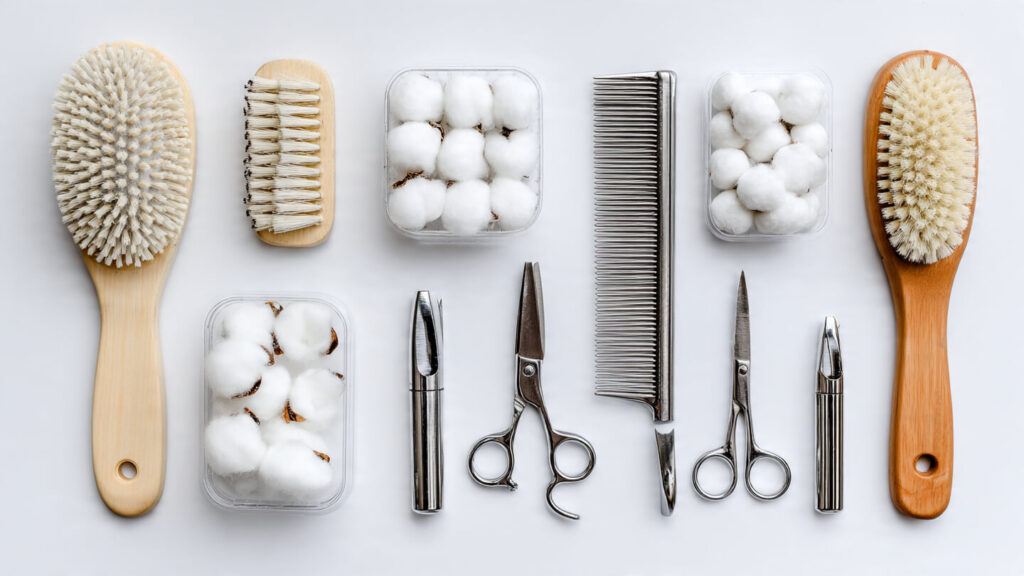
Must-Have Grooming Supplies for Beginners
The right tools make cat grooming tips at home actually work. The wrong tools make your cat associate grooming with discomfort and resist it forever.
| Tool | Purpose | Price Range |
| Slicker brush | Removes loose fur and detangles | 10 to 25 dollars |
| Wide tooth metal comb | Works through mats and tangles | 8 to 20 dollars |
| Deshedding tool (FURminator) | Removes undercoat and controls shedding | 25 to 50 dollars |
| Cat nail clippers | Safe nail trimming | 8 to 20 dollars |
| Styptic powder | Stops bleeding if nail cut too short | 5 to 10 dollars |
| Cat ear cleaning solution | Gentle ear cleaning | 10 to 20 dollars |
| Cotton balls | Ear cleaning application | 3 to 5 dollars |
| Cat-specific toothbrush and paste | Dental hygiene | 8 to 15 dollars |
| Waterless dry shampoo spray | Quick freshening without water | 10 to 20 dollars |
| Grooming wipes | Quick cleanup between sessions | 8 to 15 dollars |
One rule for all tools:
Let your cat sniff and investigate every new tool before you use it. Place it near their sleeping area for a day or two before introducing it during grooming. This removes the fear of the unknown before the session even begins.
Budget vs Premium:
The FURminator deshedding tool is worth the investment for medium and long-haired cats. It reduces shedding by up to ninety percent and nothing else on the market comes close for undercoat removal. For short-haired cats, a standard slicker brush and metal comb are sufficient.
How to Groom a Cat at Home — Step-by-Step Guide
The order of grooming matters.
Starting with the least invasive step and working toward more sensitive tasks builds your cat’s tolerance throughout the session. Reversing this order means you lose cooperation before you get to the important parts.
The correct order:
Step 1 — Choose the right time
Never attempt grooming when your cat is alert and active. Wait until they are naturally calm or slightly drowsy. After a meal is often ideal. A tired cat is a cooperative cat.
Step 2 — Start with petting
Spend two to three minutes simply petting your cat normally before introducing any tools. Let them settle into the interaction before the session officially begins.
Step 3 — Begin brushing from head to tail
Always brush in the direction the fur grows. Never against it. Start at the head and work toward the tail using gentle short strokes. Pay extra attention to the areas behind the ears, under the armpits, and around the collar where mats most commonly form.
Step 4 — Work through any tangles gently
Hold the fur at the root with one hand to prevent pulling on the skin. Work tangles out from the tip toward the root. Never yank through a mat. If a mat is too tight to brush out, use blunt-tipped scissors to carefully cut it out rather than forcing it.
Step 5 — Nail trimming
After brushing when your cat is relaxed. Details in the dedicated section below.
Step 6 — Ear check and cleaning
Quick check and gentle cleaning if needed.
Step 7 — Reward
End every single session with a treat and praise. This is not optional. The treat at the end is what makes the next session easier.
Brushing Techniques for Long Hair vs Short Hair Cats

Cat Grooming Tips at Home for Shedding Control
Different coat types need completely different brushing approaches.
Short-Haired Cats:
Short-haired cats need brushing once or twice per week. A rubber grooming glove or soft slicker brush works beautifully for removing loose fur without irritating sensitive skin. Short sessions of five minutes twice weekly are more effective than one long monthly session.
Medium-Haired Cats:
Brush two to three times per week with a slicker brush and follow up with a metal comb to catch any developing tangles. Pay attention to the belly and hindquarters where tangles form faster on medium-length coats.
Long-Haired Cats — Maine Coon, Persian, Ragdoll:
Daily brushing is not optional for these breeds. It is prevention against mats that can develop overnight in certain areas. Use a wide-tooth metal comb first to work through the coat. Follow with a slicker brush for the outer coat. The underside of long-haired cats needs particular attention during spring and fall shedding seasons.
Shedding Control Tips:
- Brush daily during spring and fall shedding seasons
- Use the FURminator deshedding tool once weekly to remove undercoat before it reaches your furniture
- Add omega-3 fish oil to your cat’s diet to improve coat quality and reduce excessive shedding
- Wipe down your cat with a slightly damp cloth after brushing to capture loose fur that the brush missed
According to the American Kennel Club’s cat care resources, regular deshedding reduces the amount of fur swallowed during self-grooming, which directly reduces hairball frequency.
Nail Trimming Tips at Home Without Stress
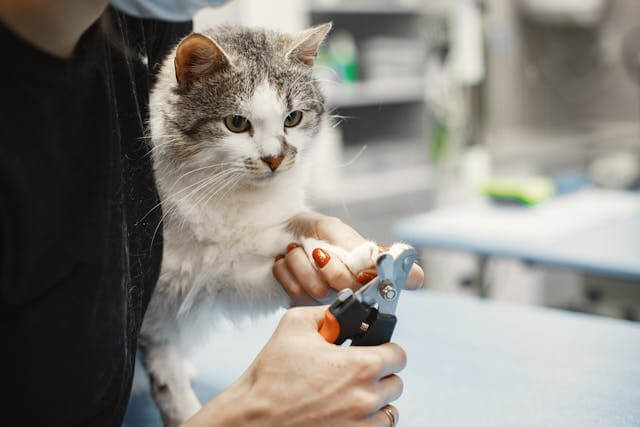
Nail trimming is the grooming task that most cat owners fear most.
And most cats hate most. But it does not have to be a battle.
Preparing your cat for nail trimming:
Start weeks before you intend to trim by simply handling your cat’s paws daily during calm moments. Pick up each paw gently, press lightly to extend the claws, and release. Give a treat every time. Do this for two weeks before ever introducing clippers.
When you are ready to trim:
- Hold your cat in your lap or on a non-slip surface
- Pick up one paw and gently press the pad to extend a single claw
- Look for the pink quick — the blood vessel running through the center of the nail
- Cut only the transparent sharp tip, staying two millimeters clear of where the pink ends
- Release immediately and give a treat
- Do one or two nails per session in the beginning rather than all at once
If you accidentally cut the quick:
Apply styptic powder immediately and hold gentle pressure for thirty seconds. It looks alarming but heals quickly. Do not let this one mistake end your nail trimming routine permanently.
Frequency:
Check nails every two to three weeks. Indoor cats do not wear their nails down naturally and overgrown nails curve into paw pads causing infections.
How to Clean Cat Ears and Eyes Safely
Ear Cleaning:
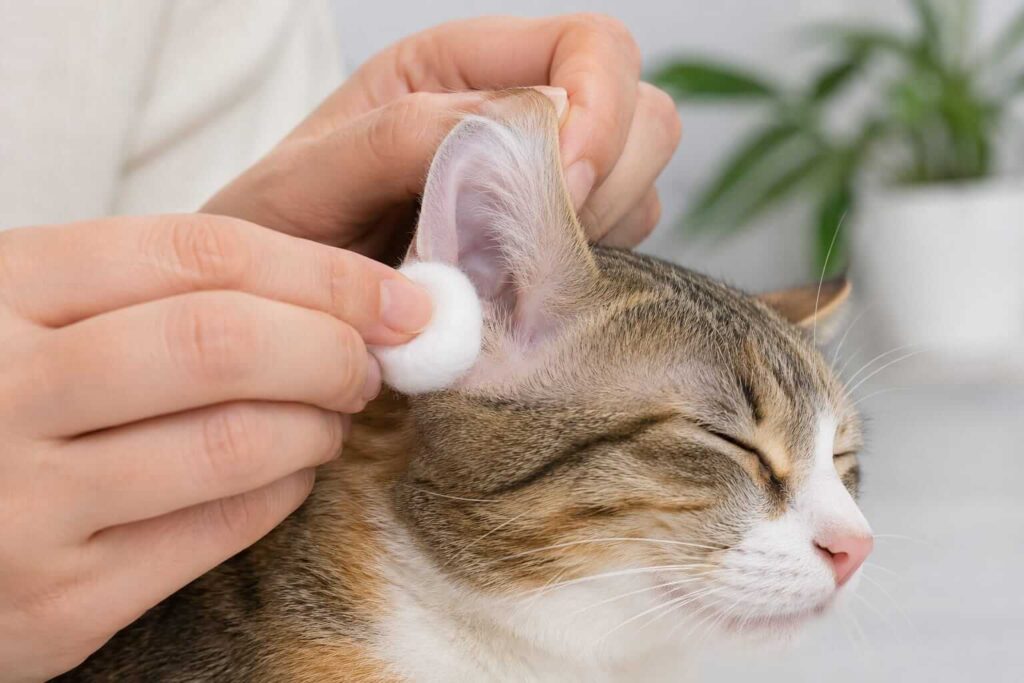
Healthy cat ears are pink, clean, and odor-free. Check them weekly during your grooming routine.
To clean:
- Apply a few drops of cat-specific ear cleaning solution into the ear canal
- Gently massage the base of the ear for twenty seconds
- Allow your cat to shake their head to bring debris to the surface
- Wipe the outer ear canal with a cotton ball to remove loosened wax and debris
- Never insert anything deeper than you can see
Warning signs that need vet attention:
- Dark brown or black discharge
- Strong unpleasant smell
- Redness or swelling inside the ear
- Constant head shaking or scratching at ears
Eye Care:
Most cats do not need eye cleaning. Exceptions include flat-faced breeds like Persians who produce excessive eye discharge due to their facial structure.
Wipe gently from the inner corner outward using a damp cotton ball. Use a separate cotton ball for each eye to prevent cross-contamination.
Cat Bathing Tips at Home — Dry Bath and Water Bath
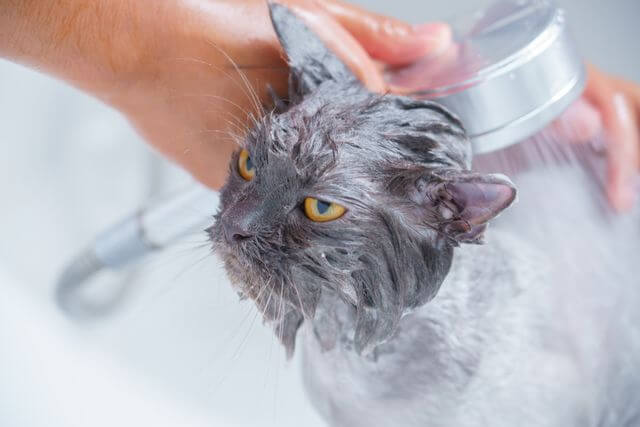
Here is the honest truth about cat bathing.
Most cats never need a water bath. Their self-grooming is remarkably effective. The exceptions are hairless breeds like the Sphynx who cannot self-groom effectively, cats that get into something toxic or extremely sticky, and cats with certain skin conditions requiring medicated baths.
Dry Bath Method — For Most Situations:
Waterless dry shampoo spray is the easiest and least stressful option for freshening your cat’s coat between necessary water baths.
- Spray lightly onto the coat from about twelve inches away
- Work through the coat with your fingers or a brush
- Wipe off with a clean towel
Water Bath Method — When Necessary:
If a water bath is genuinely needed:
- Fill a sink or small tub with two to three inches of lukewarm water
- Have all supplies ready before bringing your cat in
- Lower your cat gently into the water using calm quiet movements
- Wet the coat with a cup rather than running water which frightens most cats
- Apply cat-specific shampoo and work into a lather quickly
- Rinse twice as long as you think necessary to remove all shampoo residue
- Wrap in a large warm towel immediately and keep your cat in a warm room until fully dry
Never use human shampoo on cats. The pH is completely wrong for cat skin and causes irritation and dryness.
How to Brush Your Cat’s Teeth at Home

This is the most skipped grooming task and also one of the most important.
Dental disease causes chronic pain and can spread bacteria to the kidneys, heart, and liver over time. Starting early makes a dramatic difference in your cat’s long-term health.
Getting started:
Never go directly to a toothbrush. Start by letting your cat lick cat-specific toothpaste from your finger. Do this for a week until they accept it without resistance.
Then wrap a small piece of gauze around your finger and gently rub the outer surfaces of the teeth. Do this for another week.
Finally introduce a small cat toothbrush using the same gentle circular motion on the outer tooth surfaces. The inner surfaces are less critical as the tongue helps clean them naturally.
Frequency: Twice a week minimum. Daily is ideal.
Never use human toothpaste. Fluoride and xylitol in human formulas are toxic to cats. Always use cat-specific enzymatic toothpaste.
Weekly and Monthly Cat Grooming Routine at Home
Complete Cat Grooming Schedule for Indoor Cats
Following a cat grooming tips at home schedule prevents tasks from being forgotten and keeps the routine manageable.
Weekly Tasks:
| Task | Short Hair | Long Hair |
| Brushing | 2 times | Daily |
| Paw check | Once | Once |
| Eye check | Once | Once |
| Ear check | Once | Once |
| Treat and praise | Every session | Every session |
Monthly Tasks:
| Task | Frequency |
| Nail trimming | Every 2 to 3 weeks |
| Ear cleaning | Once monthly |
| Teeth brushing | Twice weekly ongoing |
| Full coat inspection | Once monthly |
| Weight check | Once monthly |
Seasonal Tasks:
During spring and fall shedding seasons, increase brushing frequency for all coat types. Add daily deshedding sessions for medium and long-haired cats during peak shedding months.
How to Groom a Cat That Hates Being Groomed
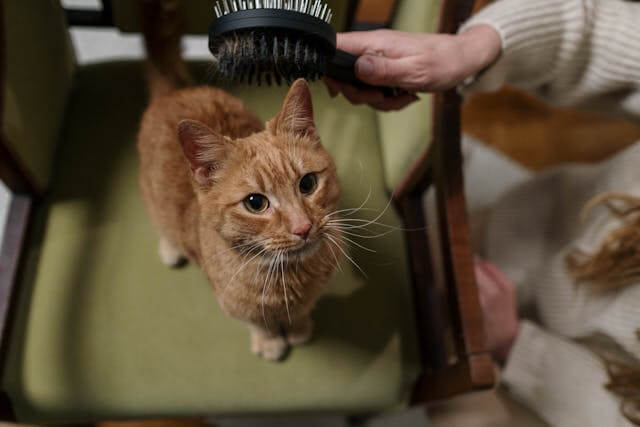
Luna hated being groomed for the first three months.
Then she started walking toward the brush when she saw it come out. Here is what changed everything.
1. Never force it
A forced grooming session teaches your cat that grooming is something to fear and escape. One bad forced session can set you back weeks of trust building.
2. Start impossibly small
One brush stroke. One treat. Done. Do this for a week. Your cat learns that the brush predicts something good.
3. Associate tools with good things before using them
Leave the brush near their food bowl for three days before any grooming session. Let them investigate on their own terms.
4. Work with their favorite spots first
Most cats enjoy being scratched behind the ears and along the spine. Start every grooming session with those spots using the brush before moving anywhere sensitive.
5. Stop before they want you to
Always end the session while your cat is still comfortable. Never push to the point of resistance. A short positive session is worth ten times more than a long stressful one.
6. Use a grooming glove
Some cats who hate traditional brushes accept a grooming glove easily because it feels like being petted. The FurHaven Grooming Glove is highly rated for resistant cats.
Common Grooming Mistakes to Avoid
Brushing against the fur direction
This causes discomfort and skin irritation. Always brush in the direction the coat grows.
Cutting nails with dull clippers
Dull clippers crush and crack nails instead of cutting cleanly. This causes pain and makes cats resistant. Replace cat nail clippers every six to twelve months.
Cleaning too deep inside the ear
Inserting anything deeper than the visible outer canal can damage the eardrum. Always stay within the visible area.
Bathing too frequently
Over-bathing strips the natural protective oils from cat skin causing dryness and dandruff. Most cats need a water bath only when necessary, not on a schedule.
Skipping dental care entirely
This is the most common mistake with the most serious long-term consequences. Even brushing teeth once a week makes a significant difference in preventing dental disease progression.
Best Cat Grooming Tools Reviews 2026
Budget vs Premium Comparison
| Tool | Budget Option | Premium Option |
| Deshedding brush | Safari Self-Cleaning (15 dollars) | FURminator Deshedding Tool (40 dollars) |
| Nail clippers | Resco Original (10 dollars) | Safari Professional Nail Trimmer (18 dollars) |
| Slicker brush | Hertzko Self-Cleaning (12 dollars) | Chris Christensen (35 dollars) |
| Ear cleaner | Veterycin Plus (12 dollars) | Virbac Epi-Otic (18 dollars) |
| Toothbrush set | Vetoquinol Enzadent (8 dollars) | Virbac C.E.T. Kit (14 dollars) |
Most worth the investment:
The FURminator deshedding tool is the single best grooming purchase for any cat owner. For long-haired and medium-haired cats it is genuinely transformative for shedding control. Most owners report a fifty to seventy percent reduction in loose fur around the home within the first week of use.
All products above are available on Chewy and Amazon with regular discounts and Subscribe and Save options that reduce the monthly cost further.
When to Take Your Cat to a Professional Groomer
Home grooming covers the majority of what your cat needs. But there are situations where professional help is the right call.
Go to a professional when:
- Mats are too tight and close to skin to safely remove at home
- Your cat’s resistance is so severe that stress levels become dangerous
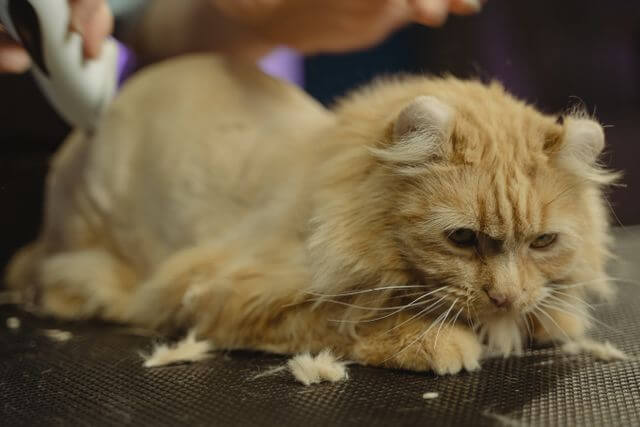
- Your long-haired cat needs a full haircut or lion cut for summer
- Anal gland expression is needed
- You suspect a skin infection that needs professional identification
Professional cat groomers charge between fifty and one hundred and fifty dollars depending on the service. For most cats doing home grooming consistently, a professional visit once or twice per year for a full groom is all that is needed.
Frequently Asked Questions
What are the best cat grooming tips at home?
The most important cat grooming tips at home are brushing regularly to prevent mats and control shedding, trimming nails every two to three weeks, checking and cleaning ears monthly, brushing teeth twice weekly, and always ending sessions with a treat to build positive associations with grooming.
How often should I groom my cat at home?
Short-haired cats need brushing twice weekly and nail checks every two to three weeks. Long-haired cats need daily brushing. Ear checks weekly. Teeth brushing twice weekly. A monthly full inspection catches any developing issues early.
How do I trim my cat’s nails at home?
Handle your cat’s paws daily for two weeks before introducing clippers. When ready, extend one claw at a time by pressing gently on the pad. Cut only the transparent tip staying clear of the pink quick. Do one or two nails per session and reward immediately. Build up to a full trim over several sessions.
How can I groom my cat that hates brushing?
Start with one brush stroke and one treat. Gradually increase over several weeks. Associate the brush with good things before using it. Use a grooming glove if your cat resists traditional brushes. Always stop before your cat reaches resistance. Never force the process.
What tools do I need for cat grooming at home?
A slicker brush, wide-tooth metal comb, cat nail clippers, styptic powder, ear cleaning solution, cotton balls, and cat-specific toothbrush and paste are the essential starting kit. Add a deshedding tool like the FURminator for medium and long-haired cats.
How do I bathe my cat at home without stress?
Use a waterless dry shampoo spray for routine freshening. For necessary water baths use two to three inches of lukewarm water in a sink, have everything ready before bringing your cat in, use a cup to wet rather than running water, and wrap in a warm towel immediately afterward. Keep the experience as calm and quick as possible.
How do I control excessive shedding in cats?
Daily brushing during shedding season, weekly use of a deshedding tool, adding omega-3 fish oil to the diet, and regular grooming sessions throughout the year all significantly reduce shedding. Excessive sudden shedding beyond normal seasonal levels warrants a vet visit to rule out skin conditions or nutritional deficiencies.
When should I stop grooming my cat at home and see a professional?
See a professional groomer when mats are too tight to safely remove at home, when your cat’s stress response to grooming is severe, or when your long-haired cat needs a full haircut. See a vet rather than a groomer when you find skin sores, unusual lumps, ear infections, or dental disease during your grooming routine.
Final Thoughts
Luna now jumps onto the grooming table by herself.
She sees the brush come out and walks toward it. She purrs through the entire session and meows when I stop too soon. It took about three months of patience and consistency to get there.
The cat grooming tips at home in this guide are everything I learned during those three months and the eight years since. None of it is complicated. All of it takes patience.
Start with just one task. Brushing is the easiest entry point. Add nail trimming when brushing is comfortable. Add ear checks the month after that. Build the routine gradually and always end on a positive note.
Your cat will get there. Every single cat can learn to tolerate and eventually enjoy home grooming when it is introduced correctly and consistently.
Share your cat grooming experience in the comments below. What is the hardest part of grooming your cat at home? I read every comment and genuinely try to help with practical solutions.
Also read:
→ Indoor Cat Care Guide
→ Cat Care Guide for Beginners
→ Best Cat Food for Healthy Growth
→ Common Pet Health Problems
→ Vet Costs in USA
Author Bio
Written by David Jason
Founder of My Pet Care Tips
Cat and dog owner with over 8 years of hands-on experience grooming and caring for pets at home. Every tip in this guide has been personally tested and refined through real experience with cats of all temperaments and coat types.
Last Updated: June 3, 2026
Sources: ASPCA, Cornell Feline Health Center, AKC, PetMD
Note: Always consult a licensed veterinarian for skin conditions ear infections or dental disease that require professional treatment.