

If your neighbors know your Beagle puppy’s voice better than they know yours, welcome to the club. Beagle puppy howling barking is one of the most common things new owners search for, usually somewhere around week two of ownership, right after the novelty wears off.
The good news is that this is not a training failure on your part. It is baked into the breed. The better news is that you can absolutely reduce it, even if you will probably never eliminate it entirely.
Quick answer: Beagle puppies howl and bark because they were bred as scent hounds who vocalize to alert hunters to what they have found. Common triggers include interesting scents, loneliness, boredom, and simple attention-seeking. Consistent training, adequate exercise, and never punishing the instinct itself all help reduce it over time.
Why Do Beagles Howl and Bark So Much?
Every problem behavior in a Beagle traces back to what the breed was actually built to do. On a hunting trail, a Beagle who found a scent would howl loudly to signal the rest of the pack, letting hunters know exactly where to look. That instinct did not disappear just because your Beagle spends their days on the couch instead of in a field.
This means the howling and barking you are dealing with is not random noise. It is a deeply bred communication instinct, and it gets triggered by scents, sounds, boredom, and being left alone, the same things that would have triggered it generations ago.
The Three Sounds Beagles Make
Most owners assume all Beagle noise is the same, but this breed actually makes three distinct sounds, each meaning something slightly different.
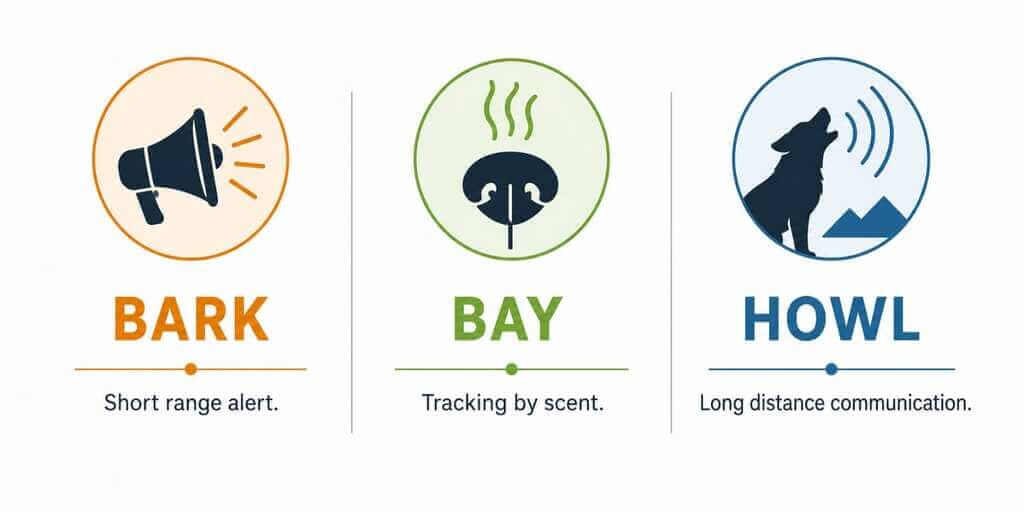
- Bark: A standard alert sound, used for everything from spotting a squirrel to hearing the doorbell
- Bay: The classic deep, drawn-out hunting call, typically triggered when your Beagle has picked up an interesting scent
- Howl: Often tied to loneliness, distress, or communicating over distance, similar to how wolves howl to signal their location
Learning to tell these apart helps you figure out what your puppy actually needs in the moment, rather than reacting to every sound the same way.
Common Triggers for Beagle Puppy Howling and Barking
A few specific triggers show up again and again with beagle puppy howling barking, and recognizing which one applies to your dog makes management much easier.
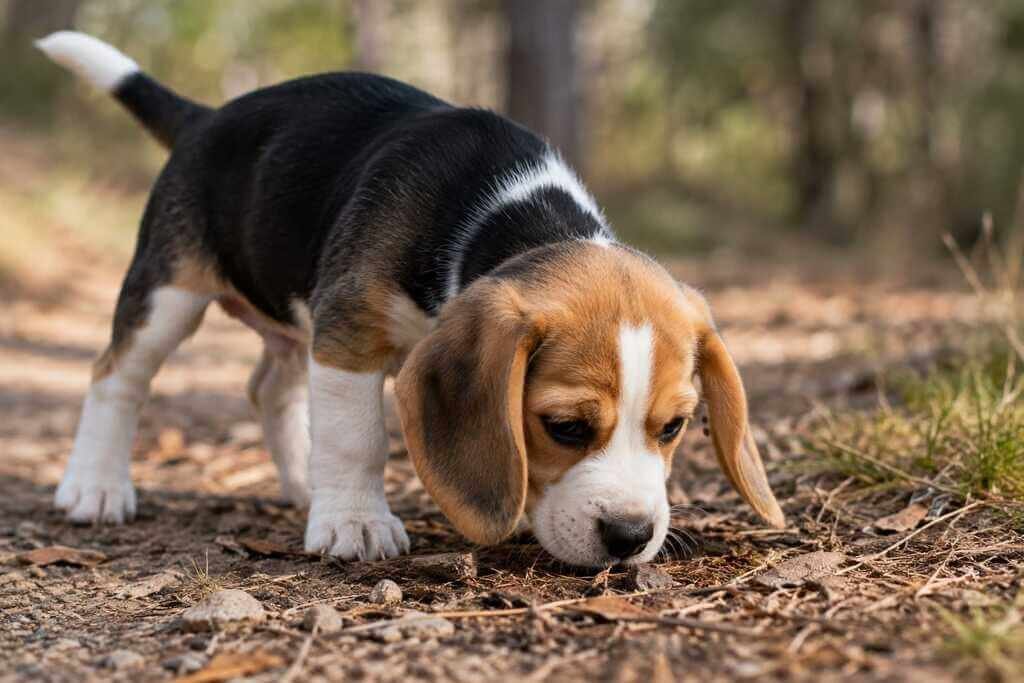
- Interesting scents: Even indoors, a strong smell can set off a full baying session, since a Beagle’s nose is arguably the most powerful part of their brain
- Loneliness and separation: Beagles are pack-oriented dogs, and being left alone without enough enrichment often leads to howling
- Boredom: An under-stimulated Beagle puppy frequently finds their own entertainment, and that entertainment is loud
- Attention-seeking: If howling has ever gotten your attention before, your puppy has likely learned that it works
- High-pitched sounds: Sirens, other dogs howling, or certain tones can trigger an instinctive vocal response
- Greeting or excitement: Visitors, other dogs, or exciting moments can all trigger a burst of noise
Most puppies are not howling for just one reason. A puppy left alone with nothing to sniff or chew is often dealing with boredom and loneliness at the same time, which is worth keeping in mind when you are trying to figure out where to start.
Is Excessive Howling a Sign of Separation Anxiety?
Sometimes, yes. Howling that happens specifically when you leave, especially if it is paired with pacing, destructive behavior, or accidents despite being housetrained, can point to separation-related distress rather than simple boredom.
Occasional howling when left alone for a reasonable amount of time is usually just normal Beagle behavior. A pattern that escalates, or that happens the moment you are out of sight every single time, is worth paying closer attention to.
How to Manage and Reduce Beagle Puppy Howling and Barking
You will not eliminate this instinct completely, and trying too hard usually backfires. The realistic goal when it comes to managing beagle puppy howling barking is reducing frequency and intensity, not achieving total silence. A Beagle who never makes a sound is not the goal, and it is probably not even a realistic one.
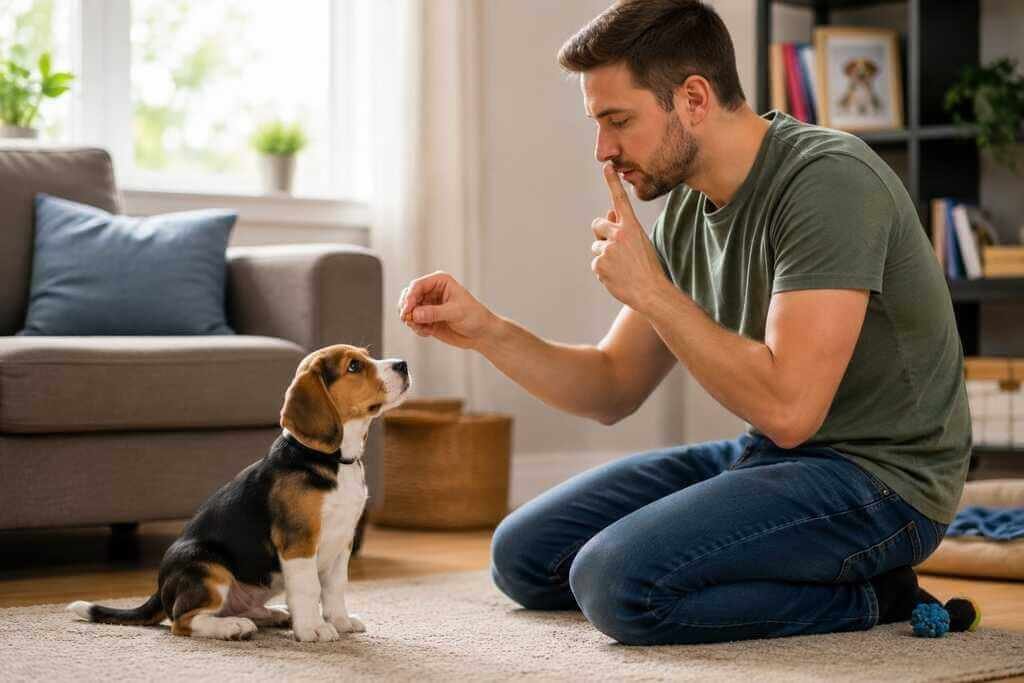
Teach a “Quiet” Cue
Wait for a natural pause in barking or howling, then reward the silence immediately with a treat and calm praise. Repeating this consistently teaches your puppy that quiet, not noise, is what earns a reward.
Do Not Accidentally Reward the Behavior
Attention, even negative attention like yelling, can reinforce howling if your puppy has learned that noise gets a reaction. Responding calmly, or waiting for a pause before engaging, avoids feeding the exact behavior you are trying to reduce.
Meet Their Exercise and Mental Stimulation Needs
An under-exercised, under-stimulated Beagle puppy is far more likely to fill the silence with noise. Our Dog Exercise Routine Guide covers how much daily activity is appropriate as your puppy grows, and scent-based enrichment activities work especially well for this breed.
Give Them a Safe Space When Alone
A properly introduced crate can genuinely reduce anxiety-driven howling by giving your puppy a secure, den-like space rather than an open room that feels too exposed. Our How to Crate Train a Puppy guide walks through how to set this up the right way.
Desensitize to Common Triggers
If sirens, other dogs, or specific sounds set your puppy off, gradually exposing them to low-volume recordings paired with treats can reduce the intensity of the reaction over time. This approach works especially well for sound-triggered beagle puppy howling barking, since it addresses the trigger directly instead of just reacting after the fact.
What Not to Do When Managing Beagle Howling
A few common responses tend to make things worse rather than better.
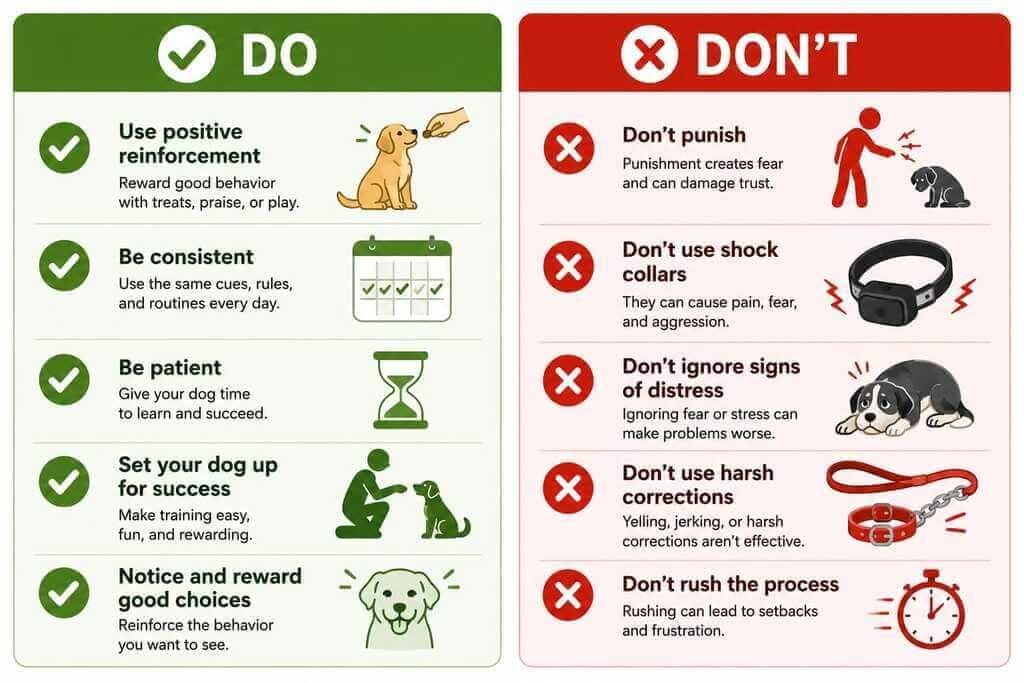
- Do not punish the howling itself. This is a genetic instinct, not defiance, and punishment tends to create distress and confusion rather than reducing the behavior.
- Do not ignore genuine distress. Separation-related howling needs a different approach than boredom-driven noise.
- Do not rely on shock or citronella collars as a first step. These treat the symptom without addressing the underlying cause and can create additional stress.
- Do not expect complete silence. Some vocalization is simply part of owning this breed.
When to Get Help From a Trainer or Vet
Most Beagle puppy howling and barking improves with consistent training and enough enrichment. A few situations are worth extra support.
- Howling paired with destructive behavior or panic when left alone
- A sudden change in vocal patterns, especially a hoarse or strained sound
- Behavior that seems to be getting worse despite consistent training
- Noise that persists at a level causing real conflict with neighbors
The American Kennel Club describes Beagles as a scent hound breed with a naturally strong voice, bred specifically to vocalize while working. If barking or howling seems paired with coughing, breathing difficulty, or a hoarse tone, the American Veterinary Medical Association recommends a veterinary evaluation to rule out an underlying health issue before assuming it is purely behavioral.
Frequently Asked Questions
Why do Beagle puppies howl so much?
Beagle puppy howling barking traces directly back to what the breed was built for. Beagles are scent hounds bred to howl and bay to alert hunters to what they found, and this instinct is genetic, showing up even in Beagles who have never hunted a day in their lives.
What is the difference between a Beagle’s bark, bay, and howl?
A bark is a general alert sound, a bay is the classic hunting call triggered by scent, and a howl is often tied to loneliness or long-distance communication.
Can you train a Beagle puppy to stop howling completely?
Not entirely. You can significantly reduce frequency and intensity with consistent training, but some vocalization is a natural part of this breed.
Is my Beagle puppy howling because of separation anxiety?
It can be, especially if howling happens immediately when you leave and is paired with pacing, destructive behavior, or accidents. Occasional howling when left alone briefly is usually normal.
Should I punish my Beagle puppy for howling?
No. Punishing a genetic instinct tends to create distress rather than solving the behavior. Redirection and consistent reward-based training work better.
Does exercise help reduce Beagle puppy howling and barking?
Yes. An under-stimulated Beagle is more likely to howl out of boredom, so meeting their physical and mental exercise needs often reduces excessive noise.
Final Takeaway
Beagle puppy howling barking is not a flaw in your dog or a failure in your training. It is a deeply bred instinct that responds well to consistent management, even if it never fully disappears. Focus on rewarding quiet moments, meeting your puppy’s exercise and mental stimulation needs, and giving them a secure space when alone.
If your Beagle also tends to wander off when following an interesting scent, our Why Do Beagle Puppies Run Away? guide covers that closely related instinct. For families considering this breed, our Best Dog Breeds for Families guide covers how Beagles compare to other options, along with our complete Beagle Puppy: Complete First-Year Guide.
Author Bio
David Jason is the founder of My Pet Care Tips and writes practical, research based guides to help pet owners raise healthier, happier dogs and cats. His content focuses on clear, beginner friendly advice backed by trusted veterinary resources and real world pet care best practices.