
Your puppy circles you in the yard. Nips at your heels when you walk. Chases the vacuum like it owes them money. If this sounds familiar, you are watching the border collie puppy herding instinct in action, and it is completely normal.
Understanding this instinct changes everything about how you respond to it. Once you see the nipping and circling for what it actually is, a deeply bred behavior rather than a discipline problem, managing it becomes much less frustrating.
Quick answer: Border Collie puppies nip and herd because it is bred into them, not something they learned. Generations of Border Collies were selected specifically for the eye, stalk, chase, and nip pattern used to move livestock. Your puppy has never seen a sheep, but the instinct behind that border collie puppy herding drive is still fully switched on.
What Is the Herding Instinct, and Why Does My Puppy Have It?
Border Collies were bred for one job: moving livestock from one place to another using body language, focus, and, when needed, a quick nip. This is not a trained skill. It is genetic, passed down through generations of working dogs long before your puppy was born.
That is why a Border Collie who has never set foot on a farm still stares intensely at moving objects, tries to control where family members walk, and nips at ankles during play. The behavior is not confused or broken. It is doing exactly what it was bred to do, just with the wrong targets.
How the Herding Instinct Shows Up in Everyday Life
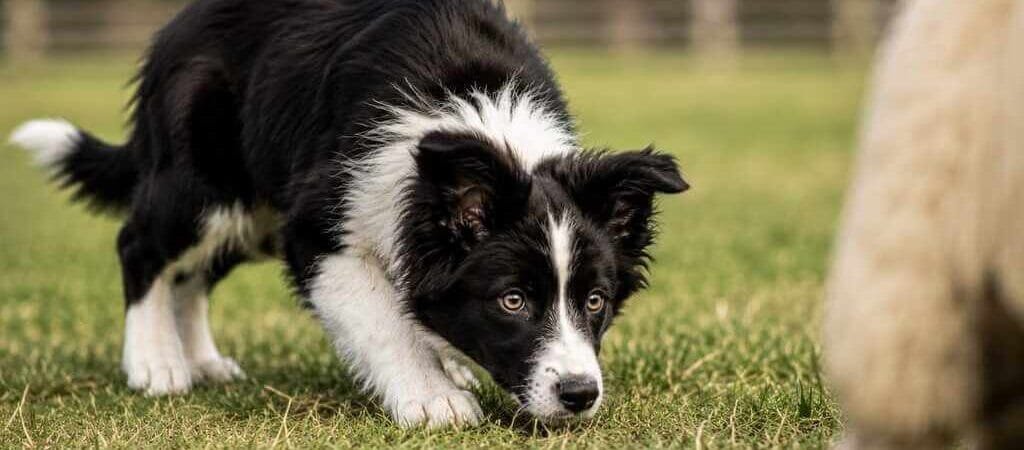
Herding follows a pattern trainers call eye, stalk, chase, nip. Your puppy locks onto something moving, creeps toward it with a lowered body, chases if it keeps moving, and nips if chasing alone does not stop it.
In a farm setting, that “something” is a sheep. In your living room, it might be:
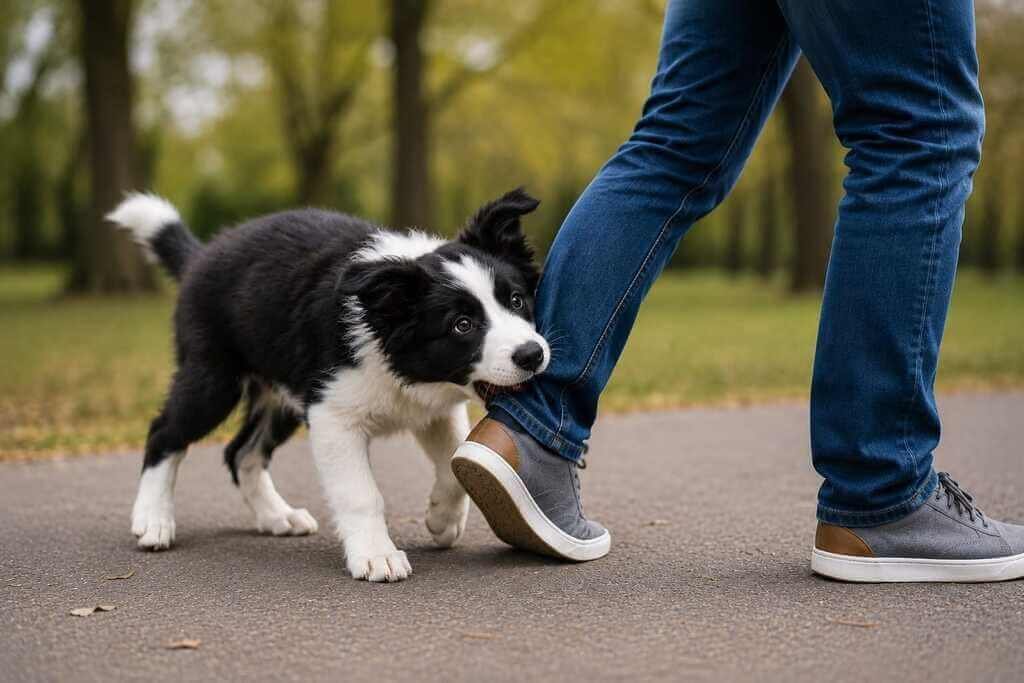
- Your ankles or heels while you walk
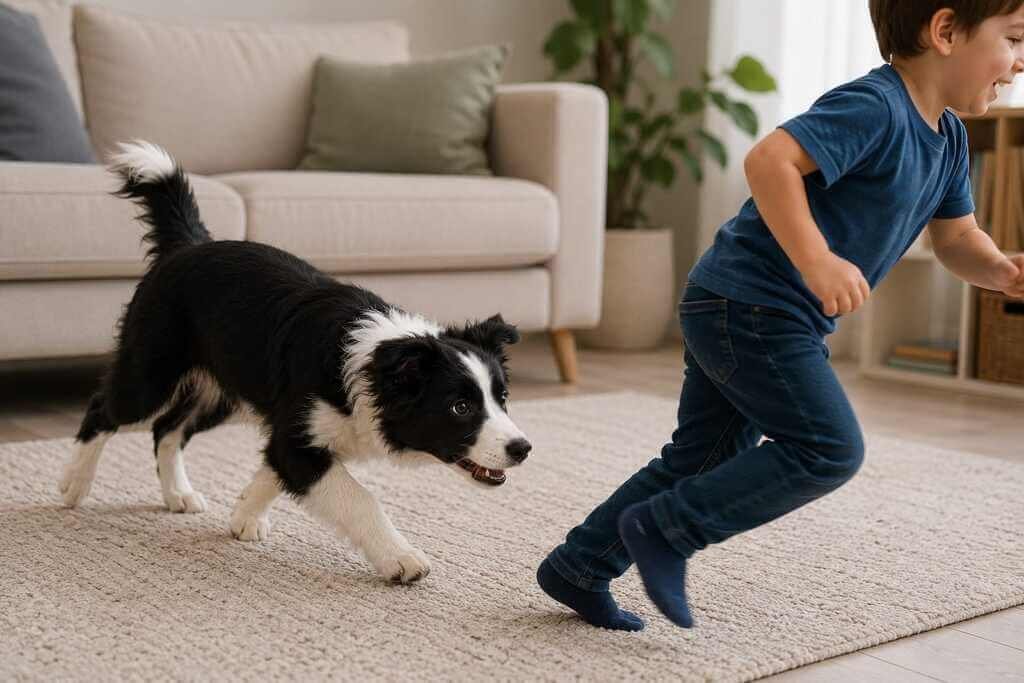
- Children running or playing
- Other pets, especially smaller or faster-moving ones
- Cars, bikes, or joggers passing by
- Vacuum cleaners, brooms, or anything else that moves unpredictably
This is why so many Border Collie puppies seem obsessed with controlling movement around them. They genuinely are, just not on purpose in the way we usually think about behavior.
Does Every Border Collie Herd the Same Amount?
Not exactly. Working-line Border Collies, bred from generations of dogs actively herding livestock, often show a noticeably stronger herding drive than show-line or companion-bred dogs. That said, the border collie puppy herding instinct shows up to some degree in nearly every dog of this breed, regardless of bloodline, since it is such a core part of what defines the breed itself.
Individual personality also plays a role. Some puppies herd constantly and intensely from the moment they arrive home, while others show it more mildly and only in specific situations, like when children are running around.
Is Herding and Nipping the Same as Aggression?
No, and this distinction matters. Herding nips are typically quick, low-intensity, and aimed at ankles or heels rather than delivered with force. A puppy exhibiting true aggression usually shows additional signals like stiff body language, growling, or repeated hard bites regardless of redirection.
That said, herding nips can still hurt, especially around young children, and they can escalate if a puppy is never taught an appropriate outlet. Normal instinct does not mean no training is needed. It means the training goal is redirection, not punishment.
Common Herding Behaviors in Border Collie Puppies
A few behaviors show up again and again in Border Collie puppies with a strong herding drive.
- Heel nipping: Quick nips at ankles or heels while you walk, especially if you move quickly or change direction
- Circling: Moving around family members or other pets as if trying to gather them into one place
- Intense staring: The classic “Border Collie eye,” a locked, focused stare at a person, animal, or object
- Barking to direct: Using bark bursts to try to control movement, similar to how working dogs move livestock
- Chasing moving objects: Cars, bikes, joggers, and even falling leaves can all trigger the chase response
How to Manage and Redirect the Herding Instinct
You cannot train the border collie puppy herding instinct out of your dog, and trying to suppress it completely usually backfires, sometimes creating more anxiety or frustration than it solves. The better approach is giving that instinct an appropriate place to go.
Give the Instinct a Job
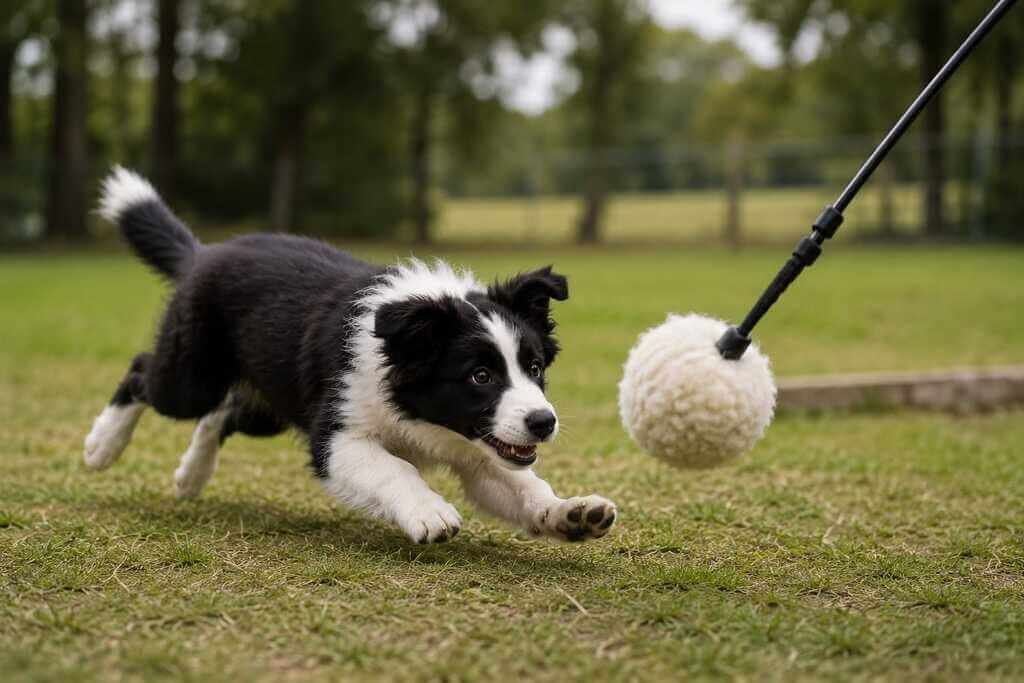
Herding balls, flirt poles, and structured fetch all let your puppy chase, stalk, and nip in a way that is safe and satisfying. These tools essentially let your puppy herd something that is designed to be herded.
Pair Physical Activity With Mental Work
A Border Collie puppy with pent-up energy and no outlet is far more likely to redirect that drive toward people, pets, or passing cars. Our How Much Exercise Does a Border Collie Puppy Need? guide covers how to balance physical exercise with the mental stimulation this breed genuinely needs.
Teach a Clear “No Nip” Cue
A short, sharp “ah-ah” or “no nip,” followed by redirecting to an appropriate toy, teaches your puppy that nipping people ends the fun while nipping their toy keeps it going. Consistency across your whole household matters here.
Manage the Environment
Sometimes the simplest fix is preventing the situation rather than reacting to it. Keeping your puppy on a leash around joggers or cyclists, or supervising closely around young children, prevents rehearsal of the exact behavior you are trying to reduce.
Avoid Punishing the Instinct Itself
Punishing a puppy for herding does not remove the drive, it just teaches them to be anxious about a completely natural impulse. Redirecting to an acceptable outlet works far better than trying to suppress the behavior entirely.
Should You Worry About Nipping Around Children?
Yes, in the sense that it deserves active management, even though it is rarely aggressive in nature. Children often move quickly and unpredictably, which is exactly the kind of movement that triggers a strong herding response.

Supervise interactions closely, teach children not to run or scream around the puppy, and give your Border Collie a clear outlet for their energy before those interactions happen. A tired, mentally satisfied puppy is far less likely to fixate on herding the kids in the yard.
When Border Collie Puppy Herding Behavior Needs Professional Help
Most nipping and herding resolves with consistent management and an appropriate outlet as your puppy matures. A strong border collie puppy herding instinct is not itself a red flag, but a few signs suggest it is time to bring in extra support.
- Nipping that leaves marks or breaks skin repeatedly
- Behavior that seems to be escalating rather than improving with training
- Signs of true aggression, like stiff body language, growling, or snapping
- Herding behavior that is not improving despite consistent redirection and exercise
Look for a trainer certified through an organization like the Certification Council for Professional Dog Trainers, which sets standards for reward-based, evidence-informed training methods. The American Kennel Club also notes that Border Collies are among the most trainable breeds, so most herding-related nipping responds well to consistent, positive redirection.
Frequently Asked Questions
Why does my Border Collie puppy nip at my heels?
This is a classic sign of the border collie puppy herding instinct at work. Your puppy is instinctively trying to control your movement the same way a working Border Collie would move livestock.
Is Border Collie nipping a form of aggression?
Usually not. Herding nips are typically quick and low-intensity, aimed at ankles or heels, and different from aggressive biting paired with growling or stiff body language.
Can you train a Border Collie puppy not to herd?
You cannot remove the instinct entirely, but you can redirect it toward appropriate outlets like herding balls, flirt poles, and structured play instead of people or pets.
Why does my Border Collie chase cars and bikes?
Fast-moving objects trigger the same chase instinct used for herding livestock. This can be a serious safety issue, so leash management around roads and cyclists is important.
Do all Border Collies have a strong herding instinct?
Most do, since it is deeply bred into the breed, though individual intensity varies. Some puppies show it constantly, while others display it more mildly.
Will my Border Collie puppy grow out of nipping?
Nipping intensity often decreases with consistent redirection, exercise, and mental stimulation, though the underlying herding instinct itself stays for life.
Final Takeaway
The border collie puppy herding instinct is not a behavior problem to fix. It is a deeply bred trait that needs the right outlet, not suppression. Give your puppy appropriate ways to chase, stalk, and nip, stay consistent with redirection, and this instinct becomes a fun, manageable part of who your dog is rather than a daily struggle.
If you are considering this breed for a busy household, our Best Dog Breeds for Families guide covers how Border Collies compare to other family-friendly options. Our Border Collie Puppy Chasing Shadows or Lights: Normal or Obsessive? guide is also worth a look if the chasing instinct seems especially intense, along with our complete Border Collie Puppy: Complete First-Year Guide.
Author Bio
David Jason is the founder of My Pet Care Tips and writes practical, research based guides to help pet owners raise healthier, happier dogs and cats. His content focuses on clear, beginner friendly advice backed by trusted veterinary resources and real world pet care best practices.