
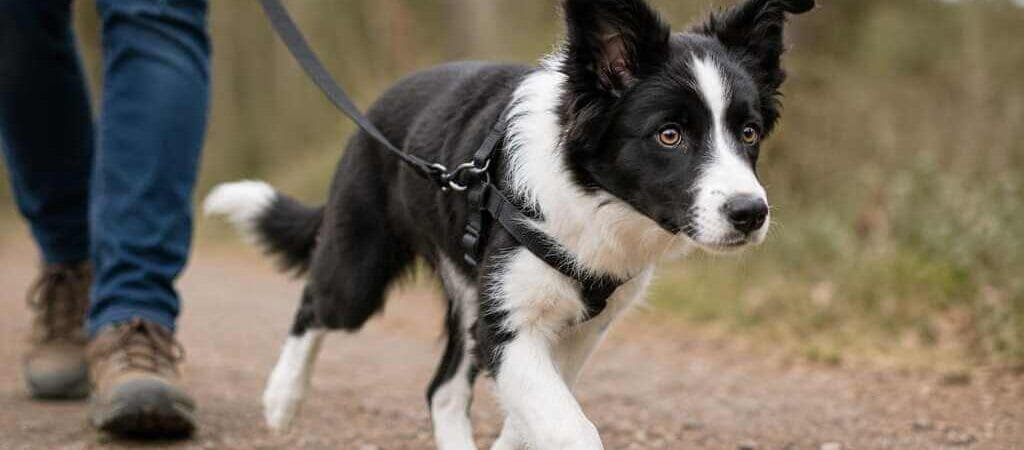
Border Collies have a reputation, and it is well earned. Ask around and you will hear the same warning again and again: get this breed’s exercise wrong and you will end up with a dog who redecorates your living room out of sheer boredom. The American Kennel Club describes Border Collies as originally bred to work all day herding livestock, which is exactly why so many new owners underestimate what proper border collie puppy exercise actually requires, often before the puppy has even come home.
Here is the part that surprises a lot of people: the answer is not simply “more.” A Border Collie puppy’s joints are still developing, and this breed in particular carries a reputation for pushing themselves harder than is good for them. Getting the balance right matters just as much as getting the amount right.
Quick answer: Structured exercise for a Border Collie puppy should stay light, roughly 5 minutes per month of age, up to twice a day, until they are close to 12 months old. Free play and mental stimulation matter just as much as physical exercise, especially for a breed built to think as much as move.
Border Collie Puppy Exercise Chart by Age
Use this chart as a starting point for structuring border collie puppy exercise at each stage, keeping in mind that every dog develops a little differently.
| Age | Recommended Exercise |
|---|---|
| 8-12 weeks | Free play only, no structured walks yet |
| 3 months | About 15 minutes of structured exercise, up to twice daily |
| 4 months | About 20 minutes, up to twice daily |
| 6 months | About 30 minutes, up to twice daily |
| 8-12 months | Gradually building toward 45-60 minutes total daily |
| 12 months and older | Structured exercise can increase more meaningfully, with full adult activity still a ways off |
The 5-Minute Rule (and Why It Is Not the Whole Story)
The most common guideline you will find for border collie puppy exercise is the 5-minute rule: about 5 minutes of structured walking per month of age, twice a day, until your puppy is fully grown. It is a reasonable starting point, and most vets and trainers still recommend it.
But here is where Border Collies genuinely differ from a lot of other breeds. Owners who follow the 5-minute rule to the letter and stop there sometimes end up with a puppy who is under-stimulated rather than well cared for. This breed was built to work long hours in a field, using their brain as much as their legs, and a short walk alone rarely scratches that itch.
That does not mean the rule is wrong. It means physical exercise is only half of what a Border Collie puppy actually needs.
Why Border Collies Need More Mental Stimulation Than Most Breeds
Border Collies were bred for one job above all else: reading livestock, making split-second decisions, and staying locked in for hours at a time. That intelligence and drive do not switch off just because your puppy is only a few months old.
A tired body and a bored brain can look surprisingly similar from the outside, but they lead to very different outcomes. A physically tired puppy settles down. A mentally under-stimulated Border Collie puppy is far more likely to start chewing furniture, obsessively chasing shadows or light reflections, or barking at nothing in particular just to have something to do.
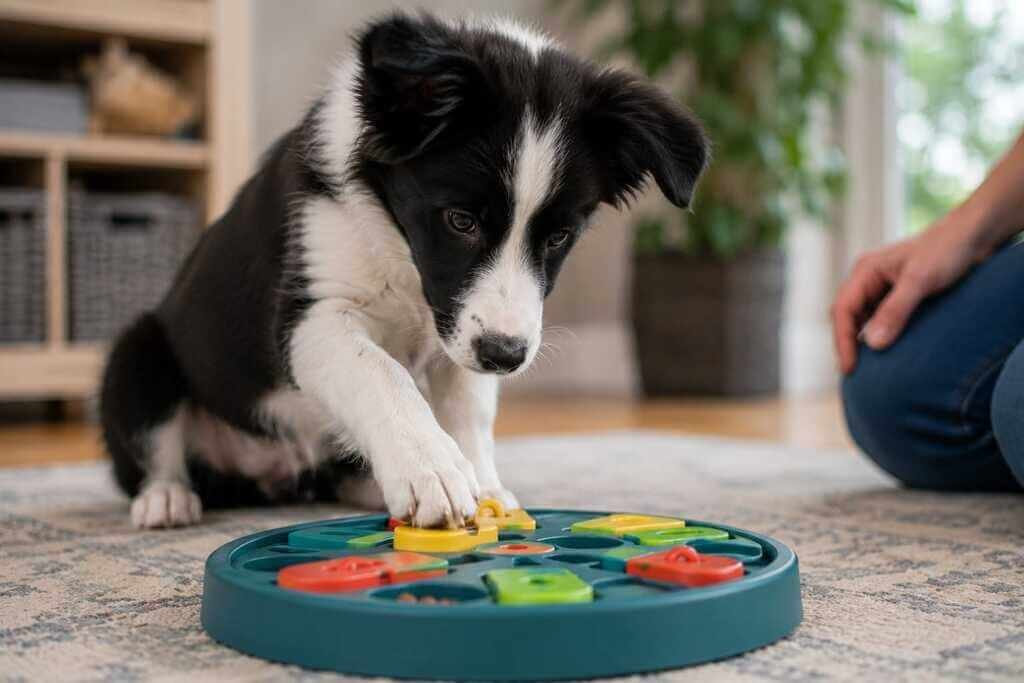
Short training sessions, puzzle feeders, scent games, and simple problem-solving toys go a long way here. Ten focused minutes of “find the treat” or basic obedience work can tire out a Border Collie puppy in a way that twenty minutes of aimless walking never will.
Why Over-Exercising a Border Collie Puppy Is Risky
Border Collie puppies have fragile, still-developing bones and joints, and most vets recommend keeping structured exercise conservative until somewhere around 12 months old. The VCA Animal Hospitals notes that repetitive stress on growing joints during a puppy’s development window can contribute to orthopedic problems later in life, which is part of why this guidance leans cautious. This is actually a bit more conservative than the guidance for some other large breeds, largely because Border Collies tend to have so much drive that they will keep going well past the point they should stop.
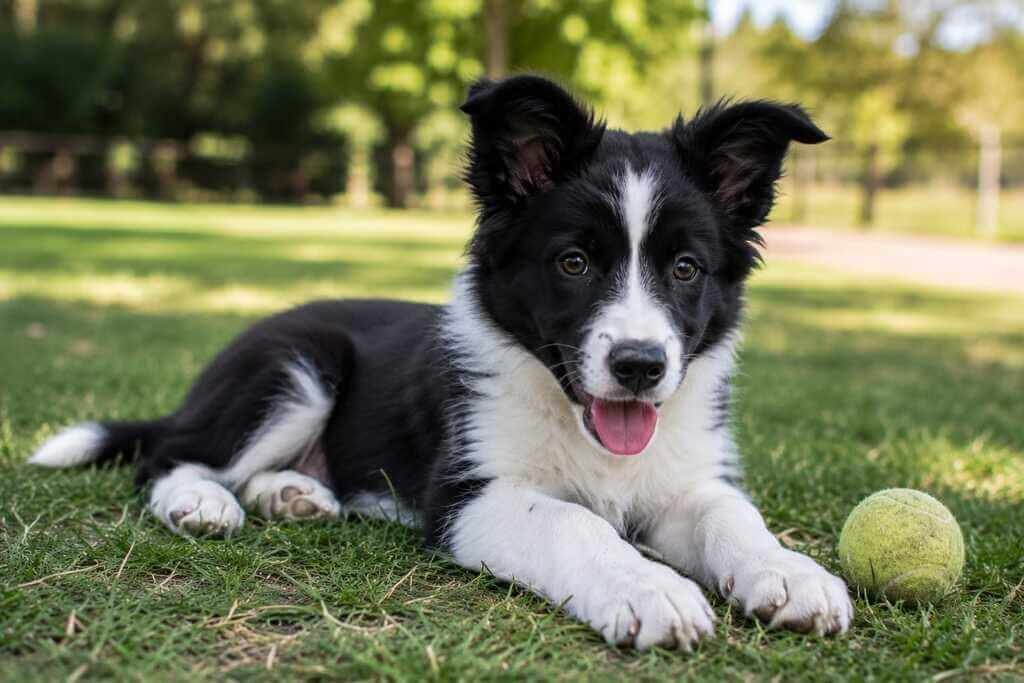
That enthusiasm is exactly the problem. Left to their own devices, a Border Collie puppy will often push through fatigue chasing a ball or trying to herd anything that moves, which puts real strain on joints that are not ready for it yet.
A few things worth avoiding until your puppy is closer to a year old:
- Repetitive high-speed fetch, especially on hard ground
- Long hikes or runs alongside a bike
- Jumping on and off furniture or in and out of vehicles
- Intense, extended herding-style play before their body is ready for it
Best Low-Impact Activities for a Growing Border Collie Puppy
Plenty of activities let a Border Collie puppy burn mental and physical energy without overloading their joints.
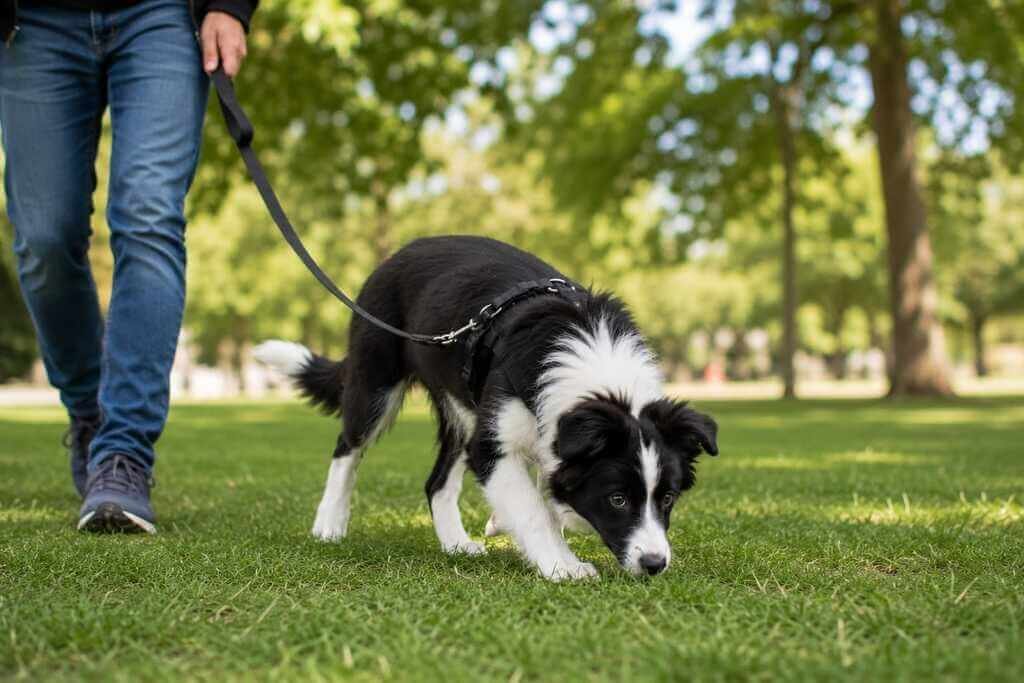
- Short training sessions: Five to ten minutes of basic obedience, several times a day, taps directly into this breed’s need to work
- Sniff walks: Slow, exploration-led walks that tire out the brain as much as the body
- Puzzle feeders and scent games: Genuinely effective for a breed this intelligent, and far lower impact than physical play
- Gentle, controlled fetch on soft ground: Short sessions on grass rather than pavement or concrete
- Supervised play with a calm, appropriate playmate: Helps burn energy without the intensity of solo herding-style chasing
Signs Your Puppy Has Had Enough
Border Collies are notorious for not knowing when to quit, which means it is on you to notice the signs before they push too far.
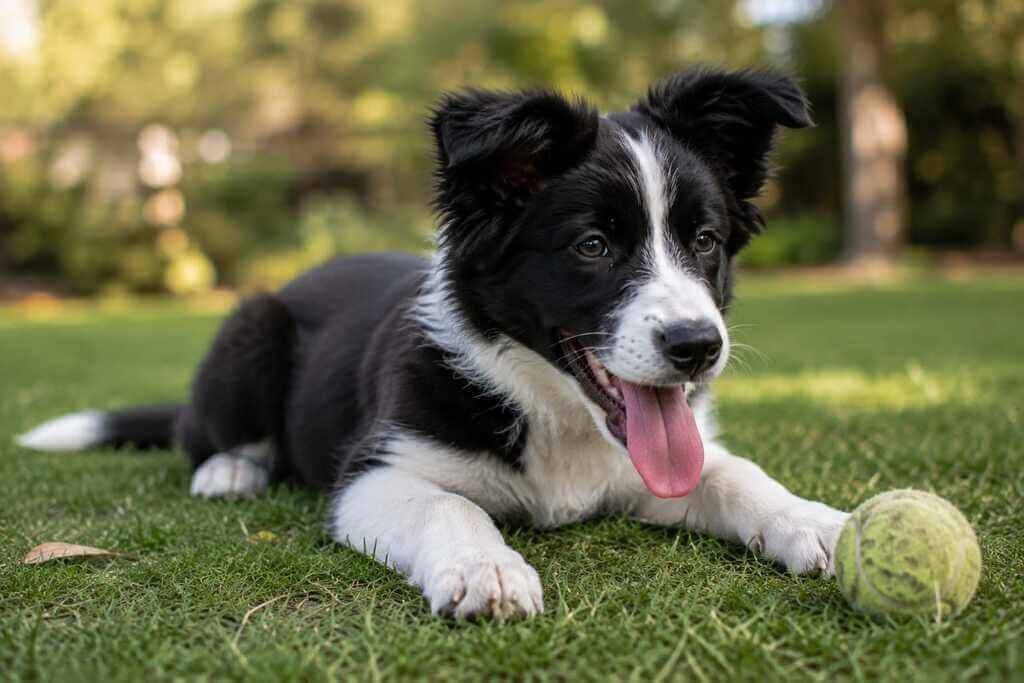
- Slowing down or lagging behind partway through a walk
- Heavy panting that does not settle quickly once you stop
- Stumbling, favoring a leg, or looking generally less coordinated than usual
- A sudden drop in enthusiasm for something they were just excited about
If you notice any of these, it is time to wrap things up, even if your puppy seems to be begging for more. Their eagerness is not always a reliable guide to what their body can actually handle.
When Can You Start More Intense Exercise or Herding Work?
Most vets suggest waiting until closer to 12 months old before introducing more demanding physical activity like running, agility training, or structured herding work. This lines up roughly with when growth plates are further along in closing and joints are better prepared to handle repetitive impact.
Every puppy develops a little differently, so it is worth checking with your vet before ramping things up, especially if you are planning to get into a sport like agility or flyball down the line.
If you already have experience with another high-energy breed, our How Much Exercise Does a Labrador Puppy Need? guide covers a similar growth-stage approach, though Border Collies generally need even more mental engagement layered on top of the physical side. For a broader look at exercise needs once your dog reaches adulthood, our Dog Exercise Routine Guide is a useful next stop. Also Related Article: Best Dog Breeds For Families
Frequently Asked Questions
How much exercise does an 8-week-old Border Collie puppy need?
This is often the first border collie puppy exercise question new owners have, and at 8 to 12 weeks old, free play is enough. Structured walks are not necessary yet, and pushing exercise this early carries real risk to developing joints.
What is the 5-minute rule for Border Collie puppies?
It is a guideline suggesting about 5 minutes of structured exercise per month of age, up to twice a day, until your puppy is close to fully grown.
Do Border Collie puppies need more exercise than other breeds?
Not necessarily more physical exercise, but they typically need significantly more mental stimulation than average, which is often the missing piece when a Border Collie puppy seems restless despite regular walks.
Can too much exercise hurt a Border Collie puppy?
Yes. Over-exercising during the growth window can strain developing joints and contribute to problems later in life, and Border Collies are especially prone to pushing past their own limits.
When can I start running or doing agility with my Border Collie?
Most vets recommend waiting until closer to 12 months old, once growth plates are further along in closing and joints are better prepared for higher-impact activity.
How do I tire out a Border Collie puppy without over-exercising them?
Lean on mental work like short training sessions, puzzle feeders, and scent games alongside light physical activity. A tired brain often does more than a tired body at this age.
Final Takeaway
Getting border collie puppy exercise right is less about hitting a specific number and more about balancing physical activity with the mental work this breed genuinely needs. Follow the 5-minute rule as a baseline, but do not stop there, since a Border Collie’s brain needs just as much of a workout as their legs.
Protect those developing joints now, and you will have a dog who is ready for everything from long hikes to backyard agility once they are actually grown enough to handle it.
Author Bio
David Jason is the founder of My Pet Care Tips and writes practical, research based guides to help pet owners raise healthier, happier dogs and cats. His content focuses on clear, beginner friendly advice backed by trusted veterinary resources and real world pet care best practices.