

If your Cavapoo has Cavalier King Charles Spaniel in their background, there is one health topic worth understanding early. Cavapoo mitral valve disease risk is real. It comes directly from the Cavalier side of this cross.
This is not meant to alarm you. It is meant to help you make informed choices. Understanding the risk helps you ask the right questions and know what to watch for as your dog ages.
Quick answer: Mitral valve disease is a heart condition. It affects a valve that keeps blood flowing correctly through the heart. Cavalier King Charles Spaniels have an unusually high rate of this disease. Cavapoos inherit some of that risk. Regular veterinary checkups, including heart monitoring as your dog ages, are the best way to catch and manage it early.
What Is Mitral Valve Disease?
Mitral valve disease is sometimes called myxomatous mitral valve disease, or MMVD. It involves gradual deterioration of the mitral valve inside the heart. As the valve weakens, some blood leaks backward with each heartbeat instead of flowing correctly.
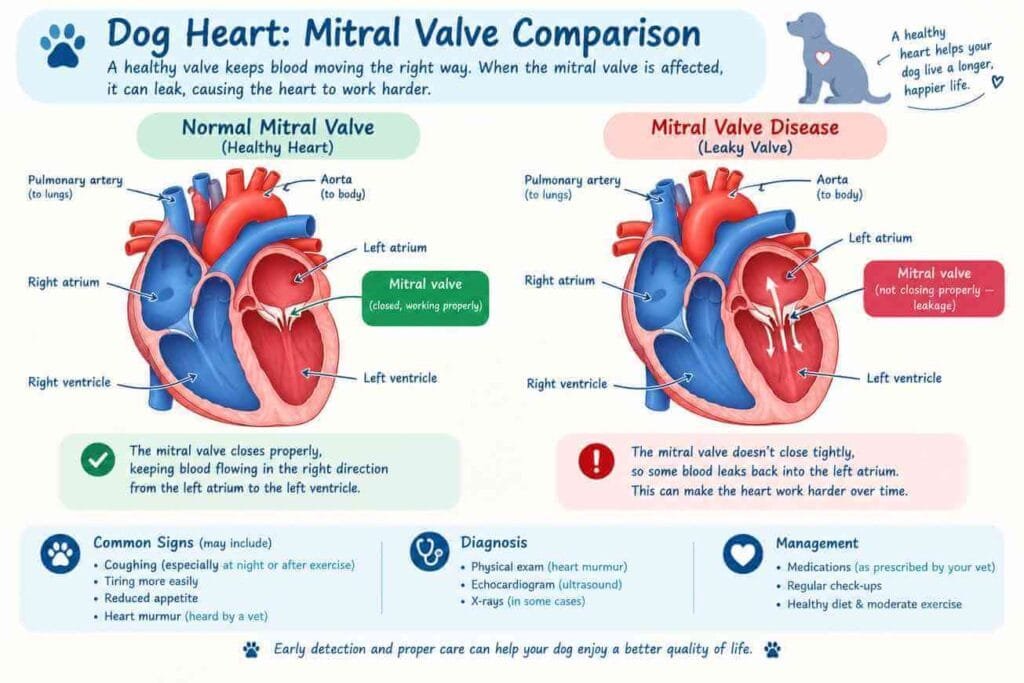
Over time, this backflow can cause the heart to enlarge. The heart also has to work harder than it should. The American Veterinary Medical Association recognizes this as the most common acquired heart disease in dogs overall. Certain breeds face a dramatically higher risk than others.
Why Are Cavapoos at Risk for Mitral Valve Disease?
The Cavalier King Charles Spaniel side of this cross carries the answer. Research has consistently shown that Cavaliers develop mitral valve disease at a much higher rate than most other breeds. It also tends to show up earlier in life for this breed.
Cavapoos are a direct cross involving this breed. That means they inherit some portion of the genetic risk. The exact degree varies by individual dog. Veterinary cardiologists take the connection to cavapoo mitral valve disease seriously, and they study it specifically in this cross.
How Common Is Mitral Valve Disease in Cavapoos?
Exact numbers for Cavapoos are harder to pin down than for purebred Cavaliers. Cavapoos are a mixed breed. They do not have the same large-scale health tracking as purebred dogs.
The picture on the Cavalier side is well established, though. Studies on Cavalier King Charles Spaniels show the condition can affect a significant portion of the breed by middle age. Prevalence climbs even further in older dogs. A Cavapoo carries Cavalier genetics, so this elevated risk carries over to some degree. The exact percentage for mixed-breed dogs is less precisely studied. This is exactly why cavapoo mitral valve disease awareness matters, even when your puppy shows no signs of trouble.
Signs of Mitral Valve Disease to Watch For
Early mitral valve disease often shows no obvious symptoms. This is exactly why routine vet visits matter so much. As the condition progresses, a few signs may become noticeable.

- A heart murmur, which your vet can detect during a routine physical exam
- Coughing, particularly at night or after lying down
- Reduced energy or reluctance to exercise as much as usual
- Rapid or labored breathing, even at rest
- Fainting or collapse in more advanced cases
None of these signs are something to diagnose on your own. They are reasons to schedule a vet appointment. Do not wait and see.
How Is Mitral Valve Disease Diagnosed?
Diagnosis is a job for your veterinarian. It is not something to assess from home. The VCA Animal Hospitals explains that a vet typically starts with a physical exam. They listen for a heart murmur through a stethoscope. Depending on what they find, they may recommend further testing like chest X-rays or an echocardiogram.

Regular wellness exams matter even when your dog seems perfectly healthy. They give your vet the chance to catch subtle changes early. This matters enormously with a condition that can progress silently before symptoms become obvious.
Can Mitral Valve Disease Be Prevented in Cavapoos?
There is no guaranteed way to prevent mitral valve disease entirely. Genetics play the dominant role. That said, a few things are within your control.
Choose a breeder who screens their breeding dogs for heart health. This includes the Cavalier lines used in the cross. Doing so reduces the odds of passing along the highest-risk genetics. Maintaining a healthy weight throughout your dog’s life also reduces unnecessary strain on the heart. Staying current on regular veterinary checkups gives you the best chance of early detection if the disease does develop.
Living With a Cavapoo at Risk for Mitral Valve Disease
A cavapoo mitral valve disease risk does not guarantee your dog will develop the condition. It also does not mean your dog cannot live a full, happy life either way. Many dogs with early-stage disease show no symptoms for years. They continue their normal daily activities without issue.
The key is partnership with your vet. Stay consistent with checkups. Pay prompt attention to any new symptoms. Follow your vet’s specific monitoring plan. These steps give your dog the best possible outcome, whatever their individual risk turns out to be.
Does Mitral Valve Disease Affect Cavapoo Lifespan?
This is a fair question, and it deserves an honest answer. In Cavalier King Charles Spaniels, mitral valve disease is a leading factor in shortened lifespan for the breed. The condition can progress to heart failure in some affected dogs.
Cavapoos are a cross rather than a purebred Cavalier, though. They generally benefit from what breeders call hybrid vigor. This broader genetic pool can sometimes reduce the severity or timing of inherited conditions compared to the purebred parent line. This does not eliminate the cavapoo mitral valve disease risk. It is one reason many Cavapoos live full, healthy lives well into their teens with proper veterinary care.
Questions to Ask Your Breeder About Heart Health
A few direct questions help you understand what you are working with before choosing a puppy.
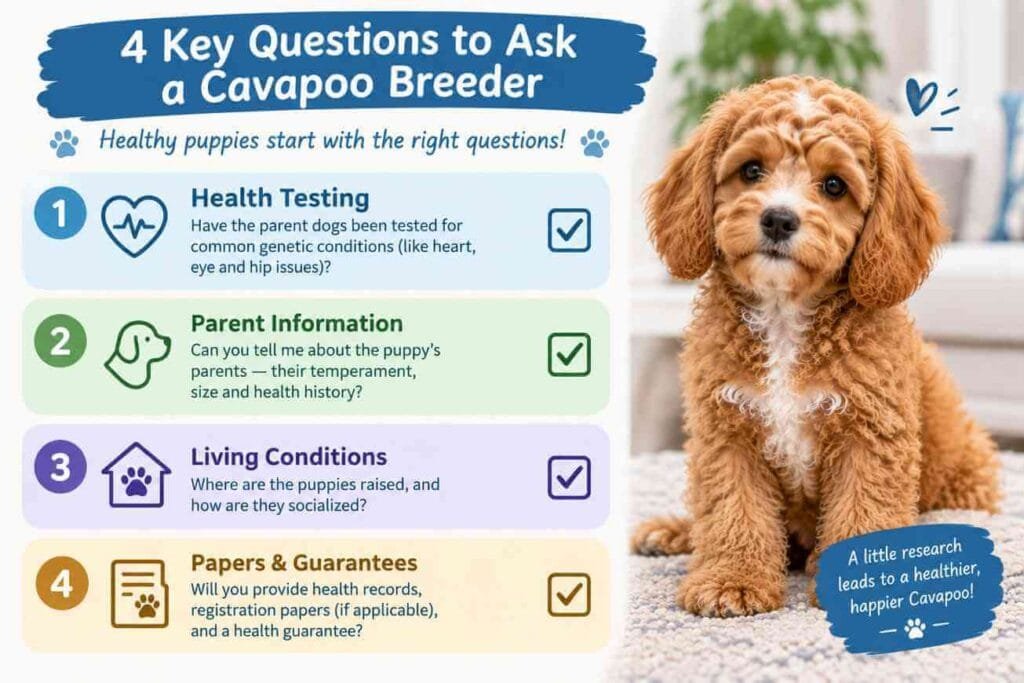
- Have both parent dogs been screened for heart murmurs by a veterinarian?
- Is there a family history of early-onset heart disease on either side?
- Can you provide documentation of any cardiac testing performed?
- What breed clubs or health testing programs does the breeder participate in?
A breeder unwilling or unable to answer these questions is worth a second thought. This risk is well-documented on the Cavalier side of the cross, so a responsible breeder should know their dogs’ history.
Frequently Asked Questions
What is mitral valve disease in dogs?
It is a progressive condition where the mitral valve inside the heart weakens. Blood leaks backward with each heartbeat instead of flowing in the correct direction.
Are all Cavapoos guaranteed to develop heart disease?
No. Cavapoos carry elevated risk due to their Cavalier King Charles Spaniel heritage. This does not mean every individual dog will develop the condition.
What are the early signs of mitral valve disease?
Early stages often show no visible symptoms at all. A vet typically detects the first sign, a heart murmur, during a routine physical exam.
Can Cavapoo mitral valve disease be treated?
Management approaches exist and can help dogs live comfortably. Treatment decisions depend entirely on your dog’s specific diagnosis. Always let your veterinarian guide this decision.
How often should my Cavapoo see a vet for heart checks?
Follow your vet’s specific recommendation. This typically includes a heart listen during routine annual or biannual wellness exams, with more frequent monitoring if concerns arise.
Should I avoid getting a Cavapoo because of heart disease risk?
That is a personal decision best made with full information. Choose a breeder who screens for heart health. Commit to regular veterinary care throughout your dog’s life. These are the most meaningful steps you can take either way.
Final Takeaway
Cavapoo mitral valve disease risk is a real, well-documented part of owning this breed. It comes from the Cavalier King Charles Spaniel side of the cross and it’s not a reason to panic. It is a reason to choose a health-conscious breeder and stay consistent with veterinary checkups throughout your dog’s life.
If you are still deciding on the right size Cavapoo for your household, our Cavapoo Puppy Size guide covers what to expect. Our general guide to Common Pet Health Problems covers broader signs worth watching for across breeds. Our complete Cavapoo Puppy: Complete First-Year Guide ties everything together.
Note: This article is for general education. It is not a substitute for veterinary diagnosis or advice. Always consult your veterinarian with specific concerns about your dog’s heart health.
Author Bio
David Jason is the founder of My Pet Care Tips. He writes practical, research based guides to help pet owners raise healthier, happier dogs and cats. His content focuses on clear, beginner friendly advice backed by trusted veterinary resources and real world pet care best practices.