
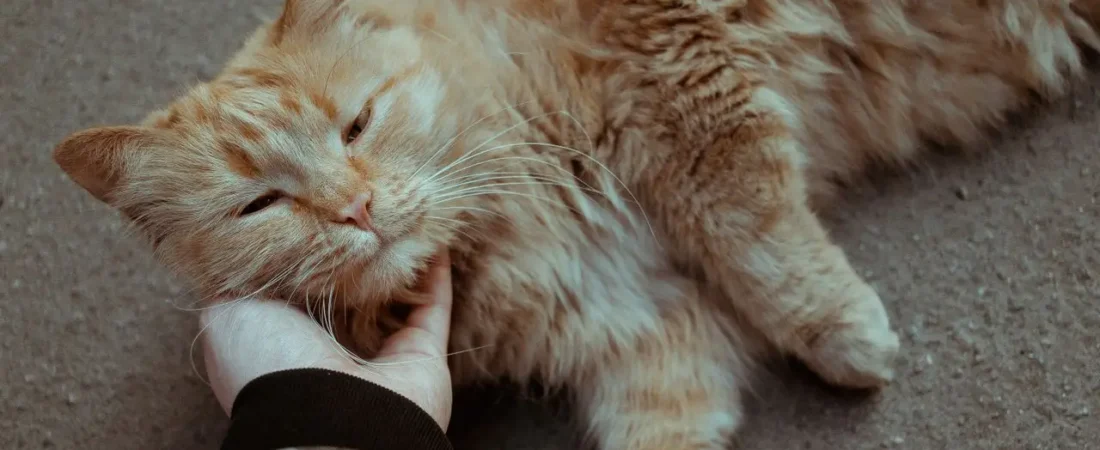
Introduction:
You feed your cat every morning. You clean the litter box. You bought him three different toys that he immediately ignored in favor of the cardboard box they came in.
But does he actually love you back?
Luna would sit on the opposite end of the couch for months after I brought her home. No cuddles. No purring. Just long suspicious stares from across the room. I genuinely wondered if she liked me at all.
Then one evening she walked over, pressed her forehead against my cheek, and settled into my lap for the first time.
That was the moment I realized I had been looking for the wrong signs entirely.
The signs your cat actually loves you are real and consistent. They just look nothing like the way a dog expresses affection. This guide breaks down all twelve clearly so you never have to wonder again.
Why Cats Show Love Differently Than Dogs
Dogs evolved alongside humans as social pack animals. Affection for them is loud, physical, and immediate.
Cats evolved as solitary hunters. In the wild, vulnerability meant danger. So cats express deep trust and love in subtle, careful ways that most owners simply do not recognize.
A cat that tolerates your presence is being polite. A cat that seeks your presence is telling you something much more meaningful.
12 Clear Signs Your Cat Actually Loves You
1. Slow Blinking — The Cat I Love You
If your cat looks at you and slowly closes their eyes, they are giving you the highest form of feline compliment.
In cat language, a long slow blink means total relaxation and trust. It means your cat is comfortable enough around you to close their eyes, which in the wild would leave them completely vulnerable.
Try it back. Look at your cat softly, then slowly close and open your eyes. Many cats will slow blink right back at you. It is one of the most direct ways to communicate love in a language your cat actually understands.
2. Head Bunting and Cheek Rubbing
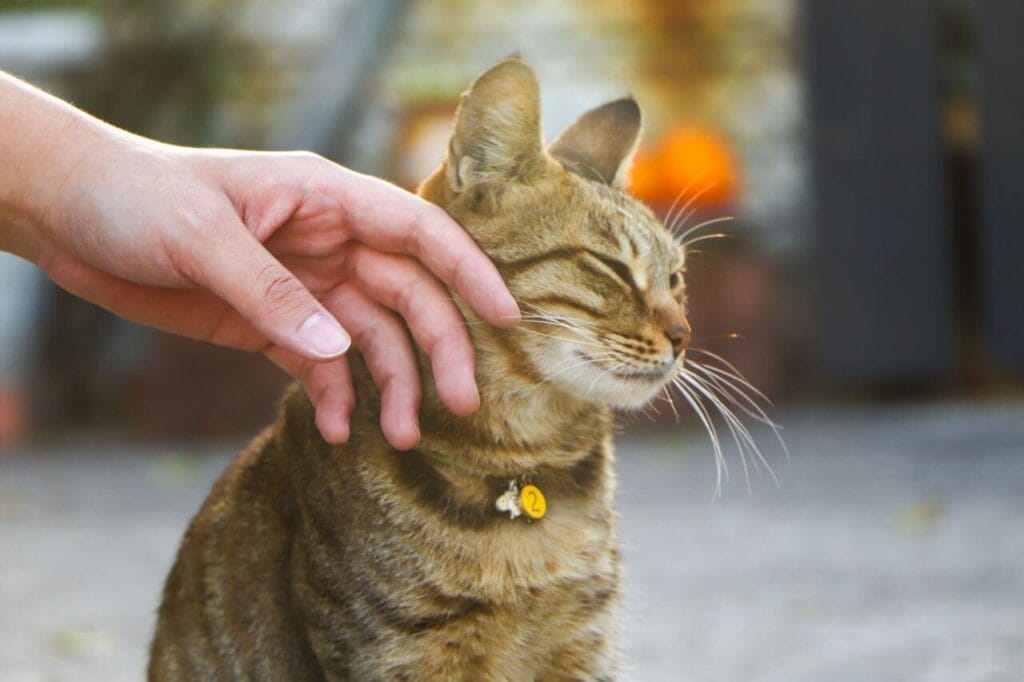
When your cat presses their forehead against your face, chin, or hand, this is called head bunting.
It is not just affection. It is claiming. Cats have scent glands on their forehead and cheeks. When they rub against you, they are marking you as theirs. In multi-cat households, cats only do this to animals and people they genuinely like and trust.
Being head-bunted by your cat is one of the clearest signs your cat actually loves you.
3. Kneading — Making Biscuits
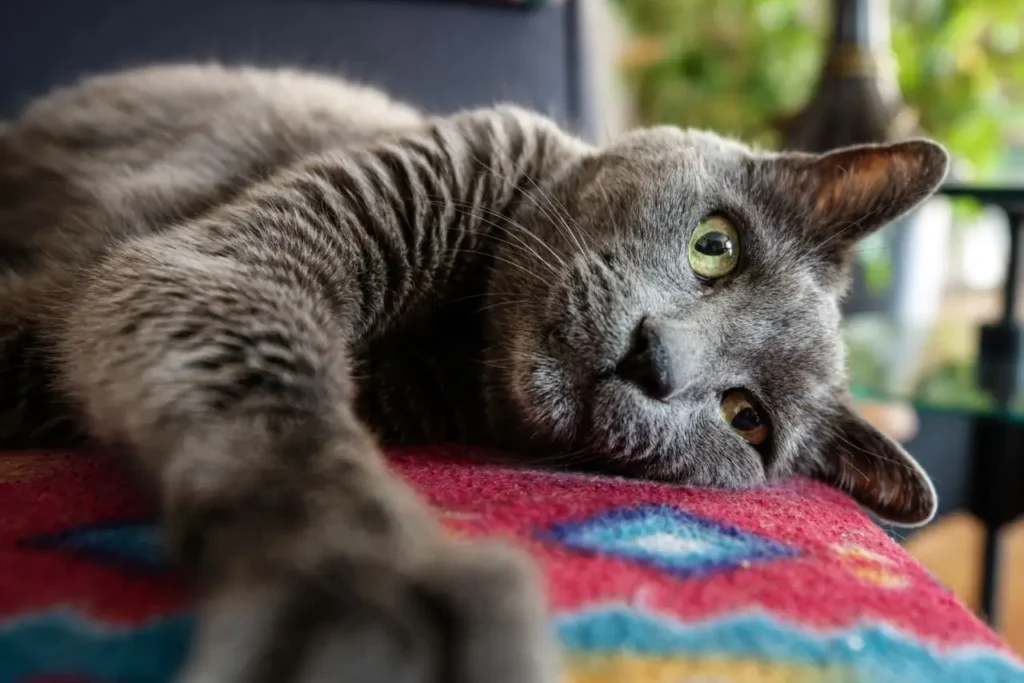
That rhythmic pushing motion your cat does with their front paws is called kneading or making biscuits.
It originates from kittenhood nursing behavior. Kittens knead their mother’s belly to stimulate milk flow. Adult cats continue this behavior exclusively in moments of deep comfort and contentment. If your cat kneads on you or near you, they associate you with the same safety and warmth they felt with their mother.
It is one of the most instinctive expressions of love in the feline world.
4. Bringing You Gifts
A dead mouse on the doormat is not pleasant. But it is genuinely loving.
Cats are hunters. When they bring you prey, real or toy-based, they are doing what mother cats do for their kittens. They are providing for you. Sharing their resources. Including you in their family unit.
Your cat is not trying to gross you out. They are trying to take care of you.
5. Sleeping on You or Near You
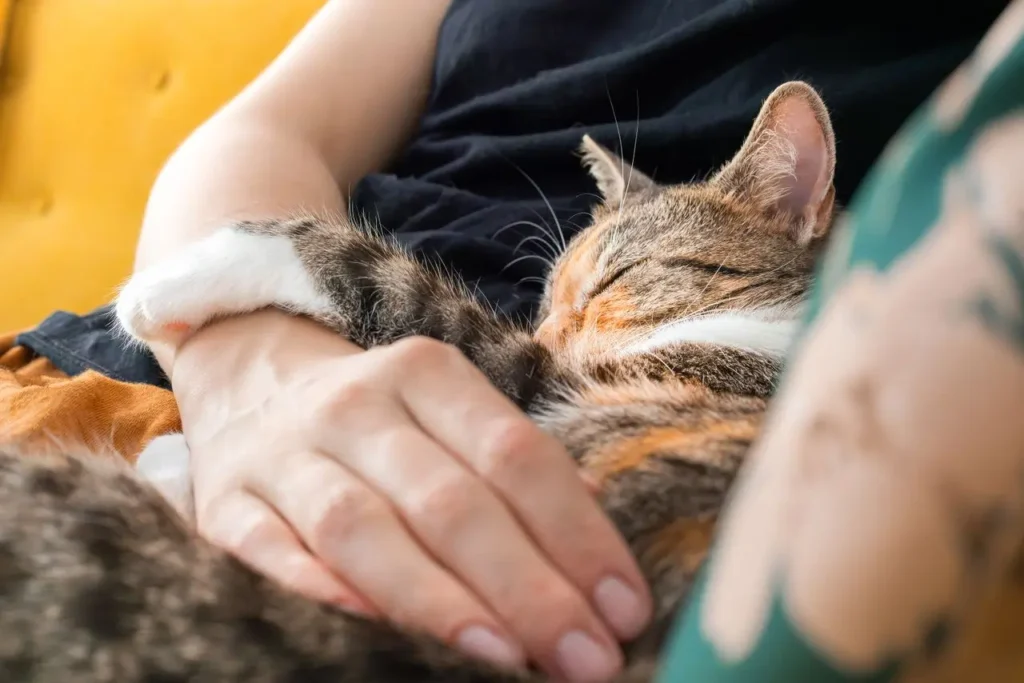
Sleep is when animals are most vulnerable.
A cat that chooses to sleep on your chest, pressed against your legs, or even just within touching distance of you is making a significant statement of trust. They feel completely safe with you. They want to be close to you even when they are unconscious.
For context, cats sleep anywhere from twelve to sixteen hours daily. Choosing to spend that time near you means you are their safe place.
6. Following You Around the House
Luna follows me to every room.
She does not always interact. Sometimes she just sits in the doorway and watches. But wherever I go, she eventually appears nearby.
Cats are naturally independent. When they choose to shadow your movements throughout your home, it is because they want to be where you are. Not because they need something. Simply because they prefer your company.
7. Tail Up and Curved at the Tip
Watch your cat’s tail when they walk toward you.
A tail held straight up with a slight curve at the tip is one of the clearest positive signals in cat body language. It is the feline equivalent of a smile and a wave. They are happy to see you, approaching you with confidence, and signaling friendly intent.
If your cat greets you at the door with a tail up, they are genuinely glad you came home.
8. Purring When You Are Around
Cats purr for multiple reasons. But purring in your presence, during calm relaxed moments, is almost always an expression of contentment and affection.
The interesting part is that cats developed their purring frequency partly as a communication tool with humans specifically. Wild cats purr far less frequently than domestic cats. The behavior intensified through generations of living alongside people who responded positively to it.
Your cat purring in your lap is as direct a statement of happiness as they are capable of making.
9. Gentle Grooming or Licking You
Cats groom other cats they are socially bonded with. This is called allogrooming.
When your cat licks your hair, hand, or arm, they are treating you like a member of their social group. It is an intimate behavior reserved for cats and people they genuinely care about.
It also means they think your hair could use a little work. But mostly it means love.
10. Showing You Their Belly
A cat that rolls onto their back and exposes their belly is showing you their most vulnerable body part.
This does not always mean they want a belly rub. In fact, many cats will grab your hand if you try. The exposure itself is the message. Total trust. Total comfort. No defenses.
Enjoy the compliment without necessarily taking it as an invitation to touch.
11. Playing With You
Play is how cats practice hunting. Choosing to play with you specifically means they see you as a trusted and enjoyable companion.
Interactive play with wands, laser pointers, or even simple rolled paper balls is one of the most direct ways cats engage with people they like. A cat who initiates play by bringing you a toy or batting at your moving feet is inviting you into their world.
For more ways to engage your cat through play, read our indoor cat care guide.
12. Waiting at the Door When You Come Home
Some cats hear the key in the lock from the other side of the apartment.
They cannot wait for you at the door because they want food. They wait because they noticed you were gone and are genuinely happy you are back. This behavior is far more common in cats than most people realize, and it mirrors the same reunion excitement that makes dogs so endearing.
How to Strengthen Your Bond With Your Cat
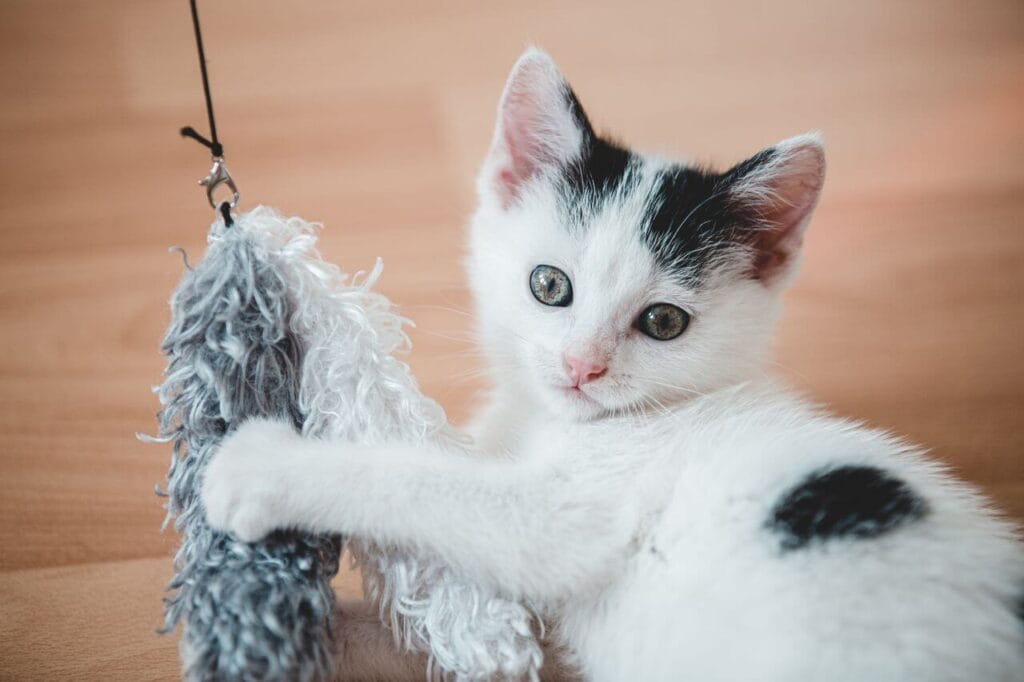
Building a stronger connection with your cat is about consistency and respecting their communication style.
- Slow blink at your cat daily. This single habit builds trust faster than almost anything else.
- Let your cat initiate contact. Never force interaction. Cats bond faster with people who allow them to approach on their own terms.
- Establish consistent routines. Feeding, play, and quiet time at predictable hours create security.
- Learn their individual signals. Every cat expresses affection slightly differently. Pay attention to your specific cat’s patterns.
- Use interactive play consistently. Two ten to fifteen minute play sessions daily deepen the bond while meeting their natural hunting needs.
For more on understanding your cat’s needs, read our complete guide on cat behavior problems solutions.
Common Myths About Cat Love
Myth: Cats are not affectionate.
False. Cats are selective about who they are affectionate with. Being chosen by a cat is actually more meaningful than being loved by a dog who loves everyone equally.
Myth: A cat that ignores you does not like you.
Not necessarily. Many cats show love simply by choosing to be in the same room. Proximity without interaction is still a choice.
Myth: Cats only care about food.
Research from Oregon State University found that most cats prefer human social interaction over food when given a choice. Your cat actually wants your company.
When Your Cat’s Behavior Might Mean Something Else
Not every behavior listed above is always about love.
Excessive vocalization, sudden clinginess, or sleeping on you only when they are normally distant can sometimes signal that your cat is unwell and seeking comfort from their safe person.
If any of these behaviors appear suddenly and dramatically, especially alongside changes in appetite, litter box habits, or energy level, a veterinary check is worth scheduling.
For guidance on recognizing health-related behavior changes, read our article on cat behavior problems solutions.
Frequently Asked Questions
What are the signs your cat actually loves you?
The clearest signs your cat actually loves you include slow blinking, head bunting, kneading in your presence, sleeping on or near you, following you between rooms, tail up greetings, bringing you gifts, and initiating grooming or play. Any combination of these behaviors indicates a deep bond.
Why does my cat slow blink at me?
A slow blink from a cat is a voluntary expression of total trust and relaxation. In feline communication, closing the eyes signals that the cat feels no threat from you. Slow blinking back at your cat actively communicates the same message and strengthens the bond between you.
Does my cat love me if he sleeps on me?
Yes. Sleep is when cats are most physically vulnerable. Choosing to sleep on you or directly beside you means your cat feels completely safe in your presence and actively wants to be close to you during rest, which is a significant expression of trust and affection.
How do cats show love to their owners?
Cats show love through physical contact like head bunting, grooming, and kneading, through proximity behaviors like following and sleeping near you, through communication behaviors like slow blinking and tail-up greetings, and through sharing behaviors like bringing gifts.
Why does my cat bring me dead animals?
This is a genuine gift-giving behavior. Mother cats bring prey to their kittens to feed them and teach them. When your cat brings you prey, they are treating you as part of their family unit and providing for you the way they would for a dependent they care for.
How can I make my cat love me more?
Slow blink consistently, allow your cat to initiate all physical contact on their own terms, maintain predictable daily routines, engage in daily interactive play, and give your cat vertical climbing space and environmental enrichment. Cats bond deeply with people who respect their communication and provide both safety and stimulation.
Final Thoughts
Luna presses her forehead against my face every morning now.
She was not cold or unloving in those early months. She was simply learning whether I was trustworthy enough to love. Once she decided I was, she committed completely.
Cats do not love easily. But when they do love you, they show it in a dozen quiet, consistent ways every single day.
Now you know exactly what to look for.
Which sign does your cat show the most? Tell me in the comments below. I read every single one and would love to know how your cat says I love you.
Also read: Indoor Cat Care Guide and cat grooming tips at home and Cat Behavior Problems Solutions
Author Bio
Written by David Jason
Founder of My Pet Care Tips
Cat owner with over 8 years of
hands-on experience learning to
read feline body language and
building deep bonds with cats
of all personalities.
Last Updated: June 18, 2026
Sources: Oregon State University
Human-Animal Interaction Research,
Cornell Feline Health Center,
International Cat Care
Note: Sudden behavior changes
always warrant a veterinary check
to rule out underlying health causes.