

Watching your puppy back away, hide, or tremble when approaching other dogs can feel discouraging, especially when you see other puppies happily playing together. A puppy scared of other dogs is more common than you might think, and in most cases, this fear is completely manageable with patience and the right approach.
It is easy to assume something has gone wrong—that you missed the socialization window, or that your puppy has a permanent behavioral problem. The reality is far more nuanced. Many puppies go through phases of caution around unfamiliar dogs, and even puppies who show significant fear during certain developmental periods often grow into confident, social adult dogs with the right support. Some puppies are simply born with more cautious temperaments, which is not a flaw but rather a personality trait that requires understanding and patience.
The key is understanding why your puppy feels afraid, recognizing whether the fear is part of normal development, and knowing exactly how to build confidence safely without forcing your puppy into situations that make the anxiety worse. This guide covers all of that, plus when it’s time to call in a professional trainer or veterinarian.
Why Is My Puppy Scared of Other Dogs?
A puppy scared of other dogs has several possible explanations, and understanding the root cause helps you respond in the most effective way.
Lack of Early Socialization
Puppies have a critical socialization window, roughly between 3 and 14 weeks old, when exposure to new dogs, people, and environments shapes how confident they feel later. This window is not an absolute cutoff—puppies can still learn and build confidence after 14 weeks—but early positive experiences make a significant difference in how easily puppies develop confidence.
A puppy who missed positive experiences with other dogs during this window often develops fear more easily, since they did not build a baseline of “other dogs are safe and predictable.” Without that early foundation, unfamiliar dogs can feel unpredictable and potentially threatening, triggering a defensive fear response.
Negative Experience
Even a single bad interaction—being snapped at, tackled roughly, or startled by another dog—can create lasting fear. This is especially true for sensitive puppies or those who haven’t had many positive dog-to-dog experiences to balance it out and show them that not all dogs behave that way.
A puppy might be bitten by an older dog, roughly corrected by a mother figure, or simply startled by a dog running directly at them. These experiences can feel traumatic from a puppy’s perspective, and without intervention, the fear can persist and generalize to all dogs rather than just the specific situation.
Genetics and Temperament
Some puppies are simply born more cautious or anxious than others. Shy or sensitive temperaments are often inherited traits, and a puppy scared of other dogs might have a naturally nervous disposition that requires extra patience to overcome. This is not something you did wrong—it is simply your puppy’s baseline personality.
Just as some humans are naturally introverted while others are naturally outgoing, some puppies are born confident while others are born cautious. Understanding that your puppy’s caution might be temperament-based rather than a learned behavior helps you approach training with realistic expectations and appropriate patience.
Fear Periods
Puppies go through developmental fear periods, typically around 8 to 11 weeks and again at 6 to 14 months, when they naturally become more cautious about unfamiliar things, including other dogs. This is completely normal and usually temporary, representing a developmental stage rather than a permanent personality trait.
During these windows, even previously confident puppies might suddenly seem afraid of things they encountered without issue before. This fear period serves an evolutionary purpose it makes puppies more careful and less likely to run into genuinely dangerous situations. Understanding that your puppy’s fear might be developmental rather than a sign of deeper anxiety helps you stay patient during these phases. For more details read our complete guide on Puppy Fear Periods: What to Expect at 8–11 Weeks.
Illness or Discomfort
A puppy who is unwell, in pain, or uncomfortable sometimes reacts with fear to situations they would normally handle fine. Health issues can temporarily increase anxiety around other dogs, and pain or illness can make a puppy feel vulnerable and defensive.
If your puppy’s fear appeared suddenly or seems disproportionate, checking with your veterinarian to rule out underlying health issues is worth doing before assuming it is purely behavioral.
Lack of Confidence in Their Owner
Puppies take emotional cues from their owners. If you are nervous or tense when approaching other dogs, your puppy picks up on that energy and may mirror your anxiety, creating or reinforcing fear. This is not judgment—it is simply how puppies navigate the world by reading their owner’s confidence level as a guide.
Is It Normal for Puppies to Be Scared of Other Dogs?
Yes, it is completely normal for puppies to show some caution or wariness around unfamiliar dogs, particularly during their natural fear periods. Most puppies are naturally hesitant when meeting new dogs for the first time, which is actually a healthy protective instinct.
What separates normal caution from problematic fear is whether your puppy gradually becomes more comfortable with repeated positive exposure, or whether the fear persists and intensifies. A puppy scared of other dogs during their first week of socialization might be showing normal hesitation, while one who remains terrified after weeks of calm, positive experiences might need more structured help.
Common Signs Your Puppy Is Scared of Other Dogs

Recognizing fear signals helps you know when to step back and slow down, rather than pushing your puppy into situations that worsen anxiety.
Body Language Signs:
- Tail tucked tightly between hind legs
- Ears pinned back or lowered
- Crouching or attempting to hide behind you
- Stiff, tense body posture
- Avoiding eye contact with the other dog
- Freezing or becoming very still
- Trembling or shaking
Behavioral Signs:
- Pulling away or refusing to approach another dog
- Whining, whimpering, or crying
- Excessive barking
- Attempting to escape or run away
- Lunging without making contact (defensive reaction to fear)
- Excessive yawning or lip licking (stress signals)
How to Help Your Puppy Gain Confidence Around Dogs
Start With Distance and Control
Begin by exposing your puppy to other dogs from a safe distance where they feel calm. This might mean sitting across the park watching dogs play from far away, rather than walking directly into a dog park. Gradually decrease distance over weeks as your puppy shows comfort at each stage.
Use Positive Reinforcement
Reward calm, brave behavior heavily. High-value treats, praise, and toys should appear whenever your puppy looks at another dog without showing extreme fear. This teaches their brain that other dogs mean good things happen.
Practice Calm Exposure
Repeated calm exposure to the same friendly dogs helps more than occasional exposure to many different dogs. One calm, predictable dog companion your puppy sees regularly often does more for confidence than chaotic play dates with multiple unfamiliar dogs.
Avoid Forcing Interaction
Never push your puppy to interact with other dogs before they are ready. Forcing a puppy scared of other dogs directly into the situation almost always makes fear worse, not better. Let your puppy approach at their own pace.
Build Confidence in General
A puppy who is confident about other things—training, walking on leash, new environments—often transfers that confidence to dog-to-dog situations more easily. Building your puppy’s overall confidence through training and positive experiences helps reduce fear across the board.
Keep Your Own Anxiety in Check
Your puppy will sense if you are nervous or tense. Practice staying calm and confident when approaching other dogs. If you catch yourself tensing up, take a breath and consciously relax before your puppy notices.
How to Safely Socialize a Fearful Puppy
Proper socialization looks different for a puppy scared of other dogs than it does for a naturally outgoing puppy. The goal is building positive associations at your puppy’s pace, not forcing play or interaction before they are emotionally ready.
Choose Your Socialization Partners Carefully
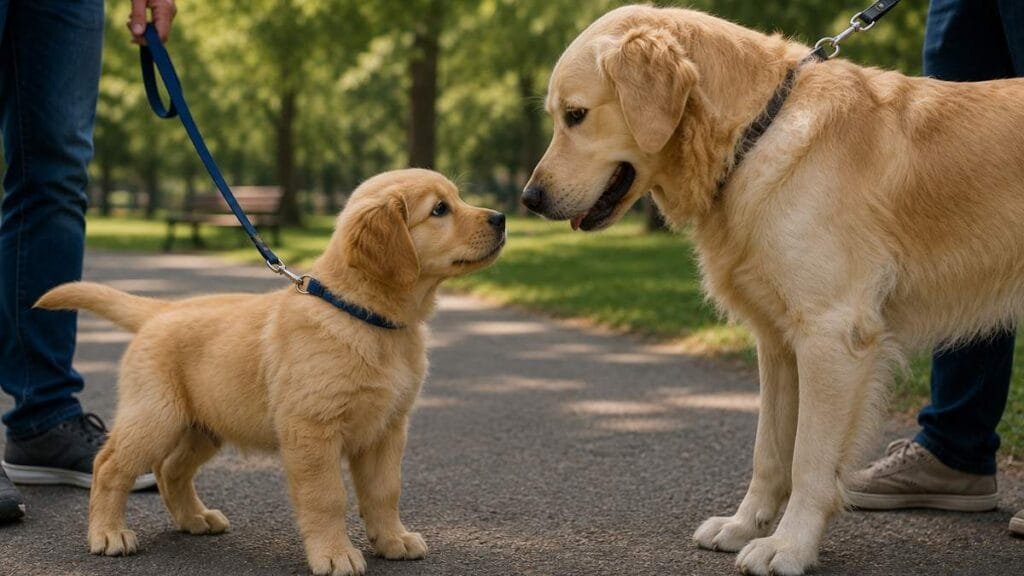
Not all dogs are good choices for a fearful puppy to interact with. Avoid large, boisterous, or overly energetic dogs in early socialization, as these can overwhelm a nervous puppy and actually worsen fear rather than help. Instead, seek out calm, patient adult dogs or other confident, gentle puppies who won’t escalate play or make direct physical demands.
The best socialization partner for a puppy scared of other dogs is typically an adult dog with a mellow temperament who ignores or gently receives puppy interaction without reciprocating intensely. Dogs who have worked with fearful puppies before, or senior dogs with low energy, often make excellent low-pressure companions for building confidence.
Use Parallel Walks
Walking your puppy beside another calm dog, with distance between them, lets them get used to the presence of other dogs without direct interaction pressure. Over time, as comfort increases, you can gradually decrease the distance between the two dogs, moving from 20 feet apart to 10 feet to 5 feet over the course of weeks.
This method works because your puppy experiences the other dog’s presence in a predictable, controlled way while moving forward with you. Movement itself can sometimes make fearful puppies feel less trapped or vulnerable than a static meeting would.
Try Treat-Based Meetings
Sit with your puppy next to another calm dog, with the dogs not directly facing each other. Have treats appear whenever the other dog is nearby, but before any direct interaction happens. This creates positive association without forcing interaction.
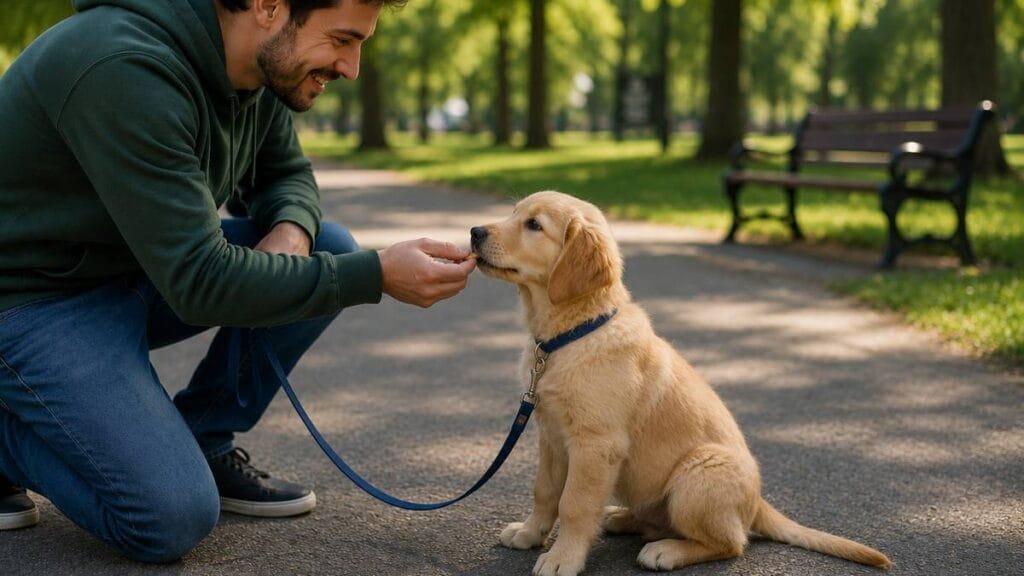
Over multiple sessions, you can gradually shift the dogs slightly closer together or adjust their positioning while continuing to reward calm behavior. The treats become evidence to your puppy’s brain that other dogs predict good things, which gradually rewires the fear response.
Avoid Overwhelm
Do not take your fearful puppy to busy dog parks or crowded dog events early in the process. These situations often backfire with fearful puppies and can worsen fear instead of helping. A chaotic environment with multiple unfamiliar dogs approaching rapidly is exactly the opposite of what a nervous puppy needs.
Instead, create controlled one-on-one meetings with calm dogs until your puppy shows consistent comfort. Only after weeks of successful calm meetings should you consider slightly larger group situations, and even then, do so gradually rather than jumping straight into unstructured play.
Training Tips to Build Your Puppy’s Confidence
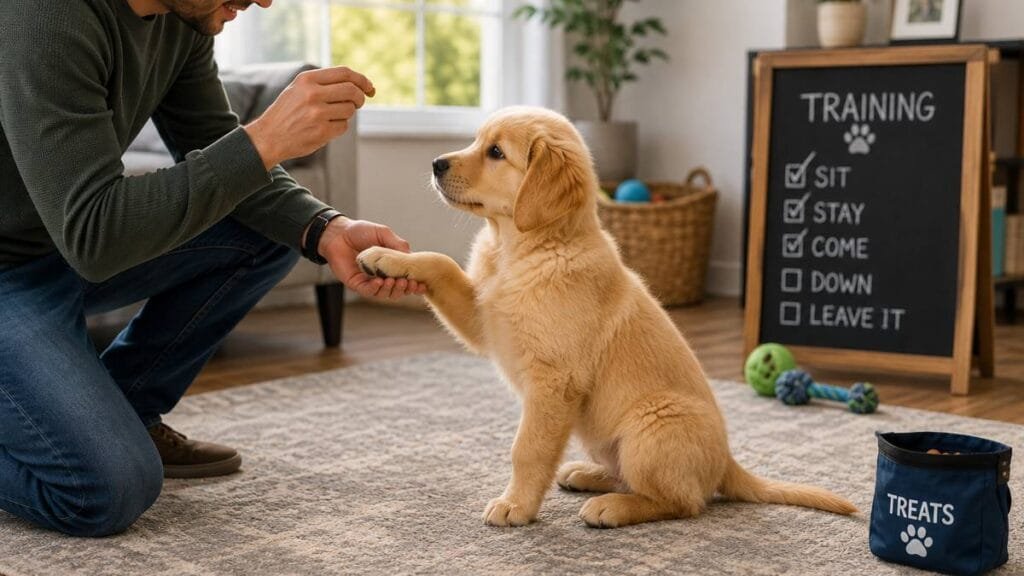
Training itself is one of the best confidence builders for puppies. A puppy who knows sit, down, leave it, and come feels more secure because they understand what is expected and receive rewards for success.
Key Training Steps:
- Master basic commands in low-pressure situations first
- Practice basic commands in the presence of calm, distant dogs
- Reward heavily for staying calm and focused on you while other dogs are nearby
- Gradually increase proximity as confidence builds
- Practice “look at me” commands to redirect focus away from other dogs if needed
Through how to train a puppy at home, your puppy learns that you provide security and guidance, which naturally increases their confidence in situations that used to scare them.
When Should You Hire a Professional Trainer?
If your puppy remains scared of other dogs after several weeks of consistent, calm exposure and positive training, or if fear is worsening despite your efforts, consulting a certified professional trainer is worth considering.
Signs It’s Time for Professional Help:
- Extreme, escalating fear despite your efforts
- Aggressive behavior arising from fear (lunging, snapping)
- Your puppy is avoiding walks or outside time due to fear
- Multiple failed socialization attempts
- Fear affecting your puppy’s overall quality of life
A trainer specializing in fearful or anxious dogs can assess your puppy’s specific situation, design a customized desensitization plan, and help you avoid accidentally reinforcing the fear.
When Should You Contact a Veterinarian?
Most cases of a puppy scared of other dogs are behavioral and improve with proper training and socialization. However, contact your veterinarian if fear is accompanied by physical symptoms or if the fear seems disproportionate to the trigger.
Red Flags Worth Discussing With Your Vet:
- Extreme panic responses or complete shutdown
- Fear that appeared suddenly after a previously confident period
- Physical symptoms like trembling, panting, or excessive drooling
- Loss of appetite or bathroom changes related to fear situations
- Signs the fear might be related to pain or illness
Frequently Asked Questions
Will my puppy grow out of this fear?
Many puppies do naturally become more confident as they mature, but not all. A puppy scared of other dogs who never has positive experiences will likely continue struggling. Confidence comes from a combination of maturity and repeated positive experiences, not time alone.
Can lack of socialization cause fear?
Yes. Puppies who miss the critical socialization window often develop fear more easily. This is why early, positive exposure to other dogs matters so much.
Is my puppy’s fear a sign of aggression?
Fear and aggression are different, though fear can sometimes lead to defensive lunging or snapping if a puppy feels cornered or overwhelmed. A puppy showing fear signals (tail tucked, ears back, hiding) is expressing fear, not aggression. Addressing the fear properly prevents it from developing into defensive aggression later.
How long does it take to build a fearful puppy’s confidence?
This varies widely. Some puppies show improvement in weeks, while others need months of consistent work. Genetics, past experiences, and how consistently you apply training all play a role.
Should I avoid other dogs entirely while my puppy is scared?
No. Complete avoidance actually makes fear worse by preventing positive experiences. The goal is controlled, calm exposure at your puppy’s pace, not avoidance.
At what age should socialization happen?
The critical window is roughly 3 to 14 weeks, but socialization continues to matter throughout puppyhood and into adulthood. A puppy scared of other dogs can still improve confidence through patient socialization at any age. For more details read our article: How to socialize a puppy: Complete Age-by-Age Checklist

Conclusion
A puppy scared of other dogs is frustrating, but it is not a permanent sentence. Most fearful puppies improve significantly with patient, consistent exposure to calm, friendly dogs combined with positive reinforcement training. The key is moving at your puppy’s pace, avoiding situations that worsen fear, and staying calm and confident yourself.
If your puppy’s fear persists despite your efforts or seems extreme, professional help is always an option and often makes a real difference. Remember that building confidence takes time, and celebrating small brave moments your puppy looking at another dog without trembling, or taking one step closer matters more than rushing toward an arbitrary goal.
Related Articles: Puppy Socialization Checklist: 100 Things to Expose Them To and How to Socialize a Puppy Before Fully Vaccinated.
According to the American Kennel Club (AKC), proper socialization during the critical puppy window is one of the most important predictors of adult dog confidence. The Certification Council for Professional Dog Trainers (CCPDT) recommends force-free, positive reinforcement methods specifically for building confidence in fearful dogs, which aligns with the training approaches outlined in this guide.
Author Bio
David Jason is the founder of My Pet Care Tips and writes practical, research based guides to help pet owners raise healthier, happier dogs and cats. His content focuses on clear, beginner friendly advice backed by trusted veterinary resources and real world pet care best practices.