

Your puppy was confident yesterday. Today they are hiding under the couch, barking at the vacuum, or shaking when a stranger walks by. This sudden shift can feel confusing and even a little scary for new owners.What you are seeing may be a puppy fear period at 8 weeks, a normal stage of development that many puppies go through. It does not mean your puppy is broken or destined to be fearful forever.
In this guide, you will learn what a fear period actually is, the common signs to watch for, how long it typically lasts, and exactly how to help your puppy through it safely. For more details read our article: How to Socialize a Puppy: Complete Age-by-Age Checklist.
What Is the Puppy Fear Period at 8 Weeks?
A fear period is a short developmental window when puppies become more sensitive to new experiences. During this stage, things that never bothered your puppy before can suddenly feel threatening.
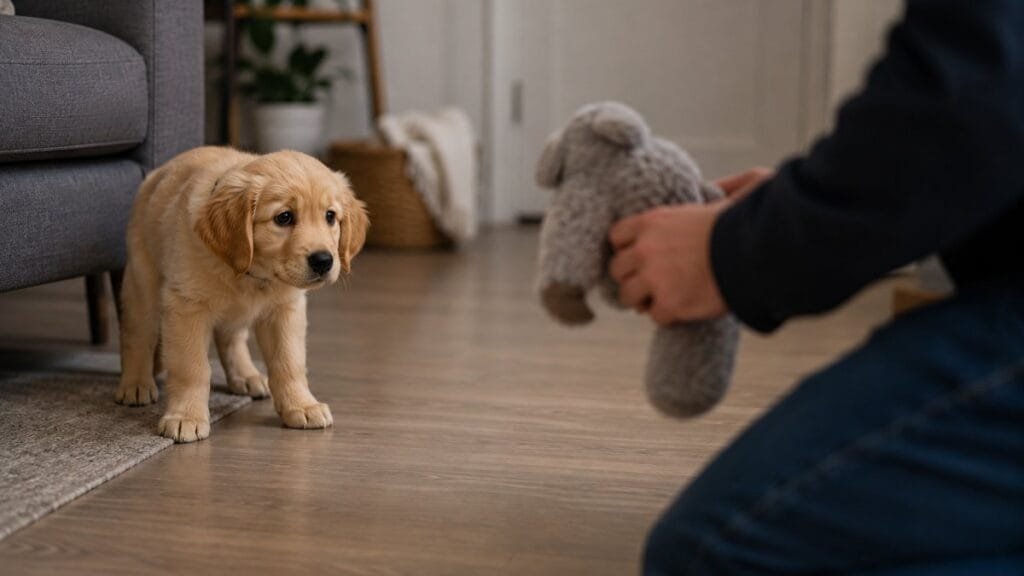
This happens because your puppy’s brain is developing quickly. Their instincts are pushing them to be more cautious, which helped wild canine ancestors avoid danger while still young and vulnerable. The American Kennel Club notes that fear periods are a recognized part of normal canine development, not a sign of a poorly bred or unhealthy puppy.
The 8-week-old puppy fear stage often overlaps with a major life change too. Many puppies leave their littermates and move to a new home right around this age. New sights, sounds, smells, and people arrive all at once, and some puppies respond with caution instead of curiosity.
It helps to separate true fear from normal adjustment. A puppy who is a little quiet during their first few days home is likely just settling in. A puppy who suddenly reacts strongly to familiar people or objects may be going through a puppy fear period.
When Does the First Puppy Fear Period Usually Happen?
Most puppies experience their first fear period somewhere between 8 and 11 weeks of age. The exact timing varies from puppy to puppy.
- 8 weeks: Often coincides with moving to a new home
- 9 to 10 weeks: A common window for the first noticeable fear stage
- 11 weeks: Some puppies show signs slightly later
Every puppy develops on their own timeline. Breed, individual temperament, and environment can all shift when the first fear period shows up and how strongly it presents.
Signs Your 8-Week-Old Puppy May Be in a Fear Period
Fear periods can look different from puppy to puppy. Watch for a noticeable change in behavior rather than a single moment of nervousness.

Hiding or Trying to Get Away
Your puppy may suddenly want to retreat to a crate, under furniture, or behind your legs. This is often their way of asking for space and safety.
Trembling, Freezing or Cowering
Some puppies freeze in place or shake when faced with something new. A lowered body, tucked tail, and stiff posture are common puppy fear signs.
Sudden Barking, Whining or Startling
A puppy in a fear stage may bark at ordinary household sounds or startle easily at movement. This is different from playful barking and usually comes with a tense body.
Avoiding People, Dogs or New Objects
Your puppy might refuse to approach a visitor, another dog, or even a new toy that would normally excite them. Avoidance is a clear signal they need more time and space.
Suddenly Becoming Nervous About Familiar Things
One of the more confusing signs is fear of something your puppy has seen many times before, like a specific chair or a family member’s hat. This is a hallmark of the puppy fear stage and usually passes with patience.
Not every fearful moment means your puppy is in a fear period. A single startled reaction to a loud noise is normal puppy behavior. A pattern of increased caution across several days is more likely tied to this developmental stage.
How Long Does a Puppy Fear Period Last?
Most fear periods last anywhere from a few days to a couple of weeks. Some puppies move through the stage quickly, while others take longer to feel confident again.
Duration depends on the individual puppy, their temperament, and how their environment is managed during this time. A calm, supportive approach usually shortens the stage. A stressful or overwhelming environment can extend it.
Resist the urge to force your puppy through the fear period in puppies quickly. Rushing exposure or pushing your puppy toward what scares them tends to backfire and can make fear stronger.
Behavior should gradually return to normal as the fear period passes. If your puppy becomes progressively braver over a week or two, that is a good sign things are on track.
Why Is My 8-Week-Old Puppy Suddenly Afraid of Everything?
This is one of the most common questions new owners ask, and there are several possible reasons your puppy suddenly scared of everyday things.
- Developmental changes: Brain and hormone shifts naturally increase caution at this age
- New home or environment: Moving away from littermates is a major life change
- Too many unfamiliar experiences at once: A flood of new sights and sounds can overwhelm a young puppy
- Overwhelming socialization attempts: Well-meaning exposure to crowds or busy places can backfire during this stage
- A negative or scary experience: A loud noise, fall, or rough handling can trigger heightened caution
- Individual temperament: Some puppies are naturally more sensitive or observant than others
Most of the time, this is simply your puppy adjusting to a big new world. Slowing down and giving them time usually resolves it.
How to Help Your Puppy Through a Fear Period
Your response during this stage matters. A calm, supportive approach helps your puppy build confidence instead of reinforcing fear.

Give Your Puppy More Distance
If something scares your puppy, increase the distance between them and the trigger. Watch their body language and let them decide when to move closer, rather than forcing an interaction.
Use Calm, Positive Exposure
Keep new experiences short and low pressure. Pair anything mildly unfamiliar with treats, praise, or a calm voice, and let your puppy continue only if they seem comfortable.
Never Force Your Puppy to Approach Something Scary
Avoid the “just get used to it” approach during a puppy fear period. Dragging, pushing, or cornering your puppy near something frightening can create a lasting negative association.
Keep Your Puppy’s Routine Predictable
A steady routine gives your puppy a sense of security while their world feels unpredictable. Try to keep feeding times, sleep schedules, potty breaks, and play sessions consistent, and check our full guide on How to Take Care of a Puppy if you want a complete daily structure to build from.
Let Your Puppy Retreat to a Safe Place
Make sure your puppy always has access to a crate, bed, or quiet corner where they feel secure. Never use this safe space for punishment, since it needs to stay a reliable place of comfort.
Puppy Fear Period vs. Puppy Socialization: What Should You Do?
A fear period does not mean you should stop socializing your puppy. It means your approach needs to shift toward quality over quantity.
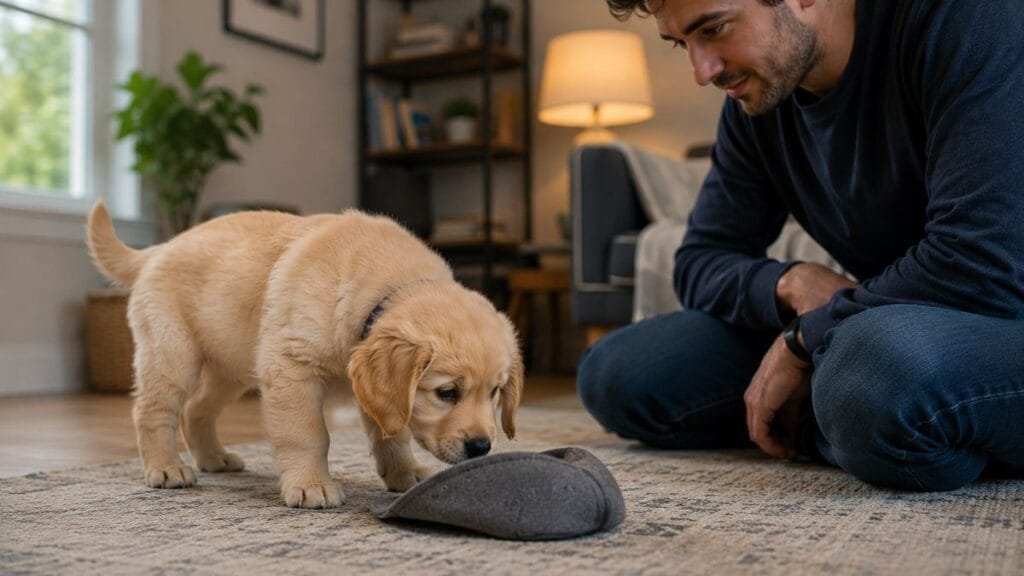
The goal of socialization was never to force interactions. It was always to build positive, low stress associations with the world. During a fear stage, that goal stays the same, but the pace slows down.
Focus on calm, positive experiences rather than crowded, high energy environments. This is a good time to avoid busy dog parks or overwhelming group settings and instead work on gentle, one-on-one exposure.
If your puppy is already showing nervousness around other dogs, our guide on Puppy Scared of Other Dogs walks through gradual, confidence-building steps you can use right now. For a broader look at safe exposure before your puppy is fully vaccinated, see How to Socialize a Puppy Before Fully Vaccinated, and our full Puppy Socialization Checklist: 100 Things to Expose Them To for ideas once your puppy is ready to build on this progress.
What Should You NOT Do During a Puppy Fear Period?
A few common mistakes can make a fear period harder on your puppy. Keep these in mind as you move through this stage together.
- Do not force your puppy toward something that scares them
- Do not punish fearful behavior like hiding, barking, or trembling
- Do not flood your puppy with overwhelming exposure to “get it over with”
- Do not mock, laugh at, or ignore your puppy’s fear
- Do not introduce too many new experiences in a single day
- Do not place a fearful puppy into uncontrolled interactions with unfamiliar dogs
When Should You Worry About Your Puppy’s Fear?
Most fear periods resolve on their own with patience and support. Some situations, however, deserve closer attention from a professional.
Fear Is Getting Worse Instead of Better
If your puppy seems more fearful each week rather than gradually improving, this is worth monitoring closely.
Puppy Cannot Settle or Function Normally
A puppy who cannot relax, eat, sleep, or engage in normal daily activities may need extra support beyond typical fear period management. If this nervousness shows up mainly when you leave the room or leave home, it may be worth reading about Dog Separation Anxiety as well, since the two can sometimes overlap.
Fear Comes With Aggression or Repeated Lunging
Fear paired with growling, snapping, or repeated lunging is different from simple avoidance and should be addressed early.
Puppy Stops Eating, Drinking or Participating Normally
Any change in appetite, water intake, or overall engagement with daily life is worth mentioning to your veterinarian.
Fear Continues Beyond the Expected Developmental Stage
If fearful behavior lasts well beyond a couple of weeks with no improvement, it may be more than a typical first fear period.
If you notice any of these patterns, talk to your veterinarian or a qualified positive reinforcement behavior professional. The American Veterinary Medical Association recommends early veterinary guidance whenever fear or anxiety starts to interfere with a puppy’s daily life. Do not assume every sudden or severe behavior change is simply a fear period without ruling out other causes.
Puppy Fear Period at 8 Weeks — Quick Action Plan
Use this simple week-long plan to support your puppy through this stage.
- Day 1: Give your puppy a calm, quiet safe space
- Day 2: Observe and note what triggers fearful reactions
- Day 3: Increase distance between your puppy and known triggers
- Day 4: Pair calm exposure to mild triggers with rewards
- Day 5: Keep all training and exposure sessions short
- Day 6: Repeat experiences that went well
- Day 7: Review progress and adjust your approach as needed
Frequently Asked Questions
How long do fear periods last in puppies?
Most fear periods last from a few days up to two weeks, though this can vary by puppy. A calm, supportive environment usually helps the stage pass faster.
What is the 8-week rule for puppies?
The 8-week rule generally refers to the idea that puppies should not be overwhelmed with major changes or stressful experiences right around 8 weeks, since this often overlaps with a natural fear period.
Why is my 8-week-old puppy scared of everything?
This is usually a combination of natural developmental changes and a big life transition, like moving to a new home. It is common and typically temporary.
How do I help my puppy through a fear period?
Give your puppy distance from triggers, use calm positive exposure, avoid forcing interactions, and keep their daily routine predictable.
Is it normal for an 8-week-old puppy to be scared?
Yes, mild caution or nervousness at this age is common and often tied to a developmental fear period rather than a lasting personality trait.
Should I socialize my puppy during a fear period?
Yes, but slow the pace and focus on calm, low pressure, positive experiences instead of busy or overwhelming environments.
Can a puppy become permanently fearful after a fear period?
A typical fear period does not cause permanent fear on its own. Ongoing fear usually points to how experiences were managed, which is why calm handling during this stage matters.
Conclusion
A puppy fear period at 8 weeks is a normal part of growing up, not a sign that something is wrong with your puppy. With patience, distance from triggers, and calm positive experiences, most puppies move through this stage and come out more confident on the other side.
Avoid forcing your puppy toward what scares them, and keep their routine as predictable as possible. If fear seems severe, persistent, or paired with other worrying signs, reach out to your veterinarian or a qualified behavior professional for guidance.
With the right support now, you are helping set your puppy up for a lifetime of confidence and trust.
Author Bio
David Jason is the founder of My Pet Care Tips and writes practical, research based guides to help pet owners raise healthier, happier dogs and cats. His content focuses on clear, beginner friendly advice backed by trusted veterinary resources and real world pet care best practices.