
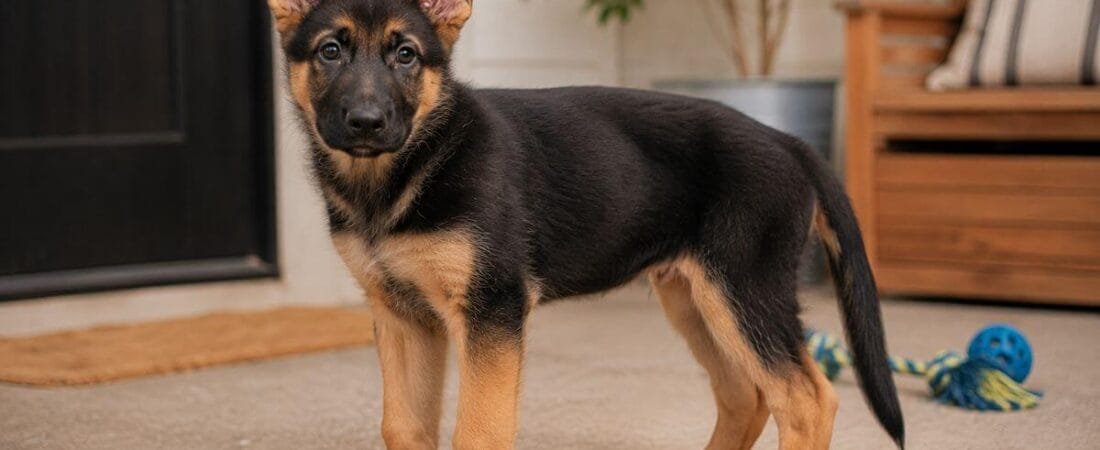
If you just brought home a German Shepherd puppy, you already know how fast they grow. Understanding the german shepherd puppy growth chart helps you know what to expect at each stage and spot the difference between normal growth and something worth a vet visit.
This guide breaks down average weight and height by age for both male and female German Shepherds, along with what to watch for during the fastest-growing months.
Quick answer: German Shepherd puppies grow fastest between 2 and 6 months old, often gaining 8 to 10 pounds a month during that window. Most reach their adult height by 12 to 14 months, though muscle and chest width continue filling out until 2 to 3 years old.
German Shepherd Puppy Growth Chart by Age
The numbers below are general averages. Individual puppies vary based on genetics, bloodline, and whether they come from working lines or show lines.
| Age | Male Weight | Female Weight |
|---|---|---|
| Birth | Under 1 lb | Under 1 lb |
| 1 month | 6-9 lbs | 5-8 lbs |
| 2 months | 15-20 lbs | 13-18 lbs |
| 3 months | 25-32 lbs | 22-28 lbs |
| 4 months | 33-40 lbs | 31-35 lbs |
| 5 months | 40-50 lbs | 35-45 lbs |
| 6 months | 45-60 lbs | 40-50 lbs |
| 9 months | 55-70 lbs | 45-58 lbs |
| 12 months | 65-75 lbs | 50-65 lbs |
| 18 months | 65-85 lbs | 48-68 lbs |
| Adult (2-3 years) | 65-90 lbs | 50-70 lbs |
At full maturity, adult height generally falls between 24 and 26 inches at the shoulder for males, and 22 to 24 inches for females, according to the American Kennel Club breed standard.
Why German Shepherd Puppies Grow So Fast
German Shepherds are a large breed, and large breed puppies pack a lot of growth into a short window. Most of the dramatic size change happens between 2 and 6 months, when a puppy can go from around 15 pounds to 50 pounds or more.
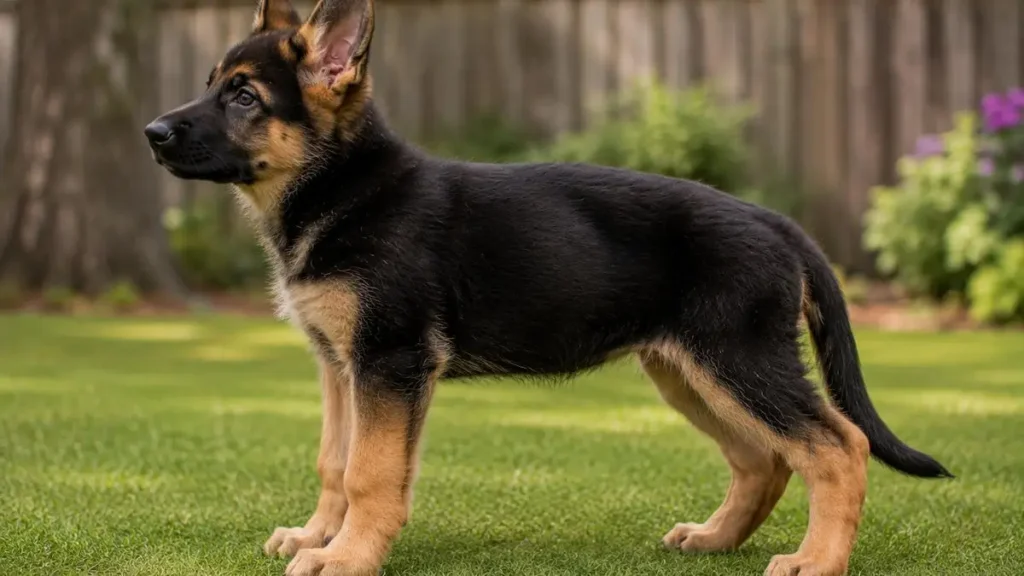
This period is sometimes called the “giraffe phase.” Legs and ears often grow faster than the rest of the body fills in, so your puppy may look lanky, oversized, or a little uncoordinated. This is completely normal and evens out over time.
After about 9 months, visible growth slows down noticeably. Height mostly plateaus, but muscle mass, chest width, and bone density continue developing well into the second and even third year.
When Do German Shepherds Stop Growing?
Most German Shepherds reach their adult height by 12 to 14 months, though it can take up to 18 months for some individual dogs. Growth plates, the areas of developing cartilage near the ends of long bones, typically close between 14 and 18 months.
Full physical maturity, including chest depth and muscle fill, usually is not complete until somewhere between 2 and 3 years old. Males tend to take longer to fully mature than females.
Growth plates matter for more than just timing. High-impact activity before they close can put unnecessary stress on developing joints, which is why exercise limits matter more for large breed puppies than for smaller ones.
Exercise Guidelines While Your Puppy Is Growing
A simple rule many trainers and vets recommend is about 5 minutes of structured exercise per month of age, twice a day, until growth plates close. A 4-month-old puppy, for example, would get roughly 20 minutes of structured walking at a time.
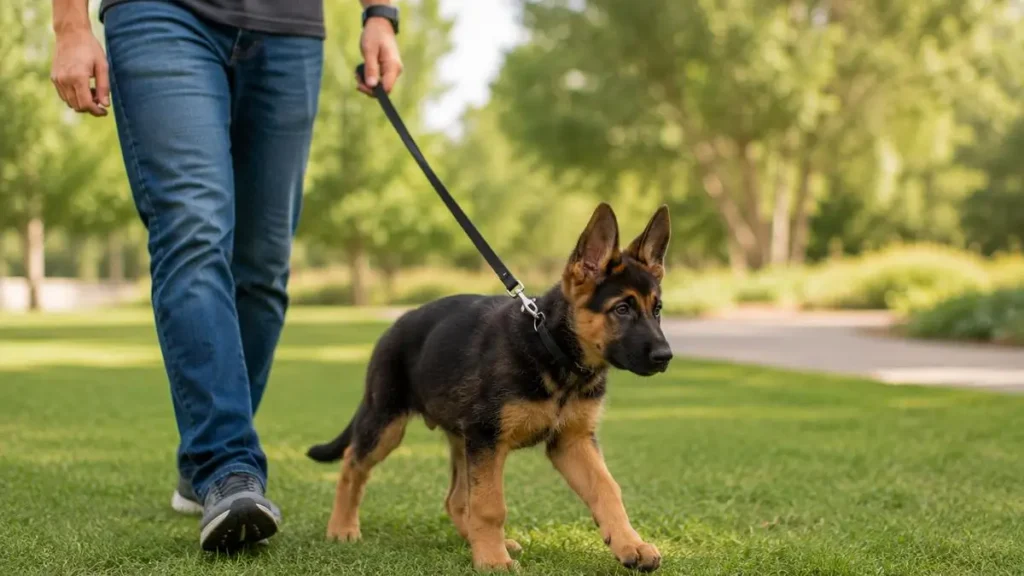
Avoid forced running, repeated jumping, or long hikes on hard pavement while your puppy is still developing. Free play in a yard is generally fine, since puppies tend to self-regulate better than during structured exercise.
The VCA Animal Hospitals recommends limiting high-impact activity in large breed puppies until skeletal growth is more complete, to help reduce the risk of joint problems later in life.
Feeding Your German Shepherd Puppy for Healthy Growth
Fast growth needs the right kind of fuel, not just more food. A large-breed puppy formula with controlled calcium levels helps support steady, even bone development instead of growth that outpaces the joints.
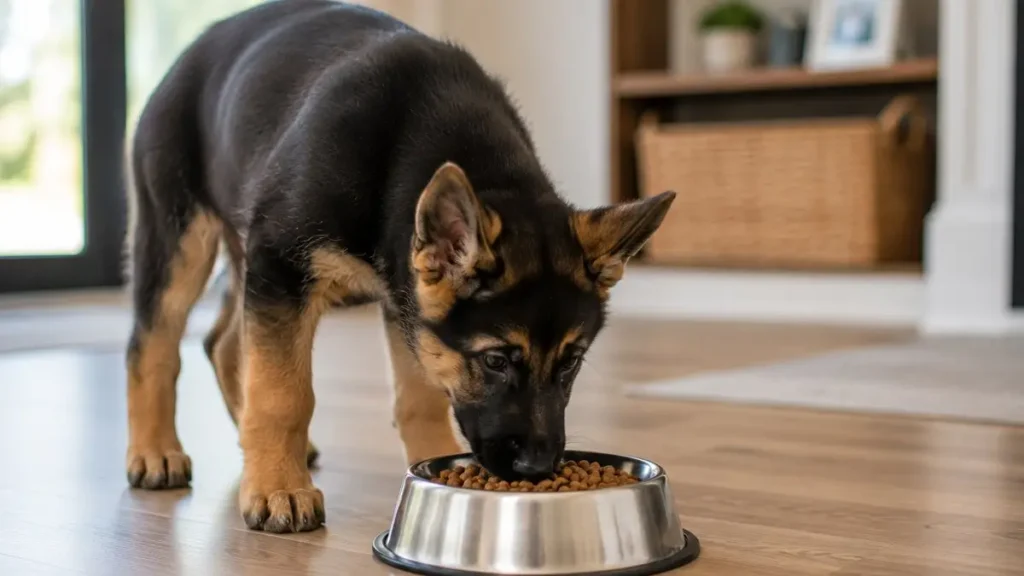
Overfeeding a growing German Shepherd puppy can actually cause more harm than underfeeding, since rapid weight gain adds extra stress to developing bones and joints. Most puppies do best on 3 meals a day until around 6 months, then a switch to 2 meals a day afterward.
A simple way to check body condition at home is to feel for your puppy’s ribs with light pressure. If you cannot feel them at all, that can be a sign to talk to your vet about adjusting portions.
How to Tell If Your Puppy Is Growing Normally
Growth is rarely a straight line. Puppies often grow in spurts, plateauing for a week or two before a sudden jump in size. This is normal and does not mean something is wrong.
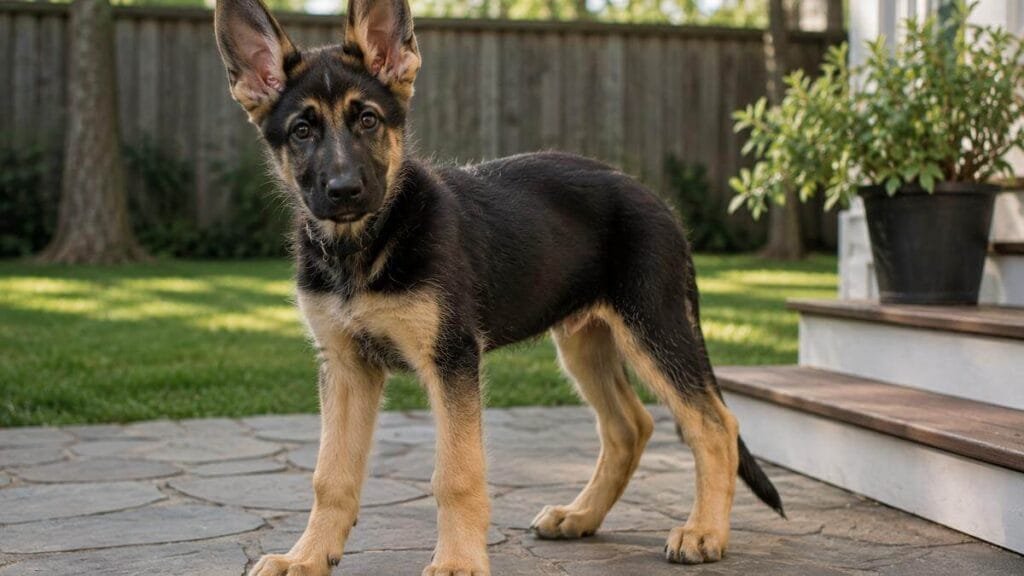
A few practical ways to gauge whether your puppy still has growing left to do:
- Check paw size compared to their legs and body. Oversized paws often mean more growth is still coming.
- Compare your puppy’s current weight to the chart above for their age and sex.
- Ask your breeder about the size of the puppy’s parents, since most dogs stay close to their parents’ adult size.
When Should You Talk to Your Vet About Growth?
Being a month or so ahead of or behind the averages above is generally not a concern. A gap of two months or more compared to typical growth patterns, or a puppy that seems consistently underweight, overweight, or in pain, is worth discussing with your veterinarian.
This article is meant as a general guide, not a diagnostic tool. Always talk to your vet if you have concerns about your individual puppy’s growth or development.
If you are still working through the basics of raising a German Shepherd puppy, our How to Train a Puppy at Home: Beginners Guide and How to Crate Train a Puppy guides cover the training foundations that pair well with this fast growth stage.
Frequently Asked Questions
How big will my German Shepherd puppy get?
Most adult German Shepherds fall between 50 and 90 pounds depending on sex, with males on the larger end. Height typically ranges from 22 to 26 inches at the shoulder.
At what age do German Shepherds grow the fastest?
The fastest growth happens between 2 and 6 months old, when a puppy can gain 8 to 10 pounds a month.
When do German Shepherd puppies stop growing?
Most reach adult height by 12 to 14 months, though full muscle and chest development can continue until 2 to 3 years old.
Are male German Shepherds bigger than females?
Yes. Males are typically taller and heavier than females at every stage, often by 10 to 20 pounds once fully grown.
Is my German Shepherd puppy underweight or overweight?
Comparing your puppy’s weight to the chart above is a helpful starting point, but body condition, meaning whether you can feel their ribs with light pressure, matters more than an exact number. Ask your vet if you are unsure.
Do German Shepherd puppies go through a lanky, awkward stage?
Yes, this is often called the giraffe phase, when legs and ears grow faster than the rest of the body. It is completely normal and resolves as the puppy matures.
Final Takeaway
Your German Shepherd puppy’s growth will happen fast, especially between 2 and 6 months old, but every dog develops on their own timeline. Use this chart as a general guide, watch your puppy’s body condition rather than chasing an exact number, and keep your vet in the loop if anything seems off.
As your puppy grows, breed-specific guidance on ears, calm-down timelines, and training will help you navigate the rest of their first year with confidence. Our German Shepherd Puppy Ears: When Do They Stand Up?, When Do German Shepherd Puppies Calm Down?, and German Shepherd Puppy Training Tips for First-Time Owners guides cover what comes next, along with our complete German Shepherd Puppy: Complete First-Year Guide.
Author Bio
David Jason is the founder of My Pet Care Tips and writes practical, research based guides to help pet owners raise healthier, happier dogs and cats. His content focuses on clear, beginner friendly advice backed by trusted veterinary resources and real world pet care best practices.