

That first tuft of golden fur on your couch is not a fluke. Golden retriever puppy shedding starts earlier than most new owners expect, and it comes in a few distinct stages before your dog reaches their full adult coat.
Knowing what is coming, and when, makes the whole process a lot less alarming the first time you find a suspiciously large clump of fur under the coffee table.
Quick answer: Golden Retriever puppies typically start a mild shed around 12 to 14 weeks old as their soft puppy fluff begins loosening. The bigger transition to an adult double coat usually happens between 4 and 6 months, with the full adult coat typically complete by 10 to 12 months, though it can take up to 18 months for some puppies.
When Does a Golden Retriever Puppy Start Shedding?
The first noticeable shedding usually shows up around 12 to 14 weeks old, sometimes called the “puppy fluff shed.” This early phase is often mild and easy to miss if you are not specifically looking for it.
The real transition begins between 4 and 6 months old, when your puppy starts losing their soft, single-layer puppy coat to make room for the adult double coat underneath. This stage tends to produce noticeably more loose fur than the early puppy fluff shed did.
Most Golden Retrievers have shed their full puppy coat by 10 to 12 months old, though the complete transition to a mature adult coat, feathering and all, can stretch to around 18 months for some individual dogs.
Puppy Coat vs Adult Coat: What Is Actually Happening
A Golden Retriever puppy is born with a single soft coat. As they mature, a second layer, the dense undercoat, develops underneath, eventually giving adult Golden Retrievers their signature double coat.
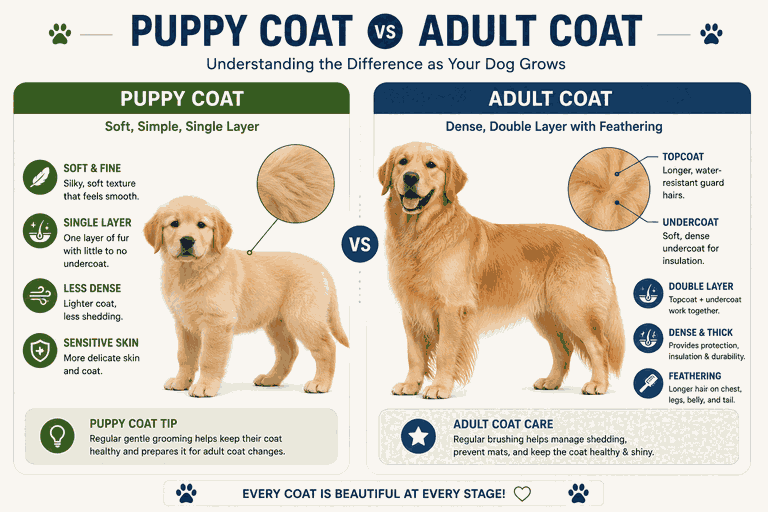
You will typically start noticing early feathering, the longer wispy fur on the ears, legs, and tail, around 3 to 4 months old. This is one of the clearest visual signs that the coat transition is underway, even before the heavier shedding becomes obvious.
Does Spaying or Neutering Affect Shedding?
Yes, often noticeably. Many Golden Retrievers shed more than usual for a period after being spayed or neutered, as hormonal shifts temporarily affect the coat cycle. Males in particular sometimes shed more heavily than expected in the weeks following the procedure.
This increased shedding is usually temporary and settles down once your dog’s body adjusts to the hormonal change. If heavy shedding continues well beyond a few months post-surgery, it is worth mentioning to your vet, though it is rarely a cause for concern on its own.
Seasonal Shedding: What to Expect as Your Dog Grows Up
Once your Golden Retriever reaches adulthood, golden retriever puppy shedding patterns shift into a predictable seasonal rhythm. Adult Goldens typically “blow their coat” twice a year, once in spring and once in fall, as they transition between lighter summer coats and thicker winter coats.

This seasonal shedding can be genuinely intense, sometimes producing noticeably more loose fur over a period of several weeks compared to typical day-to-day shedding. Knowing this is coming ahead of time makes it much easier to plan for rather than be caught off guard by.
How to Manage Shedding During the Coat Transition
The coat transition period is when brushing habits matter most, and starting early makes a real difference.

Start a Brushing Routine Around 3 to 4 Months
Once feathering begins appearing, introduce a pin brush for the outer coat and a rake or undercoat tool for the denser undercoat underneath. Brushing two to three times a week during the transition helps remove loose fur before it ends up on your furniture.
Increase Brushing During Heavy Shedding Phases
During the heaviest part of the puppy-to-adult coat transition, daily brushing for a few weeks can make a noticeable difference in how much fur ends up around the house.
Support Coat Health Through Diet
A quality diet with adequate omega-3 fatty acids supports healthy skin and coat development. Poor nutrition can sometimes worsen shedding or lead to a duller, less healthy-looking coat during this growth stage.
Consider Professional Grooming
A groomer experienced with double-coated breeds can help manage the heaviest shedding phases more efficiently than at-home brushing alone, especially during the initial 4 to 6 month coat transition.
Is Excessive Shedding Ever a Health Concern?
Most shedding during this stage, even when it feels like a lot, is completely normal. A few signs point to something beyond typical coat transition shedding.
- Bald patches or thinning in specific spots rather than general fur loss
- Dry, brittle fur paired with heavy shedding
- Red, irritated, or itchy skin underneath the coat
- Shedding that seems disproportionate compared to what is typical for this stage
The American Kennel Club describes the Golden Retriever’s coat as a dense, water-repellent double coat that naturally sheds as part of healthy maintenance. If shedding is paired with skin irritation, bald patches, or a change in coat texture, the VCA Animal Hospitals recommends a veterinary evaluation to rule out an underlying skin condition, allergy, or nutritional issue rather than assuming it is simply part of normal development.
Grooming Tools and Tips for Golden Retriever Puppies
A few tools make managing golden retriever puppy shedding significantly easier through this stage and beyond.
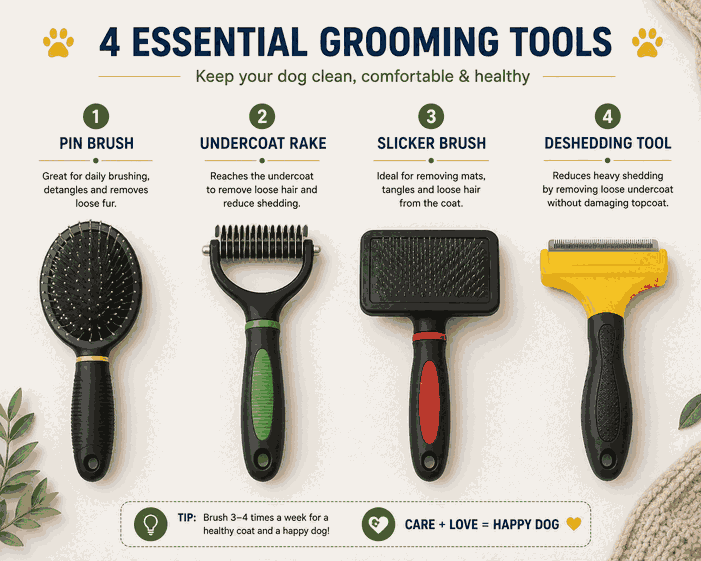
- Pin brush: Good for daily maintenance and the outer coat
- Undercoat rake: Designed specifically to remove loose undercoat fur without damaging the topcoat
- Slicker brush: Useful for smoothing feathering on ears, legs, and tail
- Deshedding tool: Helpful during the heaviest seasonal or transitional shedding phases, though it should be used according to instructions to avoid overuse
Frequently Asked Questions
At what age does a Golden Retriever puppy start shedding?
Mild shedding often begins around 12 to 14 weeks old, with the bigger coat transition to an adult double coat typically happening between 4 and 6 months.
When does a Golden Retriever get their full adult coat?
Most Golden Retrievers have their full adult coat by 10 to 12 months old, though the complete transition can take up to 18 months for some dogs.
Does neutering make Golden Retrievers shed more?
Yes, often temporarily. Hormonal changes after spaying or neutering can increase shedding for a period before settling back to normal.
How often should I brush my Golden Retriever puppy?
Two to three times a week during the coat transition around 4 to 6 months old, increasing to daily brushing during the heaviest shedding phases.
Is heavy shedding a sign something is wrong with my puppy?
Usually not. Heavy shedding during the puppy-to-adult coat transition, or during seasonal shedding as an adult, is normal. Bald patches, irritated skin, or brittle fur are worth checking with your vet.
Do Golden Retrievers shed year-round or just seasonally?
Both. They shed moderately year-round, with two noticeably heavier seasonal shedding periods in spring and fall once they reach adulthood.
Final Takeaway
Golden retriever puppy shedding follows a predictable pattern: a mild puppy fluff shed around 12 to 14 weeks, a bigger coat transition between 4 and 6 months, and a full adult coat by 10 to 12 months for most dogs. Starting a brushing routine early makes the whole process much more manageable once the heavier shedding phases hit.
If you are also tracking your puppy’s physical growth alongside their coat development, our Golden Retriever Puppy Growth Chart covers what to expect for weight and height by age. For families weighing this breed against others, our Best Dog Breeds for Families guide is a useful comparison, along with our complete Golden Retriever Puppy: Complete First-Year Guide.
Author Bio
David Jason is the founder of My Pet Care Tips and writes practical, research based guides to help pet owners raise healthier, happier dogs and cats. His content focuses on clear, beginner friendly advice backed by trusted veterinary resources and real world pet care best practices.