
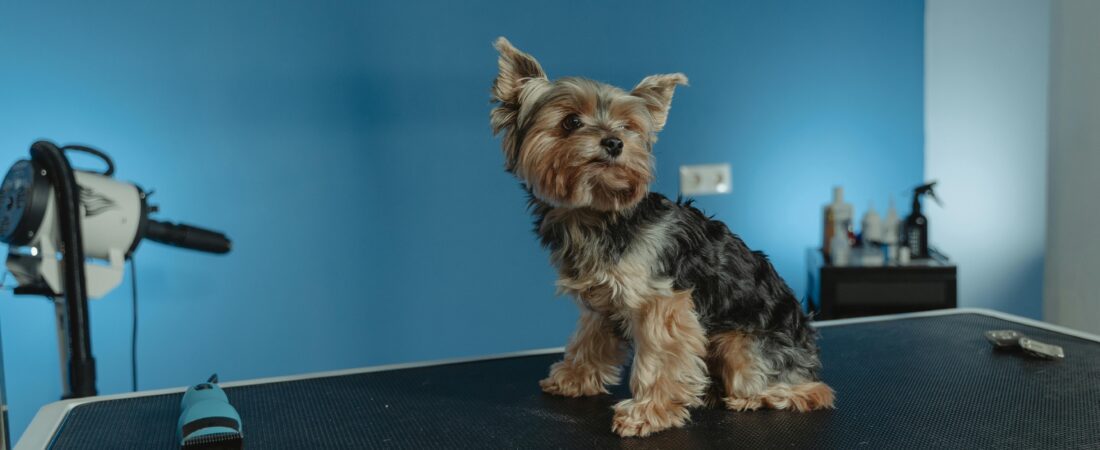
The first time I tried to groom my dog at home, it was a complete disaster.I had no idea what tools to use, my dog would not sit still, and by the end of it both of us were exhausted and frustrated. I ended up just giving up and booking a grooming appointment that cost me sixty dollars.That experience taught me something important. Dog grooming at home is absolutely doable — but only if you know what you are doing and have the right tools in your hands.
After years of grooming my own dogs at home, I can tell you that it gets easier every single time. Your dog gets used to the routine, you get more confident, and you end up saving a significant amount of money while also building a stronger bond with your pet.
This guide is written specifically for beginners. No complicated techniques, no professional jargon — just simple, practical steps that actually work at home.
Why Grooming Your Dog at Home Matters
Before we get into the how, let us talk about the why. Because grooming is about a lot more than just keeping your dog looking clean and presentable.
Regular grooming prevents painful matting of the fur that can pull on the skin and cause infections underneath. It keeps nails at a healthy length so your dog can walk comfortably without joint pain. It removes dirt, dead skin, and loose hair that can cause skin irritation if left unattended. And it gives you the chance to check your dog’s body regularly for lumps, bumps, ticks, rashes, or anything unusual that might need veterinary attention.
Professional grooming sessions typically cost between forty and one hundred dollars depending on the size of your dog and where you live. If you groom your dog at home even once a month, you could easily save five hundred to one thousand dollars a year.
But beyond the money, the grooming routine itself becomes a bonding experience. Dogs who are groomed regularly from a young age grow to enjoy the attention and the one-on-one time with their owner.
Basic Dog Grooming Tools You Need
You do not need a professional setup to groom your dog at home. But having the right tools makes an enormous difference between a smooth session and a stressful one.
Here are the essential tools every beginner needs:
Undercoat Rake or Deshedding Tool __If your dog has a thick double coat like a Husky, Golden Retriever, or German Shepherd, an undercoat rake is essential. It reaches through the top coat and removes the dense undercoat that causes most of the shedding in your home.
Slicker Brush__ This is the most versatile brush for most dog breeds. The fine wire bristles work through the outer coat and remove loose hair, tangles, and dirt without scratching the skin. This should be your first purchase.
Dog-Specific Shampoo — Never use human shampoo on your dog. Human shampoo is formulated for a different skin pH and will dry out your dog’s skin and strip the natural oils from their coat. Use a gentle, dog-specific shampoo. For dogs with sensitive skin, look for oatmeal-based formulas.
Nail Clippers — You have two options here. Scissor-style clippers work well for large dogs with thick nails. Guillotine-style clippers are easier to use for small and medium dogs. Either works fine for a beginner.
Styptic Powder — This is something most beginners forget to buy until they need it urgently. Styptic powder stops bleeding instantly if you accidentally cut the nail too short. Keep it on hand before you start.
Cotton Balls and Ear Cleaning Solution — These are used for ear cleaning and should be a regular part of your grooming kit.
Detangling Spray — Optional but very helpful for dogs with long or curly coats. A quick spritz before brushing makes the whole process much easier and more comfortable for your dog.
You do not need to buy everything at once. Start with the slicker brush, dog shampoo, and nail clippers. Add the rest as you go.
Step-by-Step Dog Grooming Process
Now let us get into the actual grooming. Follow these steps in order for the smoothest experience possible.
Brushing Your Dog’s Fur
Brushing should always come before bathing. Trying to wash a tangled or matted coat makes everything worse tangles tighten when wet and become much harder to remove.
Start by letting your dog sniff the brush. Let them get familiar with it before you start using it. This small step makes a big difference, especially with nervous dogs.
Begin brushing from the head and work your way toward the tail. Always brush in the direction the fur grows never against it, as this causes discomfort and can break the hair. Use gentle, short strokes rather than long sweeping ones.
Pay extra attention to areas where matting commonly occurs: behind the ears, under the armpits, around the collar area, and at the base of the tail. These spots need a little more time and patience.
If you find a mat or tangle, do not try to yank through it with the brush. Instead, hold the fur at the base close to the skin with one hand to prevent pulling, and gently work through the tangle from the tip of the fur toward the root. A little detangling spray applied directly to the mat helps significantly.
For dogs with short coats, a quick five-minute brush twice a week is usually enough. For long-coated breeds, daily brushing prevents mats from forming in the first place.
Bathing Your Dog
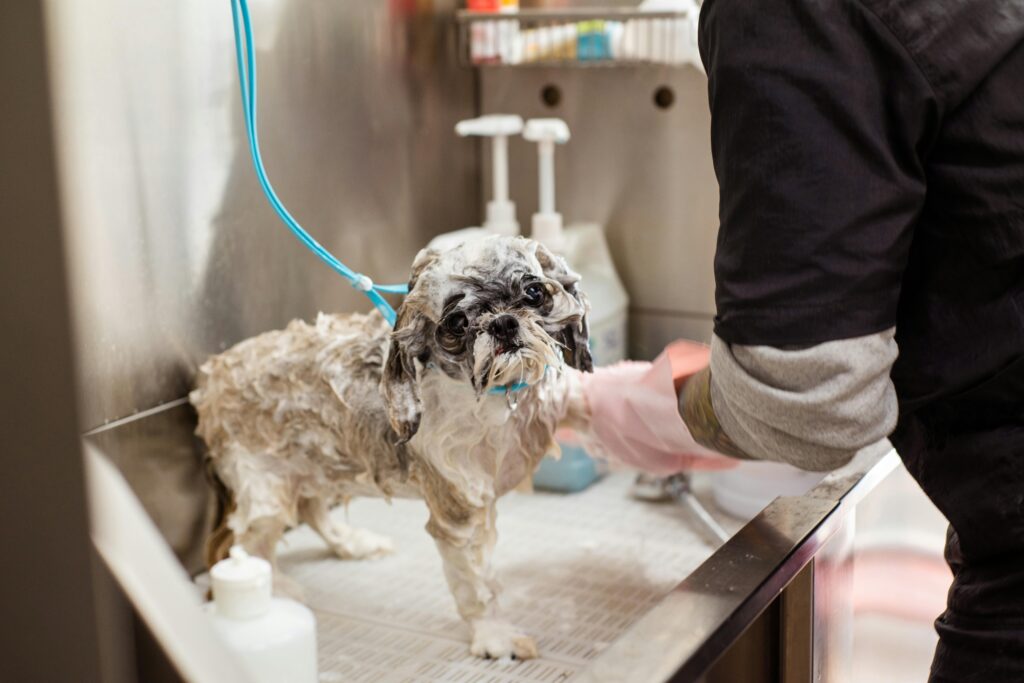
Once the coat is fully brushed and tangle-free, it is time for the bath.
Before you start, gather everything you will need and place it within reach shampoo, towels, and the detachable shower head or a cup for rinsing. Stopping in the middle of a bath to search for something gives your dog the chance to shake water everywhere and potentially escape.
Use lukewarm water. Water that is too hot or too cold will make your dog uncomfortable and resistant. Test the water temperature on your wrist the same way you would for a baby’s bath.
Wet the coat thoroughly from neck to tail before applying any shampoo. Work the shampoo in with your fingertips using circular motions, creating a good lather all the way down to the skin. Pay attention to the belly, paws between the toes, and the area under the tail ,these spots are easy to miss.
Be very careful around the face. Use a damp cloth or sponge to gently clean the face rather than pouring water directly over the head. Water and shampoo in the ears can lead to infections
.Rinsing is the most important part of the entire bath. Shampoo residue left in the coat causes skin irritation and dullness. Rinse for longer than you think is necessary at least twice as long as it took to lather up. The water running off your dog should be completely clear before you stop.
Wrap your dog in a large towel immediately after the bath and squeeze rather than rub to absorb the water. Rubbing creates tangles and frizz, especially in longer coats. If your dog tolerates it, a blow dryer on the lowest heat setting can speed up drying. Keep it moving and never hold it in one spot.
Nail Trimming
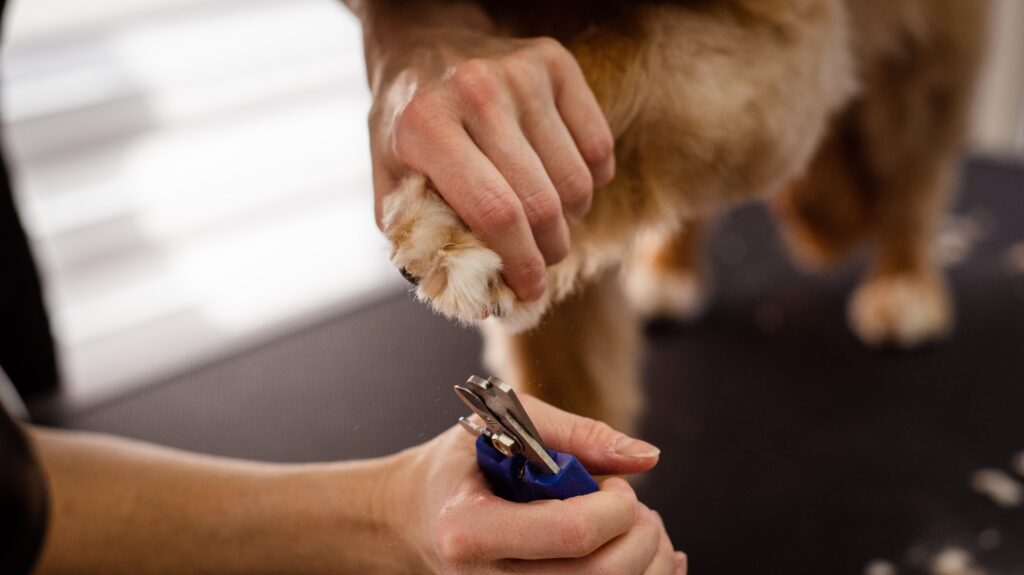
Nail trimming is the part of grooming that makes most beginners the most nervous. But once you understand the basic anatomy of a dog’s nail, it becomes much less intimidating.
The key thing to know is the quick, the pink blood vessel that runs through the center of the nail. If you cut into the quick, it bleeds and causes pain. Your job is to trim only the curved tip of the nail without reaching the quick.
On dogs with white or light-colored nails, you can actually see the pink quick through the nail. Cut about two millimeters below where the pink ends. On dogs with dark nails, you cannot see the quick, so trim small amounts at a time. When you look at the cut surface of a dark nail, you will see a white or grey chalky center. Stop trimming the moment you see a dark center dot appear , that means the quick is close.
Hold the paw firmly but gently. Position the clippers at a slight angle following the natural curve of the nail rather than straight across. Cut in one smooth, confident motion rather than a slow squeeze which can cause the nail to crack.
If you accidentally cut the quick, apply styptic powder immediately and hold gentle pressure on the nail for thirty seconds. It looks scary but is not a serious injury and heals quickly.
Trim one paw at a time and take breaks if your dog becomes restless. Giving a small treat after each paw makes the whole experience more positive.
Ear Cleaning
Dog ears are warm and dark inside , the perfect environment for bacteria and yeast to grow if they are not cleaned regularly. Ear infections are among the most common health problems in dogs and regular cleaning prevents most of them.
Start by gently folding back the ear flap and looking inside. A healthy ear is pink, odor-free, and has only a small amount of light-colored wax. If you see dark brown discharge, smell an unpleasant odor, or notice your dog scratching at the ear frequently, stop and see your vet , this is a sign of infection that needs treatment, not just cleaning.
For a healthy ear, apply a few drops of dog ear cleaning solution directly into the ear canal. Gently massage the base of the ear for about thirty seconds , you should hear a slight squishing sound as the solution loosens debris inside.
Then let your dog shake their head. This brings loosened debris to the opening of the ear canal where you can safely remove it. Use a cotton ball to gently wipe out the visible inner ear. Never push cotton balls, cotton swabs, or any object deep into the ear canal ,you can damage the eardrum.
Clean one ear, let your dog shake, then move to the other side.
Common Mistakes Beginners Make
Knowing what not to do is just as important as knowing what to do. Here are the most common mistakes new groomers make:
Skipping brushing before the bath. As mentioned earlier, wet tangles are much harder to remove than dry ones. Always brush first.
Using human shampoo or dish soap. Both are far too harsh for a dog’s skin and will cause dryness, itching, and irritation. Always use products specifically made for dogs.
Cutting nails too short too quickly. Take small amounts off at a time. It is better to do two short sessions than one session where you cut too deep.
Not rewarding the dog during grooming. Treats make everything better. Reward your dog frequently throughout the grooming session, especially during the parts they find uncomfortable like nail trimming. This builds a positive association over time.
Forcing an uncooperative dog. If your dog is genuinely terrified or aggressive during grooming, forcing through it only makes the fear worse. Start with shorter sessions, more treats, and gradually build up tolerance over several weeks.
Grooming too infrequently. Leaving long gaps between grooming sessions leads to severe matting that is painful to remove. Consistent regular grooming is always easier than infrequent intensive sessions.
How Often Should You Groom Your Dog?
The right grooming frequency depends on your dog’s breed, coat type, and lifestyle. Here is a general guide:
Brushing:
Short-coated breeds like Beagles and Boxers need brushing once or twice a week. Medium-coated breeds like Labradors and Border Collies need brushing two to three times per week. Long-coated breeds like Shih Tzus, Afghan Hounds, and Yorkies need daily brushing to prevent mats.
Bathing:
Most dogs do well with a bath every four to six weeks. Dogs that spend a lot of time outdoors may need more frequent baths. Over-bathing strips the natural oils from the coat and causes dry, itchy skin.
Nail Trimming:
Check your dog’s nails every two to three weeks. A simple test: if you can hear the nails clicking on hard floor when your dog walks, they are overdue for a trim.
Ear Cleaning:
Once a month is sufficient for most dogs. Dogs that swim frequently or have floppy ears may need weekly cleaning as moisture gets trapped more easily in those ears.
Frequently Asked Questions
Can I groom my dog at home if they have never been groomed before?
Yes, absolutely. Start with short, positive sessions. Let your dog get used to the tools before you use them. Begin with brushing ,it is the least intimidating part and slowly introduce other steps over several sessions. Patience and treats are your best tools.
What do I do if my dog hates being groomed?
Start by simply touching the areas your dog is sensitive about while giving treats, without actually grooming yet. Gradually introduce the tools. Keep early sessions very short , even two or three minutes is fine at first. Over time your dog will learn that grooming means treats and attention, not something scary.
Is it safe to cut my dog’s hair at home?
Basic trimming around the eyes, paws, and rear end is something most people can do at home with blunt-tipped scissors. However, full haircuts for breeds that require specific styles like Poodles, Bichon Frises, or Schnauzers are better left to professional groomers unless you are willing to invest time in learning the specific cuts.
What if my dog’s nails are black and I cannot see the quick?
Trim very small amounts at a time about one millimeter per cut. Look at the cut surface of the nail after each small trim. When the center of the cut surface changes from white or chalky to a dark dot, stop. You are close to the quick at that point.
Can I use baby shampoo on my dog?
Baby shampoo is gentler than regular human shampoo but it is still formulated for human skin pH, not dog skin pH. For occasional use in an emergency it is less harmful than adult shampoo, but dog-specific shampoo is always the better choice.
How do I know if my dog’s ears are infected?
Signs of an ear infection include dark brown or black discharge, a strong unpleasant smell, redness or swelling inside the ear, and your dog scratching at their ear, shaking their head frequently, or tilting their head to one side. If you notice any of these signs, visit your vet rather than attempting to clean the ear yourself.
Final Thoughts
Grooming your dog at home is one of the most rewarding skills you can develop as a pet owner. It saves you money, keeps your dog healthy, and strengthens the bond between you.
The most important thing to remember is that consistency matters more than perfection. Your first grooming session at home will not be flawless. Neither will the second. But by the fifth or sixth time, you will be surprised at how natural it starts to feel and your dog will start to enjoy it too.
Start slow. Use treats generously. Be patient with yourself and your dog. And remember that every professional dog groomer started exactly where you are right now.
Your dog is lucky to have an owner who cares enough to learn.
Want to learn more about keeping your dog healthy at home? Read our complete guide on:
→ Common Dog Health Problems
→ Best Dog Shampoo for Skin Care
→ Dog Exercise Routine Guide
→ How to Remove Ticks
→ Dog Summer Care Tips
Author Bio
Written by David Jason
Founder of My Pet Care Tips
Dog owner with over 8 years of hands-on grooming experience. Every tip in this guide is based on real,tested grooming routines at home.
Last Updated: June 16, 2026
Note: Always consult a licensed veterinarian for any emergency heat-related symptoms in your dog.