

Introduction
Dealing with cat behavior problems can be exhausting.
Your cat is peeing outside the litter box. Or biting without warning. Or screaming at 3 AM like the house is on fire.
You love your cat. But some days, the behavior makes you question everything.
Here is the truth. Almost every common cat behavior problem has a solution. Most of them are fixable within weeks when you understand what is actually causing them.
This guide gives you practical cat behavior problems solutions based on eight years of real experience with indoor cats. No punishment. No complicated techniques. Just clear, effective methods that actually work in 2026.
Why Cat Behavior Problems Happen
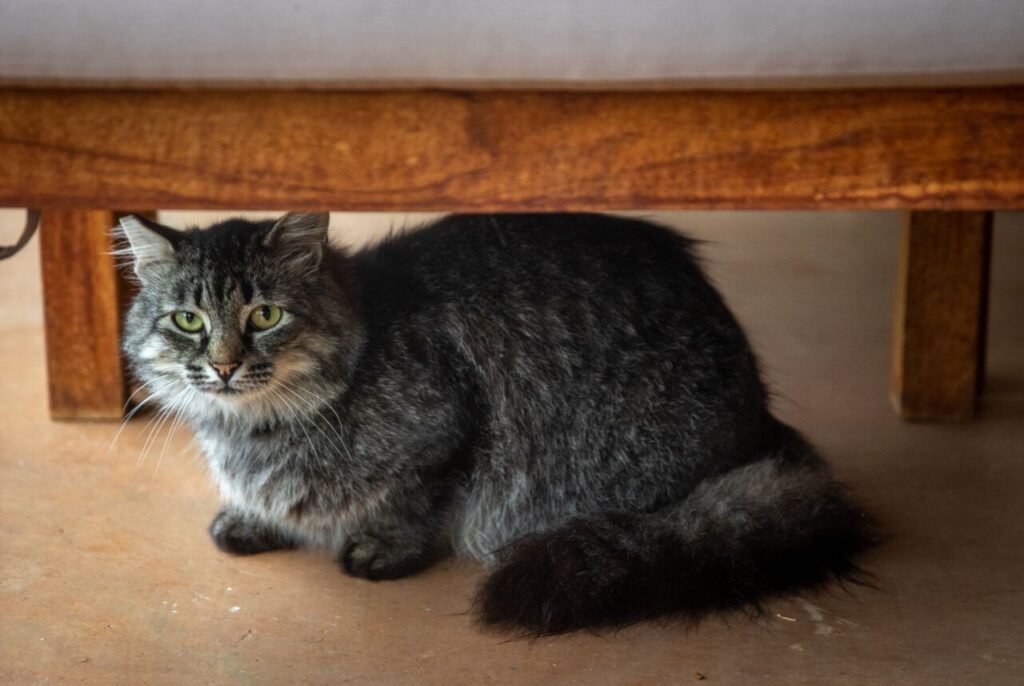
Before fixing anything, you need to understand why it is happening.
Most behavior problems have one of four root causes.
Stress and Anxiety in Indoor Cats
Stress is the number one driver of behavior problems in indoor cats.
Moving to a new home, a new pet, construction noise, schedule changes, or even rearranging furniture can trigger anxiety. Stressed cats pee outside the box, scratch excessively, hide, and sometimes become aggressive.
Medical Issues Masquerading as Behavior Problems
This one catches owners off guard every time.
A cat that suddenly starts peeing outside the litter box may have a urinary tract infection. Cat that stops using the box may have arthritis that makes climbing in painful. A cat that suddenly becomes aggressive may be in pain.
According to the ASPCA, any sudden behavior change warrants a vet visit before any behavior modification is attempted.
Lack of Enrichment and Boredom
Bored cats create their own entertainment. See
That entertainment usually involves your furniture, your sleep, and your patience. Indoor cats need daily mental and physical stimulation. Without it, behavior problems follow.
Changes in Environment or Routine
Cats are creatures of habit.
When something changes, even something small that you barely notice, your cat notices immediately. Their behavior often reflects their attempt to cope with that change.
Most Common Cat Behavior Problems and Solutions
Common Problems vs Solutions Table
| Problem | Most Likely Cause | Solution |
| Peeing outside litter box | Dirty box, UTI, stress | Clean daily, vet check, add boxes |
| Scratching furniture | No appropriate surface | Add sisal posts in right location |
| Aggression | Pain, fear, overstimulation | Vet check, learn body language |
| Excessive meowing | Hunger, attention, pain | Rule out medical, add enrichment |
| Biting | Overstimulation, play | Stop play at warning signs |
| Jumping on counters | Curiosity, food smell | Remove temptation, add cat tree |
| Litter box avoidance | Wrong type, wrong location | Change litter, move box |
Litter Box Problems — Peeing Outside the Box
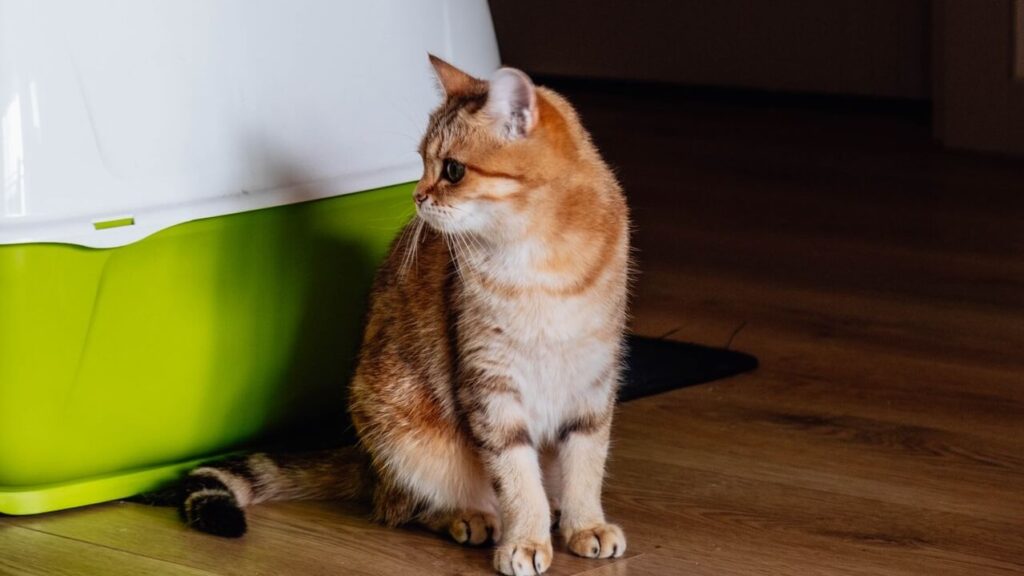
This is the most common behavior complaint from cat owners in the USA.
Before doing anything else, visit your vet. Urinary tract infections, kidney issues, and bladder stones all cause litter box avoidance. These are medical problems, not behavior problems. No behavior solution will fix them.
If your cat is medically cleared, check these things:
- Is the box scooped at least once daily? Cats refuse dirty boxes.
- Do you have enough boxes? One per cat plus one extra is the rule.
- Is the box in a quiet private location away from food?
- Is your cat a senior? Arthritis makes high-sided boxes painful to enter.
The fix: Scoop daily. Add a second box in a different location. Try a different litter type. If stress is the cause, add a Feliway diffuser near the litter box area.
Scratching Furniture Solutions
Scratching is never going to stop. It is a biological need.
Your job is redirecting it to an appropriate surface. For the complete in-depth guide on this specific issue, read our article on why cats scratch furniture.
Quick fix: Place a tall sisal scratching post directly next to the furniture your cat targets. Apply double-sided tape to the furniture surface. Reward your cat every time they use the post.
Aggression Toward Humans or Other Pets
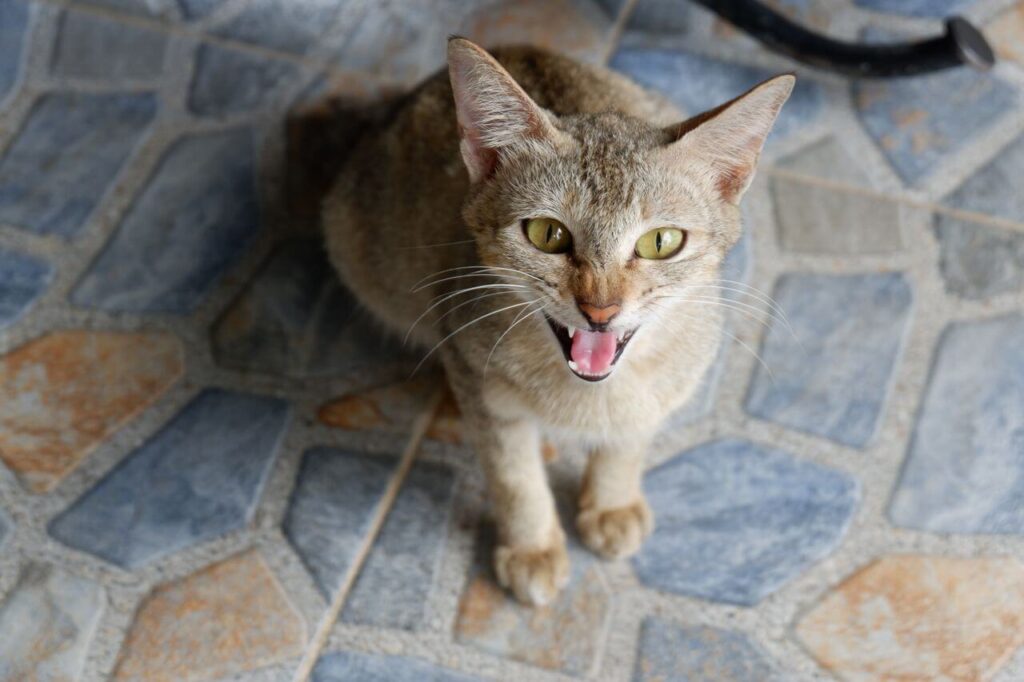
Sudden aggression always needs a vet visit first.
Pain is the most common cause of sudden aggression in cats. Dental disease, arthritis, and internal illness all make cats lash out when touched or approached.
If medical causes are ruled out, aggression usually falls into two categories.
Fear aggression: Your cat feels threatened and attacks to defend themselves. The solution is removing the trigger and giving your cat more control over their interactions.
Overstimulation aggression: Your cat is enjoying being petted and then suddenly bites. This happens when petting exceeds their tolerance threshold. Watch for tail flicking, skin rippling, and ear rotation. These are warning signs. Stop petting before they escalate.
Multi-pet aggression: Introduce new pets extremely slowly. Separate feeding areas, litter boxes, and sleeping spaces reduce territorial conflict significantly.
Excessive Meowing
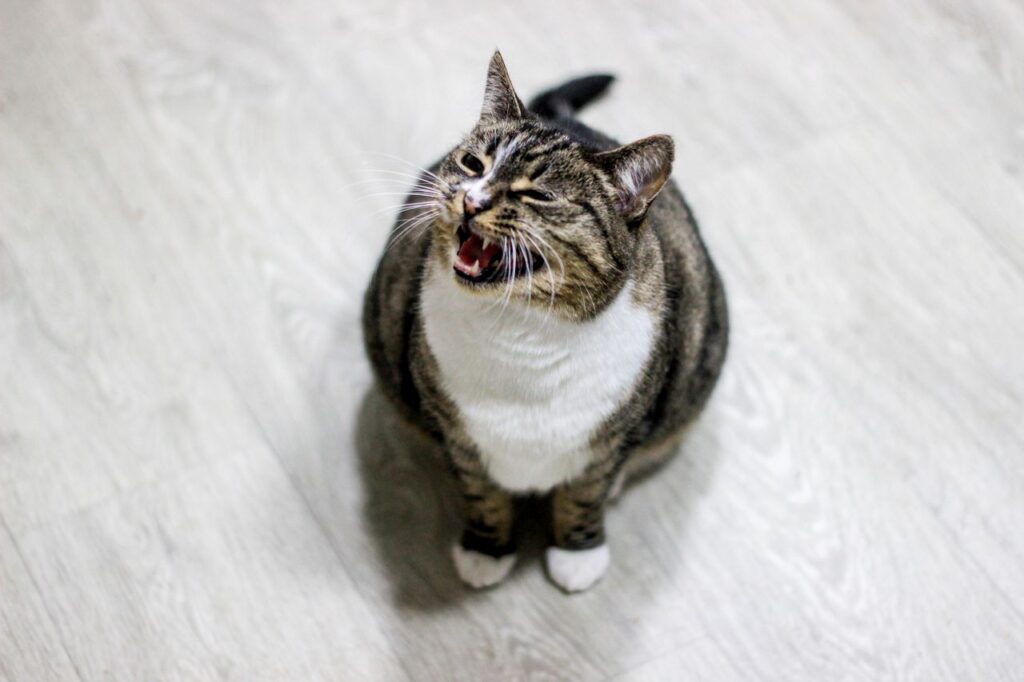
Luna went through a phase of meowing loudly every morning at 5 AM.
It turned out she was hungry because I had reduced her portion size. One adjustment and the 5 AM concerts stopped immediately.
Excessive meowing has several common causes:
- Hunger or thirst
- Wanting attention or play
- Medical discomfort or pain
- Cognitive decline in senior cats
- Stress or anxiety
The fix: Rule out medical causes first. Then ensure feeding times are consistent. Add interactive play sessions to meet attention needs. For senior cats, cognitive dysfunction syndrome causes increased nighttime vocalization and should be discussed with your vet.
Never punish meowing. It makes anxiety-based meowing worse and damages trust.
Biting and Attacking Behavior
Most cat biting happens during play.
Kittens and young cats bite because they are learning bite inhibition. Adult cats bite when they are overstimulated, in pain, or when play escalates beyond their comfort level.
The fix:Stop all play immediately the moment biting happens. Walk away for sixty seconds. This teaches your cat that biting ends the fun.
Never use your hands as toys. Use wand toys and keep your hands out of the game. Cats that play with hands as kittens grow into adults that bite hands.
For cats that bite unprovoked, always rule out pain first.
Separation Anxiety in Cats — Causes and Solutions
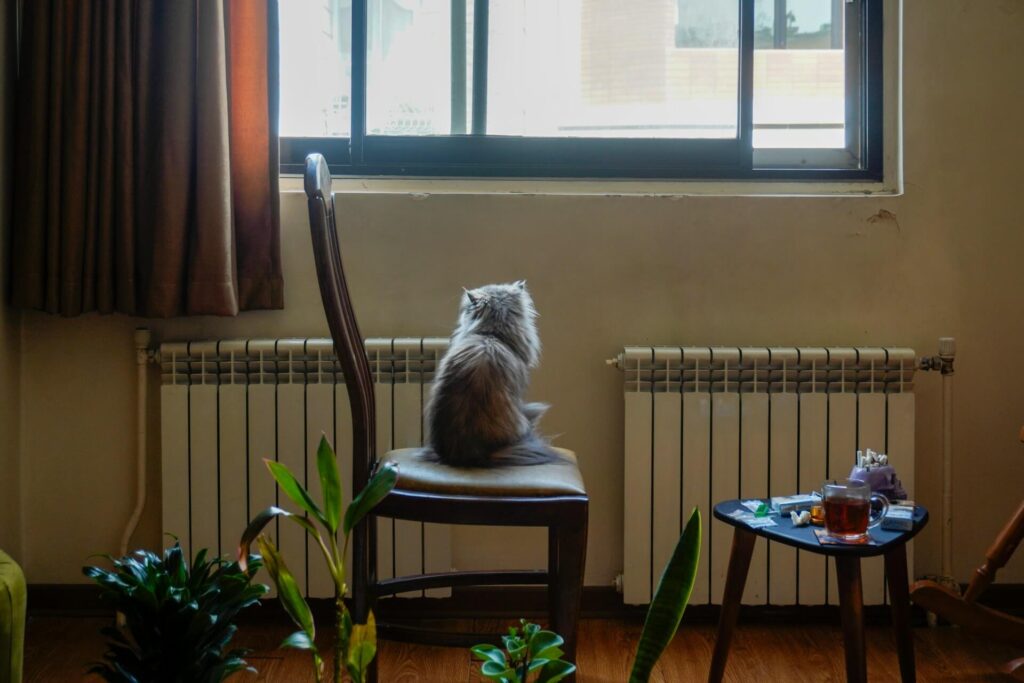
Cats get separation anxiety. This is more common than most people realize.
Signs include excessive vocalization when you leave, destructive behavior, litter box accidents that only happen when you are gone, and over-grooming.
Solutions:
- Create a consistent departure and arrival routine without dramatic goodbyes
- Leave an unwashed piece of your clothing for your cat to sleep near
- Use a Feliway diffuser to create calming pheromone signals throughout your home
- Install a pet camera so you can check in and talk to your cat during the day
- Consider a second cat for companionship if your schedule keeps you away long hours
For more on creating a stable enriching environment that reduces anxiety, read our indoor cat care guide.
How to Stop Cats from Jumping on Counters
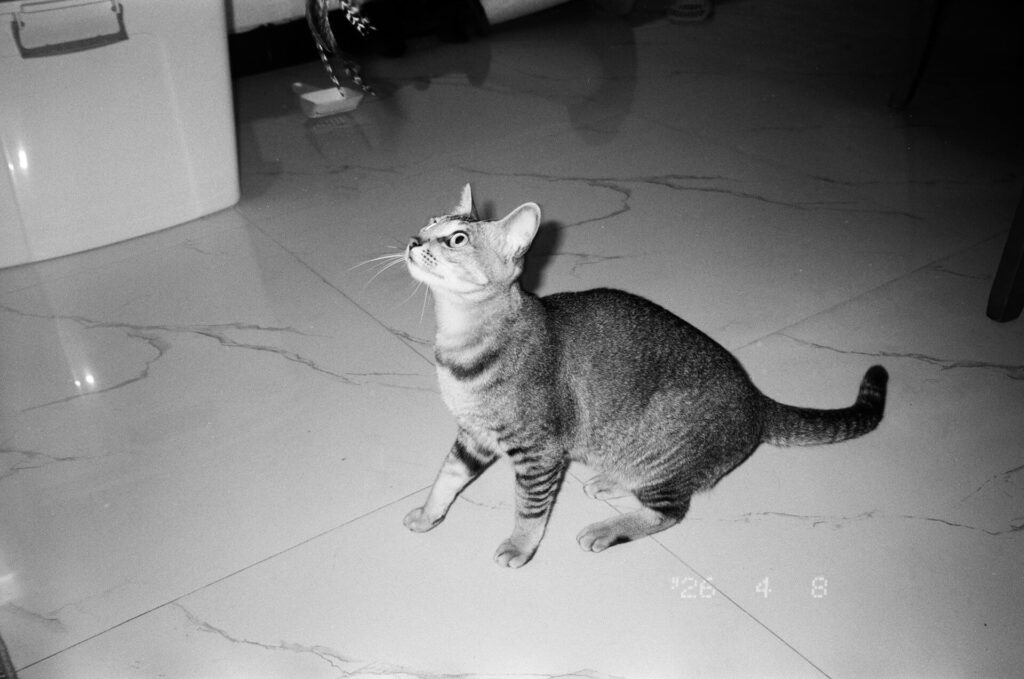
Cats jump on counters for two reasons. Curiosity and food smell.
Punishment-based approaches do not work long-term. Cats simply learn to wait until you are not watching.
Effective solutions:
- Keep all food covered and counters clear of temptation
- Provide a cat tree or shelving near the kitchen that gives similar height and viewing access
- Use aluminum foil on counter edges temporarily — cats dislike the sound and texture
- Feed your cat before cooking so food smells are less compelling
The goal is making the counter less interesting than alternative surfaces, not making your cat afraid of the kitchen.
Senior Cat Behavior Changes and Solutions
Older cats change their behavior for legitimate reasons.
Increased vocalization, litter box accidents, disorientation, and changed sleep patterns in cats over twelve years old are often signs of cognitive dysfunction syndrome, the feline equivalent of dementia. They can also signal hyperthyroidism, kidney disease, or high blood pressure.
Any new behavior change in a senior cat deserves a veterinary evaluation.
Supporting senior cats:
- Keep their environment stable and predictable
- Use low-sided litter boxes that are easy to enter
- Place food and water bowls close to sleeping areas
- Add nightlights to help with disorientation in the dark
- Speak to your vet about medication if cognitive dysfunction is diagnosed
Multi-Cat Household Behavior Problems
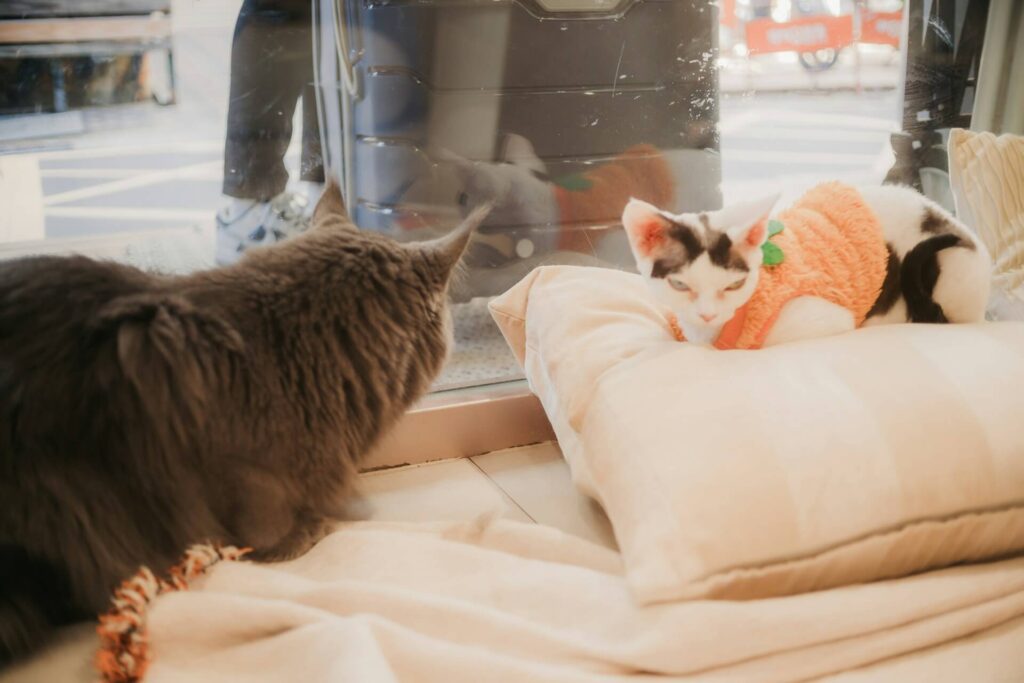
Most multi-cat behavior problems come down to competition for resources.
Cats need their own food bowls, water sources, litter boxes, and resting spots. When these are shared or insufficient, conflict follows.
The rules for multi-cat homes:
- One litter box per cat plus one extra, in separate locations
- Separate feeding stations so no cat guards another
- Multiple elevated resting spots throughout the home
- Vertical space like cat trees that allow cats to spread across different levels
- Feliway MultiCat diffuser which is specifically formulated for multi-cat households
Introducing a new cat to a resident cat should take a minimum of two weeks of gradual introduction through scent, then visual contact, then supervised physical contact.
Best Products for Cat Behavior Problems 2026
Product Comparison Table
| Product | Problem It Solves | Price | Rating |
| Feliway Classic Diffuser | Stress, anxiety, litter issues | Medium | 9.5/10 |
| Feliway MultiCat | Multi-cat aggression | Medium | 9.5/10 |
| KONG Wobbler Feeder | Boredom, counter jumping | Low | 9/10 |
| Sticky Paws Tape | Furniture scratching | Low | 9/10 |
| SmartCat Sisal Post | Scratching redirection | Medium | 9.5/10 |
| Zylkene Calming Supplement | Anxiety, separation issues | Medium | 8.5/10 |
| SmartyKat Hot Pursuit Toy | Boredom, aggression outlet | Low | 9/10 |
| PetSafe Automatic Feeder | Hunger-based meowing | Medium | 9/10 |
All products are available on Chewy and Amazon with subscription discounts.
Long-Term Prevention — Building Good Cat Behavior Habits
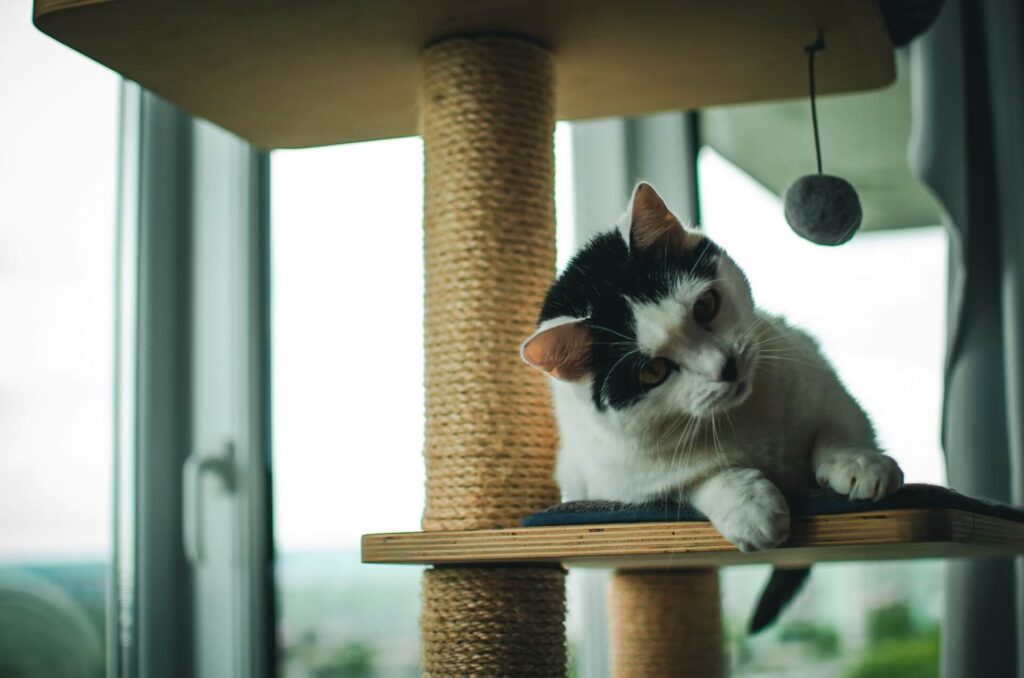
Most cat behavior problems are preventable with the right daily habits.
Daily non-negotiables:
- Scoop litter boxes once a day minimum
- Two play sessions of ten to fifteen minutes each
- Consistent feeding times every day
- Check water bowl freshness every morning
- Five minutes of calm one-on-one time
Weekly habits:
- Brush your cat based on coat length
- Check ears, eyes, and nails
- Rotate toys to prevent boredom
- Observe for any behavioral changes
Behavioral problems rarely appear out of nowhere. When you maintain consistent daily routines and a stimulating environment, most problems never develop in the first place.
For complete grooming and care routines, read our cat grooming tips at home guide.
Frequently Asked Questions
What are the most common cat behavior problems and solutions?
The most common issues are litter box avoidance, furniture scratching, aggression, excessive meowing, and biting. Most have practical solutions involving environmental changes, positive redirection, and sometimes veterinary intervention for underlying medical causes.
How do I stop my cat from peeing outside the litter box?
First rule out medical causes with a vet visit. Then ensure daily scooping, enough boxes for your number of cats, appropriate box placement in quiet areas, and consider adding a Feliway diffuser if stress is a factor.
Why is my cat suddenly aggressive and how do I fix it?
Sudden aggression almost always has a physical cause. Pain from dental disease, arthritis, or internal illness makes cats defensive and reactive. See your vet before attempting any behavior modification.
How do I stop cats scratching furniture effectively?
Place a tall stable sisal post directly next to the targeted furniture. Apply double-sided tape to the furniture. Reward your cat every time they use the post correctly. Read our complete guide on why cats scratch furniture for detailed steps.
What causes excessive meowing in cats?
Hunger, pain, attention seeking, stress, and cognitive decline in older cats are the most common causes. Always rule out medical issues first. Then address environmental and routine factors.
How do I help a cat with separation anxiety?
Create consistent departure routines, leave your scent near sleeping areas, use a Feliway diffuser, and consider a pet camera for remote interaction. Severe cases may benefit from medication prescribed by a veterinarian.
Can cat behavior problems be solved without punishment?
Yes, always. Punishment increases fear and stress which makes most behavior problems worse. Positive redirection, environmental management, and consistent routine solve virtually every common cat behavior issue more effectively and permanently than punishment ever does.
When should I take my cat to the vet for behavior issues?
Any sudden behavior change, any aggression that appears without clear cause, litter box avoidance, excessive vocalization especially in seniors, and any behavior change accompanied by changes in appetite, drinking, or weight all warrant a veterinary evaluation promptly.
Final Thoughts
Most cat behavior problems are not personality flaws.
They are communication. Your cat is telling you something is wrong. Something hurts. And something is stressful. Something is missing from their environment.
When you approach behavior problems as messages to decode rather than problems to punish, everything changes. The solutions become clearer. The results come faster. And your relationship with your cat gets stronger through the process.
Be patient. Be consistent. And if something is not working after two weeks, revisit the root cause. The answer is almost always there.
Which behavior problem are you dealing with right now? Share it in the comments below. I read every one and will do my best to help you find a solution that works for your specific cat and situation.
Also read:
→ Indoor Cat Care Guide
→ Cat Grooming Tips at Home
→ Why Cats Scratch Furniture
→ Common Pet Health Problems
→ Why Is My Cat Not Eating
Author Bio
Written by David Jason
Founder of My Pet Care Tips
Cat owner with over 8 years of hands-on experience managing indoor cat behavior. Every solution in this guide is based on real experience and trusted sources including ASPCA Jackson Galaxy and Cornell Feline Health.
Last Updated: June 9, 2026
Note: Always consult a licensed veterinarian before attempting behavior modification for sudden or severe behavior changes.