
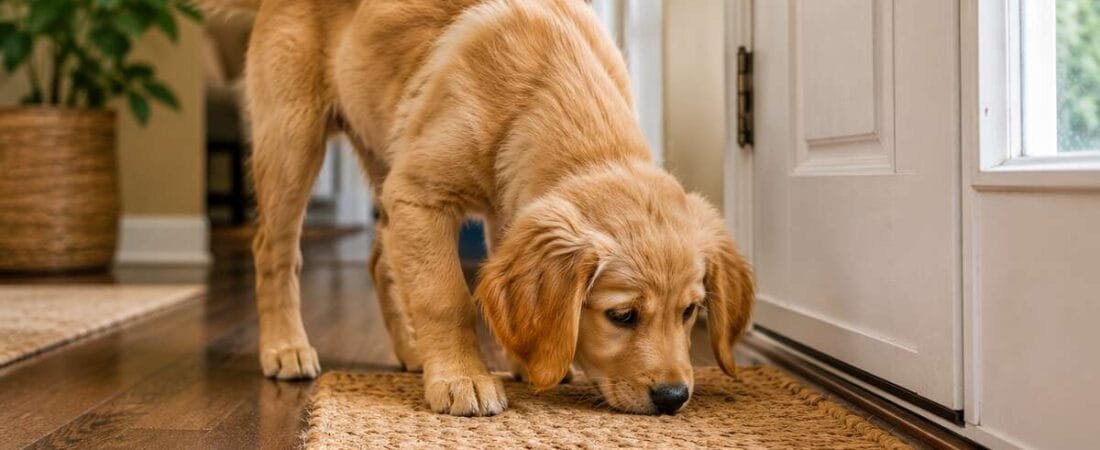
Most puppy accidents happen not because a puppy is stubborn, but because the warning signs came and went before anyone noticed. A puppy rarely just goes without warning. There is almost always a small signal first, a sniff, a pause, a look toward the door, that gets missed in the middle of a busy day.
Learning to catch these signals early is one of the fastest ways to prevent indoor accidents and speed up house training. Every puppy gives some version of these cues, even very young ones, though the signals can be subtle and easy to overlook at first. If you are still getting the basics down, our how to take care of a puppy guide covers the daily routine these signals fit into. This guide walks through the 10 most common signs a puppy needs to go potty, what they usually mean, and what to do the moment you spot one.
Why Learning Your Puppy’s Potty Signals Matters
Catching a potty signal early changes the entire training process. It leads to faster house training, fewer indoor accidents, and a lot less frustration for everyone in the house. It also builds trust, since a puppy that gets taken outside right when it signals learns that going potty in the right place actually works, rather than getting scolded after the fact for something it could not fully control.
Many of the setbacks owners run into come down to missing these small cues rather than any real lack of progress. If accidents still keep happening despite watching closely, our guide to puppy potty training mistakes covers the habits that quietly slow down housebreaking.
10 Signs Your Puppy Needs to Go Potty
1. Sniffing the Floor Constantly
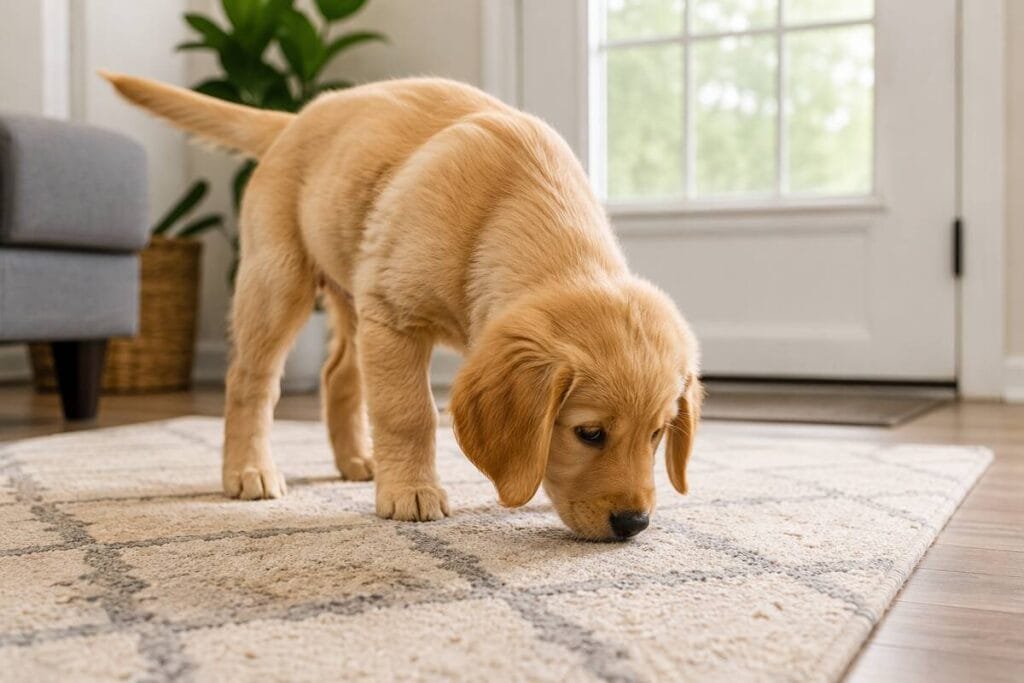
Sniffing is one of the earliest and most reliable signals. A puppy that suddenly starts sniffing the floor in a focused, repetitive way is often searching for a spot that smells familiar enough to go in.
2. Walking in Circles
Circling usually follows sniffing and often means the moment is close. Puppies circle to settle into position, much like they would before lying down, but with more urgency.
3. Suddenly Stopping Play
A puppy that abruptly stops mid-play, especially without an obvious reason, may be pausing because it just felt the urge to go. This one is easy to miss since it looks like the puppy simply got distracted.
4. Walking Toward the Door
Heading toward a door, especially one that’s used regularly for potty breaks, is a clear signal once a puppy starts to connect that door with going outside.
5. Whining or Barking
Some puppies vocalize instead of, or in addition to, physical cues. A short whine or bark near a door or exit is often a direct request to go outside.
6. Restlessness
General restlessness, pacing, shifting position, or seeming unable to settle, can signal physical discomfort from a full bladder, especially in puppies that have gone a while since their last break. Restlessness can also come from something other than a full bladder. If it shows up mainly when your puppy is left alone, it is worth reading about dog separation anxiety, since the two can look similar but need very different responses.
7. Squatting
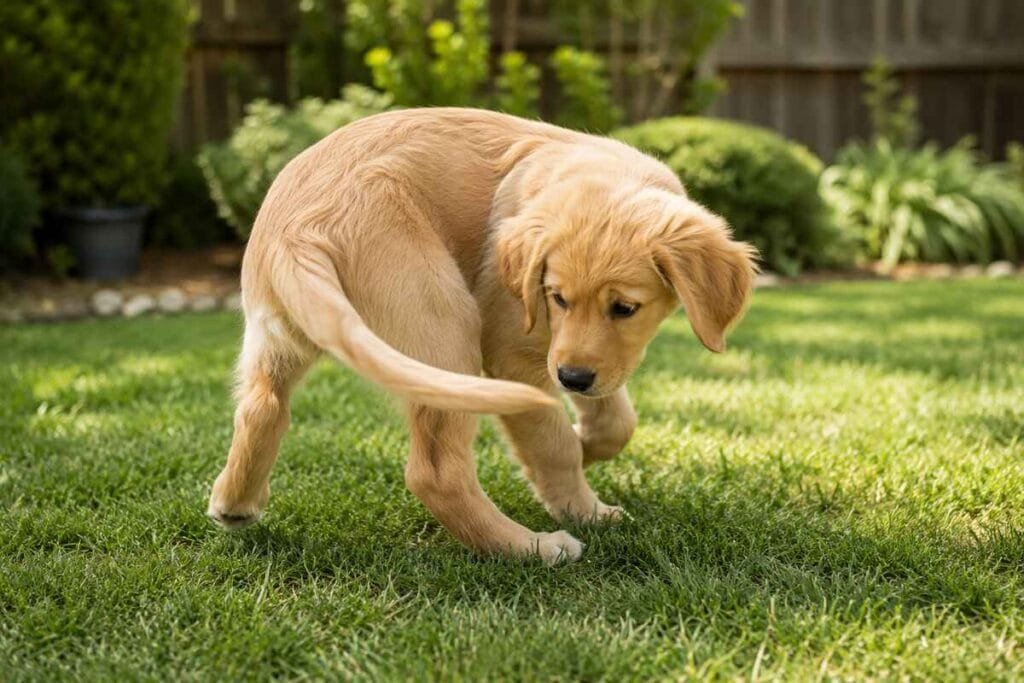
By the time a puppy squats, it usually means there are only seconds left. This is the clearest signal there is, but it also means the window to prevent an accident is almost closed.
8. Scratching the Door
Scratching or pawing at a door is a learned behavior in many puppies, especially ones that have already had some potty training. It’s a strong, intentional signal.
9. Leaving the Room
A puppy that quietly slips into another room, particularly one it does not usually spend time in, may be looking for a private spot to go, especially if house training is still new.
10. Returning to the Same Spot Where They Had an Accident
Puppies are drawn back to areas that still carry the scent of a previous accident. A puppy sniffing around or lingering near an old accident spot is signaling that it needs to go again, right there.
How Long Can Puppies Hold Their Bladder?
Bladder control develops gradually as a puppy grows. As a general guideline, most puppies can hold their bladder for roughly one hour per month of age, though this varies by individual puppy and breed size.
| Puppy Age | Approximate Bladder Control |
|---|---|
| 8 weeks | 1 to 2 hours |
| 10 weeks | 2 to 3 hours |
| 12 weeks | 3 hours |
| 3 months | 3 hours |
| 4 months | 4 hours |
| 5 months | 5 hours |
| 6 months | 6 hours |
These numbers are a starting point, not a strict rule. Overnight, most puppies can stretch slightly longer than daytime numbers suggest, especially with a potty break right before bed. For a full breakdown of how this changes as your puppy grows, our detailed guide on how long puppies can hold their bladder covers each stage in more depth.
Common Times Puppies Usually Need to Go Potty
Beyond watching for signals, timing matters just as much. Puppies most often need to go potty after:
- Waking up from sleep
- Eating a meal
- Drinking water
- Active play
- Training sessions
- Moments of excitement, like greeting someone at the door
As a general rule, young puppies need a bathroom break every one to two hours, depending on age. Building potty breaks around these predictable moments, rather than waiting for a signal every time, prevents a lot of accidents before they start. Our puppy potty training schedule guide breaks this down into a full daily routine by age.
What To Do When You Notice These Potty Signs
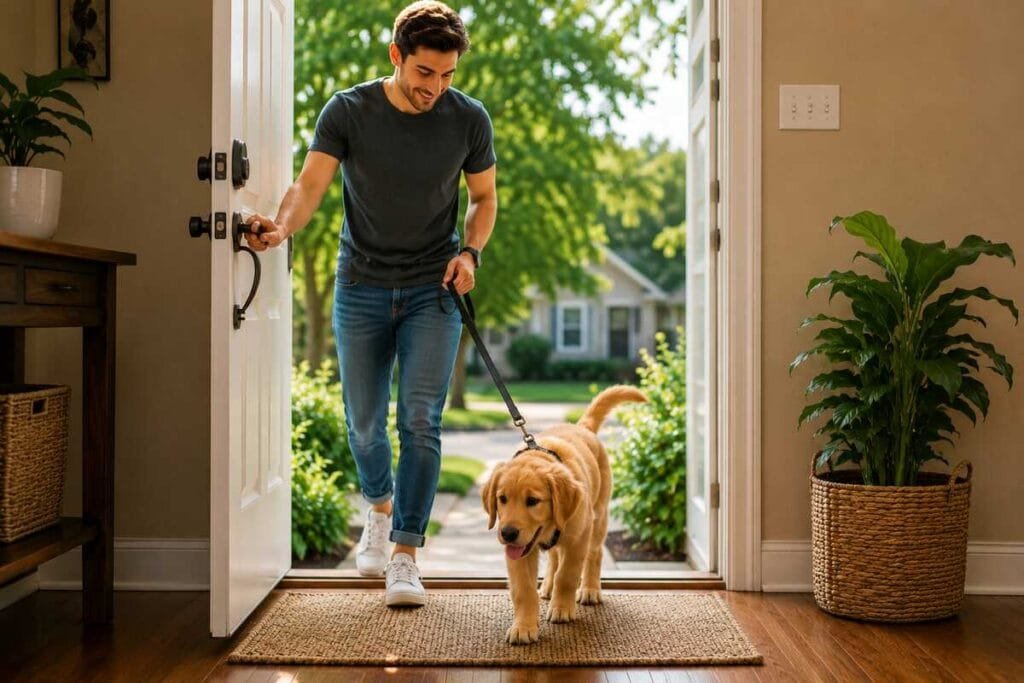
Once you spot a signal, the next few seconds matter. Here is a simple sequence to follow:
- Stay calm. Rushing or reacting loudly can startle a puppy mid-signal.
- Take your puppy outside immediately. Every second counts once a signal appears.
- Use one consistent potty spot. Familiar scent helps a puppy go faster.
- Say your potty cue. A simple word like “go potty” builds a helpful association over time.
- Reward immediately after your puppy goes. Praise or a small treat within seconds reinforces the behavior.
- Return inside calmly. Keep the whole routine low-key and predictable.
Signs Your Puppy May Have a Medical Problem Instead
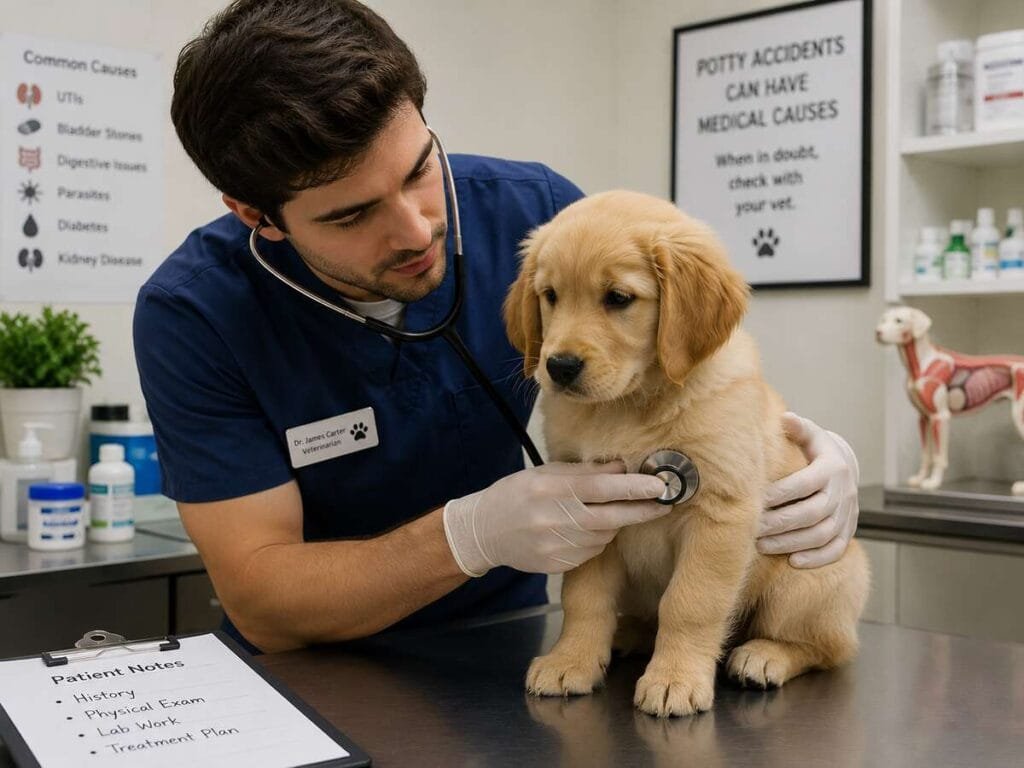
Most potty signals are simply part of normal development, but a few patterns point to something medical rather than behavioral. According to the American Veterinary Medical Association (AVMA), changes in urination or bowel habits can indicate an underlying health issue rather than a training gap.
Watch for:
- Frequent accidents despite a consistent routine
- Blood in urine or stool
- Visible straining to go
- Excessive thirst alongside more frequent accidents
- Suddenly losing potty training that was previously solid
Any of these are worth a vet visit rather than more training, especially if they appear suddenly or alongside a change in appetite or energy. A puppy that was reliably house trained and then regresses quickly is telling you something different than a puppy that is simply still learning. For a broader look at what counts as urgent, our pet emergency signs guide covers when a symptom needs same-day attention.
Common Mistakes Owners Make When Reading Potty Signals
Even attentive owners fall into a few predictable patterns that make signals harder to catch:
- Waiting too long to react once a signal appears, hoping the puppy can hold it a bit longer
- Ignoring sniffing because it looks like normal exploring rather than an early signal
- Punishing accidents after the fact, which does not teach a puppy anything about the signal it gave earlier
- Keeping an inconsistent schedule, which makes it harder to tell a real signal from normal puppy behavior
These overlap heavily with the broader puppy potty training mistakes that slow down housebreaking in general, so fixing one usually helps with the other.
Frequently Asked Questions
How do I know my puppy needs to pee?
Watch for sniffing, circling, restlessness, or heading toward a door. These are the most common early signals, and they usually appear a minute or two before a puppy actually goes.
Why does my puppy sniff before peeing?
Sniffing helps a puppy find a scent-familiar spot to go, especially one that already smells like a previous bathroom break. It is one of the earliest and most reliable pre-potty signals.
Is circling always a potty sign?
Not always. Puppies also circle before lying down to rest. Context matters. Circling combined with sniffing or heading toward a door is a stronger potty signal than circling alone.
How often should I take my puppy outside?
Most puppies need a bathroom break every one to two hours, more often for very young puppies, and always after sleeping, eating, or active play.
At what age do puppies tell you they need to go outside?
Many puppies start showing intentional signals like scratching or standing at the door between 12 and 16 weeks old, though this depends heavily on consistency in training.
Why does my puppy suddenly have more accidents?
A sudden increase in accidents can point to a routine change, stress, adolescence, or a possible medical issue. If it happens abruptly with no clear cause, a vet check is worth ruling out first.
Final Thoughts
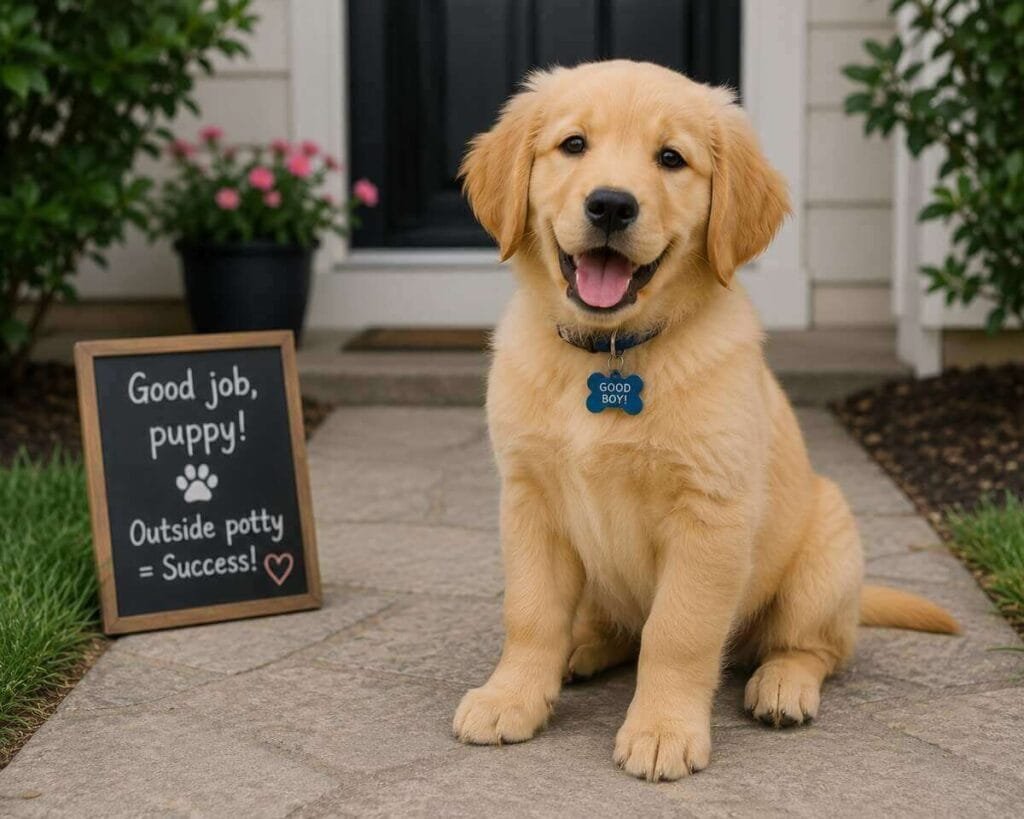
Recognizing your puppy’s potty signals early is one of the simplest ways to speed up house training. Stay consistent, follow a predictable schedule, and reward every success right away. Most puppies improve steadily with a little patience, even after a rough week of missed signals
Related Articles: Stubborn Puppy Potty Training, Why Is My Puppy Pooping in the Crate at Night? And Puppy Potty Training Regression
Author Bio
David Jason is the founder of My Pet Care Tips and writes practical, research-based guides to help pet owners raise healthier, happier dogs and cats. His content focuses on clear, beginner-friendly advice backed by trusted veterinary resources and real-world pet care best practices.