
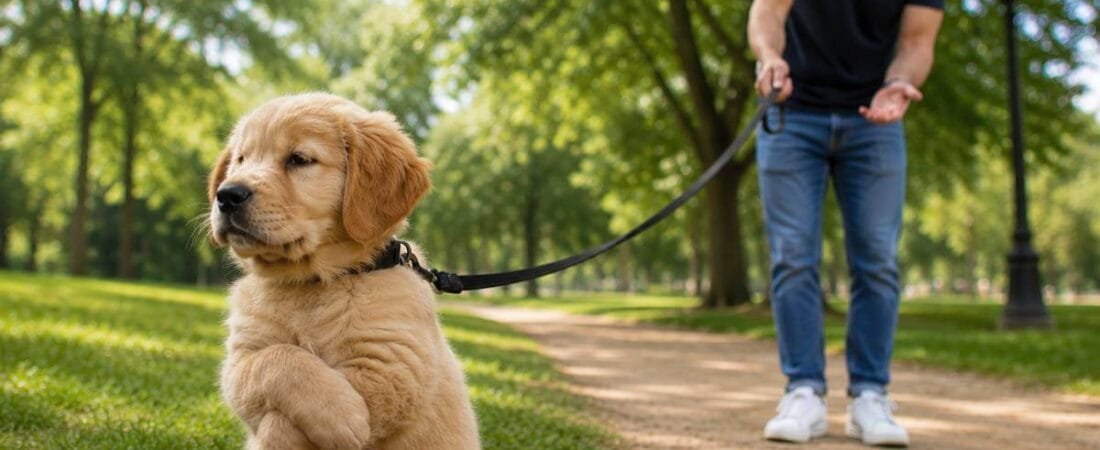
If it feels like your puppy is potty trained one day and back to square one the next, you are not imagining it, and you are not doing something wrong. Potty training a stubborn puppy usually has less to do with stubbornness and more to do with a gap somewhere in the routine, a missed signal, an inconsistent schedule, or freedom given a little too soon. The good news is that gap is almost always fixable once you know where to look.
This guide breaks down why some puppies seem harder to train than others, along with a practical, step-by-step plan built on consistency and positive reinforcement rather than frustration. None of it requires anything complicated, just more structure than the average puppy might need.
Is Your Puppy Really Stubborn or Just Confused?
Puppies rarely ignore potty training out of spite. Dogs do not think in terms of getting back at their owners the way people sometimes assume. What looks like stubbornness is usually confusion, caused by a routine that has not been clear enough for the puppy to learn from yet.
Two things drive most of this confusion. The first is age and learning stage. Very young puppies simply have not had enough repetition to build a solid habit, no matter how intelligent they seem in other areas. The second is mixed signals from owners, like inconsistent timing, different family members using different rules, or reacting to accidents in unpredictable ways. A puppy that gets scolded one time and ignored the next has no reliable way to learn what is actually expected.
Before assuming your puppy is being difficult, it helps to rule out these common puppy potty training mistakes to avoid, since many of them look exactly like stubbornness from the outside.
Why Some Puppies Are Harder to Potty Train
A few real factors make some puppies genuinely slower to catch on, even with a good routine.
Breed Tendencies
Some breeds are naturally more independent or slower to mature, which can stretch out the timeline. Working and companion breeds often develop at different rates, and neither pace means something is wrong. This is a difference in speed, not a training failure.
Age and Bladder Development
A very young puppy physically cannot hold it as long as an older one, no matter how well trained it seems otherwise. Expecting adult-level control from an 8 to 12 week old puppy sets an unrealistic bar that no amount of consistency can overcome on its own.
Inconsistent Routines
A schedule that changes from day to day makes it hard for any puppy to build a reliable habit, stubborn or not.
Too Much Freedom Inside the House
Unsupervised access to multiple rooms gives a puppy more chances to have an accident and less chance of being redirected in time.
Stress or Environmental Changes
A recent move, a new pet, or a disrupted routine can temporarily undo progress that seemed solid just days earlier.
Step-by-Step Plan for Potty Training a Stubborn Puppy
When basic potty training is not sticking, a stricter, more structured version of the process usually works. Here is a step-by-step plan for potty training a stubborn puppy that leans on structure instead of guesswork.
Create a Strict Potty Schedule
Take your puppy out at the same times every day rather than waiting for signals alone, especially early on.
Always Use the Same Potty Area
A consistent spot gives your puppy a scent cue that speeds up the process considerably.
Keep Your Puppy on a Leash Outside
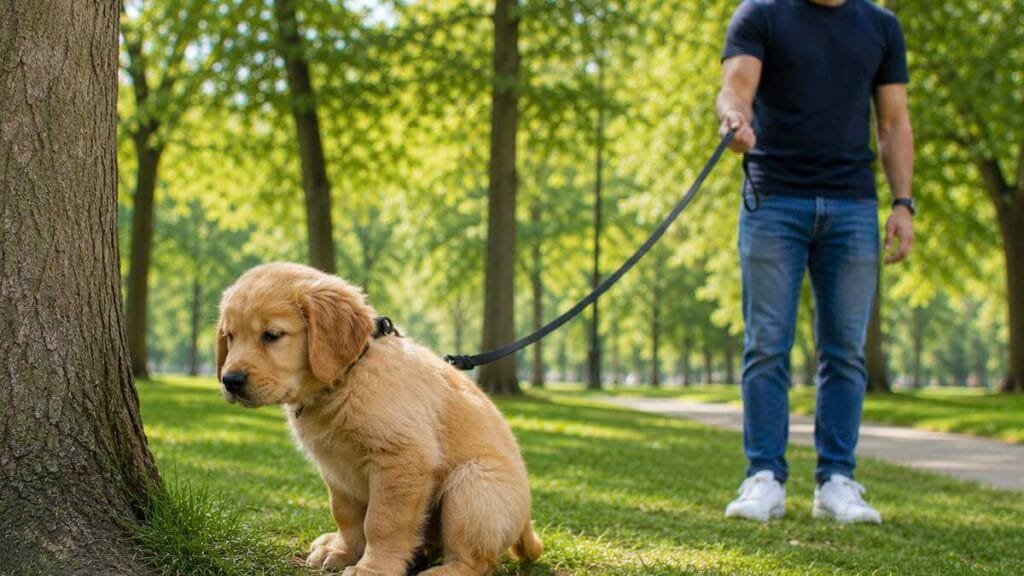
A leash keeps your puppy focused on the task instead of wandering off to explore or play.
Reward Immediately After Success
Praise or a small treat within seconds of going in the right spot reinforces the behavior far more effectively than a reward given even a minute later.
Supervise Indoors at All Times
Close supervision, or a leash indoors if needed, closes the gap where most accidents actually happen.
Prevent Accidents Instead of Reacting
Watching for early signals is far more effective than responding after the fact. Our guide to signs your puppy needs to go potty covers the specific cues to watch for before an accident happens.
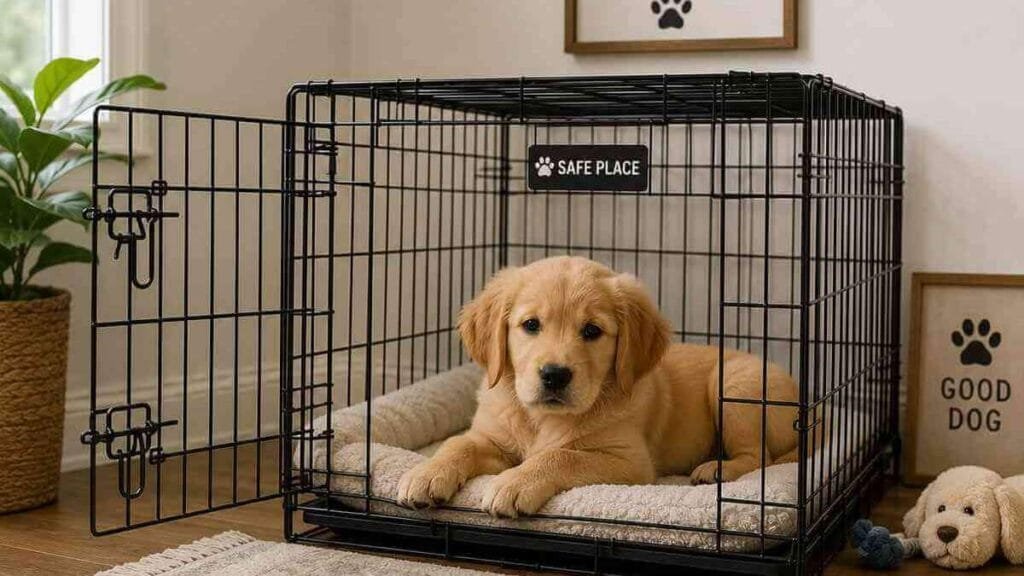
Use Crate Training Correctly
A properly sized crate gives a puppy a natural reason to hold it, since most dogs avoid soiling their own resting space. For more details read our article : How to Train a Puppy at Home
Common Mistakes That Keep Stubborn Puppies From Learning
A few habits quietly work against even a well-intentioned owner:
- Punishing accidents after the fact, which teaches fear rather than the right behavior
- Waiting too long between potty breaks, especially for younger puppies
- Inconsistent commands, using different words or cues each time
- Cleaning with the wrong products, which leaves a scent trail that draws a puppy back to the same spot
- Giving too much freedom before the habit is fully formed

These overlap heavily with the broader puppy potty training mistakes to avoid that slow down housebreaking in general, so fixing these usually helps even a puppy that seemed unusually difficult.
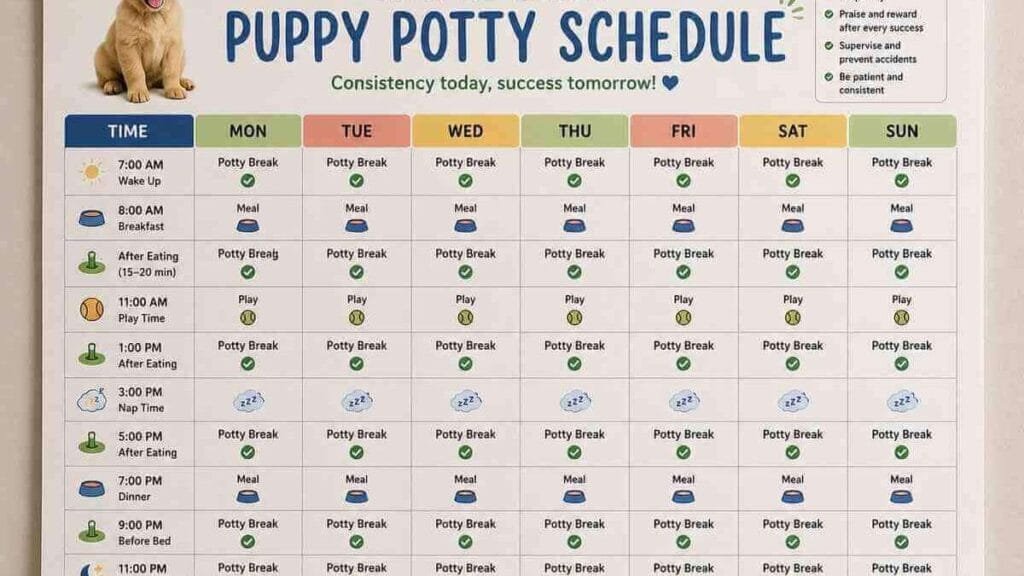
Sample Daily Potty Schedule
| Time | Potty Break |
|---|---|
| Wake up | Immediately after getting up |
| After meals | Within 15 to 20 minutes of eating |
| After naps | As soon as your puppy wakes |
| After playtime | Right after active play ends |
| Before bedtime | One final trip before lights out |
What If Your Puppy Still Won’t Potty Outside?
Some puppies get outside and simply do not go, then have an accident minutes after coming back in. This is one of the more frustrating patterns for owners, since it looks like the training window was there and got missed entirely. If this happens, stay calm rather than showing frustration, since puppies pick up on tension quickly and can start associating the outdoor trip itself with stress.
A few things that help:
- Take a short leash walk instead of standing still in one spot
- Bring your puppy back inside briefly if nothing happens after a few minutes
- Try again shortly after, rather than waiting a long stretch
- Avoid showing frustration, since it can make a puppy more anxious rather than more cooperative
Repeating this cycle patiently, rather than extending one long outdoor session, tends to work better for puppies that seem distracted outside.
When to Call Your Veterinarian
Most slow progress is still within the range of normal puppy development. According to the American Veterinary Medical Association (AVMA), however, certain patterns point to a medical cause rather than a training issue.

Reach out to your vet if you notice:
- Frequent accidents after real progress had already been made
- Pain or visible discomfort while urinating
- Blood in urine
- Excessive thirst alongside more frequent accidents
- Any sudden, unexplained change in bathroom habits
The Animal Humane Society also notes that ruling out a medical cause early prevents weeks of training frustration over something that was never a behavior issue to begin with.
Frequently Asked Questions
How do you help a puppy who won’t potty train?
Go back to basics with a strict schedule, close supervision, and immediate rewards for success. Most puppies that seem stuck respond well to more structure rather than more correction.
How long does it take to potty train a stubborn puppy?
It varies, but potty training a stubborn puppy often takes a few extra weeks compared to average, commonly landing in the four to eight month range with consistent effort.
What is the 10-10-10 rule for potty training puppies?
Take your puppy outside, wait about 10 minutes for it to go, reward within 10 seconds of success, then allow about 10 minutes of supervised freedom before returning to a confined space.
What is the hardest puppy breed to potty train?
Independent and stubborn-natured breeds are often mentioned anecdotally as slower to train, but individual temperament and consistency at home usually matter more than breed alone.
Is crate training necessary for stubborn puppies?
It is not strictly required, but it is one of the more effective tools available, since it uses a puppy’s natural instinct to keep its resting space clean.
Should I punish my puppy after accidents?
No. Punishment after the fact does not teach a puppy anything useful and often adds stress that makes training harder, not easier.
Final Thoughts
Potty training a stubborn puppy takes more patience than the average case, but the process itself does not need to change, just the consistency behind it. Every puppy learns at a different pace, and steady structure wins over frustration every time.
Related Articles: Dog Exercise Routine Guide , Common Dog Health Problems , Why Is My Puppy Pooping in the Crate at Night? and Puppy Potty Training Regression
Author bio: Malik Khubaib is the founder of My Pet Care Tips and writes practical, research-based guides to help pet owners raise healthier, happier dogs and cats. His content focuses on clear, beginner-friendly advice backed by trusted veterinary resources and real-world pet care best practices.