
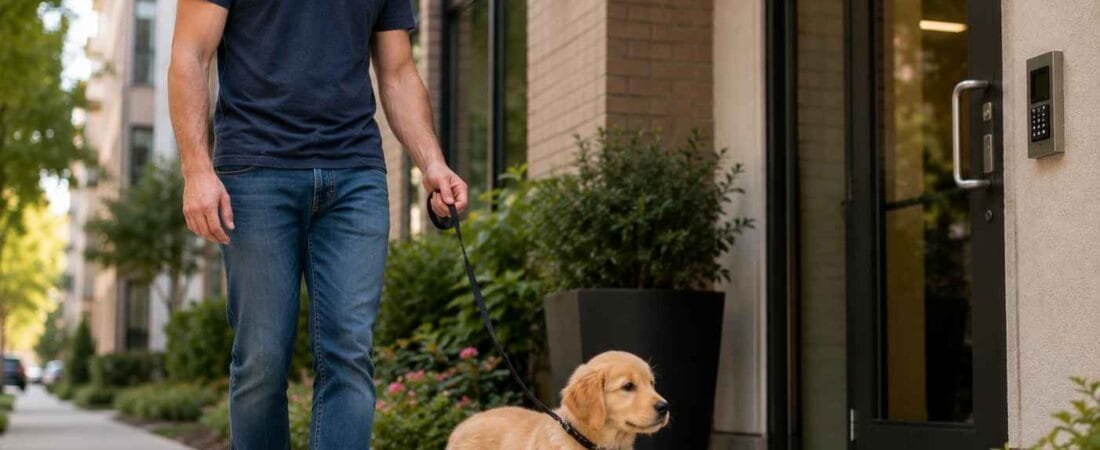
Potty training a puppy in an apartment can be challenging because getting outside takes more than opening a back door. Hallways, elevators, stairs, shared spaces, and building rules can all make it harder to reach the right potty spot before an accident happens.
The good news is that you can potty train a puppy without a backyard. The key is to choose a consistent bathroom location, plan frequent potty breaks around your puppy’s needs, supervise them indoors, and reward them immediately when they go in the correct place.
This guide explains how to potty train a puppy in an apartment, whether to use puppy pads or an outdoor spot, how to handle elevator and hallway accidents, and how to build a practical routine for your home.
Short Answer: How Do You Potty Train a Puppy in an Apartment?
Choose one main potty location, take your puppy there after waking, eating, drinking, and playing, and reward them immediately after they finish. Because elevators and hallways add travel time, start the trip before your puppy reaches their limit rather than waiting for an urgent signal.
If outdoor access is difficult, a puppy pad or indoor grass tray can be a practical backup. Keep the setup consistent, supervise your puppy closely, and adjust the routine as they grow. Ask your veterinarian about safe outdoor potty locations if your puppy has not completed their vaccinations.
What Makes Apartment Potty Training Different?
Limited Outdoor Access
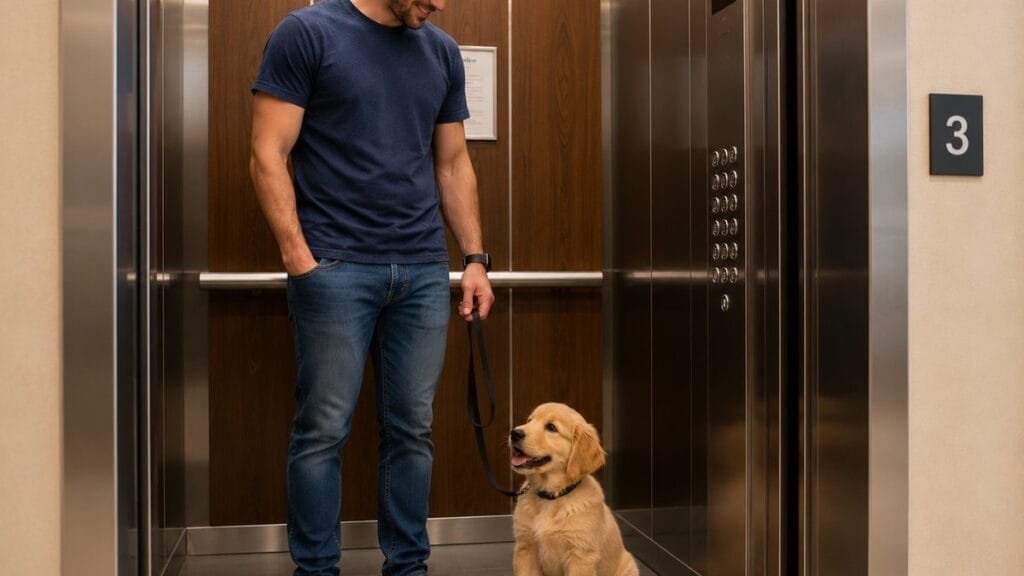
In a house, a puppy can be let into a fenced yard within seconds. In an apartment, every potty trip means getting your puppy leashed, walking through common areas, and reaching an outdoor spot. That extra time matters when a puppy’s bladder is small and the urge to go is sudden.
Elevators and Stairs Slow You Down
If you live above the ground floor, an elevator ride or a flight of stairs adds precious minutes to every potty run. A puppy who needs to go right now may not be able to hold it through a slow elevator or a crowded hallway.
No Backyard Means Less Margin for Mistakes
Without a yard as a backup, indoor accidents happen on carpet, hardwood, or shared building flooring instead of grass. This raises the stakes for building a reliable schedule early.
Common Apartment Potty Training Challenges
Apartment owners often deal with noise sensitive neighbors, restricted outdoor areas, breed size restrictions, and building rules around where dogs can and cannot relieve themselves. All of this makes a clear plan more important than it would be in a single family home.
Picture a typical weekday morning. Your puppy wakes up needing to go right away, but you are on the fourth floor, the elevator is slow, and a neighbor’s dog is barking in the hallway. That short window between waking up and getting outside is exactly where most apartment accidents happen. Planning around these small, everyday obstacles is what separates a smooth training experience from a frustrating one.
Weather adds another layer. Rain, snow, or extreme heat can make owners hesitant to take a puppy out on schedule, which is often when consistency slips the most. Having a backup plan, such as a covered relief area or a temporary indoor pad option for genuinely bad weather, keeps the schedule intact even on difficult days.
If you have not yet worked through the basics of house training, our puppy potty training guide is a good starting point before diving into apartment specific strategies. It also helps to recognize the early cues your puppy gives before an accident, which we cover in detail in our signs puppy needs to go potty article.
Can You Potty Train a Puppy in an Apartment?
Yes, But Consistency Matters
Thousands of apartment dwellers successfully potty train puppies every year. The method is not fundamentally different from house training. What changes is the logistics around getting outside quickly and reliably.
Does Apartment Living Make Potty Training Harder?
Apartment living does not prevent a puppy from learning good bathroom habits, but it can make timing more difficult. A puppy in a home with a yard may reach the potty area in seconds, while an apartment puppy may need to travel through several shared spaces.
Age, individual bladder control, daily routine, supervision, and access to a suitable potty location all affect progress. Breed size alone does not determine how quickly a puppy will become house-trained.
Choose a routine that matches your puppy’s needs and your building’s layout. If you have a very young puppy, expect frequent potty breaks and allow for accidents while the habit develops.
How Long Does It Usually Take?
Potty training can take weeks or months, and the timeline varies from one puppy to another. Some puppies make progress quickly, while others need more time because of their age, routine, health, or difficulty reaching the potty area consistently. Focus on fewer accidents and reliable habits rather than a fixed deadline.
What You’ll Need Before You Start
- A properly sized crate
- Puppy pads, if you plan to use them as a backup or bridge option
- An enzymatic cleaner for accidents
- A leash you can grab quickly
- High-value treats reserved just for potty success
- A potty bell, which is optional but helpful in apartment settings
A bell can be especially useful in apartments since it gives your puppy a clear way to signal before an accident happens, rather than relying only on body language you might miss in a smaller space. Our how to bell train a puppy to go potty guide walks through the exact setup process.
Step-by-Step Apartment Potty Training Plan
Step 1: Create a Consistent Potty Schedule
Build potty breaks around predictable events rather than relying only on your puppy to ask to go outside. Take your puppy to the designated spot after waking up, after meals and drinking, after play, after naps, and before bedtime. Young puppies may need additional breaks throughout the day and overnight.
Keep a simple record of potty trips and accidents for several days. This can help you notice patterns and adjust the schedule before accidents happen. If your puppy regularly has accidents between breaks, shorten the interval instead of expecting them to wait longer.
Step 2: Choose One Potty Location
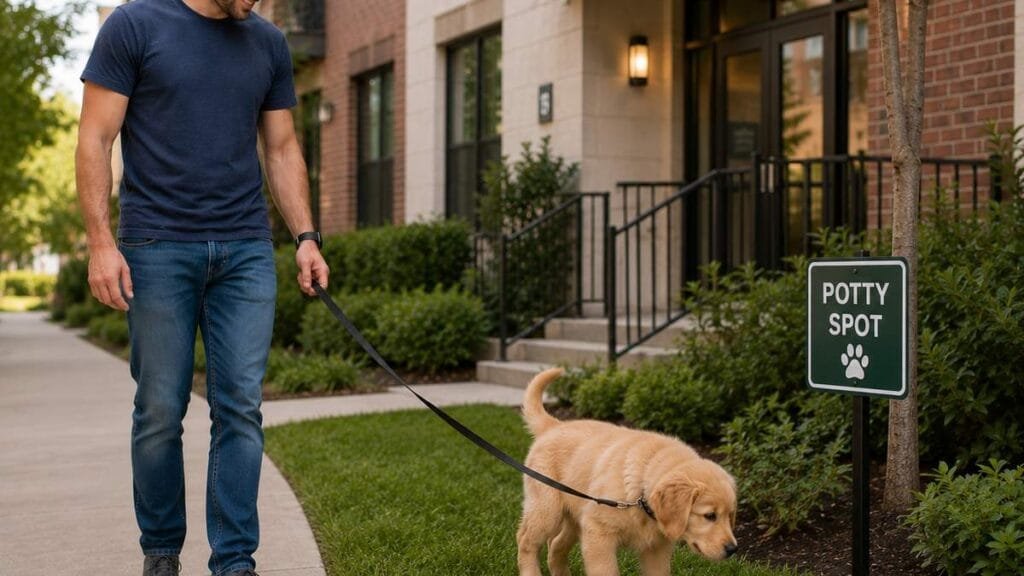
Pick a single outdoor spot near your building and use it every time. Consistency in scent and location speeds up learning.
Step 3: Take Your Puppy Outside Immediately
When it is time for a potty break, head to your chosen spot without unnecessary delays. In an apartment, put the leash and waste bags near the exit so you can leave quickly.
If your puppy starts sniffing, circling, squatting, or suddenly moving away from play, treat that as a possible sign they need to go. If the outdoor trip takes several minutes, plan ahead rather than waiting for the signal to become urgent.
If your puppy does not go once you reach the spot, return indoors under close supervision and try again shortly afterward. Reward them immediately when they finish in the correct location.
Step 4: Reward Successful Potty Trips
Praise or treat your puppy within seconds of finishing outside. This step matters just as much in an apartment as anywhere else.
Step 5: Supervise Indoors
Keep your puppy in the same room as you, or use a leash indoors during high accident risk periods, so you can catch early signals before they turn into a mess on the floor.
Step 6: Handle Accidents Correctly
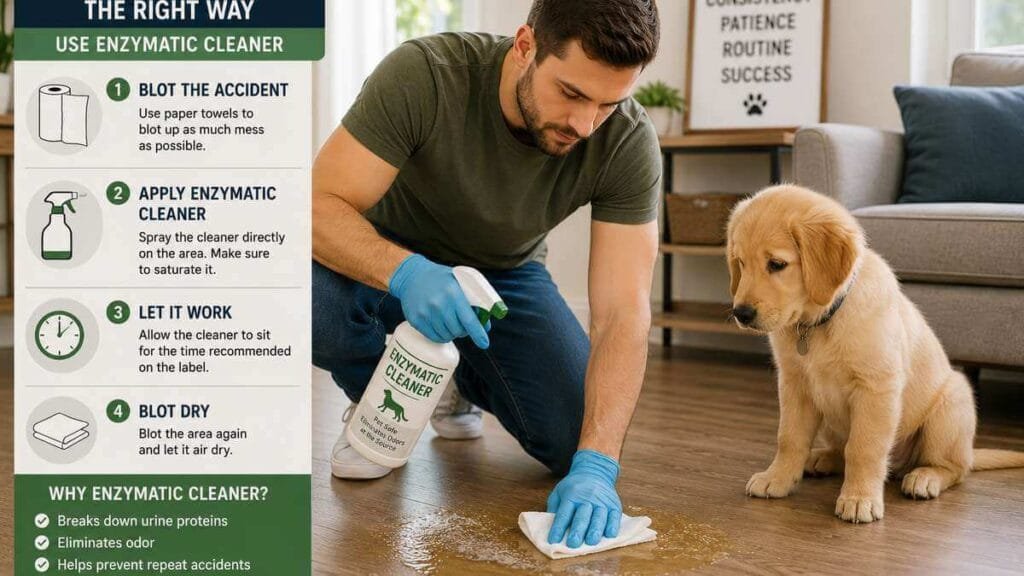
Clean thoroughly with an enzymatic cleaner and avoid punishment. Accidents are a normal part of the learning curve, especially in the first few weeks.
Reviewing our puppy potty training schedule by age article alongside this plan helps you fine tune timing based on exactly how old your puppy is. If mistakes keep happening despite following the schedule, our puppy potty training mistakes guide covers the most common setup errors that slow progress.
Should You Use Puppy Pads in an Apartment?
When Puppy Pads Help
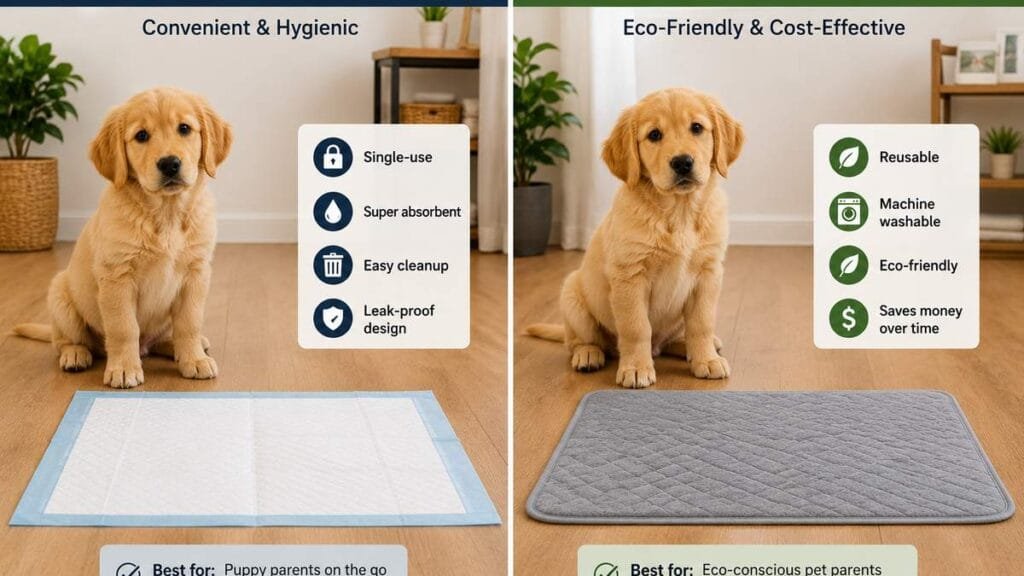
Puppy pads can be useful when a young puppy cannot reliably reach an outdoor potty area in time. They may also help when a building has slow elevator access, outdoor trips are temporarily difficult, or your veterinarian recommends avoiding certain public areas during the vaccination period.
If you use pads, choose one permanent location that is easy to clean and keep it away from your puppy’s food and sleeping area. Take your puppy to the pad at predictable times and reward them when they use it correctly.
When Puppy Pads May Slow Outdoor Training
If your long-term goal is for your puppy to eliminate outdoors, relying on indoor pads can make the transition more complicated for some puppies. Using pads in several different rooms or changing the rules from day to day can also make the expected potty location less clear.
This does not mean pads are always a bad choice. Decide whether you want outdoor-only training or a consistent indoor backup, and make the plan clear through repetition.
Transitioning From Pads to Outdoors
When you are ready to move toward outdoor potty training, introduce the outdoor spot consistently and reward successful trips there. You can gradually adjust the indoor setup if your puppy is responding well, but avoid rushing the change or moving the pad repeatedly in a short period.
Some households keep an indoor potty option for specific circumstances. If you choose this approach, keep the location consistent and continue providing appropriate outdoor experiences, exercise, and socialization.
If you are deciding whether pads are right for your puppy, read our guide to puppy potty pads: pros and cons for a closer look at their benefits and limitations.
Apartment Potty Schedule by Puppy Age
| Puppy Age | Daytime Potty Breaks | Night Potty Breaks |
|---|---|---|
| 8 to 10 weeks | Every 30 to 45 minutes | Every 2 to 3 hours |
| 10 to 12 weeks | Every 1 hour | Every 3 to 4 hours |
| 3 to 4 months | Every 2 hours | Every 4 to 5 hours |
| 4 to 6 months | Every 3 to 4 hours | Once, if needed |
| 6 months and older | Every 4 to 6 hours | Rarely needed |
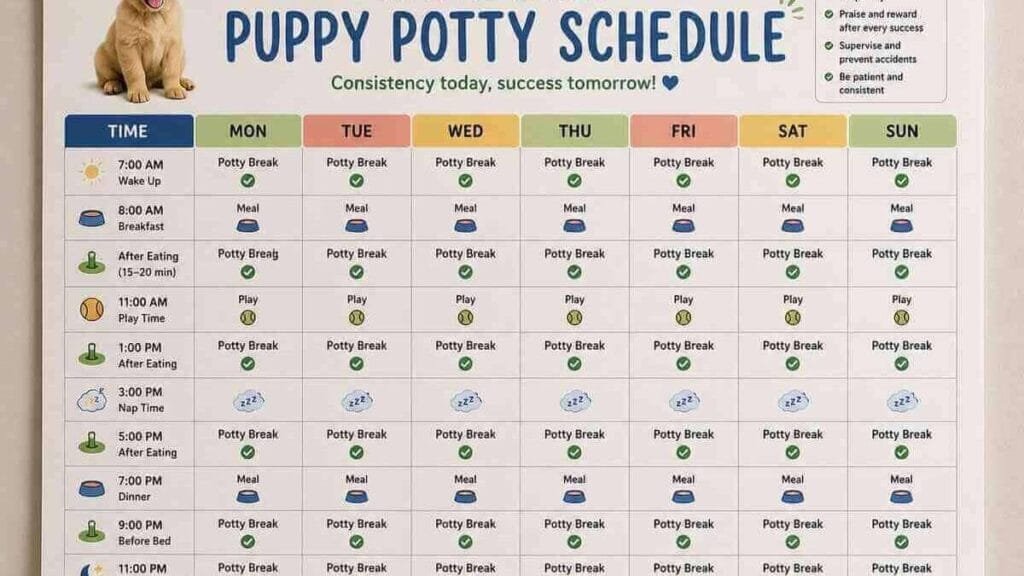
These are routine-planning guidelines, not a guarantee that every puppy can wait for the same amount of time. Very young puppies may need frequent breaks during waking hours and overnight. Adjust the schedule to your puppy’s age, behavior, and individual needs, and ask your veterinarian for advice if accidents are unusually frequent or suddenly increase.
Potty Training Without a Yard
Using Nearby Grass
If your building does not have a designated pet area, a nearby park strip, tree pit, or grass patch can work as your consistent potty spot. Just be sure it is a location your building or city permits for dog use.
Apartment Dog Relief Areas
Many apartment complexes now include designated pet relief areas, sometimes with turf or gravel. These are ideal since they are close, consistent, and specifically designed for this purpose.
Balcony Potty Options
Balcony potty setups using artificial turf boxes exist, but they come with real limitations. Not all buildings allow them, cleanup can be more involved, and puppies may still need outdoor exposure for full socialization. If you consider this option, check your lease terms first and treat it as a temporary or supplemental solution rather than a permanent replacement for outdoor potty training.
If you do set up a balcony option, choose a turf box with proper drainage and clean it daily to prevent odor buildup, especially in warmer months. Never leave an untrained puppy unsupervised on a balcony, since railings and gaps can pose a fall risk for small breeds in particular. Treat balcony access the same way you would treat any other supervised training area rather than a place your puppy can visit freely on their own.
Crate Training for Apartment Puppies
How Crate Training Can Support Potty Training
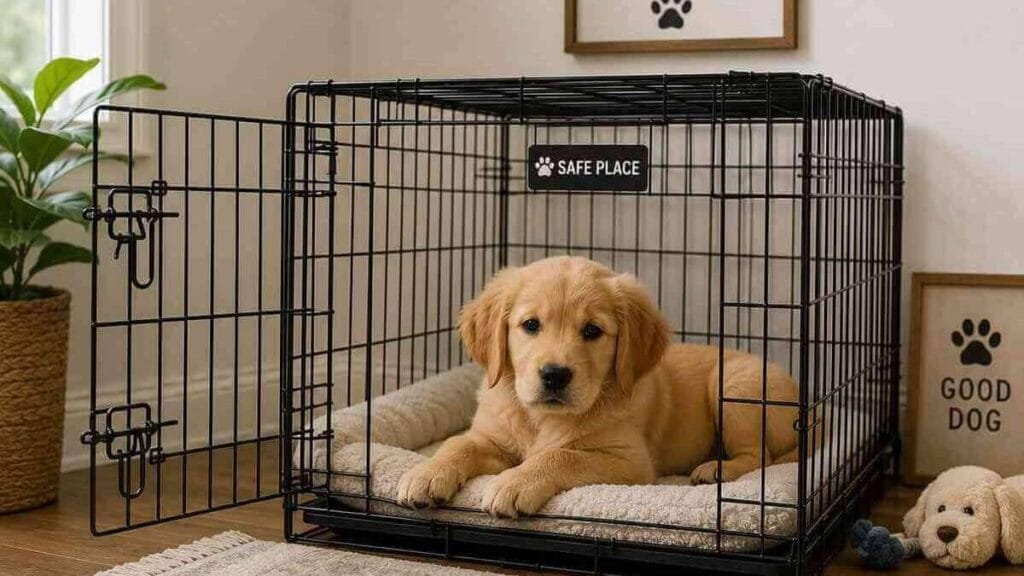
A crate can help with potty training when a puppy is introduced to it gradually and learns to feel comfortable inside. It can also make supervision easier when you cannot watch your puppy closely for a short period.
However, a crate is not a substitute for frequent potty breaks. Puppies should not be expected to stay inside longer than they can comfortably manage. A puppy pen or a safely restricted area can be an alternative if a crate is not suitable for your household.
Choose a crate that allows your puppy to stand, turn around, and lie down comfortably. Take your puppy to the potty area after waking up and whenever their routine indicates they may need to go.
Correct Crate Size
The crate should be large enough for your puppy to stand, turn around, and lie down comfortably, but not so large that they can use one end as a bathroom and the other as a bed.
Crate Schedule
Pair crate time with your potty schedule directly. Puppies should go straight from the crate to an outdoor potty trip first thing after waking up.
In an apartment, the crate also doubles as a management tool during the moments when you cannot immediately get outside, such as during a video call or while waiting for an elevator. Just remember that a crate should never be used as a substitute for a proper potty schedule. It is a support tool, not a solution on its own.
If your puppy is having accidents inside the crate itself, our puppy pooping in crate at night article covers the most common causes and fixes for this specific issue.
How to Potty Train a Puppy Before Vaccinations Are Complete
Puppies need potty training while they are still receiving their early vaccinations, but the safest location depends on local disease risks, your puppy’s health, and the advice of your veterinarian.
Ask your veterinarian which outdoor areas are appropriate for potty breaks in your neighborhood. Until you have that guidance, avoid assuming that busy dog parks or heavily used areas are safe for a young puppy.
If reaching a suitable outdoor spot is difficult, an indoor puppy pad or a designated indoor potty tray may be a temporary option. Keep the location consistent and clean it regularly.
Choosing a Safe Potty Location
Choose a location that you are allowed to use, is practical to reach quickly, and can be kept clean. Follow your veterinarian’s advice about areas used by unfamiliar dogs.
When to Expand Outdoor Access
There is no single date that applies to every puppy or every location. Your veterinarian can advise when and how to expand access to public areas based on vaccination progress and local disease risks.
Apartment Potty Training at Night
Bedtime Routine
Take your puppy to the designated potty area shortly before bedtime. Keep the routine calm and predictable so your puppy learns that this is a bathroom break rather than playtime.
Keep fresh water available as appropriate for your puppy’s age, health, and veterinary guidance. Do not routinely restrict water simply to prevent accidents. If your puppy needs to urinate unusually often overnight, ask your veterinarian for advice.
Nighttime Potty Trips
Very young puppies may need overnight potty breaks. Keep these trips quiet and brief, use the same potty location when practical, and reward successful elimination calmly.
As your puppy grows and becomes more reliable, you can adjust the routine according to their needs. Do not expect every puppy to sleep through the night at the same age.
Reducing Overnight Accidents
Take your puppy out after waking, before settling for the night, and whenever they show signs of needing a bathroom break. If accidents continue, review the timing and make the sleeping area easier to supervise. Contact your veterinarian if the problem is sudden, persistent, or accompanied by other symptoms.
Common Apartment Potty Training Mistakes
- Waiting too long between scheduled potty breaks
- Giving too much free roam of the apartment before training is established
- Switching up the potty schedule inconsistently
- Punishing accidents after the fact
- Using too many different potty locations instead of one consistent spot
If your puppy seems especially resistant to the process despite following these steps, our stubborn puppy potty training guide covers troubleshooting for puppies who are not responding to standard methods. It is also worth revisiting our puppy potty training mistakes article, since several of the same errors apply to apartment settings.
Apartment Potty Training Problems and Solutions
Puppy Won’t Potty Outside
This often happens when a puppy is distracted by new smells, sounds, or people in a busy apartment complex. Try a quieter time of day or a less trafficked exit route.
Puppy Only Uses Puppy Pads
If your puppy strongly prefers the pad, gradually move it closer to the door as outlined earlier, and increase outdoor trips during high success times, like right after waking up.
Puppy Has Accidents in the Hallway
Hallway accidents often happen because the puppy cannot reach the outdoor potty spot quickly enough, is not yet fully trained, or becomes distracted during the trip. Start the potty trip earlier, keep your puppy on a secure leash, and use the same route and approved potty location whenever practical.
Clean any accident thoroughly with a pet-safe enzymatic cleaner suitable for the surface. If your puppy repeatedly urinates in the hallway despite a consistent routine, review the schedule and consult your veterinarian if the change is sudden or unusual.
Puppy Refuses Elevators
Some puppies are nervous about elevators at first. Practice short, calm elevator rides unrelated to potty trips so your puppy does not associate the elevator only with urgency or stress.
Regression After Doing Well
A puppy who was reliable and suddenly starts having accidents again may be dealing with a schedule change, stress, or a medical issue. Our puppy potty training regression guide breaks down the most common causes and how to get back on track.
Apartment Potty Training Tips From Experts
- Use the same exit every single time, not just the same general area
- Keep potty trips businesslike rather than turning them into play sessions
- Reward immediately, within seconds of your puppy finishing
- Track your puppy’s potty schedule on paper or in an app to spot patterns faster
- Keep a small bag of treats and waste bags by the door so you are never delayed by a last minute search
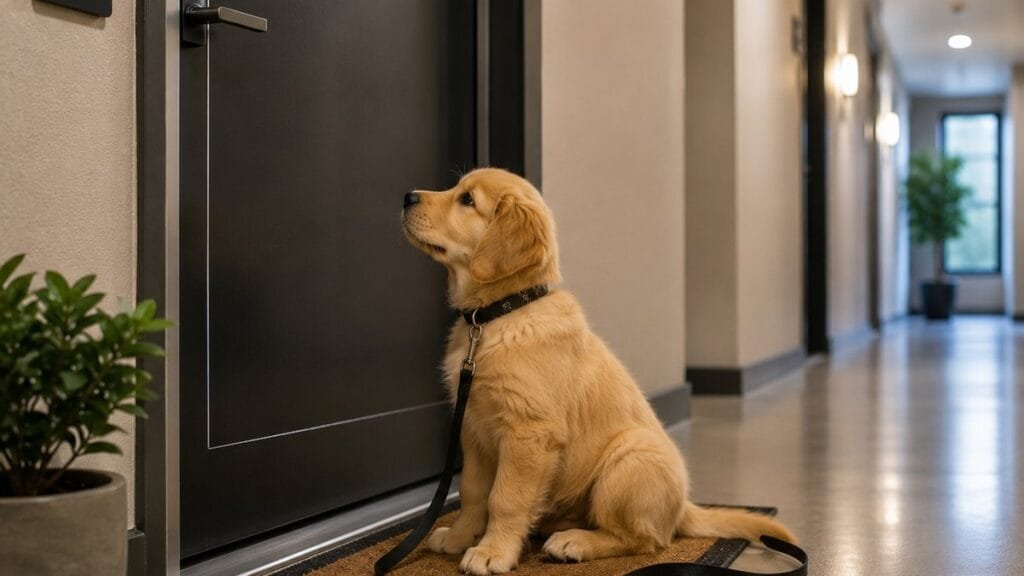
A few safety notes matter specifically for apartment living. Always keep your puppy on a secure leash in elevators and hallways, since sudden movement in tight spaces can be dangerous. Never allow an untrained puppy loose on a balcony, and always supervise closely in shared building spaces where other residents and pets are present. If your building has a shared elevator, consider training your puppy to sit calmly during the ride, which reduces stress for both your puppy and other residents sharing the space.
Frequently Asked Questions
Is it harder to potty train a puppy in an apartment?
It is not inherently harder, but it does require more planning around timing, building logistics, and consistent access to an outdoor spot.
Can I use puppy pads permanently?
Some owners choose to use pads long term, particularly for small breeds or older dogs, but most apartment owners eventually transition fully outdoors for better long term habits.
How often should I take my puppy outside?
Very young puppies need potty breaks every 30 to 60 minutes during the day, gradually extending as they age, following the schedule outlined above.
Can puppies use apartment balconies?
Some buildings allow supervised balcony potty setups, but this depends on your lease terms and should be treated as a supplemental option rather than a full replacement for outdoor training.
Should I carry my puppy downstairs?
For very young puppies who cannot yet hold their bladder long enough for stairs or an elevator ride, carrying them down for potty trips is a reasonable short term solution.
How long does apartment potty training take?
Most apartment puppies reach full reliability within 4 to 6 months, similar to the general timeline for potty training in any home setting.
Can I potty train without a yard?
Yes. Nearby grass patches, designated relief areas, or a consistent sidewalk spot can all work as a reliable potty location without a private yard.
How Do You Potty Train a Puppy in an Apartment Without an Elevator?
Choose the closest approved outdoor potty location and take your puppy there after waking, eating, drinking, and playing. Keep the leash and supplies ready near the door to avoid delays. If stairs make it difficult to reach the spot in time, ask your veterinarian whether carrying your puppy is appropriate for their age and health. A consistent indoor potty area may also help when outdoor access is impractical.
What Should You Do if Your Puppy Keeps Having Accidents in an Apartment?
Review the potty schedule, shorten the time between breaks if needed, and supervise your puppy closely indoors. Make sure the route to the potty area is quick and that you reward success immediately. Clean accidents thoroughly with a pet-safe enzymatic cleaner. If accidents suddenly increase, your puppy seems uncomfortable, or the problem continues despite consistent training, contact your veterinarian.
Conclusion
Potty training a puppy in an apartment takes planning, but a backyard is not essential for success. Choose a consistent potty location, account for the time it takes to reach it, and offer frequent opportunities that match your puppy’s age and needs.
Use puppy pads or an indoor grass tray if they fit your situation, and keep the routine consistent so your puppy can learn what is expected. Supervise closely, reward successful potty trips, and clean accidents without punishment.
Remember that every puppy learns at a different pace. If accidents suddenly increase or your puppy shows signs of discomfort or illness, seek veterinary advice instead of assuming the problem is only behavioral.
David Jason is the founder of My Pet Care Tips
David writes practical, research based guides to help pet owners raise healthier, happier dogs and cats. His content focuses on clear, beginner friendly advice backed by trusted veterinary resources and real world pet care best practices.
Last Updated : July 30,2026
Sources: American Kennel Club (AKC),ASPCA