
A puppy who won’t stop barking in the crate is exhausting, especially at 2 in the morning or right before an important work call. It is easy to feel like your puppy is doing this on purpose, but barking is communication, not stubbornness.
Your puppy is telling you something, whether that is fear, boredom, a full bladder, or simply not yet understanding that the crate is a safe place. The goal of this guide is to help you figure out what your puppy is actually saying, and respond in a way that calms the barking without accidentally making it worse.
Ignoring barking is sometimes the right move, but not always. Getting this distinction right is one of the most important parts of solving the problem for good.
Why Puppies Bark in Their Crate
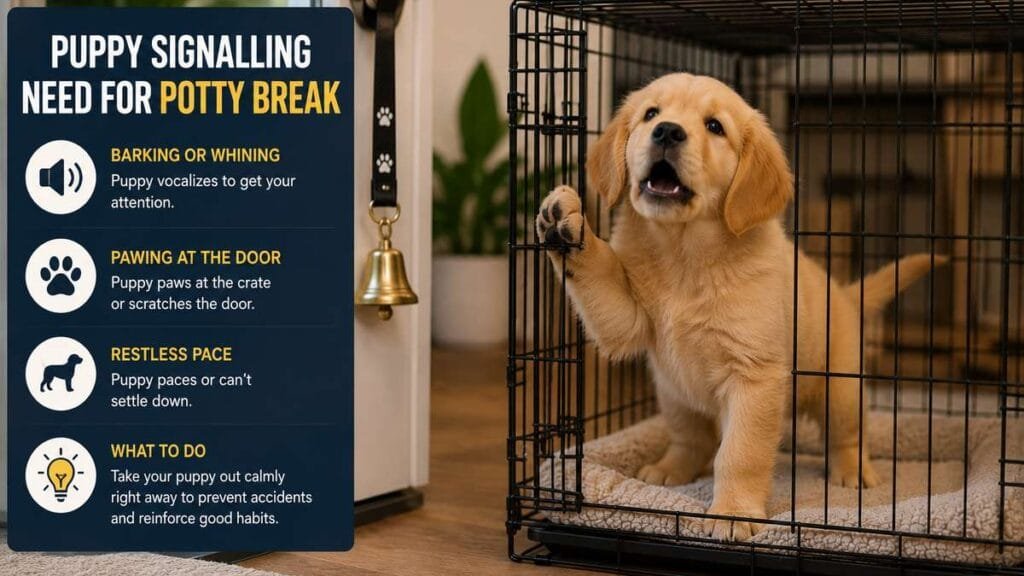
Fear or Anxiety
A crate that feels unfamiliar or confining can trigger genuine distress, especially in the first few nights home. This is different from mild protest barking and usually comes with other stress signals like panting or trembling.
Needs a Potty Break
Young puppies have limited bladder control, and barking is often a direct signal that they need to go outside. If the timing lines up with your puppy’s usual schedule, this is likely the cause. Our puppy potty training schedule by age guide can help you cross check the timing.
Too Much Energy
A puppy who has not had enough physical activity before crate time often has excess energy with nowhere to go, which comes out as barking. Matching exercise to your puppy’s actual needs, as covered in our dog exercise routine guide, makes a noticeable difference.
Attention Seeking
Some puppies quickly learn that barking gets a reaction, even a frustrated one. If barking consistently results in you rushing over, opening the crate, or talking to your puppy, this pattern can reinforce itself.
Not Fully Crate Trained
If your puppy was placed in a crate for long stretches before ever building a positive association with it, barking is a natural response to an unfamiliar, uncomfortable situation. Our upcoming How to Crate Train a Puppy pillar guide covers the full foundational process for building that comfort from scratch.
Should You Ignore Puppy Barking?
When Ignoring Works
If your puppy has recently had a potty break, exercise, and is barking simply out of protest or attention seeking, calmly ignoring short bursts often works. Puppies typically settle once they learn that barking does not result in immediate release.
When It Doesn’t
Ignoring barking is not appropriate if your puppy genuinely needs a potty break, is in physical distress, or is showing signs of real panic rather than simple protest. In these cases, responding calmly and appropriately is the right move, not a setback.
Warning Signs
Watch for barking paired with drooling, frantic scratching at the crate, or barking that escalates rather than fades over several minutes. These signs point toward something beyond typical settling in behavior, and may be worth discussing with your veterinarian, particularly if it overlaps with signs of dog separation anxiety.
How to Stop Puppy Barking in the Crate
Make Sure Potty Needs Are Met
Always rule out a potty break first. A quick trip outside before crate time removes one of the most common and easily fixed causes of barking. Our signs your puppy needs to go potty article, wait, our signs your puppy needs to go potty guide covers the early cues to watch for.
Exercise Before Crate Time
A tired puppy settles into the crate far more easily than one full of pent-up energy. Aim for active play or a walk in the 30 to 60 minutes before crate time whenever possible.
Create Positive Crate Associations
Let your puppy explore the crate on their own terms with the door open, using treats and calm praise, well before you start closing the door for real stretches.
Feed Meals in the Crate
Feeding regular meals inside the crate, with the door open at first, builds a strong positive association between the space and something your puppy genuinely enjoys.
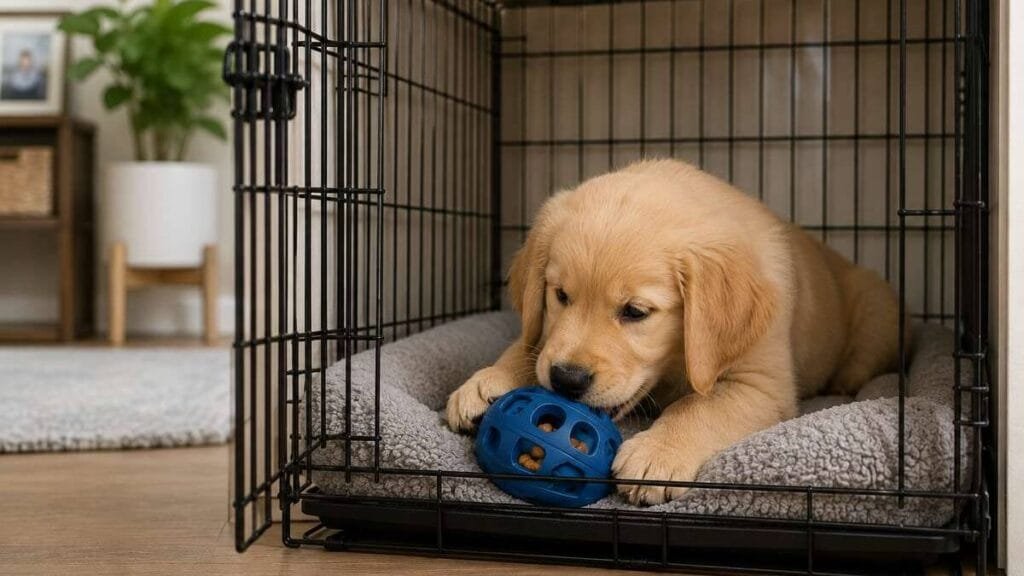
Use Special Crate Toys
Reserve a few high-value toys exclusively for crate time. Our best dog toys for active dogs guide includes several options that work well for this purpose, particularly food puzzle style toys that keep your puppy occupied.
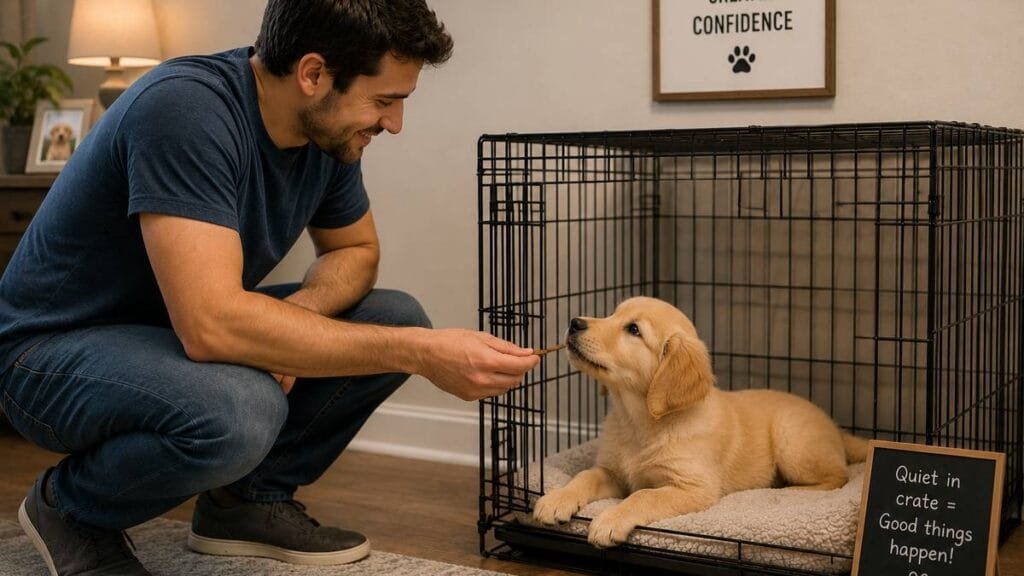
Reward Quiet Behavior
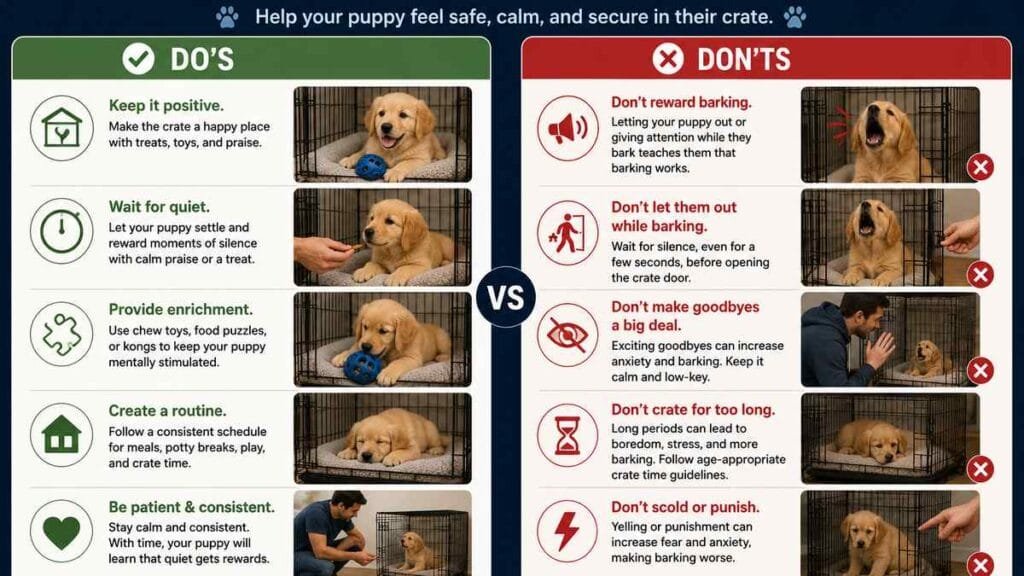
The moment your puppy is calm and quiet, even briefly, offer praise or a treat. This teaches your puppy that quiet, not barking, is what earns a response.
Cover the Crate, Only If Your Puppy Likes It
A partial cover can create a den-like, calming effect for some puppies, though others find it stressful. Test this gradually and watch your puppy’s reaction before making it a permanent setup.
Don’t Accidentally Reward Barking
Opening the crate the instant your puppy barks teaches them that barking works. Instead, wait for a brief pause in barking before letting them out, so the release is connected to calm behavior rather than noise.
Build Crate Time Gradually
Start with short stretches and increase duration slowly as your puppy shows they can settle. Jumping straight to long crate periods before your puppy is ready is one of the most common triggers for ongoing barking.
Keep a Consistent Daily Schedule
Puppies settle more easily when meals, exercise, and crate time happen at roughly the same times each day. Predictability reduces the anxiety that often shows up as barking.
Know When Barking Needs a Vet Visit
If barking is paired with physical symptoms, extreme distress, or does not improve despite consistent positive training over several weeks, it is worth discussing with your veterinarian to rule out underlying medical or behavioral concerns.
Common Mistakes Owners Make
- Yelling at the crate. This adds stress rather than reducing it, and can make your puppy associate the crate with tension instead of calm.
- Using punishment. Correcting a puppy for barking in the crate damages trust and often increases anxiety rather than resolving it.
- Letting your puppy out while barking. This is one of the fastest ways to accidentally train a puppy that barking gets results.
- Crating too long for their age. Our how long can a puppy stay in a crate by age guide breaks down appropriate stretches by age so you can check whether your puppy’s crate time is realistic for their stage.
- Skipping exercise before crate time. An under-exercised puppy is far more likely to bark simply because they have nowhere to put their energy.
Several of these same patterns show up in general potty training struggles too. Our puppy potty training mistakes article covers the broader list if you are working through both issues at once.
Puppy Barking in Crate Won’t Stop at Night
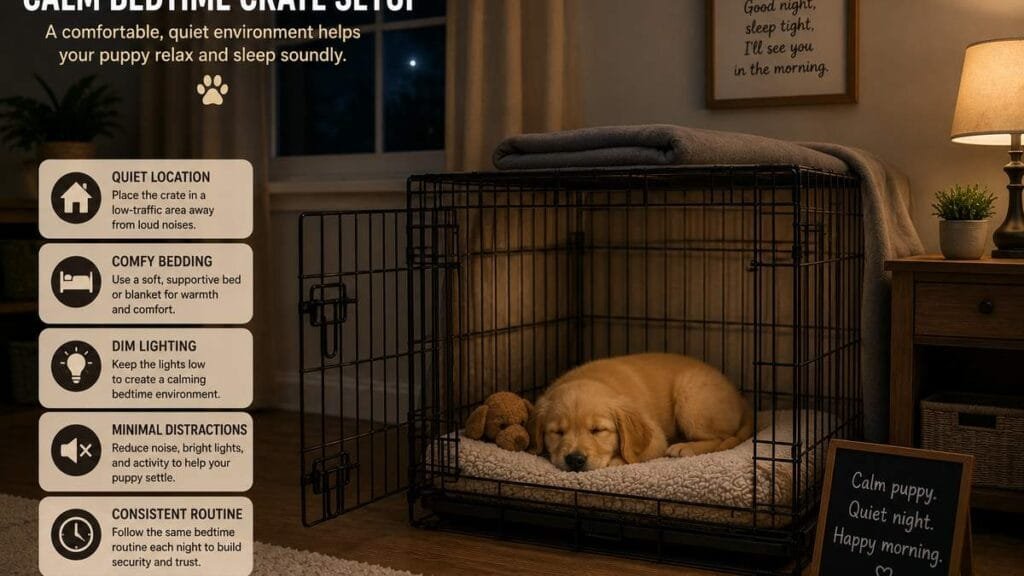
Bedtime Routine
A calm, predictable bedtime routine, including a final potty break and a short wind-down period, helps signal to your puppy that it is time to settle rather than play.
Potty Break
Confirm your puppy has fully emptied their bladder right before bed. A puppy who still needs to go will almost always bark, regardless of how calm the rest of the routine is.
White Noise
A fan or white noise machine near the crate can help mask household or outside sounds that might otherwise startle a light sleeping puppy awake.
Location of Crate
Keeping the crate in or near your bedroom for the first few weeks, rather than isolated in another room, often reduces nighttime barking significantly, since your puppy does not feel completely alone.
If your puppy’s nighttime barking seems tied to genuine distress rather than a quick settling in period, our upcoming Puppy Crying in Crate at Night: What to Do guide covers this specific scenario in more depth.
Crate Barking While You’re Away
Practice Short Departures
Leave for very brief periods, even just stepping outside for a minute, and gradually build up the duration. This teaches your puppy that your absence is temporary and predictable.
Avoid Dramatic Goodbyes
A long, emotional goodbye can actually increase anxiety around your departure. Keep exits and returns calm and low key.
Use Enrichment
A food puzzle or long-lasting chew given right before you leave gives your puppy something productive to focus on instead of the sound of the door closing.
When Barking Could Be Separation Anxiety
Symptoms
Persistent barking that does not fade over time, destructive behavior beyond typical chewing, drooling, or attempts to escape the crate can all point toward separation anxiety rather than simple crate adjustment.
When to Contact a Trainer or Vet
If these symptoms are frequent, intense, or getting worse rather than better despite consistent positive training, it is worth reaching out to your veterinarian or a certified trainer. Our dog separation anxiety article covers the broader signs and next steps in more detail.
Quick Do’s and Don’ts Table
| Do | Don’t |
|---|---|
| Reward quiet behavior | Punish barking |
| Exercise before crate time | Leave your puppy crated all day |
| Build crate time gradually | Rush straight to long stretches |
| Confirm potty needs first | Assume it is always attention seeking |
| Keep a consistent schedule | Let your puppy out the moment they bark |
Frequently Asked Questions
Will my puppy eventually stop barking in the crate?
Yes, for most puppies. With consistent positive training, potty needs met, and enough exercise, crate barking typically fades significantly within a few weeks.
Should I ignore puppy barking?
Sometimes. Ignoring short protest barking after ruling out potty needs and exercise can work well, but genuine distress signals should not be ignored.
Why does my puppy bark only at night?
Nighttime barking often points to a potty need, loneliness in an unfamiliar room, or disrupted sleep from household noise. A consistent bedtime routine usually helps.
How long should I let my puppy bark?
There is no fixed number of minutes. The key is waiting for a brief pause in barking before responding, rather than opening the crate the instant barking starts.
Can crate barking become a habit?
Yes, particularly if barking has previously been rewarded with release or attention. Breaking this pattern takes consistency, but it is very achievable.
Is crate barking a sign of separation anxiety?
It can be, especially if paired with other symptoms like destructive behavior or intense distress that does not improve over time. Milder crate barking is often just a normal part of the adjustment process.
What toys help reduce crate barking?
Food puzzle toys and long-lasting chews tend to work best, since they keep a puppy mentally occupied rather than relying on excitement alone.
Conclusion
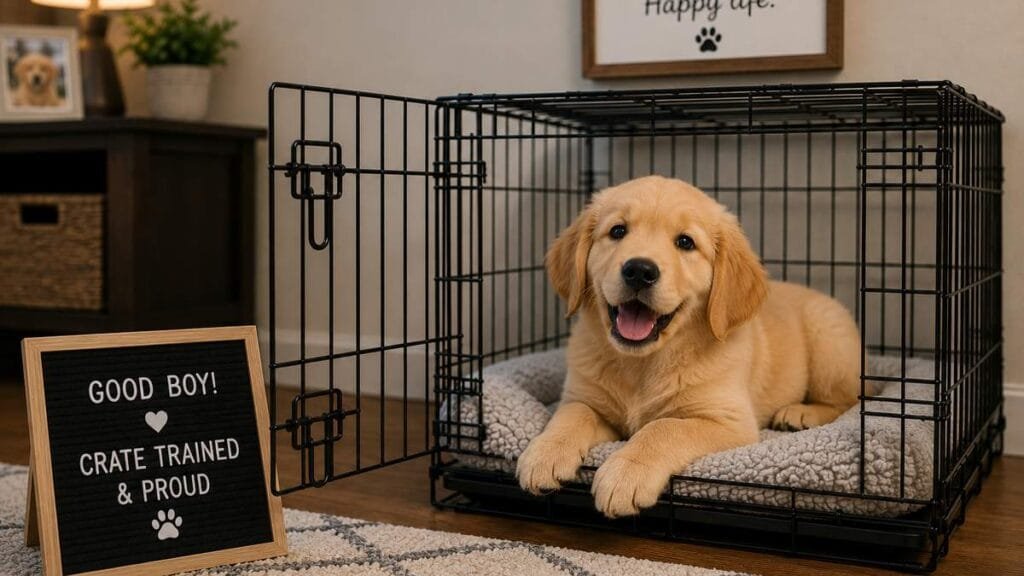
Crate barking almost always has a clear cause, whether that is a potty need, excess energy, fear, or simply an incomplete crate training foundation. Rule out the basics first, respond with consistency rather than frustration, and build crate comfort gradually. Every puppy adjusts at their own pace, and steady, positive training gets there far more reliably than punishment ever will.
According to the American Kennel Club (AKC), positive reinforcement consistently produces better long-term results than punishment-based approaches for crate training and behavior issues in general. The American Veterinary Medical Association (AVMA) also recommends consulting a veterinarian if barking is paired with signs of genuine distress rather than typical settling in behavior, and the American Animal Hospital Association (AAHA) offers additional guidance on building healthy crate habits from the earliest weeks home.
Author Bio
David Jason is the founder of My Pet Care Tips
David writes practical, research based guides to help pet owners raise healthier, happier dogs and cats. His content focuses on clear, beginner friendly advice backed by trusted veterinary resources and real world pet care best practices.
Last Updated : July 31,2026