

If your puppy won’t sleep through the night, you’re not alone. Many new puppy owners struggle with nighttime crying, barking, or frequent waking.Nighttime waking is one of the most common struggles new puppy owners face, and it can feel exhausting when it drags on longer than expected.
It often helps to remember that this stage, however tiring, is temporary for the vast majority of puppies. What feels like a stubborn problem is usually just your puppy’s body and brain still catching up with the routine you are trying to build. Understanding the reason behind the waking makes it far easier to respond in a way that actually helps rather than one that accidentally makes things harder.
The good news is that there are usually clear, identifiable reasons behind it, and most of them are fixable with the right approach. This guide covers exactly why puppies struggle to sleep through the night, what to expect at different ages, practical solutions that actually work, and how to tell when it might be time to check in with your veterinarian.
Why Won’t My Puppy Sleep Through the Night?
Normal Puppy Sleep Development
Puppies are not born with adult sleep patterns. Bladder control, emotional security, and the ability to self-settle all develop gradually over the first several months, which means some nighttime disruption is a completely normal part of early puppyhood.
Age Matters
An 8 week old puppy simply cannot be expected to sleep the same way a 6 month old puppy can. Bladder capacity, comfort with being alone, and overall maturity all shift significantly across these early months, and expectations should shift right along with them.
When It Becomes a Problem
Occasional nighttime waking is expected. It becomes worth addressing more directly when it disrupts your puppy’s rest consistently over weeks without any improvement, or when it is paired with signs of distress or physical discomfort rather than simple restlessness.
Common Reasons Puppies Wake Up at Night

Needs to Potty
A young puppy’s bladder often cannot hold through a full night yet. This is one of the most common and easily addressed causes of waking, and it typically improves steadily as your puppy grows.
Hunger or Thirst
A puppy who is hungry or thirsty close to bedtime may wake simply because a basic need was not fully met earlier in the evening. Adjusting meal timing slightly earlier can sometimes resolve this on its own.
Overtired Puppy
Counterintuitively, an overtired puppy often struggles more with settling and staying asleep than one who is calmly, moderately tired. Overtiredness can trigger a wound-up state that makes deep, restful sleep harder to reach.
New Home Anxiety
In the first weeks especially, unfamiliar surroundings and the absence of littermates can lead to genuine nighttime unsettledness. This tends to ease naturally as your puppy builds trust and familiarity with their new environment.
Crate Discomfort
An improperly sized crate, uncomfortable bedding, or a crate placed somewhere too warm or too cold can all interfere with restful sleep. Small adjustments to the physical setup sometimes make a bigger difference than expected.
Teething Pain
Physical discomfort from teething, typically most intense between 3 and 6 months, can genuinely disrupt sleep. A safe chew toy offered before bed can sometimes help ease this discomfort.
Sleep Regression
Puppies go through predictable developmental stages that can temporarily disrupt a previously settled sleep pattern, even without any change in routine. Our puppy sleep regression guide breaks this down by age in much more detail, including which stages tend to cause the most noticeable disruption.
Too Much Daytime Sleeping
A puppy who naps excessively during the day may simply not be tired enough come bedtime, leading to more nighttime restlessness. Gently limiting very late afternoon or early evening naps can help realign the schedule.
Medical Issues
Less commonly, ongoing sleep disruption can point to an underlying medical issue, particularly if paired with other symptoms like changes in appetite, energy, or bathroom habits.
How to Help Your Puppy Sleep Through the Night
Create a Consistent Bedtime Routine
A predictable sequence of events each night, such as a final potty break followed by a calm wind-down period, helps your puppy’s body anticipate sleep rather than resist it. The specific steps matter less than the consistency of the order itself.

Exercise Before Bedtime
Adequate physical activity during the day, particularly in the hours before bed, helps your puppy settle more easily once nighttime arrives. Avoid intense play right before bed, since this can have the opposite effect and leave your puppy wound up.
Mental Enrichment
Puzzle toys, short training sessions, and varied daily activities help tire your puppy’s mind, not just their body, which often supports deeper, more restful sleep. A puppy who is only physically tired but mentally understimulated can still struggle to settle.
Last Potty Break
A thorough final potty break right before bed removes one of the most common and easily fixed causes of nighttime waking. Give your puppy enough time outside to fully empty their bladder rather than rushing this step.
Limit Water Before Bed, Without Causing Dehydration
Reducing water access an hour or two before bedtime can help reduce overnight accidents, though your puppy should always have full access to water throughout the rest of the day. Never restrict water for extended periods, especially during warm weather or after exercise.
Comfortable Sleeping Area
Soft, washable bedding and a properly sized crate go a long way toward making nighttime feel secure rather than uncomfortable. A crate that is too large or too small can both work against restful sleep in different ways.
White Noise or Calming Environment
A fan or white noise machine can help mask sudden household or outside sounds that might otherwise startle a light sleeping puppy awake. This is particularly helpful in homes with unpredictable outside noise, such as traffic or neighbors.
Keep Nighttime Potty Trips Boring
Low lighting, minimal talking, and no play during nighttime potty breaks helps your puppy learn the difference between a quick break and morning wake-up time. An exciting nighttime routine can accidentally teach your puppy that waking up is rewarding.
Don’t Reward Unnecessary Crying
If your puppy has recently had a potty break and shows no signs of real distress, rushing in the instant crying starts can accidentally reinforce the behavior over time. A brief, calm pause before responding helps your puppy learn to settle on their own.
Puppy Sleep Schedule by Age
| Puppy Age | What to Expect Overnight |
|---|---|
| 8 weeks | Frequent waking, often needing 1 to 2 nighttime potty breaks |
| 10 to 12 weeks | Gradually longer stretches, still typically needing one break |
| 3 months | Longer sleep periods, teething may cause temporary disruption |
| 4 to 6 months | Many puppies begin sleeping through most nights |
| 6 months and older | Most puppies sleep through the night consistently |
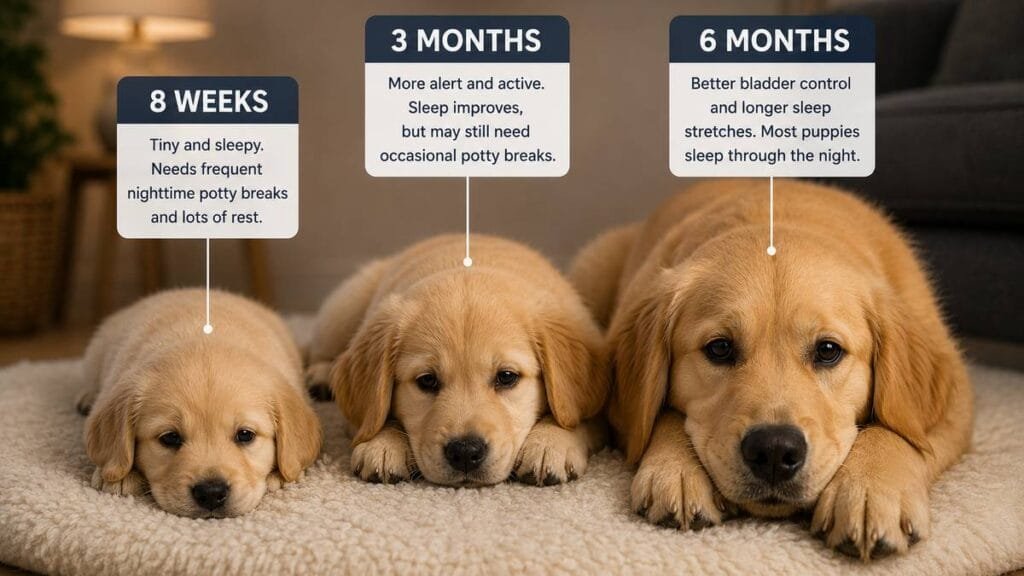
Every puppy develops slightly differently, so use this as a general guide rather than a strict benchmark. Our Puppy Sleep Schedule by Age pillar guide covers this timeline in even greater depth once available.
Should You Ignore a Puppy Crying at Night?
When to Wait
If your puppy has recently had a potty break, is not showing signs of distress, and the crying seems like mild protest, giving a brief pause before responding is often appropriate.
When to Check
If crying is persistent, intense, or paired with signs of genuine discomfort, checking on your puppy calmly is the right move rather than a setback.
What You Should Never Do
Avoid yelling, punishing, or ignoring a puppy who is showing genuine distress rather than simple protest. This can damage trust and make nighttime settling more difficult over time, not less.
Crate Training Tips for Better Night Sleep

Correct Crate Size
The crate should be large enough for your puppy to stand, turn around, and lie down comfortably, but not so large that comfort and security are compromised.
Crate Placement
Keeping the crate in or near your bedroom, especially during the early weeks, often reduces nighttime distress significantly.
Positive Association
Building comfort with the crate during calm daytime sessions, separate from nighttime sleep, helps your puppy see it as a secure space rather than something only tied to being left alone.
Gradual Independence
If you eventually plan to move the crate to another room, do this gradually rather than all at once, giving your puppy time to adjust to each change. Our how to crate train a puppy guide covers the full foundational process from the very first introduction onward, and if crying specifically inside the crate continues to be a challenge, our puppy crying in crate at night guide covers that scenario in more depth.
Signs Something More Serious Is Going On
Watch for these red flags alongside disrupted sleep:
- Vomiting
- Diarrhea
- Signs of pain or discomfort
- Constant whining that does not ease with normal comfort measures
- Difficulty breathing
- Sudden behavior changes that do not match your puppy’s usual pattern

When to Contact a Veterinarian
If your puppy’s nighttime waking is paired with any of the red flags above, or if sleep disruption continues well beyond the typical adjustment window without any improvement, it is worth checking in with your veterinarian to rule out an underlying medical cause.
Frequently Asked Questions
How long does it take for a puppy to sleep through the night?
Most puppies begin sleeping through the night somewhere between 4 and 6 months old, though this varies based on individual development, breed, and consistency of routine. Smaller breeds sometimes take slightly longer due to smaller bladder capacity relative to their size. If you want more details about this topic read our complete guide Why Is My Puppy Sleeping So Much? When to Worry
Is it normal for an 8-week-old puppy to wake up?
Yes. Frequent nighttime waking, often needing one or two potty breaks, is completely normal at this age and reflects limited bladder control rather than a training problem. This is one of the most common questions new owners ask in the first week home.
Should I let my puppy cry at night?
Brief protest crying after ruling out potty needs and exercise can often be allowed to pass, but persistent or intense crying deserves a calm, appropriate response rather than being ignored outright. Learning to distinguish between the two takes a bit of observation in the early weeks.
Can teething cause night waking?
Yes. Teething discomfort, typically most intense between 3 and 6 months, is a common and genuine cause of temporary sleep disruption. This usually resolves on its own as your puppy’s adult teeth finish coming in.
Why did my puppy suddenly stop sleeping through the night?
A sudden change after a previously settled pattern often points to sleep regression, a growth spurt, teething, or an environmental change. Our puppy sleep regression guide covers this specific pattern by age in detail, including how long each stage typically lasts.
Conclusion
Most puppies improve their nighttime sleep steadily with consistency, patience, and age-appropriate expectations. A predictable bedtime routine, adequate daytime activity, and a comfortable, secure sleeping space will carry your puppy through the more difficult early stages. Stay patient through the process, and remember that most sleep struggles resolve well within the first several months.
According to the American Kennel Club (AKC), a consistent nighttime routine is one of the most effective tools for helping puppies build healthy sleep habits early on. The American Veterinary Medical Association (AVMA) recommends contacting your veterinarian if nighttime disruption is paired with physical symptoms rather than simple developmental restlessness. The RSPCA also offers additional guidance on supporting a calm, secure sleep environment as your puppy grows.
If you have not yet settled on where your puppy should sleep in the first place, our where should a puppy sleep on their first night guide is a helpful starting point for building the right setup from day one.
Author Bio
David Jason is the founder of My Pet Care Tips and writes practical, research based guides to help pet owners raise healthier, happier dogs and cats. His content focuses on clear, beginner friendly advice backed by trusted veterinary resources and real world pet care best practices.