
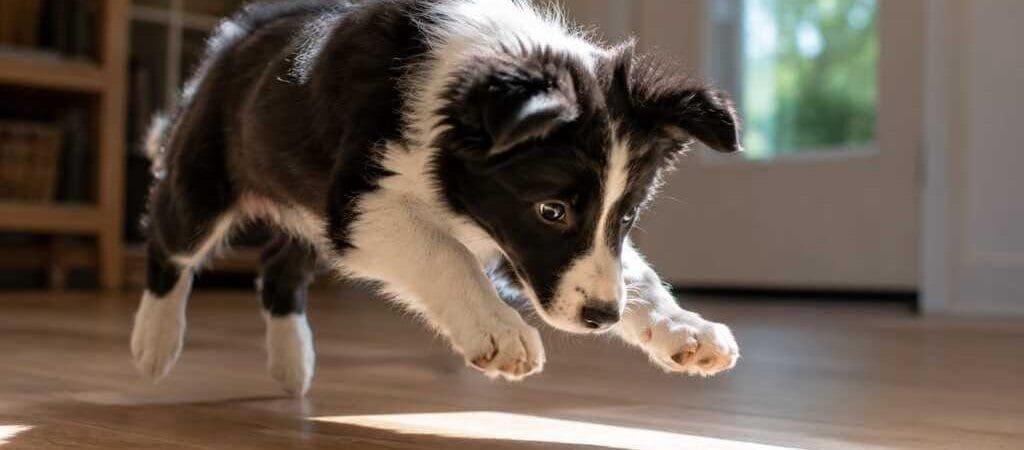
Your puppy freezes, eyes locked on a patch of light moving across the floor. Then pounces. Then does it again. And again. If this sounds familiar, you are watching a border collie puppy chasing shadows, a behavior that is common in this breed and, in most cases, manageable if you catch it early.
The tricky part is that this particular habit can go from harmless curiosity to a genuine compulsive behavior faster than most people expect, especially in Border Collies. Knowing the difference now can save you a lot of trouble later.
Quick answer: Occasional interest in shadows or light is normal puppy curiosity. It becomes a concern when your puppy cannot be interrupted, searches for shadows on their own, or seems distressed when the light disappears. Border Collies are genetically more prone to developing this into a compulsive habit than most other breeds.
Is Chasing Shadows and Lights Normal for Puppies?
Yes, in small doses. Most puppies notice movement, including shadows and reflections, and will investigate or chase them occasionally out of simple curiosity. A puppy who glances at a shadow, pounces once, and then moves on to something else is behaving completely normally.
The concern is not the behavior itself. It is how often it happens, how hard it is to interrupt, and whether your puppy can settle once the light or shadow is gone.
Why Border Collies Are Especially Prone to This Behavior
Border Collies were bred for generations to spot movement from a distance, sometimes tracking sheep across an entire hillside. The American Kennel Club describes this breed as having an intense, almost hypnotic focus when working, and that same keen eyesight and hyper-focus on motion, so useful for herding, makes them unusually sensitive to any moving light or shadow indoors. It is a big part of why a border collie puppy chasing shadows is such a common, breed-specific pattern rather than a random quirk.
Combine that visual sensitivity with the breed’s intense focus and high drive, and you have a genuine predisposition toward this specific kind of fixation. Researchers studying canine compulsive behavior have specifically looked at Border Collies and other herding breeds because shadow and light chasing shows up in this group far more often than in the general dog population.
Never Use a Laser Pointer With a Border Collie Puppy
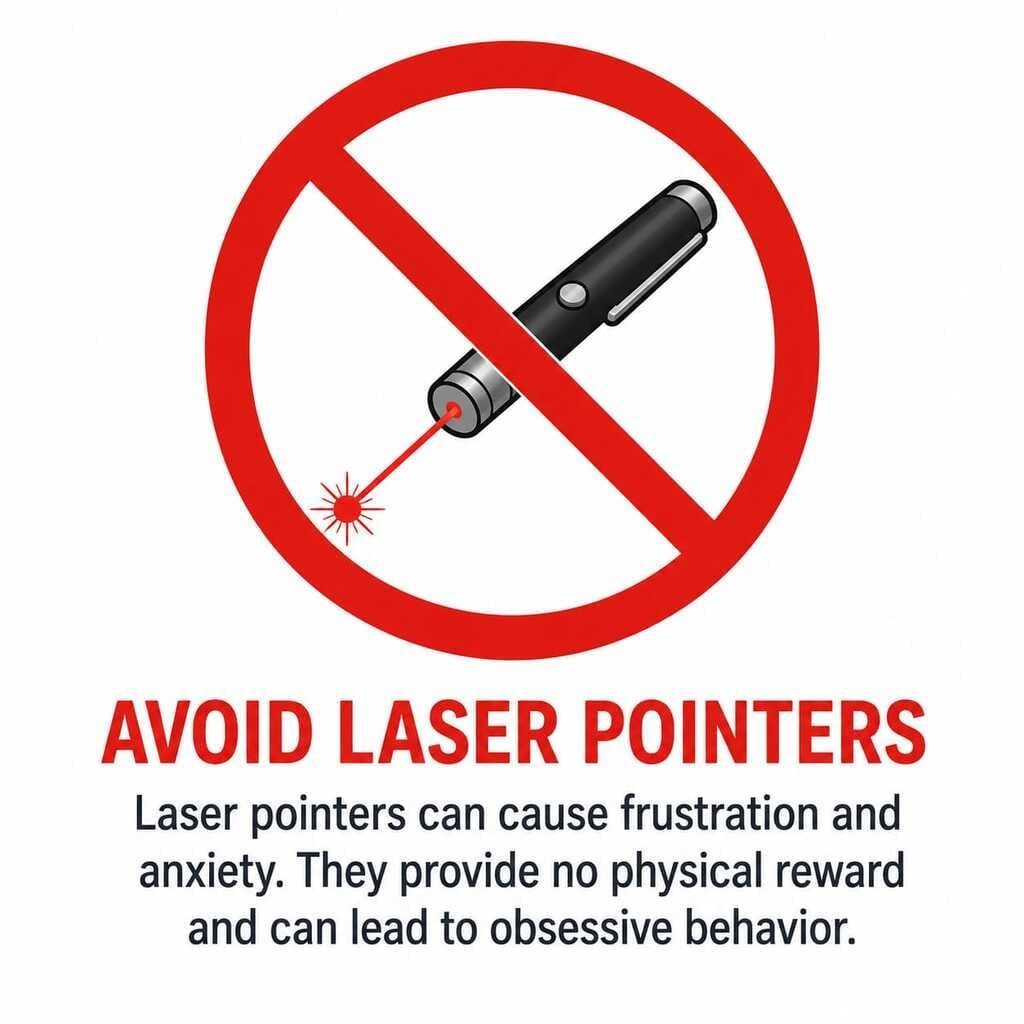
This is worth saying plainly: avoid laser pointers with this breed entirely. A laser pointer game seems harmless and fun, but for a border collie puppy chasing shadows already prone to fixation, it can be the exact trigger that turns occasional interest into a compulsive habit.
The core problem is that a laser dot can never actually be “caught.” That built-in impossibility, combined with a Border Collie’s drive to complete the chase, can wire in a frustrating, unsatisfiable obsession that is much harder to undo than it was to start.
Normal Curiosity vs. Obsessive Behavior: How to Tell the Difference
A few signs separate ordinary puppy curiosity from a pattern worth addressing early.
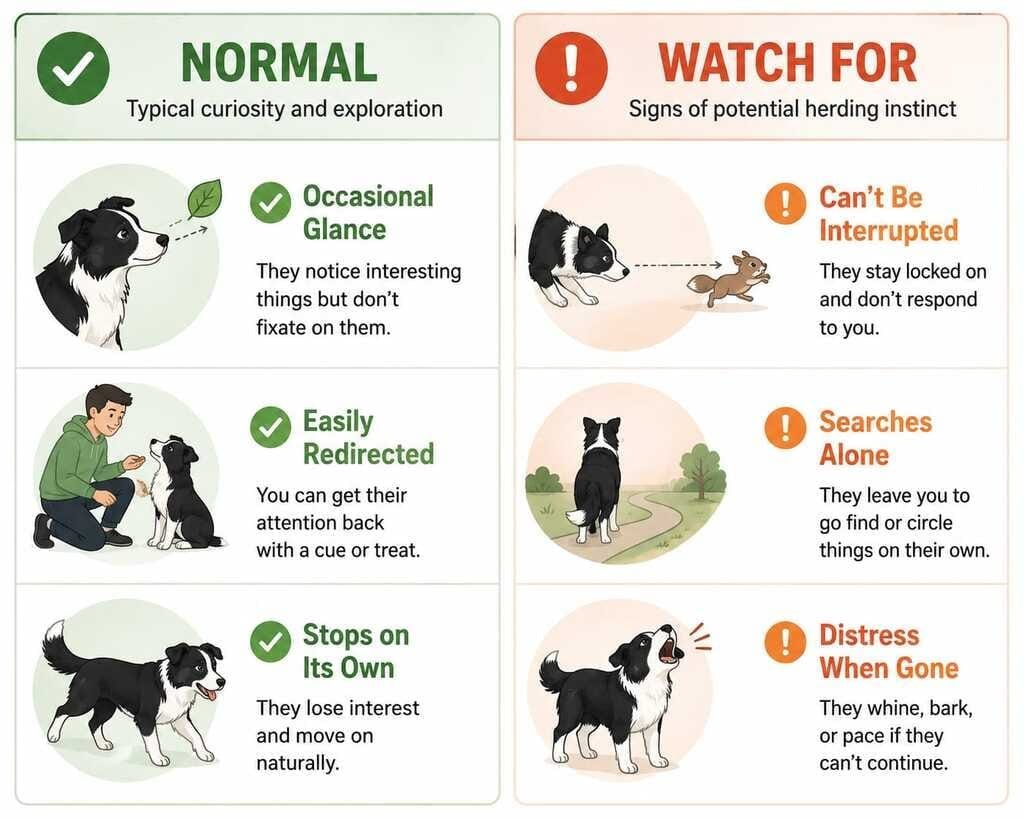
- Cannot be interrupted: Your puppy ignores their name, treats, or toys entirely while fixated on a shadow or light
- Searches for it on their own: Actively looking for shadows or reflections even when nothing is currently moving
- Refuses normal activities: Skipping meals, avoiding rest, or ignoring play in favor of watching for light
- Shows distress when it is gone: Whining, pacing, or agitation once the shadow or light disappears
- The behavior escalates over time: What started as occasional interest becomes a daily, then hourly, occurrence
One or two of these showing up occasionally is not an emergency. A consistent pattern across several of them is a sign to intervene sooner rather than later.
What Causes Shadow Chasing to Become Compulsive?
It is tempting to assume this only happens to bored, under-exercised dogs, but that is not the full picture. Genetics plays a major role, and some Border Collies develop a strong fixation even with plenty of exercise, training, and attention.
A few contributing factors show up again and again:
- Genetic predisposition: Herding breeds are simply more prone to this type of repetitive, movement-triggered behavior
- Accidental reinforcement: Laughing, filming, or encouraging the behavior, even unintentionally, teaches your puppy that chasing shadows gets attention
- Insufficient mental stimulation: A puppy without enough mental engagement can turn to shadow chasing as a self-generated activity, though this is only part of the story for many dogs
- Stress or anxiety: For some puppies, the intense focus required to track a shadow can become a coping mechanism, similar to pacing or fidgeting in a stressed person
How to Prevent and Manage Shadow Chasing
The earlier you address a border collie puppy chasing shadows, the easier it is to manage. A pattern that has been practiced for months is much harder to change than one caught in its first few weeks.

Never Start the Game
Avoid laser pointers entirely, and gently discourage your puppy the first few times you notice fixation on a shadow or reflection rather than laughing it off as cute.
Redirect Immediately
If you catch your puppy locking onto a shadow, interrupt calmly and redirect to a toy, a training cue, or a short game instead. The goal is to break the fixation before it has a chance to build.
Prioritize Mental Stimulation
Border Collies need significant mental engagement, not just physical exercise. Our How Much Exercise Does a Border Collie Puppy Need? guide covers how to balance both, since a mentally satisfied puppy has less room left over for self-generated fixations.
Avoid Rewarding the Behavior, Even by Accident
Skip the laughing, filming, and pointing out shadows to see what your puppy does. Even negative attention, like shouting when your puppy chases a shadow, can reinforce the behavior by giving it your focus.
Manage the Environment
Closing curtains during peak sunlight hours, avoiding reflective surfaces near your puppy’s favorite resting spots, and keeping evening lighting consistent can all reduce triggering opportunities while you work on redirection.
When to See a Vet or Behaviorist
Most mild shadow chasing responds well to early management. A few situations call for professional support rather than trying to handle it alone.

- The behavior happens daily or multiple times a day
- Your puppy cannot be interrupted or redirected at all
- Normal activities like eating, sleeping, or play are being disrupted
- Your puppy shows real distress, not just excitement, around the behavior
The American Veterinary Medical Association recognizes repetitive, fixation-based behaviors like this as a legitimate welfare concern worth addressing with a veterinarian, since some cases benefit from a combined approach of behavior modification and, in more severe cases, medication. A veterinary behaviorist, or a certified trainer experienced specifically with compulsive behaviors in herding breeds, is the right resource if home management is not working.
Frequently Asked Questions
Is it normal for Border Collie puppies to chase shadows?
A border collie puppy chasing shadows occasionally is normal. It becomes a concern when your puppy cannot be interrupted, searches for shadows independently, or shows distress when the light is gone.
Why are Border Collies more prone to shadow chasing than other breeds?
Their genetics prioritize sharp eyesight and intense focus on movement, traits bred for herding livestock, which also makes them unusually sensitive to shadows and reflected light.
Should I use a laser pointer to play with my Border Collie puppy?
No. Laser pointers are strongly discouraged for this breed, since the impossible-to-catch nature of the light can trigger or worsen compulsive chasing behavior.
Can shadow chasing be cured once it starts?
Early, mild cases often improve significantly with consistent redirection and management. More established or severe cases usually need professional behavioral support and sometimes medication.
Does a bored Border Collie always develop shadow chasing?
Not necessarily. While insufficient mental stimulation can contribute, some dogs develop this fixation despite plenty of exercise and enrichment, largely due to genetic predisposition.
How do I know if my puppy’s shadow chasing is compulsive?
Look for an inability to be interrupted, searching for shadows independently, refusing normal activities, or visible distress when the shadow disappears. A consistent pattern across these signs points to something beyond normal curiosity.
Final Takeaway
A border collie puppy chasing shladows occasionally is nothing to worry about. Catching the pattern early, avoiding laser pointers entirely, and keeping your puppy mentally engaged are the best ways to make sure a normal curiosity never turns into a compulsive habit.
If nipping and herding behavior are also part of your puppy’s daily routine, our Why Does My Border Collie Puppy Nipp and Herd? guide covers that closely related instinct. For families considering this breed, our Best Dog Breeds for Familieps guide covers how Border Collies compare to other options, along with our complete Border Collie Puppy: Complete First-Year Guide.
Author Bio
David Jason is the founder of My Pet Care Tips and writes practical, research based guides to help pet owners raise healthier, happier dogs and cats. His content focuses on clear, beginner friendly advice backed by trusted veterinary resources and real world pet care best practices.