

Learning how to socialize a puppy is one of the most important things you can do in your puppy’s first few months. It shapes how confident, calm, and comfortable your dog will be for the rest of their life.
Socialization is not just about meeting other dogs. It means helping your puppy build positive associations with people, sounds, surfaces, places, handling, and everyday life.
The goal is not to expose your puppy to everything at once. The goal is safe, controlled, and positive exposure at the right pace.
Quick answer: Start with short, positive experiences and gradually introduce your puppy to different people, sounds, surfaces, places, handling, and appropriate dogs. Keep every experience calm and let your puppy set the pace.
What Is Puppy Socialization?
Puppy socialization is the process of helping your puppy feel comfortable with the normal sights, sounds, and experiences of everyday life. Done well, it builds confidence instead of just familiarity.
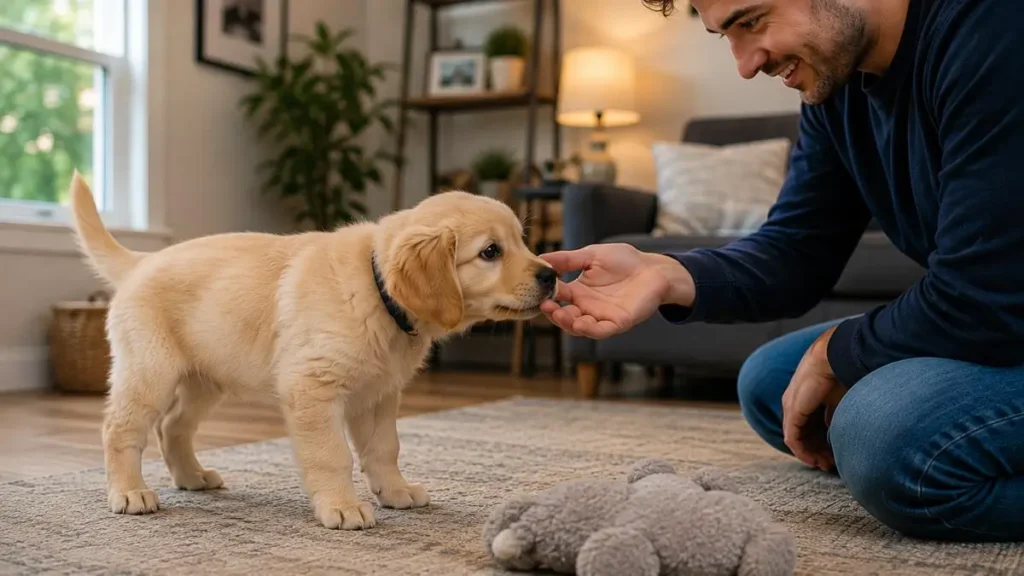
Socialization vs. Simply Meeting People and Dogs
Many new owners think socialization only means playdates with other dogs. In reality, it covers much more ground, including:
- New people of all kinds
- Other dogs
- Everyday sounds
- Different surfaces
- New objects
- Gentle handling
- New environments
- Car rides
- Grooming and vet-style handling
A well-socialized puppy is comfortable with all of these, not just the presence of other dogs.
What Good Socialization Looks Like
Good socialization has a few clear signs. Your puppy stays relaxed, or recovers quickly if startled. They form a positive association with treats, play, or praise during the experience.
Sessions stay short so your puppy does not get overwhelmed. Your puppy gets a say in the process, since forced interaction usually backfires.
Can You Socialize a Puppy Too Much?
Yes, this is possible. Too many new experiences packed into a single day can overwhelm a young puppy, even if each one seems minor on its own.
Quality matters more than quantity. A few calm, positive experiences most days will do more good than a single overwhelming outing.
When Should You Start Socializing a Puppy?
You can start socializing your puppy as early as 3 to 4 weeks old, well before they are fully vaccinated. The early weeks of a puppy’s life are considered a key socialization window, and waiting until vaccinations are complete can create a real gap in this development.
That does not mean taking your puppy to busy public spaces. It means focusing on safe exposure at home, in the yard, and in controlled settings while avoiding places with high disease risk. For a full breakdown of what is safe before your puppy’s shots are complete, see our guide on How to Socialize a Puppy Before Fully Vaccinated.
Puppy Socialization Checklist by Age
Socialization needs shift as your puppy grows. Here is what to prioritize at each stage.
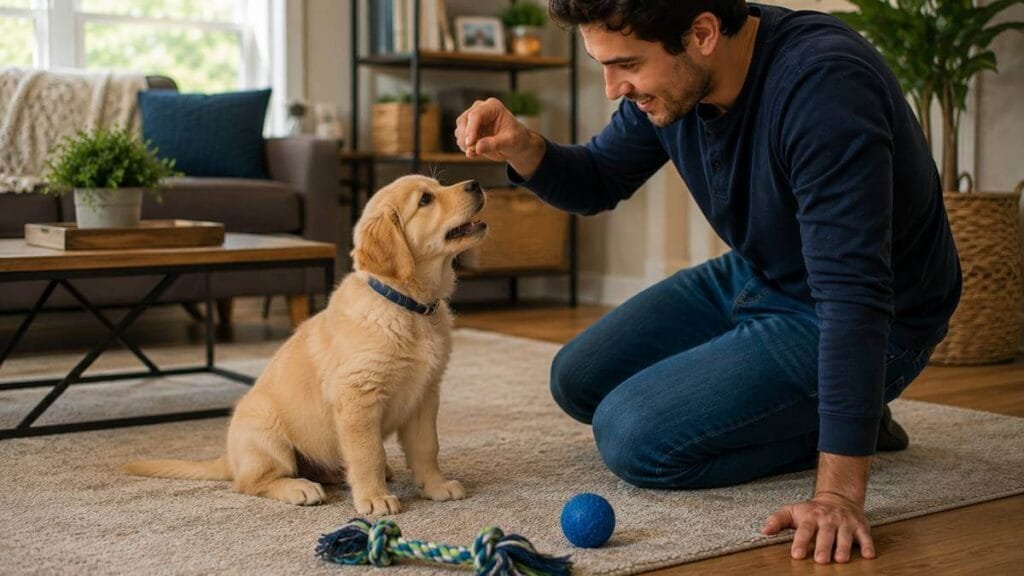
3 to 4 Weeks: Early Exposure
- Gentle human interaction
- Everyday household sounds
- Different safe surfaces to walk on
- Gentle, brief handling
- Small environmental changes
5 to 7 Weeks: Expanding Experiences
- Meeting different people
- New objects to sniff and explore
- Household noises like the TV or dishwasher
- Practicing gentle movement and play
- Continued handling practice
- Short, positive experiences overall
8 to 11 Weeks: Building Confidence
This stage often overlaps with moving to a new home, so it deserves extra care.
- Meeting new family members
- Safe, calm visitors
- Different sounds around the house
- Safe surfaces indoors and out
- Short car rides
- Grooming-style handling
- Gentle vet-style handling
- Controlled, calm interactions with appropriate dogs
- Avoiding overwhelming experiences
If your puppy suddenly becomes cautious or fearful during this stage, that is common and usually temporary. Puppy Fear Periods: What to Expect at 8-11 Weeks covers how to recognize and support your puppy through it.
12 to 16 Weeks: Continue, Don’t Stop
Socialization does not end at 12 weeks. Keep reinforcing earlier experiences while gradually introducing new environments.
- Continued exposure to people and dogs
- Reinforcing familiar positive experiences
- New environments introduced gradually
- Controlled dog interactions
- Public environments when appropriate for your puppy’s vaccination status
- Ongoing handling practice
4 to 6 Months: Reinforcing Confidence
- New environments and situations
- More people and dogs
- New sounds
- Grooming practice
- Training in mildly distracting settings
- Consistent positive reinforcement
6 Months and Beyond
Socialization becomes maintenance at this stage rather than introduction.
- Continue regular socialization
- Watch for signs of regression
- Offer age-appropriate experiences
- Be aware some dogs show adolescent fear or reactivity
- Keep reinforcing positive associations
Puppy Socialization Checklist: 100 Things to Expose Your Puppy To
A full breakdown of specific items to work through lives in our detailed Puppy Socialization Checklist: 100 Things to Expose Them To. Here is a preview organized by category to get you started.
People
Men, women, children, people wearing hats, people with glasses, people using umbrellas, people with different voices, people walking with unusual gaits, and delivery workers.
Other Dogs
Calm adult dogs, friendly puppies, dogs of different sizes, dogs of different breeds, controlled play sessions, and simply observing dogs from a safe distance.
Sounds
Vacuum cleaners, doorbells, traffic noise, recorded thunder, household appliances, construction sounds, other dogs barking, and children playing.
Surfaces
Grass, carpet, tile, hardwood, concrete, gravel, rubber mats, and stairs.
Places
Home, backyard, the car, the vet’s office, the groomer, pet-friendly stores when appropriate, and quiet outdoor areas.
Handling
Ears, paws, mouth, tail, brushing, nail handling, collar, and harness.
Everyday Objects
Umbrellas, boxes, bags, bicycles, strollers, hats, and sunglasses.
How to Socialize a Puppy With People
Start With Calm Introductions
Keep first meetings low energy. Loud greetings or crowding your puppy can create unnecessary stress.
Let Your Puppy Approach at Their Own Pace
Give your puppy the choice to approach a new person rather than having that person reach for them first.
Reward Calm Behavior
Pair calm, confident behavior with treats or praise so your puppy connects new people with good things.
Socializing Puppies With Children
Supervise every interaction closely. Teach children to be gentle and calm, and keep sessions short.
Socializing Puppies With Strangers
Ask visitors to let your puppy approach first. Avoid overwhelming your puppy with too many strangers in one sitting.
What If My Puppy Is Afraid of Someone?
Do not force the interaction. Increase distance, stay calm yourself, and let your puppy watch from a comfortable distance before trying again later.
How to Socialize a Puppy With Other Dogs

Choose the Right Dogs
Look for calm, vaccinated, well-socialized dogs rather than unpredictable or overly rough playmates.
Start With Calm, Controlled Interactions
Short, supervised meetings work better than long, unstructured play sessions early on.
Watch Your Puppy’s Body Language
Loose body movement and relaxed ears are good signs. Stiffness, hiding, or repeated avoidance mean it is time to create distance.
Avoid Overwhelming Dog Parks
Busy dog parks can be too much for a young puppy and are not a good starting point for socialization.
What If My Puppy Is Scared of Other Dogs?
This is common and manageable with the right approach. Our guide on Puppy Scared of Other Dogs walks through gradual, confidence-building steps.
How to Know If Your Puppy Is Overwhelmed
Learning to read your puppy’s body language helps you know when to slow down. Watch for hiding, freezing, backing away, a tucked tail, lip licking, yawning, trembling, excessive barking, trying to escape, or refusing treats they would normally take.
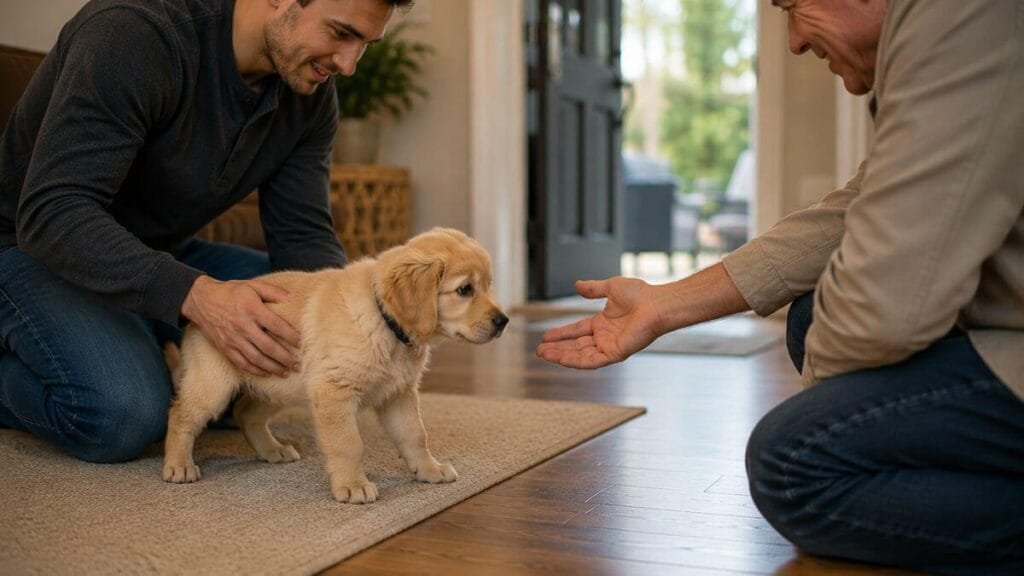
What To Do When Your Puppy Shows Fear
Increase distance from whatever is causing the reaction and stop forcing the interaction. Let your puppy recover at their own pace, use treats to rebuild a positive association, and try again later at a lower intensity.
If fear or stress seems severe or does not improve with a calmer approach, it is worth a conversation with your veterinarian, since some behavior changes can overlap with a health issue covered in our guide to Common Pet Health Problems.
Common Puppy Socialization Mistakes
- Forcing the puppy to say hello
- Introducing too many new things at once
- Taking a puppy straight to a busy dog park
- Ignoring fear signals
- Only socializing with other dogs and skipping people, sounds, and surfaces
- Stopping socialization after vaccinations are complete
- Using punishment when the puppy is afraid
How Often Should You Socialize a Puppy?
Aim for short sessions with frequent repetition rather than long, occasional outings. Introduce one new experience at a time when possible, and end the session while your puppy is still comfortable.
Repeating experiences that went well helps build lasting confidence, so do not feel pressure to constantly introduce something new.
Puppy Socialization: A Simple Weekly Routine
A simple weekly rhythm makes socialization easier to stay consistent with.

| Day | Example Activity |
|---|---|
| Monday | Meet a new person |
| Tuesday | Introduce a new sound |
| Wednesday | Explore a new surface |
| Thursday | Practice gentle handling |
| Friday | Visit a new safe environment |
| Saturday | Controlled dog interaction |
| Sunday | Repeat a favorite past experience |
What If My Puppy Is Already Scared?
Don’t Force Exposure
Pushing a scared puppy toward what frightens them usually makes fear stronger, not weaker.
Go Back to an Easier Level
If your puppy is struggling, return to a lower intensity version of the same experience and rebuild from there.
Use Positive Reinforcement
Pair calm behavior with treats, praise, or play so your puppy associates the experience with something good.
When to Get Professional Help
If fear seems severe, persistent, or paired with aggression, reach out to your veterinarian or a qualified positive reinforcement trainer. Our guide on Puppy Scared of Other Dogs covers dog-specific fear in more detail if that is the main trigger.
Frequently Asked Questions
What is the best age to socialize a puppy?
The early weeks, roughly 3 to 14 weeks, are considered the most important socialization window, though socialization should continue well beyond this age.
Is 12 weeks too late to socialize a puppy?
No. While early weeks matter most, socialization should continue through adolescence and beyond, not stop at any single age.
Can you socialize a puppy before vaccinations?
Yes, with safe choices like home visitors, a private yard, and controlled environments while avoiding high-risk public spaces until your vet says it is safe.
How do you socialize a puppy with people?
Keep introductions calm, let your puppy approach at their own pace, and reward relaxed behavior with treats or praise.
How do you socialize a puppy with other dogs?
Choose calm, appropriate dogs, keep early interactions short and supervised, and watch your puppy’s body language closely.
Can you over-socialize a puppy?
Yes. Too many new experiences packed into one day can overwhelm a puppy, even if each individual experience is minor.
Should puppies go to dog parks for socialization?
Busy dog parks are usually too overwhelming for young puppies and are not recommended as an early socialization tool.
What if my puppy is afraid of everything?
This is often tied to a developmental fear period and usually improves with patience, distance from triggers, and calm positive exposure.
How long does puppy socialization take?
The most critical window is in the first few months, but ongoing socialization should continue throughout your dog’s life.
Final Puppy Socialization Checklist
- People
- Children
- Dogs
- Sounds
- Surfaces
- Places
- Car rides
- Handling
- Grooming
- Vet-related handling
- Household objects
- Outdoor experiences
- Calm behavior around distractions
Final Takeaway
Good puppy socialization is not about making your puppy meet everyone and everything. It is about helping your puppy experience the world safely, gradually, and positively.
Start small, stay consistent, and let your puppy set the pace. For more foundational guidance on raising a confident, well-behaved dog, see our full How to Train a Puppy at Home: Beginners Guide.
Author Bio
David Jason is the founder of My Pet Care Tips and writes practical, research based guides to help pet owners raise healthier, happier dogs and cats. His content focuses on clear, beginner friendly advice backed by trusted veterinary resources and real world pet care best practices.
Last Updated: August 10,2026
Sources: American Veterinary Society of Animal Behavior (AVSAB),American Kennel Club (AKC) and American Animal Hospital Association (AAHA)