
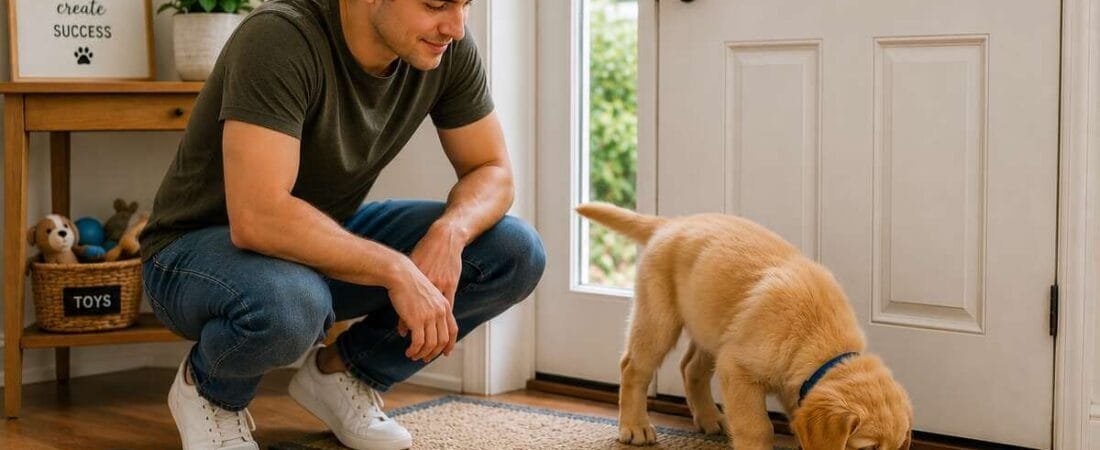
Puppy potty training mistakes can lead to repeated accidents, slow progress, and frustration for both you and your puppy. The good news is that most house-training problems can improve with a consistent routine, close supervision, and positive reinforcement.
Accidents are a normal part of learning, especially when puppies are young. However, if your puppy was previously doing well and has suddenly started peeing or pooping indoors again, it is worth looking at what changed rather than assuming the training has failed.
In this guide, you’ll learn 11 common puppy potty training mistakes, how to correct them, and what to do when a puppy that seemed potty trained starts having accidents again. You’ll also learn when repeated accidents may require veterinary attention.Ft
Why Puppies Have Potty Training Accidents
Before fixing what is going wrong, it helps to understand why accidents happen at all.
Young puppies have limited bladder control, so accidents are common during house training. The time between potty breaks depends on age, activity, sleep, water intake, and individual development. A simple age-based rule cannot predict every puppy’s needs.
Take your puppy to the designated potty area after waking up, after meals and drinking, after play, and before bedtime. Very young puppies may also need frequent breaks during waking hours and overnight. Watch your puppy closely and shorten the intervals if accidents keep happening.
If your puppy does not go outside, bring them back in under close supervision and try again shortly afterward. Reward them immediately when they eliminate in the correct place.
Beyond age, potty training accidents usually come down to a few core factors:
- Routine. Puppies learn through repetition, not logic.
- Consistency. Mixed signals from different family members slow progress.
- Positive reinforcement. Puppies repeat behaviors that get rewarded.
- Supervision. Accidents happen fastest when a puppy is unsupervised.
Once you understand these basics, the mistakes below become much easier to spot and fix.
Mistake #1: No Potty Schedule
The single biggest mistake new owners make is skipping a puppy potty training schedule entirely. Without one, potty breaks become random, and a puppy never builds the internal rhythm needed to signal when it needs to go.
A basic puppy potty training timeline should include trips outside right after waking up, after meals, after play sessions, and before bedtime. A puppy cannot ask for a bathroom break on your schedule if you never gave it a schedule to learn in the first place.
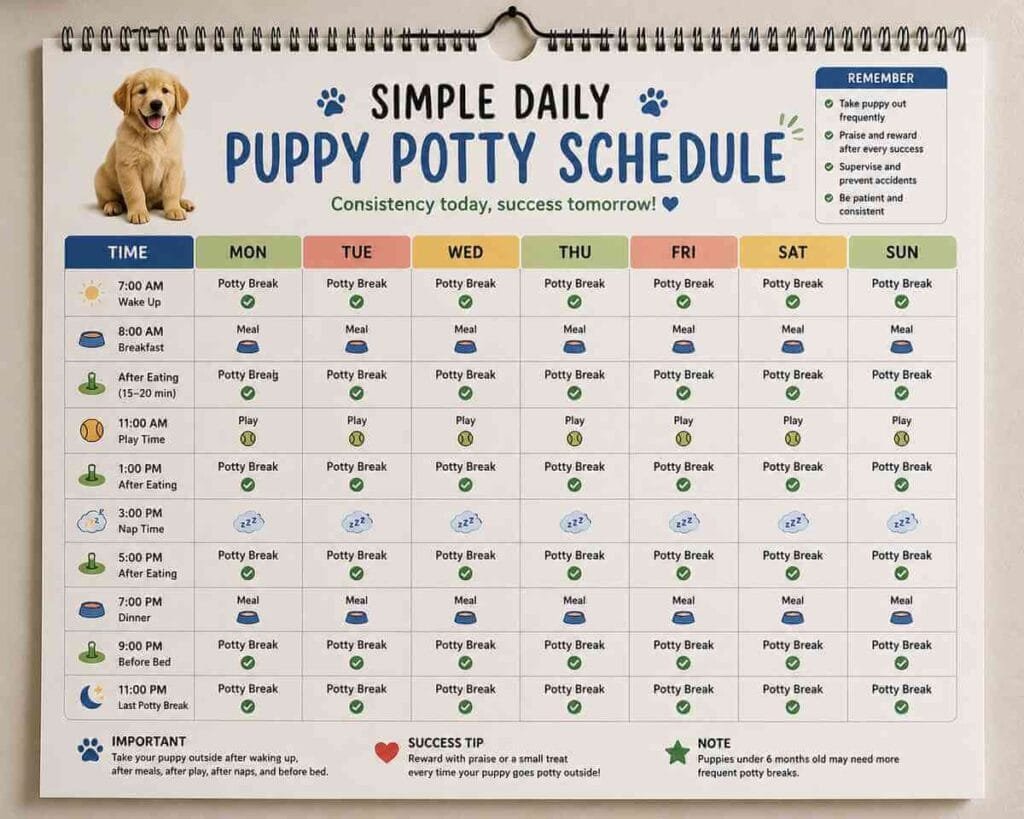
For a full week by week breakdown, our upcoming puppy potty training schedule by age guide will walk through exact timing for every stage of development.
Mistake #2: Waiting Too Long Between Potty Breaks
Even a solid schedule fails if the gaps between breaks stretch too long. A young puppy simply cannot hold it as long as an adult dog can.
An 8 week old puppy potty training schedule at night usually means a bathroom break every two to three hours, including overnight in the early weeks. Waiting five or six hours between breaks almost guarantees an accident, no matter how well the puppy seems to be doing during the day.
Mistake #3: Punishing Your Puppy
Scolding a puppy after finding an accident feels natural, but it usually backfires. Puppies rarely connect punishment after the fact with something they did minutes earlier. Instead, many just learn to fear their owner or start hiding to go, which makes accidents harder to catch, not easier.
Punishment delays learning because it adds stress without teaching the puppy what to do instead. Rewarding successful potty breaks immediately works faster and builds trust at the same time.
Mistake #4: Skipping Crate Training
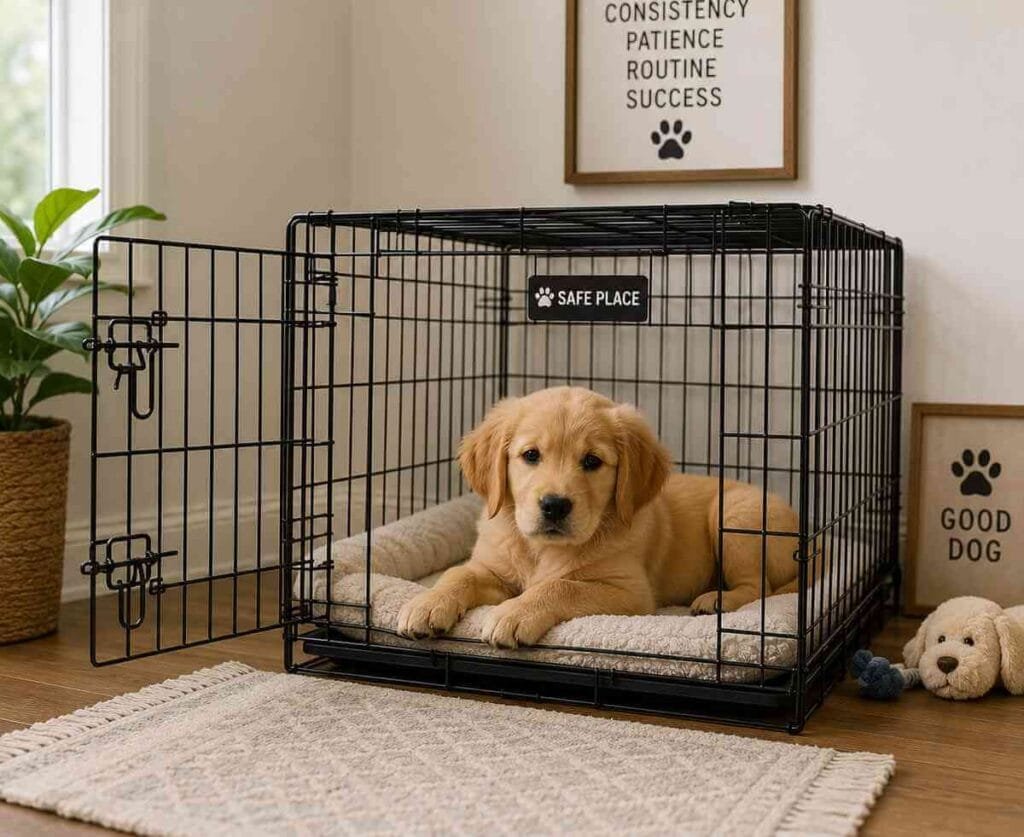
A crate can help with house training when a puppy is introduced to it gradually and feels comfortable inside. However, crate training is not the only way to teach bathroom habits, and a crate should never be used to make a puppy wait longer than they can comfortably manage.
Choose a crate that allows your puppy to stand, turn around, and lie down comfortably. Take them to the potty area after they come out, and arrange additional breaks when needed. If your puppy becomes distressed or repeatedly soils the crate, review the routine and seek advice from a veterinarian or qualified trainer.
You can also read our guide to how to take care of a puppy for more beginner care advice.
Mistake #5: Giving Too Much Freedom Too Soon
Letting a new puppy roam the whole house is one of the fastest ways to undo progress. Without supervision, a puppy simply has more chances to have an accident and less chance of being caught and redirected in time.
Instead, limit space using baby gates, a house line indoors, or one or two rooms until house training becomes more reliable. Expanding freedom gradually, room by room, keeps supervision realistic instead of overwhelming.
Mistake #6: Ignoring Potty Signals
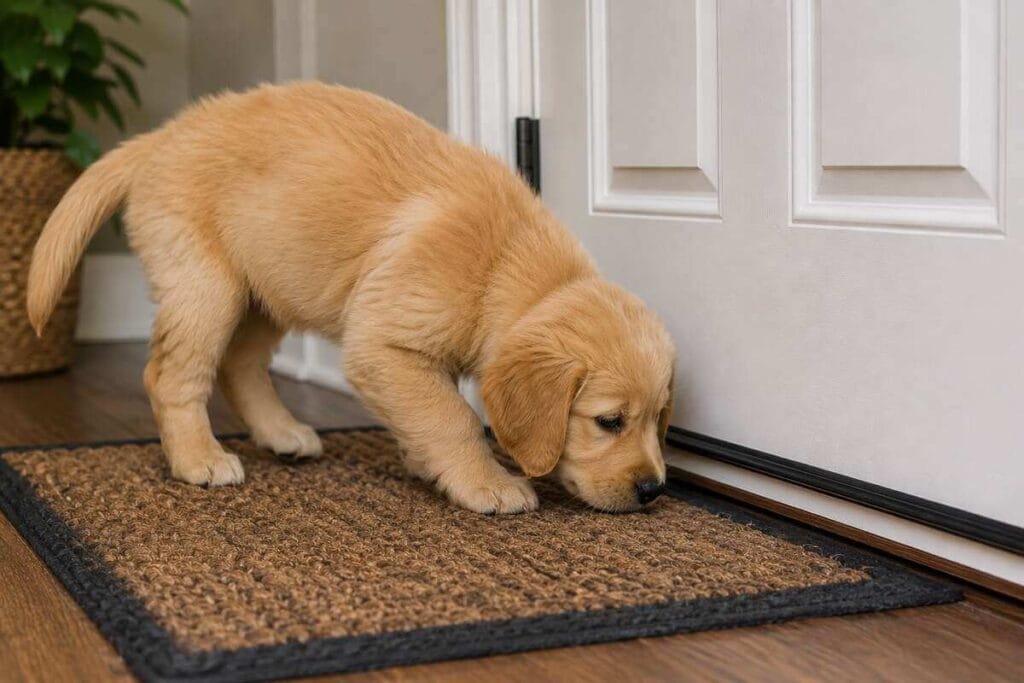
Puppies almost always signal before an accident, but the signs are easy to miss for a first-time owner. Common signals include:
- Sniffing the floor repeatedly
- Circling in one spot
- Whining near the door
- Scratching at the door
Watching for these cues and responding right away, instead of waiting for an obvious sign, prevents a lot of avoidable accidents.
Mistake #7: Cleaning Accidents Incorrectly
Standard household cleaners do not fully remove the odor of urine, and puppies return to spots that still smell like a bathroom to them. Using a regular cleaner instead of an enzymatic cleaner is a quiet mistake that keeps causing repeat accidents in the exact same spot.
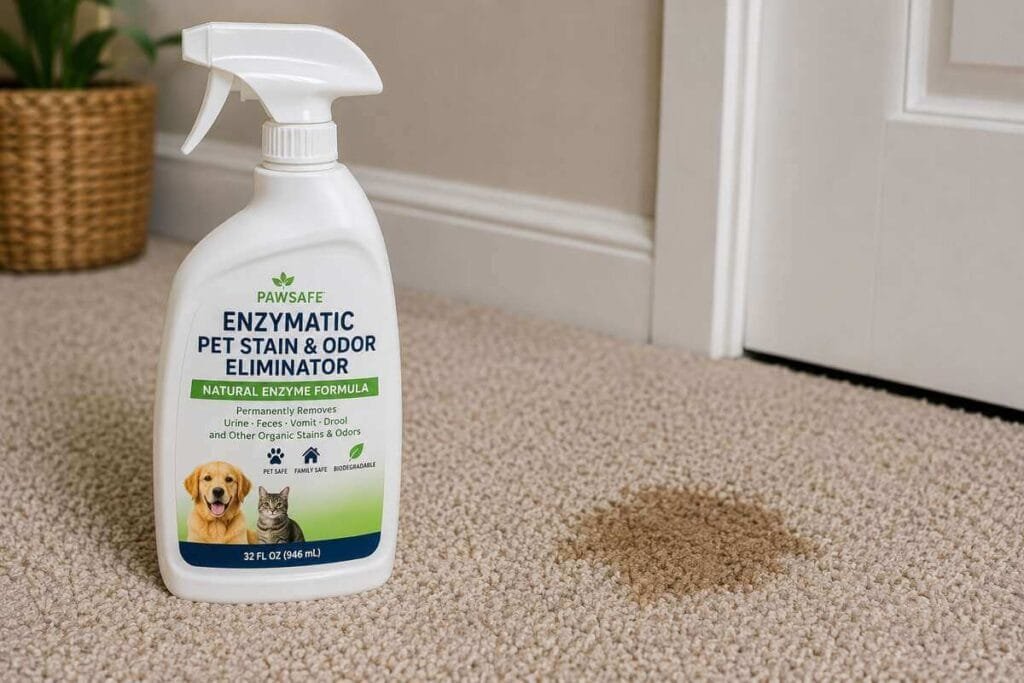
The American Kennel Club (AKC) recommends enzymatic cleaners specifically because they break down the compounds in urine that regular soaps and sprays leave behind, removing the scent trail completely rather than just masking it.
Mistake #8: Changing the Potty Spot Frequently
Puppies rely on scent and routine to know where they are supposed to go. Switching between different yard spots, or alternating between the yard and a walk, can confuse a puppy that has not fully built the habit yet.
Picking one consistent spot, at least during the early weeks, speeds up learning noticeably.
Mistake #9: Using Puppy Pads the Wrong Way
Puppy pads can be a useful tool, especially for apartment living or bad weather, but using them without a clear plan often backfires. If a puppy learns to go on a pad indoors, transitioning to outdoor-only potty training later can take extra time and consistency.
If pads are part of your plan, decide early whether they are temporary or permanent, and keep the indoor vs outdoor transition intentional instead of accidental.
For more details read our complete guide on puppy potty pads: pros and cons.
Mistake #10: Expecting Instant Results
Potty training rarely wraps up in a few days, no matter how consistent an owner is. A realistic potty training timeline often runs anywhere from four to six months, with some puppies taking longer depending on breed size and individual temperament.
Expecting instant results leads owners to give up on a routine too early, right when consistency matters the most.
Mistake #11: Ignoring Potty Training Regression
Even when a puppy seems potty trained, accidents can return. This does not automatically mean your puppy has forgotten everything they learned.
If your puppy was doing well but is now having accidents indoors, consider whether the daily schedule changed, supervision decreased, access to the yard became less frequent, or the puppy was given more freedom too soon. Stress, a new environment, and incomplete house training can also contribute.
Start by returning to a consistent routine. Take your puppy outside after waking, eating, drinking, and playing. Supervise them closely indoors, limit access to areas where accidents happen, and reward successful potty trips immediately.
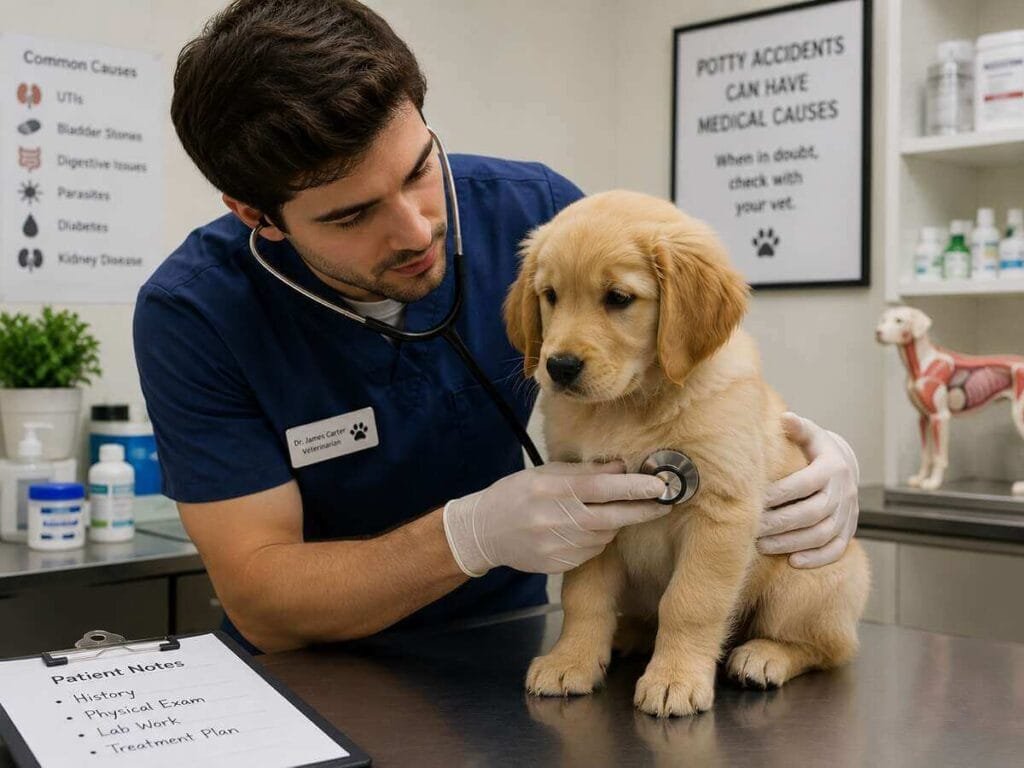
Do not assume every setback is behavioral. If the change is sudden, keeps happening, or comes with unusual thirst, frequent urination, straining, blood in the urine, or other signs of illness, contact your veterinarian. A medical problem should be ruled out before treating repeated accidents as a training mistake.
Puppy Potty Trained but Now Having Accidents: What to Do
If your puppy was previously using the correct potty spot but has started having accidents again, begin by checking three things: routine, supervision, and health.
- Review the routine: Check whether meal times, walks, potty breaks, or sleeping arrangements have changed.
- Increase supervision: Keep your puppy nearby or use a safe, restricted area when you cannot watch them closely.
- Return to frequent potty breaks: Take your puppy out at predictable times and reward them when they go in the right place.
- Clean previous accident spots: Use a pet-safe enzymatic cleaner according to its label instructions to help remove lingering urine odors.
- Watch for health changes: Contact a veterinarian if accidents are sudden, persistent, painful, or accompanied by other symptoms.
Avoid punishment. Focus on identifying the cause, making the correct behavior easier, and rewarding success.
Is the 10-10-10 Rule Necessary for Puppy Potty Training?
The 10-10-10 rule is sometimes shared as a simple potty-training guideline, but it is not a universal rule that works for every puppy. Your puppy may need more or less time outside, and the amount of supervised freedom they can handle depends on their age, habits, and progress.
Instead of following a rigid timer, take your puppy to the designated potty area at consistent times, allow a calm opportunity to go, and reward success immediately. If they do not go, supervise them closely indoors and try again shortly afterward.
What NOT to Do When Potty Training a Puppy?
A quick checklist of things to avoid:
- Don’t punish or scold after an accident
- Don’t rub your puppy’s nose in it
- Don’t give unsupervised freedom too early
- Don’t skip potty breaks after meals or naps
- Don’t use a regular household cleaner on accidents
- Don’t expect results within a few days
What Is a Red Flag During Potty Training?
Most potty-training accidents are part of the learning process, but repeated or sudden changes in bathroom habits can sometimes indicate a medical problem.
Contact your veterinarian if your puppy:
- Tries to urinate repeatedly but produces little or no urine
- Has blood in the urine or appears uncomfortable while urinating
- Suddenly urinates much more frequently than usual
- Drinks noticeably more water and has more accidents
- Develops persistent diarrhea or other concerning symptoms
- Starts having accidents after previously being reliably house-trained, especially when other symptoms are present
Repeated attempts to urinate with little or no urine, particularly when your puppy seems distressed, need urgent veterinary attention. Do not assume these signs can be fixed through training alone.
At What Age Can Puppies Regress in Potty Training?
Potty-training setbacks can happen at different ages. A puppy may have accidents because the training habit is not fully established, the daily routine has changed, supervision has decreased, or the puppy is adjusting to a new environment.
If accidents return, go back to a consistent schedule and reward successful potty trips. If the change is sudden, persistent, or accompanied by other symptoms, ask your veterinarian whether a medical cause should be investigated.
Housebreaking Tips That Actually Work
Successful housebreaking usually comes down to fewer, more consistent habits rather than more rules. A few tips that make a real difference:
- Take your puppy out on a fixed schedule, not just when it seems to need it
- Reward every success immediately
- Supervise closely indoors for the first few months
- Keep one consistent potty spot outside
- Use an enzymatic cleaner for every accident, without exception
Learning how to housebreak your puppy uses largely the same process as learning how to house train an older puppy, just with a little more patience if old habits have already formed. Dogs of any age can still learn, especially with a consistent schedule and clear rewards.
Puppies with enough physical and mental stimulation also tend to settle into a routine faster, since boredom and pent up energy often show up as restlessness or accidents. A solid dog exercise routine mom, paired with a few of the best dog toys for active dogs, can make potty training noticeably smoother day to day.
Puppy Potty Training Mistakes: Quick Checklist
| Mistake | Better Alternative |
|---|---|
| Punishing accidents | Reward successes instead |
| No routine | Fixed potty schedule |
| Too much freedom | Close supervision |
| Wrong cleaner | Enzymatic cleaner |
| No crate training | Consistent crate routine |
Final Thoughts
Potty training rarely fails because a puppy is stubborn or slow to learn. It usually comes down to a missing schedule, inconsistent supervision, or one of the other mistakes covered here.
Stay consistent, reward every success, and follow a routine your puppy can predict. For daily care basics beyond potty training, our how to take care of a puppy guide is a solid starting point for any new owner, and if accidents keep showing up alongside general health changes, our common dog health problems guide can help you tell the difference between a training issue and a medical one.
Related Articles:
Signs Your Puppy Needs to Go Potty , Puppy Potty Training Regression , Why Is My Puppy Pooping in the Crate at Night? And Stubborn Puppy Potty Training and Signs Your Puppy Needs to Go Potty.
Frequently Asked Questions (FAQ)
How long does it take to potty train a puppy?
Most puppies take about four to six months to become reliably potty trained, though some finish sooner and others, especially smaller breeds, take longer. The timeline depends less on the puppy’s intelligence and more on consistency at home. Owners who avoid common puppy potty training mistakes, like skipping a schedule or allowing too much unsupervised freedom, tend to see faster, more reliable progress. Full house training, including nighttime reliability, often takes closer to a year for some dogs, so steady patience matters more than speed.
Can an 8 week old puppy be potty trained?
Yes, but expectations need to match a puppy’s age. An 8 week old puppy has very limited bladder control, so training at this stage is about building habits and routine rather than expecting long stretches without accidents. Frequent trips outside, right after waking, eating, and playing, teach the pattern early. Formal potty training really begins the moment a puppy comes home, even if full reliability does not show up for several more months.
Should I use puppy pads or go straight outside?
Both approaches can work, but consistency matters more than which one you choose. Puppy pads are helpful for apartments, bad weather, or very young puppies that cannot hold it long enough to get outside. Going straight outside from day one tends to build outdoor habits faster and avoids an extra transition step later. If you do use pads, decide early whether they are temporary or permanent so the plan stays clear instead of accidentally mixing signals.
Why does my puppy pee right after coming back inside?
This usually means the outdoor trip ended too soon or was too distracting for the puppy to fully empty its bladder. Puppies can get caught up sniffing, exploring, or playing outside and come back in without actually finishing. Giving a puppy a few extra quiet minutes outside, away from major distractions, and rewarding the moment it goes usually solves this. If it keeps happening despite patience, a quick vet check can rule out a urinary issue.
Is it normal for a puppy to have accidents at night?
Yes, especially in the first few weeks. Young puppies have small bladders and often cannot make it through a full night without a bathroom break. Most owners need to get up once or twice overnight for the first several weeks, gradually stretching the time as the puppy’s bladder control improves. A predictable bedtime routine, including a final potty break right before lights out, helps reduce how often nighttime accidents happen.
Do puppy potty training bells actually work?
Potty bells can work well because they give a puppy a clear, consistent way to signal that it needs to go outside. They tend to work best when paired with a set schedule rather than used on their own, since a puppy still needs to learn the connection between ringing the bell and going outside to potty. Some puppies pick this up quickly, while others need a few weeks of guided practice before it becomes a reliable habit.
What is the best age to start potty training a puppy?
The best time to start is the day a puppy comes home, usually around 8 weeks old. Waiting for a puppy to get older before starting a routine is one of the more common puppy potty training mistakes, since habits form early whether or not an owner is actively teaching them. Starting with a simple schedule and plenty of supervision from day one builds a much stronger foundation than trying to correct habits later.
How many potty accidents are normal for a puppy per day?
In the first few weeks, one or two accidents a day is common, even with a good routine in place. What matters more than the number is the overall trend. A puppy that is slowly having fewer accidents over several weeks is progressing normally, even with occasional setbacks. If accidents suddenly increase after a period of reliability, it is worth checking for a change in routine, stress, or a possible medical cause rather than assuming the puppy has forgotten its training.
Why Is My Puppy Having Accidents After Being Potty Trained?
A puppy may start having accidents again because the training habit is not fully established, the routine has changed, supervision has decreased, or the puppy is experiencing stress. Return to consistent potty breaks and reward success. If the change is sudden or persistent, contact your veterinarian to rule out a medical problem.
How Do I Stop My Puppy From Having Accidents in the House?
Take your puppy to the potty area after waking, eating, drinking, and playing. Supervise them closely indoors, reward successful potty trips immediately, and clean accident spots with a pet-safe enzymatic cleaner. Avoid punishment and adjust the schedule if accidents continue. Seek veterinary advice if the accidents are sudden, persistent, or accompanied by other symptoms.
Author Bio
David Jason is the founder of My Pet Care Tips and writes practical, research-based guides to help pet owners raise healthier, happier dogs and cats. His content focuses on clear, beginner-friendly advice backed by trusted veterinary resources and real-world pet care best practices.