

Puppy potty pads can make house-training easier in some homes, but they are not the right choice for every puppy. They provide a convenient indoor bathroom area for people living in apartments, households without quick outdoor access, and situations where frequent outdoor trips are difficult.
The main trade-off is that a puppy may learn to use an indoor surface first, which can add an extra step if your long-term goal is outdoor potty training. Before choosing pads, consider your living situation, your puppy’s age, your daily schedule, and where you want your dog to go to the bathroom as an adult.
In this guide, you’ll learn the main pros and cons of puppy potty pads, when they can help, how disposable and washable pads compare, and how to transition toward outdoor training if that is your goal.
Our Puppy Potty Training Guide covers the full training process if you want the bigger picture, and our How to Take Care of a Puppy guide covers the daily routine potty training fits into.
What Are Puppy Potty Pads?
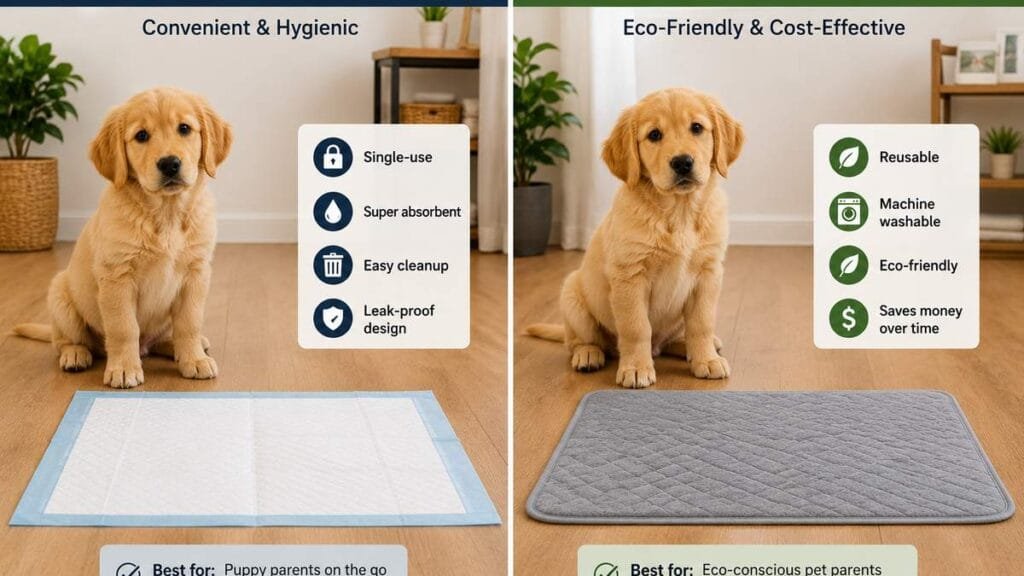
Potty pads come in two main types, and understanding the difference matters before deciding which fits your situation.
Disposable puppy pads are single-use, absorbent pads that you throw away after each accident or scheduled change. They are convenient but add an ongoing cost and some environmental waste over time.
Washable puppy pads are reusable, machine-washable mats. They cost more upfront but save money over months of use and produce less waste.
Both work the same basic way. The pad’s top layer draws liquid through to an absorbent core, keeping the surface relatively dry and helping mask the odor between changes.
Disposable vs. Washable Puppy Pads: Which Should You Choose?
Disposable pads are convenient because you can throw them away after use, but replacing them regularly creates an ongoing expense. They may suit households that want quick cleanup or need a temporary indoor potty option.
Washable pads can reduce repeated purchases, but they need regular laundering and enough time to dry. Keep a spare pad available so your puppy is not left without a clean potty area.
Neither type automatically makes potty training faster. Choose the option that fits your budget, cleaning routine, and training goal. Whichever type you use, keep the potty area consistent and clean it regularly.
Pros of Puppy Potty Pads
There are several genuine advantages that explain why potty pads remain popular among puppy potty pads pros and cons discussions.
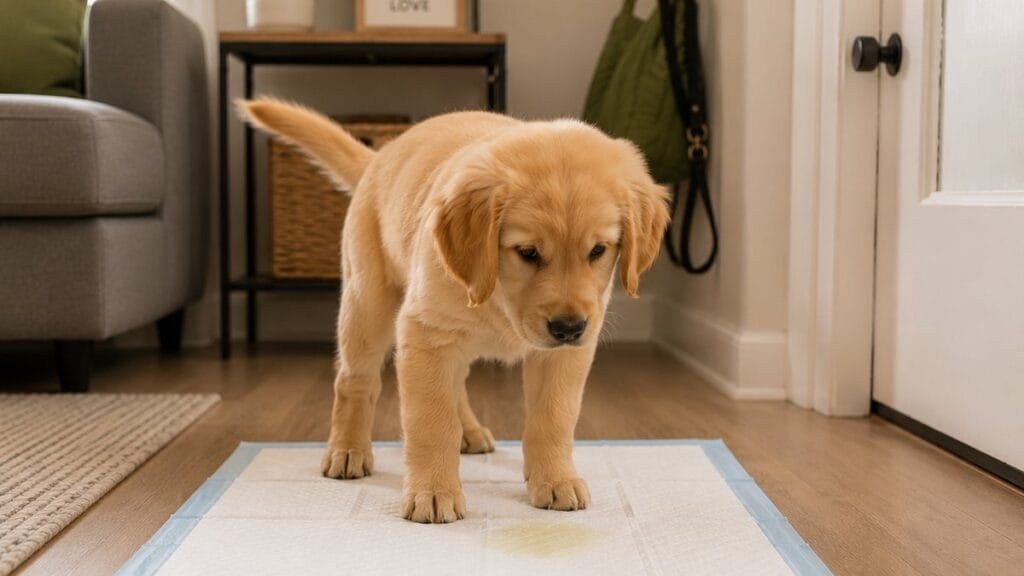
- Helpful for apartment living, where getting outside quickly is not always realistic.
- Useful during bad weather, when frequent outdoor trips are uncomfortable or unsafe for a young puppy.
- Useful for young puppies when a veterinarian recommends limiting exposure to public areas used by unfamiliar dogs. Ask your vet which outdoor locations are safe during your puppy’s vaccination period.
- Helpful for senior or disabled dogs that struggle with mobility or frequent outdoor trips.
- Convenient for busy owners who cannot always guarantee a fast trip outside.
Cons of Puppy Potty Pads
The drawbacks are just as real and worth weighing carefully before committing to pads long-term.
Can delay outdoor potty training. If your goal is outdoor potty training, you will eventually need to transition away from indoor pads.
Puppies may become dependent on the indoor option, making the eventual switch to outdoor-only training harder than starting outdoors from day one.
Extra ongoing cost, particularly with disposable pads used consistently over several months.
Odor problems if pads are not changed frequently enough or cleaned properly.
Environmental waste, especially with disposable pads used long-term rather than as a short bridge.
Are Puppy Pads Good for Potty Training?
It depends on what you mean by potty training. For indoor training specifically, pads work well and can be genuinely effective. For outdoor training, pads can help in the short term but are not a requirement, and skipping them entirely often leads to a smoother long-term transition.
Weighing puppy potty pads pros and cons usually comes down to this: pads solve an immediate problem well, but they add a step if your end goal is outdoor reliability. Our Puppy Potty Training Guide and Puppy Potty Training Schedule by Age both cover the broader process either path eventually leads to.
When Should You Use Puppy Pads?
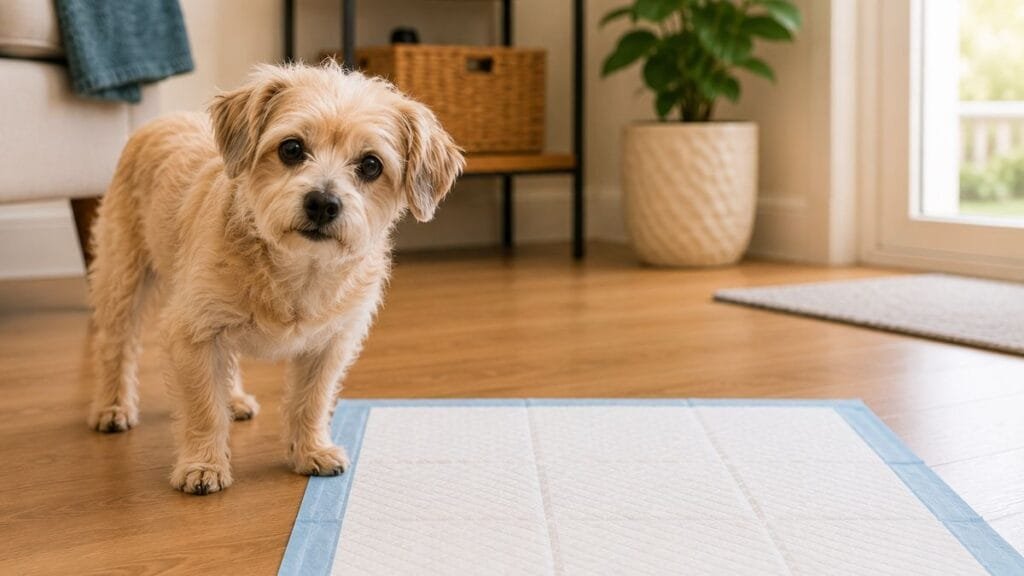
Potty pads make the most sense in a few specific situations:
- Apartment owners without quick outdoor access
- High-rise buildings where reaching ground level takes real time
- Small breeds with especially limited bladder capacity
- Very young puppies not yet fully vaccinated
- Medical recovery periods where outdoor trips are temporarily limited
When Should You Avoid Puppy Pads?
A few situations make pads less useful or even counterproductive:
- If your primary goal is outdoor potty training from the start
- Large breed puppies, where the eventual jump in size makes indoor pads impractical quickly
- Puppies already doing well with outdoor trips, where introducing pads can add confusion rather than help
Puppy Pads vs Outdoor Potty Training
| Puppy Pads | Outdoor Training |
|---|---|
| Convenience | Long-term habit |
| Indoor use | Outside only |
| Easier early weeks | Better lifelong reliability |
| Can delay transition | Builds clearer communication |
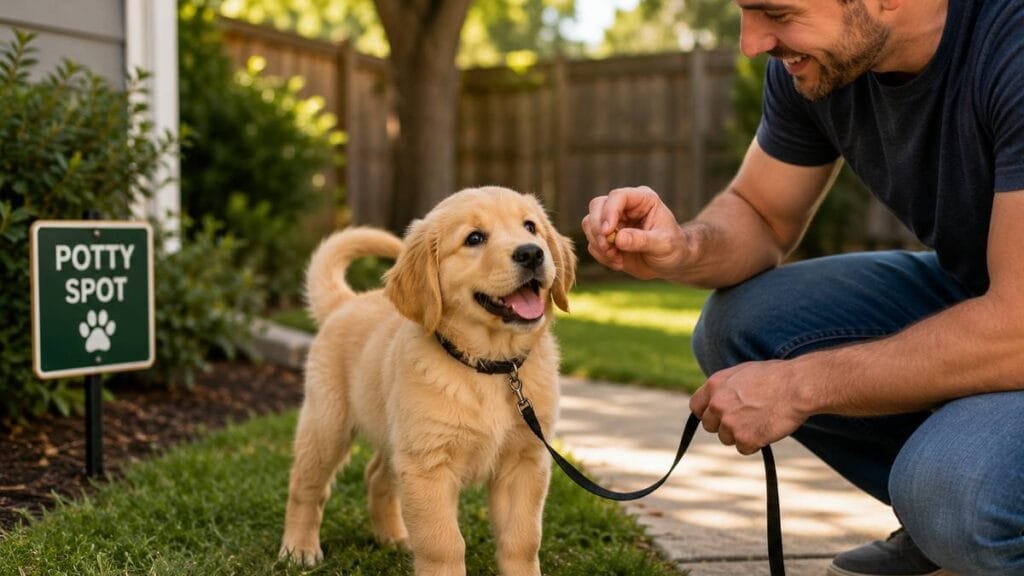
Neither method is automatically best for every household. If your long-term goal is outdoor potty training and you can take your puppy outside frequently and safely, you may prefer to start with an outdoor routine. If access is difficult, indoor pads can be a practical option. The key is to choose a clear plan, use consistent cues, and reward your puppy immediately after successful potty trips.
Signs It’s Time to Stop Using Puppy Pads
A few patterns suggest your puppy may be ready to transition away from pads:
- Fewer accidents overall, even away from the pad
- Actively asking to go outside instead of using the pad by default
- Holding its bladder noticeably longer than before
How to Transition Away From Puppy Pads
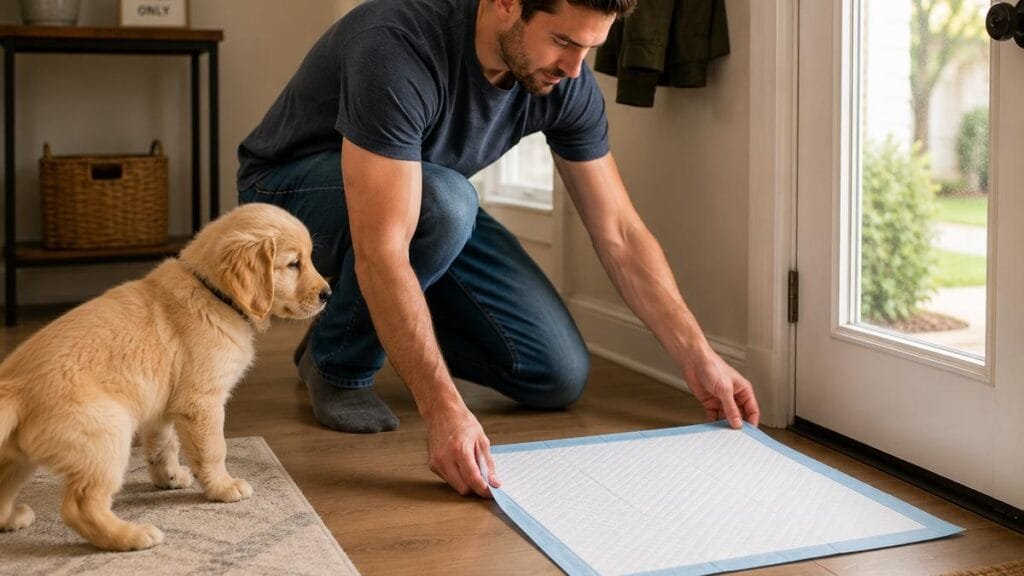
Moving from puppy pads to outdoor potty training works best when you make the new routine clear and reward success consistently. The transition may take different amounts of time depending on your puppy’s age, habits, and access to an outdoor potty area.
- Choose one outdoor potty spot. Use the same safe location whenever possible so your puppy can learn the routine.
- Follow predictable potty times. Take your puppy to the designated area after waking up, after meals, after play, and before bedtime. Young puppies may need additional trips.
- Use a consistent cue. Say a short phrase such as “go potty” as your puppy begins to eliminate.
- Reward outdoor success immediately. Offer praise or a small treat as soon as your puppy finishes.
- Move the pad gradually if needed. If your puppy relies heavily on an indoor pad, move it a little closer to the exit over time. When practical and safe, you can gradually move the potty area outside.
- Clean accidents calmly. Use a pet-safe enzymatic cleaner where appropriate, and avoid punishing your puppy for accidents.
- Be patient and consistent. If accidents increase, review the schedule and access to the potty area instead of assuming your puppy is being stubborn.
Some households may find it easier to start outdoor training directly. If you use pads as a temporary step, keep the final goal in mind and adjust the routine gradually.
Common Puppy Pad Mistakes
A few habits quietly undo the benefits of using pads in the first place:
- Leaving pads in different locations, which confuses the scent cue pads rely on
- Not changing them regularly, which leads to odor problems and reduced effectiveness
- Punishing accidents near or away from the pad, which adds stress without teaching anything useful
- Not cleaning accidents thoroughly: Lingering urine odor may encourage repeat accidents in the same area. Use a pet-safe enzymatic cleaner according to its label.
- Expecting fast results, when consistency over several weeks matters more than speed
These overlap with the broader list of puppy potty training mistakes, and if a puppy that was doing well with pads suddenly starts having more accidents, our guide to puppy potty training regression covers the common causes.
Expert Tips
A few habits make pad training work better, whichever direction you eventually take it:
- Keep one consistent pad location rather than moving it around
- Reward success immediately, every time
- Follow a consistent feeding schedule to make timing more predictable
- Stay consistent across everyone in the household
- Move toward outdoor training when your puppy shows readiness, rather than waiting indefinitely
Watching for signs your puppy needs to go potty and following a puppy potty training schedule by age both make pad training, and the eventual transition away from it, considerably smoother.
Frequently Asked Questions
Are puppy potty pads a good idea?
They can be, depending on your situation. Apartments, bad weather, young puppies, and mobility-limited dogs are all cases where pads genuinely help.
Do puppy pads delay potty training?
They can delay outdoor-specific training since they teach an indoor habit first, though they do not prevent outdoor training from eventually succeeding.
Should I use washable or disposable puppy pads?
Disposable pads are convenient because they can be thrown away after use, but the cost can add up with frequent replacement. Washable pads can reduce repeat purchases, but they need regular washing and time to dry. Consider your budget, cleaning routine, and how often the potty area will be used. Keep the pad clean whichever option you choose.
At what age should puppies stop using potty pads?
This varies by individual puppy and household goals. Our upcoming when to stop using puppy pads guide covers age-specific signals to watch for.
Can puppy pads confuse dogs?
They can, particularly if pad locations change frequently or if the transition to outdoor training is rushed without a clear plan.
How often should puppy pads be changed?
Change disposable pads when they are soiled or no longer absorbent enough to keep the area clean. Wash reusable pads according to the manufacturer’s instructions and replace them when needed. The right schedule depends on how often your puppy uses the pad, the product, and whether odor or moisture is building up. Check the potty area regularly rather than leaving a dirty pad in place for long periods.
Are puppy pads bad for large breed puppies?
Not inherently, but the practicality drops quickly as a large breed puppy grows, making a switch to outdoor-only training sooner often the more realistic choice.
Final Thoughts
Puppy potty pads pros and cons ultimately come down to your specific lifestyle and long-term goals. Pads offer real convenience for apartments, bad weather, and young or mobility-limited dogs, but they can add an extra step if outdoor reliability is the end goal. Choose based on what fits your daily routine now, and plan to transition gradually toward outdoor training when your puppy is ready.
Written by David Jason Founder of My Pet Care Tips
David has spent years helping first-time puppy owners build reliable routines for house training, crate training, and daily care, drawing on real-world experience and trusted veterinary guidance to make the process less overwhelming.
Sources
- American Kennel Club (AKC): The Ins and Outs of Potty Pad Training
- American Kennel Club (AKC): Indoor Potty Training for Puppies
- PetMD: How to Potty Train a Puppy
Last Updated: Oct 17,2026
Note: A puppy that suddenly has more accidents than usual, on or off the pad, should be checked by a veterinarian to rule out a medical cause.