
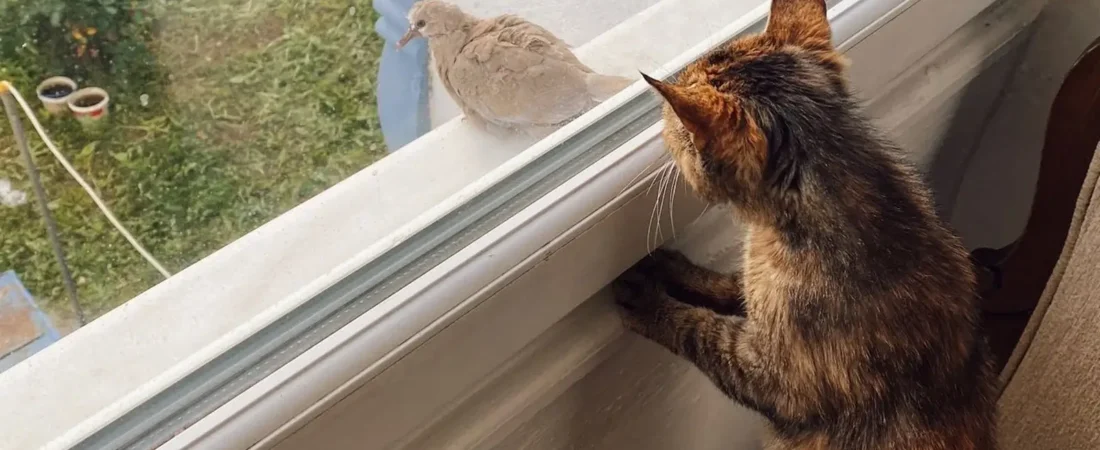
You’re sitting near the window with your cat when a bird lands on the feeder outside. Instantly, your cat freezes, locks onto the bird, and lets out a strange, high pitched sound you’ve never quite heard before. If you’ve ever wondered why does my cat chirp at birds, you’ve witnessed one of the most fascinating pieces of feline body language there is.
This chirp is not random. It’s rooted in instinct, and in most cats, it’s a sign of a healthy, active prey drive rather than anything to worry about. In this guide, you’ll learn what cat chirping actually is, why it happens specifically around birds, how it differs from chattering and trilling, and when the sound is worth mentioning to your vet.
Quick Answer
Why does my cat chirp at birds? Your cat sees prey it cannot reach, so its hunting instinct switches on. The chirp is a mix of excitement and frustration. It is normal in healthy cats and needs no correction. Call your vet only if chirping comes with coughing, breathing trouble, or sudden behavior changes.
What Is Cat Chirping?
Cat vocalizations fall into a few distinct categories, and chirping, chattering, and trilling each mean something slightly different.
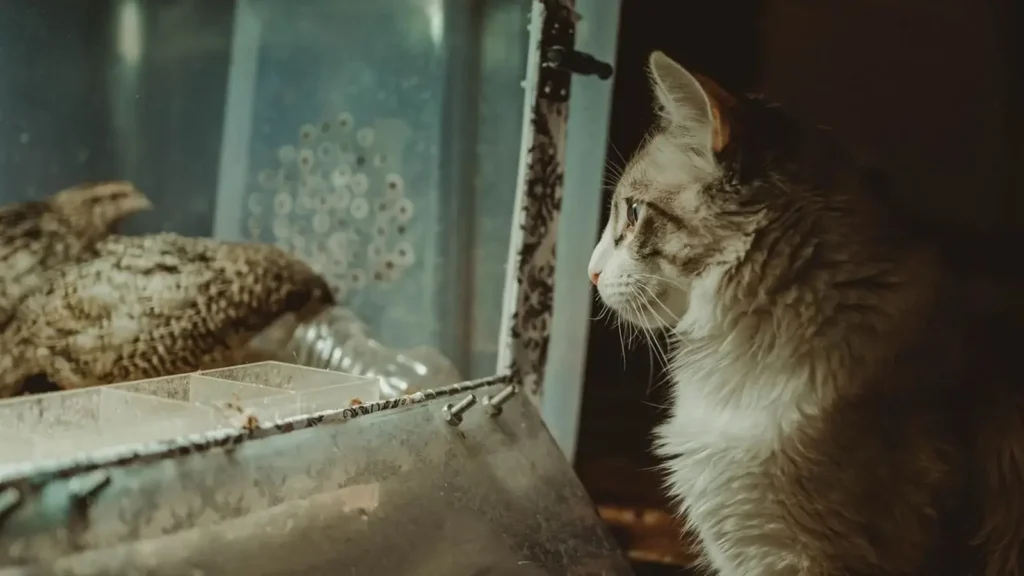
A chirp is a short, high pitched, bird like sound, usually made with the mouth mostly closed. A chatter is a rapid clicking or jaw movement, often layered on top of the chirp. A trill is a rolling, musical sound, closer to a purr crossed with a meow, and it’s typically used as a friendly greeting rather than a hunting response.
All three sounds can happen together, which is why owners often use the terms interchangeably, even though each one carries a slightly different meaning.
Why Does My Cat Chirp at Birds? The 5 Main Reasons
Most cats chirp for more than one reason at the same time. Read the five reasons below, then match them to what your cat does at the window.
Hunting Instinct
Chirping is closely tied to a cat’s predatory drive. Even indoor cats who’ve never caught real prey still carry this instinct, and watching a bird through a window is often enough to trigger it.
Your cat does not need to be hungry to hunt. Cats are natural predators, and a moving bird starts the whole hunting routine: watch, stalk, chase, and pounce. The chirp often shows up during the watching stage.
Excitement
The sight of movement, especially fast, unpredictable movement like a bird hopping or flying, can spike a cat’s excitement level. Chirping is one way that heightened energy comes out.
Look at the rest of your cat’s body. Wide eyes, forward ears, and a twitching tail often go with an excited chirp. Many cats chirp most when a bird lands close to the glass.
Frustration
Many behaviorists believe chirping reflects a mix of excitement and frustration, since your cat can see the bird clearly but has no way to reach it. That gap between desire and ability seems to fuel the sound.
A window blocks the final steps of the hunt. Your cat cannot pounce, so the energy has nowhere to go. A frustrated chirp often sounds sharper, and your cat may pace or swish its tail hard.
Trying to Mimic Bird Sounds
Some researchers believe chirping may be an attempt to imitate prey sounds, possibly as a way to seem less threatening or to blend into the environment while stalking.
Scientists have not proven that cats copy bird calls on purpose. Some people think the chirp imitates prey. Others see it as pure excitement. Both ideas remain theories, so treat any single answer with caution.
Natural Predator Behavior
At its core, chirping at birds is simply your cat’s predator instincts working exactly as designed, whether or not there’s ever a real chance of a catch.
Wild cats hunt to survive, and house cats keep the same wiring. A well-fed pet still feels the pull. That is why even a sleepy cat can wake up fast when a sparrow lands on the feeder.
Why Does My Cat Chirp at Birds Only Through the Window?
A window gives your cat a perfect view with no way to reach the bird. That mix creates the loudest chirps. The cat sees, tracks, and freezes, but the hunt never finishes.
Most cats chirp more at windows with a feeder, a birdbath, or a low branch nearby. Birds that land close to the glass raise the excitement even more. Morning and evening often bring the most activity, because birds feed at those times.
Some cats also chirp at birds on a TV or tablet. The moving shapes and bird sounds start the same response. This is normal, as long as your cat calms down afterward.
Why Do Cats Chatter at Birds?
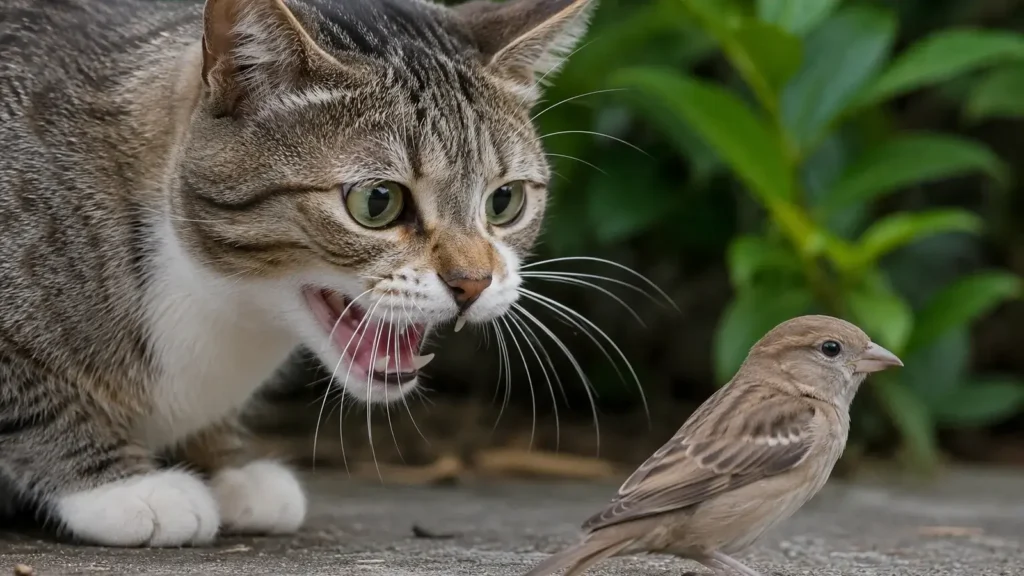
If you’ve also asked why do cats chatter at birds, the answer is closely related but not identical to chirping. Chattering involves rapid jaw movement, sometimes described as teeth clicking, layered under or alongside the chirp.
One theory suggests chattering mimics the motion cats use to deliver a killing bite to prey. Another suggests it’s simply a physical release of built up predatory tension. Either way, chattering tends to show up in the same high intensity moments as chirping, usually when a bird is close but unreachable.
Cat Chirping vs Cat Trilling
Chirping and trilling can sound similar to an untrained ear, but they serve different purposes.
| Feature | Chirping | Trilling |
| Trigger | Hunting | Greeting |
| Directed at | Birds, insects, prey | Humans or other cats |
| Sound pattern | Fast, sharp sounds | Rolling, musical sounds |
| Emotional tone | Excitement, frustration | Friendliness, warmth |
If your cat makes the sound while calmly walking toward you, it’s likely a trill. If it happens while they’re frozen and staring at something outside, it’s almost certainly a chirp. Many cats also trill while carrying a toy to you. If yours does this, read our guide on why your cat brings you toys.
Is Cat Chirping Normal?
Yes. Cat chirping at birds is a completely normal, healthy behavior seen in cats of every age and breed. According to International Cat Care, chirps and trills fall under a broader category of murmuring sounds that cats use naturally for greeting, attention, and acknowledgment, with the bird directed version being tied specifically to hunting instinct.
A normal chirp is short and comes and goes with what your cat sees. Your cat relaxes soon after the bird leaves. A chirp that never stops, or one that comes with distress, deserves a closer look.
Do Cats Chirp at Things Other Than Birds?
Yes. Cats also chirp at squirrels, flies, moths, lizards, and even a dust speck floating in the light. Any small, quick target can start the same hunting response.
Some cats chirp at their owners too, usually as a greeting or a request for attention. That sound is closer to a trill, which the section above explains.
When Should You Be Concerned?
Chirping itself is rarely a red flag. But changes around the behavior are worth watching. Contact your vet if chirping is paired with:
- Breathing issues
- Coughing
- Loss of appetite
- Lethargy
- Signs of pain
- Sudden, unusual vocal changes
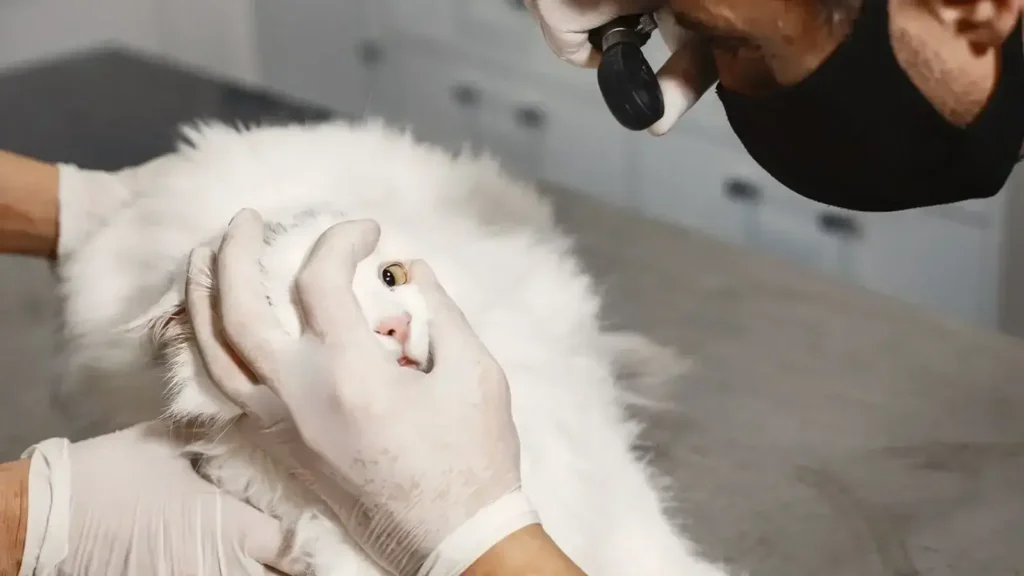
A cat who suddenly starts or stops a normal vocal habit, especially alongside other symptoms, deserves a checkup rather than a guess.
Is Indoor Cat Chirping at Birds a Sign of Stress?
Chirping alone is not a stress signal. Most indoor cats chirp as a normal reaction to prey. Stress shows up in the body and in what happens after the chirping stops.
Watch for these signs:
- Hissing or swatting at you or another pet right after bird watching
- Pacing or crying at the window for long stretches
- Skipped meals or hiding after a long window session
Vets call sudden aggression after a cat sees something outside redirected aggression. Give your cat space and calm time. If it happens often, talk to your vet or a qualified cat behavior professional.
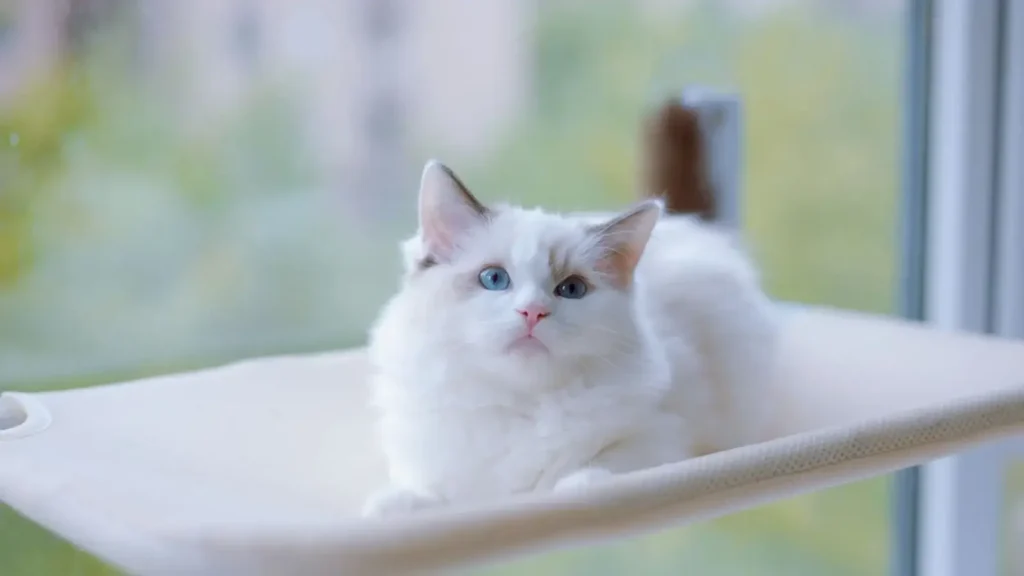
This kind of window time also doubles as mental enrichment. A well placed perch near a window can turn ordinary bird watching into a daily source of stimulation, similar to the enrichment ideas covered in Indoor Cat Care Guide.
How to Help a Cat That Gets Frustrated Watching Birds
A frustrated cat needs a way to finish the hunt. These steps help:
- Keep a wand toy near the window. Move it like a bird, then let your cat catch it at the end.
- Offer a small treat or meal after play. Hunt, catch, and eat is a natural cycle for cats.
- Move the bird feeder farther from the window if the chirping turns into pacing or crying.
- Add a window perch so your cat can watch without crowding the glass.
- Apply frosted film to the lower part of the glass if your cat gets obsessed or aggressive after bird watching.
Do not punish chirping. Your cat cannot control the instinct, and punishment only adds stress.
How to Keep Your Cat Mentally Stimulated
Chirping is a small window into your cat’s hunting drive, and channeling that energy into healthy outlets benefits their overall wellbeing. Try adding:
- Puzzle feeders
- Wand toys
- A window perch
- Bird watching videos
- A climbing tree
- Daily play sessions
According to the VCA Animal Hospitals behavior team, cats that don’t get enough outlets for natural predatory behavior can develop restlessness or attention seeking habits, which regular interactive play helps prevent.
Frequently Asked Questions
Why do cats chirp?
Cats chirp as a form of vocal communication tied to excitement, greeting, or hunting instinct, depending on the context.
Why does my cat chirp at birds?
Your cat sees prey it cannot reach, so its hunting instinct switches on. The chirp mixes excitement and frustration.
Why do cats chatter at birds?
Chattering is a related sound involving rapid jaw movement, often thought to reflect hunting frustration or an attempt to mimic prey.
Why does my cat chirp at me?
When directed at people, chirping is usually a friendly greeting rather than a hunting response.
Why do cats trill?
Trilling is a warm, musical sound cats use to greet people or other cats, often associated with positive emotions.
Is cat chirping normal?
Yes, it’s a normal and common vocalization seen in healthy cats of all ages.
Do cats chirp to attract prey?
Not exactly. Chirping is more likely tied to a cat’s own excitement or frustration than an attempt to lure prey closer.
Can kittens chirp too?
Yes, kittens can chirp from a young age, and mother cats also use chirps to call their kittens.
Does bird chirping attract cats?
Yes, it can. Bird sounds and fast movement catch a cat’s attention and can start the hunting routine.
Is indoor cat chirping at birds a sign of stress?
Usually not. Stress shows up in other signs, such as aggression, hiding, or skipped meals.
How do cats learn to chirp at birds?
Most cats seem to do it without being taught. The chirp comes from instinct, though some cats chirp much more than others.
Expert Tip
Cat chirping alone is usually harmless. However, if chirping suddenly changes or is accompanied by coughing, wheezing, or breathing difficulty, consult your veterinarian.
Final Thoughts
So, why do cats chirp at birds? In healthy cats, it’s simply hunting instinct on full display, often mixed with excitement and a touch of frustration at not being able to reach the prey. It’s one of the more charming signs that your cat’s natural instincts are alive and well, even from behind a window.
If the chirping ever changes suddenly or comes with other symptoms, a quick vet visit is always the safer choice.
Has your cat ever chirped at birds? Tell us about your experience in the comments.
For more on your cat’s everyday behavior, check out Why Won’t My Cat Stop Meowing and Signs Your Cat Actually Loves You.
Also Read
Cat Behavior
Why Does My Cat Keep Headbutting Me
Why Does My Cat Lick Me
Cat Behavior Problems Solutions
Author Bio
David Jason
Founder, My Pet Care Tips
David Jason is the founder of My Pet Care Tips, a website dedicated to helping everyday pet owners care for their dogs and cats with practical, easy to follow advice. He works closely with veterinary sources and trusted animal health organizations to keep every article accurate, current, and genuinely useful for beginner pet parents.